Audible
 Listen on Spotify
 Apple Podcasts

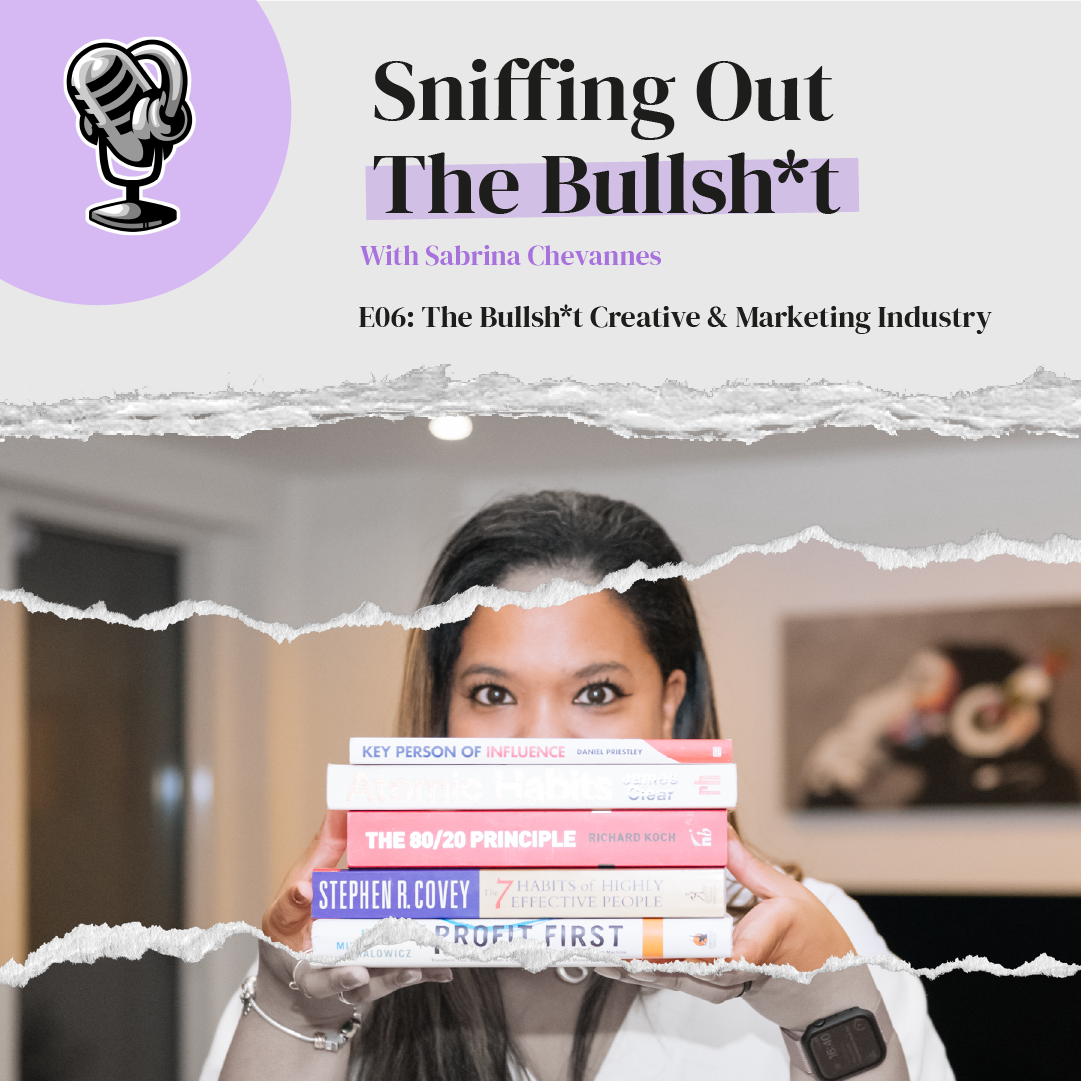
“Creative and marketing work is valuable simply because it looks impressive.”
Sniffing Out the Bullsh*t · Season 1 · Episode 6
The Bullsh*t Creative and Marketing Industry
This episode examines “The Bullsh*t Creative and Marketing Industry”, showing why creative work must solve a real commercial or audience problem and be judged against a clear objective.
Myth vs reality.
Creative work must solve a real commercial or audience problem and be judged against a clear objective.
Episode summary
Creative work must solve a real commercial or audience problem
Ever wondered why our agency is called the No Bullsh*t Agency? Because we were so sick of the BS flying around the industry all the time. We wanted to be different – more transparent and honest with our clients. The problem is, the industry hasn’t changed – the same BS is still there.
This episode only touches on the amount of BS in the industry, but if you’re in the creative and marketing sector, you need to hear this. Even if you’re not, you should listen to ensure you don’t get ripped off by one of the many cowboy agencies out there!
Key takeaway
Creative work must solve a real commercial or audience problem and be judged against a clear objective.
Short clips.
One useful idea.
Watch the argument in context and continue on the original platform.
Listen, skim or read every word.
This is the maintainable version: the summary, chapters and transcript all originate from the same approved transcript.
Why we became the No Bullsh*t Agency +
Hello, and welcome to this week's episode of Sniffing Out the Bullshit. So today, I thought I would talk about the bullshit scene in my industry. And I guess that industry is marketing, creative, websites, all that sort of stuff, because there is so much of it, so much that that is what inspired us to have the tagline, The No Bullshit Agency, because we'd spent a good six years running our agency and seeing so much crap everywhere, that when we started to deal with clients, and we, I like to say, rescued them from the scammers that were out there, they would all say, oh my God, you guys are just no bullshit, aren't you? And we're like, well yeah, we'll just tell it how it actually is. And so we ended up becoming the no bullshit agency. A lot of people ask us what that actually means. They think, I think they misunderstand it at first. They think it means that we don't take any shit. We're like, yeah, no bullshit. We don't take any of that sort of stuff. And whilst we like to be respected, that's not what we mean. What we mean is that we don't give clients any bullshit because that's what most of the people in our industry do. And, you know, we have been even on joint pictures with other agencies and we've seen first-hand some of the nonsense that they do. And it's shocking. We've literally been in pictures where they've straight up just lied to the client about absolutely everything. And I remember when the client asked me a question and I'd look at the other agency, and they'd shake their head and put me in a really awkward position. So I had to just like not say anything because I'm not really sure how to lie to them. And then afterwards, I call them out on it, I say, what was that about? And they're like, oh, well, you know, by the time we get to that part of the project anyway, we'll have collected most of their money, so it doesn't really matter. And they're like, are you joking? And they're like, yeah, well, you know, most of the money we've been done, two-thirds have been paid, so like if they complain about it, that's fine. We'll just help them try to make out that it's their fault. And this attitude really, really surprised me, and we were supposed to be a joint pitch, and we were supposed to work on the project with them. And when they found out that they actually won the pitch and had came to tell us, we refused to work with them because we just couldn't, it was just shocking how they would treat their clients. And so we made a pledge that we would never do that to a client. We're trying to be straight, upfront and honest, and that's what the node bullshit is about.
Hidden fees, jargon and fake agencies +
For example, we hate that, especially in the website business, because I feel like most people don't understand the intricacies of web development when it comes to actually coding and building a website, and it can sound very intimidating. And I think that web developers play on that, and they deliberately try to make jargon, and they just come into all this jargon and make things sound so much more complicated than they actually are. And so when they're talking to a client, they spew out all these words, and it's just such a mess. And so I think that that's what a lot of agencies do. And so we vow to never be like that, and that's why we became the node bullshit agency. So other things that I guess companies were doing were things like, I guess, charging hidden fees for various things. So, you know, you'd sign on with them, but then be like, oh, that's not included, that's not included. And it's like basic things such as if they're hosting with you, they suddenly charge for SSL certificate, but even though they are free now, but back in the days we paid for, so they just charge it anyway, or they charge to integrate Google Analytics with, again, it should be given from a website. And, you know, of course it takes a bit of time, but that should be in the overall scope of the project if it's included. But then they suddenly charge 500 pounds to integrate things like this. And it's just really kind of ludicrous, the amount of hidden fees there are. And, you know, usually these sort of people are not real agencies as well. And that's a thing. I feel like, at the moment, so many agencies out there, and I say agencies in inverted commas, because they don't even exist. Like, there are people building websites, branding themselves up as a particular agency, and then you do your diligence, you look them up, and they don't even have a company on Companies House. They are not even a sole trader. They're just taking in money, which is kind of ridiculous. And, I don't know, I feel like, especially since COVID, so many people have a remote business, and fine, you know, there are people running legit remote businesses, and there are people who did that before COVID. And, you know, I just think that, however, if you are someone working from your mum's basement, and, you know, you're farming out your services on the likes of Fiverr, Upwork, to people in Bangladesh, Pakistan, Philippines, and these are all the countries usually where they find cheapest labour, and they are, you know, selling services in the UK, and they're farming out to these places, and you're just managing a bunch of freelancers in different countries, you're a glorified pimp. Let's
Outsourcing without transparency +
think about it. You know, you're literally pimping out your services to all these people all over the world and making a cut on it. That's what you are. You're not running an agency. Don't even compare yourself to those who have overseas contractors, and, you know, they treat them, like, really properly, and, you know, they are part of the team, and there's team culture, and they all discuss things with each other, and, you know, they actually get them together for team days and bring them into the same country. That's a very different model. I mean, it's not something that I would want to do, because I feel like it doesn't have that same cultural effect that as a full, fully in-house team, but at least you are actually running a remote company. But those who are literally just farming it out, individual freelancers who don't even talk to each other, who barely talk to you and barely talk the language, then you're just basically being a pimp, and you're trying to farm it out as cheap as possible, and you cannot really call yourself an agency owner. And it's outright dishonest to the client. Like, they are coming to you and paying UK fees because they want a UK person to deal with their work, and ideally UK people to actually do the work. It's different if you are upfront and honest at the beginning and say, actually, I've got loads of overseas contractors, and you're paying me a fee for my time to manage them. Some people might be like, that's okay, because I don't need the effort to do that. But most of the time, people aren't doing this. And it's actually just crazy what's going on. I mean, I feel like agencies all over the place now are calling themselves agencies, but they're not even really agencies. There are people who are now creating all these new ideas thanks to the likes of all this AI coming out now. So there are design agencies who are doing everything on Canva. And while Canva is actually a very powerful tool for the lay person, you cannot get away with trying to claim that you're a professional graphic designer when you're just using templates on Canva. And Canva is getting stronger every day, and it's pretty scary the stuff you could do with it. But there are now people who are doing full-blown, call themselves full-blown creative agencies, producing videos and graphics and all sorts of things, and everything comes on Canva. It's all a template. And it's honestly ridiculous.
Canva, AI and fake creative expertise +
And I think that I've seen talented graphic designers use Canva, and the work comes out pretty good. And I use it to the day to even create a little video, because I'm not very good at video. And I produce something. I was like, oh, I'm quite impressed with this. But there's a difference. We have fundamentals that we understand, and we have a design background. So you can give a designer a tool to use, and it might be inferior to a proper Adobe Suite, but they're still able to produce good work. But those who have absolutely zero design knowledge should not be selling design services just because they've got an automated software. It's actually ridiculous. It's now the same, worse now, with ChatGPT. I have seen content agencies coming up out of nowhere, and one fell on our radar the other day because they have got a tagline on there called No Bullshit Agency. And FYI, to all the people out there who are trying to claim this, we actually have it trademarked. So please refrain from doing that, because I'm going to come after you. And you know, it's ours. And you know, this is why it's quite funny, because they're claiming to be this No Bullshit Agency, and it is literally all bullshit. They are, they admittedly on their website say they use AI to do it, and they are just running through a copy, and they're giving you back instantly, and they're not even editing it. It's different if they had proper copy editors who were talented and editing it. They're literally putting in a prompt going, create a blog post called the title, not even getting the tone of voice right, not even understand the target audience, and none of that's done. They are literally just spewing it out of ChatGPT. And I feel like this is coming up everywhere now, and it's really, really difficult to kind of manage, because how do you know what to do? Because even if, you know, you see a company, the problem is these companies now have got fake portfolios. And I mentioned this on the previous week, that people fake their portfolios. But now, like I've seen in this agency world, you could put in any article and say that you've written that as a copywriting agency. You could put in any website and say you designed that. Unless it has designed by and then the company's name at the bottom, they're not necessarily going to know. And the odds of someone like actually contacting that company and finding out are slim. But that's exactly what you should do. If someone puts that in our portfolio, go contact that company.
Go see who in your network knows who's in that company or go actually to drop them a message saying, actually, I've got this agency who are claiming that they've done your website and we just need to do our due diligence. Please, can you confirm who created your website? You don't need to say the company's name. Just say who did your website. And I'm sure that if you're trying to just, you know, protect yourselves, that company probably will apply and you could get some insight into it. Now, of course, there might be situations where the company did it white label or something like that, but they should have some proof of this. They should have original design files or something like that. And the problem is, there is just plagiarism going everywhere. And they don't, those sort of people do that. Don't stop there. They just straight up nick designs of other people. So, for example, we had a competitor agency completely copy one of our designs the other day that we put on social media. We announced that we just did a new design and build for a client, and we were like, well, say please, blah, blah, blah. Here it is. And within a couple of weeks, we saw someone else totally nick that design. And we're like, what? And it was so similar, and it was for a competitor. So this is what the bad thing was. It's different if it's a completely different industry. But we didn't know what to do. But we are actually still debating what to do, because it's not the agency who are going to suffer from this. It's the actual company, because if our client sees that company website and gets annoyed with it and determines that they're stealing their copyright, then that company might get sued for it. And the client is the one that's in trouble. So this is why, if you're trying to hire an agency, you absolutely need to do your research on them, because you have to check to see if they are legit and actually come up with this sort of stuff, because if they're the one plagiarising their designs, you're the one that suffers from it. Now, there are all sorts of these fudged things everywhere, like fudged stats when it comes to digital marketing as well. I see this in marketing agencies and especially my ads agencies. They're taking in a lot of money, and they are not really doing anything with that money. They're not really getting results, and they're just taking a fee for it. Half the time, I'm spending the money properly, and they are just budging the results.
Fudged analytics and impossible promises +
So companies who don't know how to check their own analytics or understand how to produce their own reports, they're relying on the reports of the agencies. Same with SEO. And the SEO is really difficult. With ads, you should be absolutely concrete with what's being spent and what the results are getting back. But with things like SEO, it's quite difficult because there's no concrete data, per se. And that's obviously traffic and rankings, all that sort of stuff, but you can't see what they're doing on a daily basis. And I've seen so many agencies just fudge the numbers. And so my recommendation for anyone who's using a digital marketing agency is to have someone in your team that knows a little bit about analytics and data and all that sort of stuff, so much so that they could at least log in to your own analytics account and have a look to see if the numbers remotely match what they're reporting to you. And if the company doesn't allow you access to it, that's a red flag, because you should always have your analytics in your own Google account, and they just manage it, so that you are the ones that own that data. And if the numbers don't tally, then you need to actually question that. And if there's something else that doesn't really match up and you don't understand it, they should be the one explaining it to you. And even if the numbers are higher, if they're not that much higher compared to the money you're spending, absolutely you have the right to question it. So you need to flag up these people. There are so many agencies out there that promise XYZ to win a pitch, and then they don't even do it. It's crazy. We always end up losing to some agencies, I've seen this, who have promised to do what we've said, but three times over for half the price. And we're like, well, obviously we can't compete with that. But we touch base with that client a few months later when things should have been done, and we see how things are going, and they're always like, we regret going with them, like they promised the world, it's still not ready. And what they try to do, I've seen so many people do this. For example, the brief will say, oh, we want to create the website in Shopify. And we want to do this bespoke Shopify website, and it's going to have XYZ, and it's got all these things. And the company will pitch for that work. And they will do this, even though they have absolutely no Shopify skills. Then somewhere later down the line, they'll convince the client, after receiving the money, and after they've kicked off the project, convincing them to then rebuild that website in something like WooCommerce or even Squarespace or something.
Scope-switching and holding clients hostage +
I've seen people do that. So it's something that's within their expertise. And something that's easier as well. And they'll still charge the same fees and try to claim that it's better, it's in their client's best interest. But obviously, with the client perspective, they've already invested in this company, already had time wasted. They don't want to have to go back again and try and find someone. So all they do is they lie, they lie, they lie in order to win the work and then do whatever they can to change it at a later date. That happens so much. So if you're a client who's going through a process like this at the moment, make sure there are some clauses in it that say, obviously, if you're unable to fulfill that original brief, then obviously you have the right to cancel and get any deposit back at any money paid. And actually, maybe we should shove something in there if it's the agency's fault that they have to pay for time wasting because it's ridiculous. Like we would do the same. We'd expect that if you guys turned around and said, actually, sorry, I've changed our mind on a brief, and you've already done like two weeks of work, but we're totally changing our mind to start again. We would expect to be paid. We wouldn't expect to just do all that for free and then start again. So likewise, you could do the same back to them if they are changing the scope of work. So I think that there's so much out there at the moment, which is absolutely crazy. And the one piece of comment that we always get when we speak to people is that they are so surprised at how transparent we are with what we do. And the whole purpose of what we do is that we want to kind of educate our clients, take them on a journey, and make sure they're always feeling safe. And so they should know everything that's being charged. But this isn't the usual thing in our industry. I feel like so many agencies out there are still building websites from templates and still charging so much money for that, and the clients don't even know the difference between whether it's a template or bespoke design. They're not even giving them login details to these websites. They are holding those login details ransom. So they are forcing them to host with them at extortionate prices, saying that that's what is part and parcel of the website. And then say if they try to leave later, they'll be like, okay, sure, but you need to pay us a grand for the login details. Stuff like that, which is really, really crazy. And that stuff still happens. And I'm surprised. I'm really surprised. But it definitely still happens, and people are still falling for it.
So what can we do to try to stop that sort of stuff happening? Because it's happening all the time, and we need it to stop. And one of our mission statements is that we want to try and raise the game of people in our industry. So what I'd love to do is ask for, you know, clients out there to try to look out for these signs and do what they can to call people out and to try and make people prove that they're actually legit. So my advice is to do background checks. Look up the company. So you don't have to necessarily do a check on their finances. For example, credit checks are expensive to do. You don't have to do that. I mean, you can do if you've got the facilities to do so, but just even a quick check on companies' house, check their filings, check if that looks healthy. Check, you know, again, their online presence, anything people have been writing about them. Check, like, you know, external messages about them. See what stuff's going on there. And I'm not talking about the stuff that they've submitted to Google themselves, but what other people are writing about them and general consensus on social media. Definitely do background checks. And the same thing on the owners as well, because you can see what sort of people are running the business. And definitely meet the team members, because if someone's claiming to have, you know, X amount of people on the team, then you should be able to meet them. If they are farmed out to all other countries, then that might be different. I mean, again, remote working, complete understanding, that's absolutely fine. And, you know, especially if you're looking for someone who can come into the office every so often, we've had that too, where people promise that, oh, yeah, we're just down the road from you, we'll come to you. And we've had the same thing with freelancers. Freelancers, they promise to come into the office and work with us, and they never ever do. Like, we can never ever get them in. They've always got an excuse of what's happening, and the reality is they don't actually live anywhere near us. So double check who they are, and, you know, meet their team members. Okay, so if they're remote, do it all on Zoom. But all of them should be able to answer open and honestly about the company, how long they've been working there, what their role is, check their coherency of their answers. Double check their LinkedIn to see if that matches up to what they've said.
How to do due diligence on an agency +
And, you know, do they speak good English? Are they communicative? Do you see yourself be able to work with these people and communicate with them about the brief? All these sort of things you have to check. And then client references. So if they claim to work with certain clients, then ask for references on those clients. Now, don't get me wrong, not every client is going to be happy to be a reference, but someone will. And check that company. Because again, they might just ask their mate for a reference because that's what people do. And I've noticed that a lot of people, when I've asked in the past to ask for references from agencies, when we were trying to do partnerships before, they said it was inappropriate to ask for references, and people don't do that these days. And their clients are very private people, and they have, you know, in terms of they... We've signed NDAs, have all these excuses, so we can't show you our portfolio or can't explain and talk to these clients. And fine, like, you know, that you do have certain ones like that, but there will be some that absolutely will give references. And so I feel like it's a big red flag if they don't. So this episode is really about calling out all the bullshit in my industry, because, I mean, this is how the whole No Bullshit brand started with the creative and marketing and website industry and all the people who have agencies. It's been a pet peeve of mine for so many years, but until people start calling people out on it and highlighting the people who are doing things wrong and actually maybe invoking some kind of punishment or fine for people who are lying, who are plagiarising copy and designs and everything all over the place, then it won't ever end. So I am pleading for everyone who's listening to this podcast to actually start looking and doing your due diligence when it comes to agencies and freelancers and all that sort of stuff, and to stop people stealing people's work and to just raise the game and raise the bar of the quality in this industry, because especially if people are farming it out to other countries, the quality is often a lot lower due to several reasons. The fact that they can't communicate properly with millions and millions of miles away, and they're usually trying to juggle with that with multiple people and multiple projects, so it's never going to work out well. But I'm really, really calling people to kind of call people out so that we can raise the game on this. So that's definitely something that I want to see change, and it's something that we're consistently working on, and it's what has inspired us to become the No Bullshit Agency. So that's all it from today, and I hopefully will see you all next week for another episode of Sniffing Out The Bullshit.