No Bullsh*t Talks · Season 3 · Episode 18
Inside the Room Where Brands Decide If Your Podcast Is Worth The Money
With Ashley Morris.
 Watch on YouTube
 Listen on Spotify
 Apple Podcasts
About this conversation
What brands really look for in podcast sponsorships
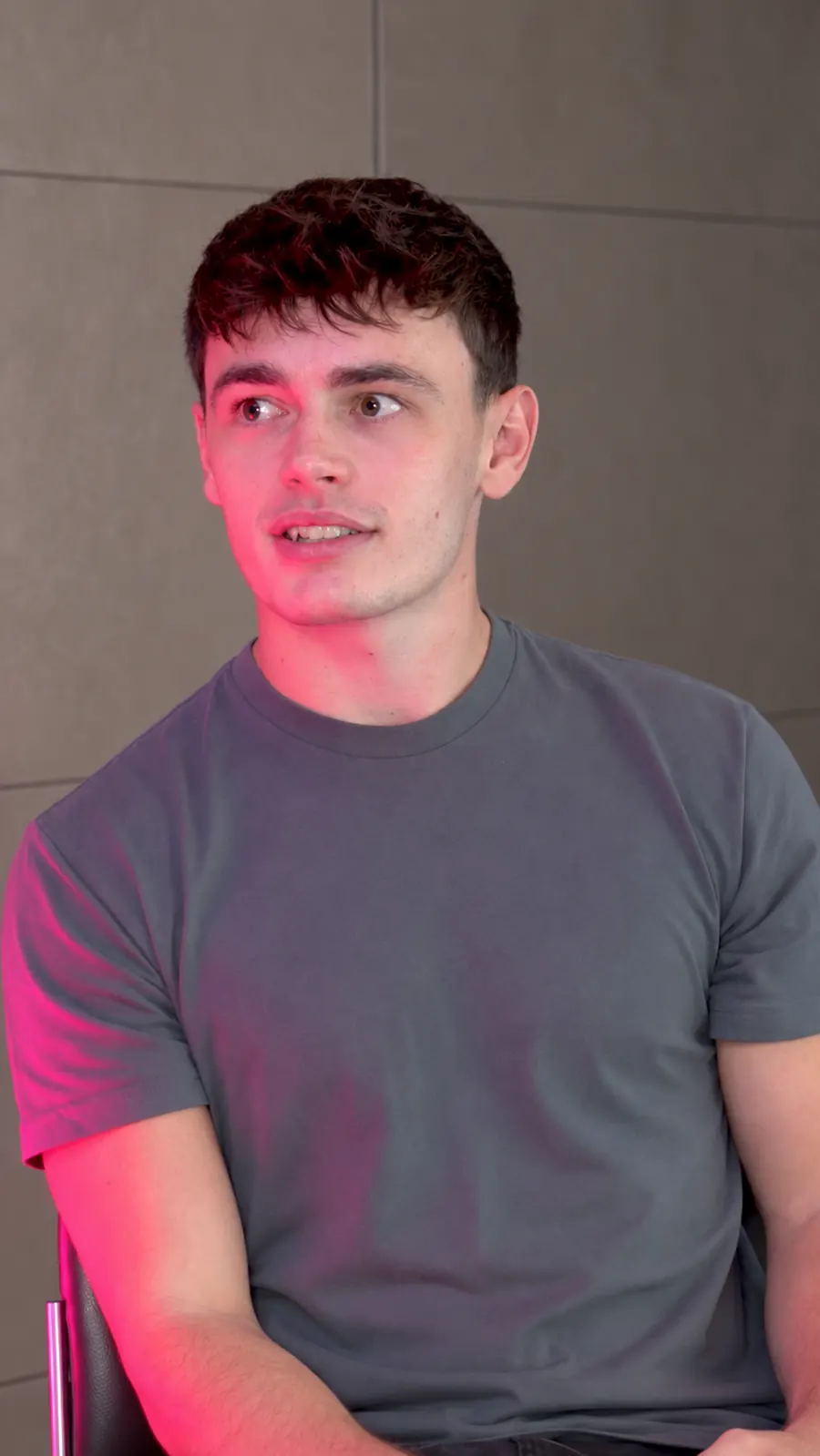
Ashley Morris is the co-founder of Pod Partnerships, a content sponsorship agency connecting brands with podcasters and YouTubers. He’s spent five years inside the industry training over 10,000 podcasters and working with hundreds of brands, and knows what actually makes a podcast valuable to a brand.
In this episode, Ash joins Sabrina to discuss why most podcasts fail early, the difference between audio and video podcasts, why niche audiences can be commercially powerful, and what brands actually assess before spending on sponsorship.
Watch
See the full video conversation.
Listen
Take the conversation with you.
Watch the moments
that travelled.
Watch, share and continue on the original platform.
Read the full conversation.
The transcript is organised by timestamp so it can be generated from the master transcript, edited once, and published here without designing a new section every week.
Full transcript+
00:00:00.120 — 00:00:22.480 · Speaker 1
Some of the richest people I've met there have looked borderline homeless. And then it was literally like we landed pay the first few months rent and deposit and everything. That was like shit. Like, we need to start making money. And then we had a big deal fall through. Literally on the flight there, because I actually quit my job three days after I bought my house. But for every one of those, there's a guy on this laptop in the coffee shop who's just sold his business for £30 million, and you just get chatting to randomly.
00:00:23.640 — 00:00:56.280 · Speaker 2
No bullshit. Talks is a podcast for entrepreneurs by entrepreneurs. There's too much bullshit out there, especially when it comes to business. This podcast aims to highlight what's true and what's not in the world of entrepreneurship, bringing you honest and raw conversations about the rollercoaster that is entrepreneurship. Each week, my guest will be a high performing entrepreneur, sharing the ups and downs of their journey and helping you prepare for the road ahead while providing you with actionable insights and absolute gems of knowledge. Stay tuned as I introduce this week's guest.
00:01:02.350 — 00:01:26.190 · Speaker 2
Ashley Morris is the co-founder of Pod Partnerships, a content sponsorship agency connecting brands with podcasters and YouTubers. He uprooted his life and moved to Dubai to embrace entrepreneurship culture, where he's continued to train thousands of podcasters and he still has time to co-host his own show, The Content Business. I present to you this week's guest, Ashley Morris.
00:01:28.590 — 00:01:30.830 · Speaker 3
Ash, welcome to day bullshit talks.
00:01:31.070 — 00:01:32.630 · Speaker 4
Love is here. Thank you for having me.
00:01:32.670 — 00:01:54.990 · Speaker 3
Oh, it's gonna be a pleasure. I'm gonna. I'm really excited to delve into your journey today, because I feel like it's been an interesting one, I think. Um, from a bullshit perspective as well. There's a lot of stuff in, in your industry that is bullshit. A lot of things that you've done that, you know, we can dig out what's bullshit, what's not. So I think it's going to be really exciting. But do you wanna introduce yourself, like what you do, who you are for the audience.
00:01:55.030 — 00:01:55.270 · Speaker 4
Cool.
00:01:55.310 — 00:02:14.100 · Speaker 1
Yeah. I'm ash, I'm the co-founder of Pop Partnerships, which is a podcast sponsorship agency. Essentially, I live out in the UAE. Me and my business partner moved there a year and a half ago to Dubai to grow the business there. Um, back here, visiting the UK at the moment. So I thought I'd come along to share some wisdom.
00:02:14.100 — 00:02:17.820 · Speaker 3
Hopefully you should just have you back here purely for the podcast and.
00:02:17.860 — 00:02:18.900 · Speaker 4
Just fill me out. Okay.
00:02:18.940 — 00:02:21.380 · Speaker 3
Yes, yes. That's that. That's the narrative.
00:02:21.500 — 00:02:23.340 · Speaker 4
Budget and budget through the roof.
00:02:23.820 — 00:02:37.380 · Speaker 3
I will let you know. Some people have actually flown in for the podcast. I'm like it's it's. And so when I did this call out for a thing and so many people are like, they don't live in England. And they were like, oh no, you're flying in. I'm like, wow. Like it's it's an honour, but it's a lot of pressure.
00:02:37.700 — 00:02:39.740 · Speaker 4
Yeah, I we we do.
00:02:39.780 — 00:03:01.050 · Speaker 1
Um, so my background in podcast for the last five years work at a company here where run events, teach people how to start their own, how to grow it from the start up. Right. Um, and that would then run one day events, two day events. And we'd had people fly over from America, from Croatia, from everywhere for these events. I hope you enjoy yourself either. I hope the event's worth it because we're not paying for your flight.
00:03:01.090 — 00:03:30.050 · Speaker 3
Yeah, it's a lot of pressure, but it also says something about what you do, right? And and like, I've had a few people come into my events and they've flown in for them. And I'm like, I hope it's not like, you know what they what they've flown in for. I mean, you can't be my event. So it's really it's not so flattering, obviously, but it's like it shows. Yeah, it absolutely is. But I guess like I want to know about that. So you've heard you've obviously won these events and like people are flying in from all over the world to come to them. Like what is it with podcasting that everyone is so obsessed with at the moment? Like, what is it?
00:03:30.290 — 00:04:21.440 · Speaker 1
It's like the new thing, right? So it was YouTube maybe 15 years ago, or then a social media event wants to be an influencer. But podcaster was was that new exciting thing? Um, it's still something that people just don't understand a lot of that as well. It's it's kind of the newest form of media, which is growing that the rate at which it's growing from an advertising point of view, from a listener point of view, from the amount of podcasts being created, is is huge. It's just a massive industry that's going up. And because of that, there's not a lot of people who have done it for long enough, well enough to be able to teach. And the team that built the business I worked for before were one of the first people to the industry in that sense, built some successful podcasts. So, yeah, people were like, look, this looks this looks great. So they're flying to come and come and learn from us. Um, because a lot of people also think you can only do it as a celebrity or it's like a chat show podcast, but actually the the really niche, intricate professional ones are often the ones that make the most money, for example.
00:04:21.480 — 00:04:31.320 · Speaker 3
So I just think like, you know, again, you said not many people do long enough. I think I'd better start with that. The average podcast is actually only eight episodes long, and it's like.
00:04:31.360 — 00:04:31.680 · Speaker 4
I think.
00:04:31.720 — 00:04:47.080 · Speaker 1
90% don't make it past seven or something like that. It's crazy. And then 90% of that don't make it past 20. It's the amount of podcasts that are active and successful. Or by successful, I mean I've done more than 20 episodes and are going still is like single digit percentage, like low single digit percentage.
00:04:47.080 — 00:04:48.120 · Speaker 3
So I should be happy.
00:04:48.280 — 00:04:51.280 · Speaker 1
You are in probably the top 1 or 2% of the podcasts.
00:04:51.320 — 00:04:52.030 · Speaker 4
There we go.
00:04:53.750 — 00:04:54.670 · Speaker 4
In new bio.
00:04:54.710 — 00:05:29.070 · Speaker 3
That is cool though. Like they'll be like. And I think that's what, you know, as a as a business owner, it's hard because you you as anyone, you could pay yourself everyone on the internet way. It's just naturally. And then like when I think podcast, I'm sitting there going, mm. But Steven Bartlett does this and it's like and you're just sort of like diary of CEO does this and these people do this. And it's like and you can't help but you know, compare yourself to these guys with the giant budgets and done amazing things. So you then do see yourself as inadequate. But obviously like I said that means that puts me in the top 1%. I'm this is like I'm on 90 episodes and it's like.
00:05:29.390 — 00:05:30.350 · Speaker 4
I get nowhere near like.
00:05:30.430 — 00:06:07.750 · Speaker 3
Yeah, so that's kind of cool. I like that, and I actually have a solo audio podcast. I do as well on top of it, which is like I so it's called sniffing out the bullshit, obviously on the same thing, but it's the idea is because, like, I love having these conversations where like, I get someone on it's all about the guests, really, and their journey and I can learn from them. But sniffing out the bullshit is where I pick a topic in the world of entrepreneurship that I think is bullshit or myth. You know that people talk about I break it down or why it's bullshit. I do all the science behind it and I just talk about it, and it's just me in a microphone and it's audio only, so it's really low key, easy to produce or whatever. But even that, I think I'm at 60 episodes or something.
00:06:07.750 — 00:06:08.910 · Speaker 1
So a lot of podcasting.
00:06:08.950 — 00:06:13.870 · Speaker 3
Yeah. So actually when people go, oh, you're a podcast, I'm not a podcaster, but technically I'm a podcast.
00:06:13.910 — 00:06:14.270 · Speaker 4
Yeah.
00:06:14.630 — 00:06:15.310 · Speaker 1
You definitely.
00:06:15.310 — 00:06:16.750 · Speaker 4
Are. That's kind of cool.
00:06:17.430 — 00:06:54.540 · Speaker 3
So if you're like, okay, so it's the new thing, but why do you think people don't make it? Because my, my theory and I look at it is because it's really bloody hard work. I think that's how people don't realise. It's like running a podcast. It's hard work. And I think that I've noticed that, you know, people love external validation, right? And social media, they get everyone can see the likes. Everyone can see the like in the vanity metrics and they feel like popular. But with podcasts, that's all done behind closed doors. Really? Like you, you don't get the external validations. I feel like, do they not just get the dopamine hit that they get? Like from what is it?
00:06:54.580 — 00:06:55.260 · Speaker 4
Why do you think.
00:06:55.260 — 00:07:02.980 · Speaker 1
It's like you said, it's a lot more work than people expect. You've got to find guests. You've got to then get the production done. Either pay for it or yourself. You've got to actually shoot. Like this whole process takes a long.
00:07:02.980 — 00:07:03.220 · Speaker 4
Time.
00:07:03.460 — 00:07:31.460 · Speaker 1
So there's a lot more effort than people realise would involve. People would get into it around lockdown time and you could just record into your microphone. But then now the the minimum standard is so much higher. You need to have these great cameras, you need to have good lighting. It ideally needs to be in person. Like there's so many standards to hit, and even then you're probably not going to see financial success for it for a long time because it's something that takes the longer you can do it without expecting something back, then more like you're going to be successful. I think Chris Williamson did it for three years without anyone listening.
00:07:31.580 — 00:07:32.060 · Speaker 4
And now.
00:07:32.340 — 00:07:40.460 · Speaker 1
Yeah, he was. I think he would have episodes that would have zero listeners. And he was like two years in. So and then now look at him. He's one of the biggest podcasts. So it's.
00:07:40.500 — 00:07:41.780 · Speaker 3
That gives me loads of inspo I.
00:07:41.780 — 00:07:42.340 · Speaker 4
Love that.
00:07:43.180 — 00:08:09.970 · Speaker 1
Exactly. So the it's not easy. It takes a long time, but the audience you'll build on a podcast will be by far the most valuable audience you could have across any form of media. So people give up because of how much time and effort it takes. And it's not instantly like there's not an instant payback. It's something that over time, it's 90 episodes in and you've mentioned to me before, like you want to start monetising, but it's not something you massively explore so far. A lot of people would probably give up if they hadn't made money by episode 90, you know?
00:08:10.010 — 00:08:27.250 · Speaker 3
Yeah, yeah. Oh well, they'd give up, I said nine. Like, it was like. I think that's why they don't make it past seven or whatever you said before, because that's it. Like, people do things for the wrong reasons. And like I said, I started this podcast because I love having these interesting conversations like so I enjoy this as well. So I mean, I couldn't be doing it 90 episodes if I didn't enjoy it.
00:08:27.370 — 00:08:27.530 · Speaker 4
Yeah.
00:08:28.130 — 00:09:32.040 · Speaker 3
Like so I do enjoy it. And so that's why I've not seen it as like, how do I make money from this? I just think, right, I love having these these guests in, but I also do like earn from it in the way that I make great connections. Like, like also when you sit down with someone for an hour and you talk deep topics about their expertise, and you're saying stuff back there, then like, oh, this person has some, like, interesting things to say that obviously, like intelligent, they'll be good at what they do and then they sort of turn around and go, actually, I was on this great podcast, you should meet the host. That's what's happened so many times. Right. So I've ended up getting great introductions or great referrals to other people just by having them on my podcast. And like, oh, now when I'm looking for speakers for events, I can know exactly who's going to be good at what they do because I've spoken to them for an hour. I know who's good at delivering that talk and what expertise out there. So from a selfish perspective, it's made my business and life much easier. So it has paid in a different way, if you see what I mean. But obviously monetisation is the goal, which we'll explore later.
00:09:32.080 — 00:09:58.070 · Speaker 1
Sometimes it's an indirect monetisation because I rightly say, I think when I spoke to people who started a podcast and they've done well, what's been the biggest benefit? More often than not, it's the guests, not the audience. So like you said, it's the connections you're making. You might find a new business partner. You might find a new client. And for example, on a podcast we used to host. We interviewed a few people that went on to become clients that have made us tens of thousands of pounds now, way more than we ever made through the podcast directly. But that was our introduction to these people, which has made us a lot on the back end.
00:09:58.110 — 00:10:38.390 · Speaker 3
So and I agree with that. And that's what that's and that's the sort of thing that I believe that in business anyway. That's how that's why my method business is I say that like, you know, networking, building your network and building who you know and having real, genuine conversations like that's how you build a business anyway. So I feel like that's I've just considered it as something I do as part of the business. I've never seen it as a separate thing. Only now, like I said, when I'm 90 episodes in, I've spoken to lots of people who are like, actually, you should be monetising. This is such a great podcast, I say. Or like other guests who have come on the show, I really enjoyed it. Whatever, so I might. Now I'm starting to think about it, but I think that if you go in there with the wrong mindset, like if you think about like getting money from day one or like, you know, that's probably why.
00:10:38.390 — 00:10:40.270 · Speaker 4
People get purely for money where everyone.
00:10:40.270 — 00:11:10.940 · Speaker 3
First, because it's not going to be. Not going to work. So you mentioned. Only like the standard obviously has gone up loads. And I think I agree with that. Tell me if someone wants to run a podcast and, you know, so many people go to me or I run a podcast and so on, like Riverside or Zoom or whatever, and fine, it's a great low key way to do it. And that's how I started to get guests on. I just don't think they look as good. And no offence on anyone else who's doing that, because you've got to start somewhere. I started that as the way I started, but even now, when I get asked to be a guest on a podcast, I go, is it in person?
00:11:10.980 — 00:11:11.340 · Speaker 2
Mhm.
00:11:11.380 — 00:11:28.300 · Speaker 3
Because if it's in person, I'll make the effort to go, because I just think that the assets you get afterwards, there's so much better quality to put on your own social media profile. From a selfish perspective. That's great for that reason. But obviously like do you see podcasts being successful if they're like just audio only or like they're on a low budget?
00:11:28.340 — 00:11:28.660 · Speaker 4
It's very.
00:11:28.660 — 00:12:33.410 · Speaker 1
Dependent. I think audio only you can absolutely be successful if it's within a niche. If you're targeting a specific audience, I think you're going to struggle. If you're a comedy podcast. Yeah. Or if you're just a general business podcast, because there's going to be so many other people doing the same thing, and it's visual and it's better production, right? I personally only listen to podcasts. I don't watch them. Yeah. And I think your audio audience will always be by far the best audience. However, the visual aspect has carries so much weight now, and even on Spotify they have the visuals, right. So I think you can get away with it if you're super niche, uh, about a specific topic and you only need a small audience, but that's super valuable to you. Virtual stuff. You're right. I only like to do them in person. You can absolutely have a successful virtual podcast using the right tools. Riverside for example. So Riverside have actually sponsored my podcast and some of my own personal brand stuff for the last few years. So I'm I'm genuinely a big fan of Riverside. They're fantastic what they do. But I also believe that an in-person podcast is a million times better than a virtual podcast. So is it possible? Yes. Is it difficult? Yes. Do you have to pay a lot of attention to how it looks if you're doing it virtually to even stand a chance? Absolutely.
00:12:33.450 — 00:12:54.600 · Speaker 3
So what about, like, say, if someone's on a budget and they wanted to just do an audio podcast. Like I said, I always said Riverside because they always use the superior kind of platform at the moment, from what it seems that then like, would they be able to then do social media graphics and like maybe create like reels from that to distribute it? Would that be kind of a good compromise for someone who's kind of trying to build a podcast?
00:12:54.640 — 00:13:16.040 · Speaker 1
Yeah, but your easiest way to do that as record the full thing and cut it down, right. Rather than do extra reels on top because it's just there's more time. But if you're doing audio only, you'd, you'd have to be trying to serve a very specific audience and an audience that you could almost reach directly through communities and things like that. Right. So, for example, we've worked in the other business work with the Health and Safety Podcast, which is for health and safety professionals.
00:13:16.080 — 00:13:16.360 · Speaker 4
Right.
00:13:16.400 — 00:13:36.230 · Speaker 1
I'm not going to listen to that podcast. You're probably not going to listen to the podcast either. But they're now recognised as one of the most influential people in that industry through this audio only podcast, which serves a very specific type of person, and they get a lot of business from it. Does it get tens of thousands of views now? But does it get a large portion of the people interested in that topic to view it, because it's the only one that's doing it and doing it well? Yes.
00:13:36.350 — 00:13:54.110 · Speaker 3
So regardless of whether it's video or audio, if someone's got a podcast. Like we've already said, we've already said so many different sources. I've felt like anyone is listening. This is like, oh my God, we're on another podcast. But I think that's a big decision you have to make. Like, because so many people are going to say, oh, I think I should start a podcast. And I was like, oh, it's funny because they're like, oh, it seems quite easy.
00:13:54.110 — 00:13:55.270 · Speaker 4
Just like speaking from the outside.
00:13:55.310 — 00:14:16.590 · Speaker 3
Yeah. And then and they realise it's really bloody hard and that's why they stop. So let's, let's say you really, really do want to run a podcast or you've started a podcast and you're like, how do I keep promoting it? Because I think that's the other thing. It's like, like I said, Chris Williamson did it for two years without any views. Like, not many people can get there. Not many people, because he's obviously doing it again for a different reason. He wasn't doing it for those vanity metrics.
00:14:16.790 — 00:14:18.070 · Speaker 1
He he wanted to have the conversation.
00:14:18.070 — 00:14:53.260 · Speaker 3
Exactly, exactly. And that's again, that's why I like to think that hopefully that's my path too, because I genuinely love these conversations. And I think that if you see benefit in any way without the views and the and the like, you know, I didn't even look at my analytics for ages until someone asked me and I was like, oh my God, these are cool. You know? And he's like it's quite interesting. So I think like if you're doing it for the right reasons you have that motivation. But but at the same time everyone wants to see progression growth or some kind. So if you have a podcast with science and a podcast, how do you make it bigger? Because it is hard. Like, what would you be your strategies to kind of promote the podcast?
00:14:53.300 — 00:16:11.460 · Speaker 1
It's a very difficult thing to do. I think now leaning into the video element is huge because YouTube will push you out to people if it's like if it's suitable content. The first, though, was the second episode, second or third episode of the new podcast we released on a brand new channel on YouTube. It's going to get 60,000 views because we had great guests and those really capable moments. Um, and the YouTube algorithm got hold of it and pushed it massively. It got us up to a thousand subscribers like that. And then like fantastic new podcast, it's giving us a massive headstart. So that only came from leaning into the video element of it. Right. Um, then you got clips on social. So I think video is a big part of it. Um, more scrappy marketing ways. Being a guest on podcast is huge because people are already on a podcast platform. So if I were to sit here and talk about my podcast, then people are already here listening to your podcast audio and it is a somewhat related topic. So then it'd be easy for them to go down and click through to mine and listen to that, rather than seeing a clip and then going from scrolling mode to listening to a podcast mode. Just a completely different ways of consuming media. So being a guest is huge industry events. If it's something specific, community groups like, the more, the more specific it is, the more creative you can be with it, because there might be communities specifically for it, like a business podcast, a bit harder. But if it's specifically about an area, you can go into that local community and do something there. And so yeah, there and there, a couple that come to mind.
00:16:11.500 — 00:16:23.380 · Speaker 3
So you worked you've worked with like thousands of podcasts now. And it's like kind of crazy that you've done so many. And um, what would you say are the traits of like really successful podcasts? And the opposite.
00:16:23.380 — 00:16:24.260 · Speaker 4
Uh, it's.
00:16:24.260 — 00:16:28.460 · Speaker 1
Going to give you the boring answer, but which is unfortunately correct as to consistency, which is what.
00:16:28.460 — 00:16:28.860 · Speaker 4
You.
00:16:28.980 — 00:16:34.849 · Speaker 1
Pull them off yourself very well, that just being able to turn up consistently due to high quality. For a long time, I think
00:16:36.490 — 00:16:53.370 · Speaker 1
creating content for one avatar, like when you say success, if you're talking about financial gain or business gain in some way, the more niche it is, often the easier I think it is. When it comes to podcasting, because you can target a specific audience, you could have an audience of 100 people if they're 100 billionaires. That's so.
00:16:53.370 — 00:16:53.810 · Speaker 4
Fantastic.
00:16:54.250 — 00:17:27.810 · Speaker 1
Right? So podcasting is all about who and not how many. And if you've got a great who and you create content interesting specifically for them, that's that can set people apart. People can come to us with ideas like that's a fantastic idea. It's a lot harder to be successful with another podcast that's just a comedy podcast. It's you and your mates round the table talkers. There's a million of them out there and there's some massively produced ones. But if you're serving an underserved audience with content that isn't readily available, um, and you then also on the back end provide business solutions for what those people need. That's like the easiest way to have a successful podcast, in my opinion.
00:17:27.850 — 00:17:33.600 · Speaker 3
So how did you get to the point where you're so successful, like you're so knowledgeable about podcasts, that you created your own agency from it?
00:17:33.640 — 00:17:34.480 · Speaker 4
Yeah, well, I.
00:17:34.760 — 00:19:20.710 · Speaker 1
Fell into it. So the agency I run now is specifically commercials monetisation. Don't touch the production or anything. But I was employed at Progressive Media, so it's now rebranded to Disruptive Media. I still consult there. Um, but essentially that's a podcast agency teaching people how to start their own podcasts and then helping them with production as well, providing production solutions. I that was about five years ago. I just joined as an employee and just by being around, it just turned off every one of the other people. My now business partner and the head of production and just learn off of people being there, and then also done it myself with a podcast at that, at that company, which was successful in its own right. So a lot of it has just been surrounded by the people being at these events. And now I've done 30 or 40 of these events. Whatever it is, my business partner is the main public speaker for it. Um, so I've heard the advice millions and millions of times, and it's now second nature to me. In every question I get asked. I've heard it 3040 times and I can either answer it from I've done this. One of our clients has done this, or I've heard someone in the team talk about doing this. So just exposure of of it over a long period of time. But then the business me and my business partner Kane created is for partnerships. We do sponsorship, so we work with existing podcasts with a big audience to help them make more money through sponsorships, and then help brands to run sponsorship campaigns to actually convert. Because we learned a lot from working with these creators, we learned a lot about what's a successful sponsorship and what isn't. Yeah, in terms of the creator getting paid, but the brand also doing well. So then create a business around it to be like not many people know about the sponsorship element of podcasting, will know a lot about it, speak to a lot of brands and they're clueless. A lot of creators are clueless. And it's like, if we know, we can almost be a genuine middleman of like, let us help you get paid, but let's help you get good results as well at the same time.
00:19:20.750 — 00:19:56.380 · Speaker 3
That is definitely the main topic we're going to come into, but I do need to ask first. So why Dubai? You went out there? I feel like because I have to ask. Because it's like it was the thing, right? It was like you literally did the thing that I was talking about, and it was like, oh, let's be an entrepreneur. We moved to Dubai. We have this lifestyle. You actually are living it and like and I need because I feel like there's lots of mixed, mixed reviews on it. People are coming back, people, and saying it's not all it's cut out to be, but then other people are like, oh, tax free life. I've got millions of pounds. And it's like, so tell us why you moved out to Dubai, how you did it. And like, you know what it's been like.
00:19:56.380 — 00:20:14.500 · Speaker 1
So about 18 months ago, we actually interviewed Daniel Priestley, um, entrepreneur we look up to we kind of floated the idea a little bit. It was like, oh, we could go and try and grow the business out there on the UK. And we was talking to him and he said, just as a throwaway question, um, and actually the clip of this question went viral on TikTok, which kind of helped us accountable.
00:20:14.500 — 00:20:14.980 · Speaker 4
For.
00:20:15.060 — 00:24:48.410 · Speaker 1
It was like, if you're an entrepreneur, what do you want me to do about? And he was like this, you've got such a hard time getting ahead in the UK because of the tax system and it's not built for building businesses in the UK. It's really difficult at the moment. Go somewhere like that where it's an entrepreneur's community. The whole vibe of the place helps you build a business. There's no tax. You can reinvest in the business, you can grow it and then come back years later. I mean, we're like, that's really good. That's what we've been thinking of. So the reasons were at the time, the business was small. It was a new business. Most people, not most people. But the perception is people make money, go to Dubai to live in a rich person's playground, which it is. By the way, if you're rich and Dubai, you've got the best life. It's unbelievable. But we weren't in that situation whatsoever. It's a new business, but we knew the the contact, the relationships, like the people we could meet out there would be huge. We work with content creators. It's a massive place for content creators to go. Now, um, obviously the tax benefit would come into effect down the line. The life like we were at the time. I think me and my business partner were both like recently single, didn't have many commitments here. Um, and it was just like ready for, like a new part of my life. It was like, let's go. Let's go travel. are our friend who actually we employed, had just done two years travelling the world and he came back and it was like he wasn't a step behind anyone else there. Everyone was worried about travelling because of their career, whatever. But he came back and he fit straight back into society. But he lived probably more life in those two years than most people do across their whole life. And it was me and my business partner, and I was like, that's really cool. So it was the opportunity to go, let's experience a whole new life in a new area of the world. Do something. A lot of people don't get the chance to do, try and grow a business like that. If it doesn't work so well, we'll come back and do it here. Um, and yeah, it's the first year was survival mode, but now it's going really quite well. And yeah, the the people we know are black book of contacts that our friends would never in a million years have happened here. The things we've done in like from a personal life point of view over the last year and a bit as well, have been crazy like the brilliant experiences, some of the whether it's the restaurants you get to eat out or whether it's events or whatever it is, they're just the weather. Everything's been amazing from that point of view as well. So kind of worked out pretty well. I do see a lot of people fail seeing a lot of people in negative opinions, which are fair enough. I think the place is whatever you make it. People have their own perceptions of it. Um, if you want it to be a crazy party place, it's got everything you want. If you want a chilled beach holiday, it's got great beaches on the brand. If you want a fitness holiday, there's million and one run clubs. It's the buyers, whatever you want it to be. And we didn't because it was a new thing. We didn't really get dragged into the let's go party at the beach clubs culture. As soon as we landed, which most people do because they're like some of the parties and everything, they're like amazing. You've seen like, this looks. But yeah, that's where everyone blows their money. And then I didn't have the money to spend. So I was like, yeah, well, if I do that, I'm not eating next month. So. So we weren't didn't really get caught up in the Dubai lifestyle that happens to people. Then they go home, they're like, oh, Dubai shit. And it's like, oh, did you just do it wrong? Yeah. Um, so we kind of learnt the life of, like, it's not that much more expensive. It's cheaper than London, it's not much more expensive than where we live in Peterborough. But when you take tax into consideration, it's probably cheaper, um, to live there. So yeah, we were quite careful with it in that sense. We there is. You come across the fake, you come across the weird, you come across people who want you to think that this and that. But for every one of those, there's a guy on this laptop in the coffee shop who's just sold his business for £30 million, and you just get chatting to randomly and there's like, it's an entrepreneur's culture, which is amazing. The people you bump into, everyone's super helpful. It's almost like a pay it, pay it forward kind of approach. When we moved, everyone wanted to help us and you felt guilty. But now anytime I get the chance to help someone, I do it because everyone's in the same boat. Everyone there is an expat really. Everyone's uprooted their life to move across the world and give them a shot, whether they're from Australia or America or the UK or Slovakia or Russia or wherever it is. Everyone's kind of on that same journey, whether they're here, here or here. Um, and when you find the right kind of community of people, it's super helpful. I'm a massive benefit, we add, is that three of us move together. The biggest thing I've seen is people get lonely if you're not, if you struggled to put yourself out there. It's hard because it's like moving to any foreign country. There's so many cultures out there as well. Every person you speak to is from a different country. It's it's it's crazy. We had that as an advantage. There was three of us there. It became a lot easier to build good community around us. But if you can be extroverted and build community out there and you can, you're a good judge of person. The people you can meet and you're switched on and you're not going to get caught up in the in the tourist traps and the the lifestyle. Then the opportunities of a place like that is phenomenal. But it doesn't surprise me that so many people fail. If you're like.
00:24:48.810 — 00:24:59.330 · Speaker 3
Wow, I mean, oh, that was it. Honestly, it's actually really nice to hear that because I think that you get the bullshit version of Dubai online. Right? And you hear.
00:24:59.370 — 00:25:00.170 · Speaker 5
The Lamborghinis.
00:25:00.170 — 00:25:02.210 · Speaker 1
The watches by my course. We've seen it.
00:25:02.250 — 00:25:51.290 · Speaker 3
Yeah, exactly. And like, it's really refreshing to hear that actually. There's just really scrappy entrepreneurs looking to hustle like in, in, in in Dubai. But I guess like I wouldn't know what that's like because for me, even the thought of it, like I personally wouldn't because I've just my circumstance of where I am. But I love the city in terms of like to go on holiday like and it is, is a is a great city. And like I've got friends who have moved out there and and you know, part of me is like, oh, it's really cool. I'd love to do it. But then I'm like, oh, I don't know. And it's like, and I think, like, unless you really like, you know, dive into the culture. And I obviously went out there and did the beach parties that were hella fun, inexpensive. And then it's like, you know, it's like really nice, but it's, you know, and, um, I went to a wedding there and they had it in the, um, you know, the one that looked like a boat sail like that building.
00:25:51.330 — 00:25:52.210 · Speaker 1
Oh, oh, in the Burj.
00:25:52.930 — 00:25:53.530 · Speaker 3
That's it. Yeah.
00:25:53.770 — 00:25:54.730 · Speaker 1
It cost a pretty penny.
00:25:54.770 — 00:26:58.120 · Speaker 3
Oh, yeah, it did, it was. It was a sick wedding day. Give me one. Um, but it was. Yeah, I was like, wow. It was. And we were like, as guests and we were like, wow, look at this place. And then I think because I had the whole outdoor bit as well, and it was just epic like these. And then you went upstairs and all the rooms are made of like gold or whatever. And whatever. I'm just like, this is wild. And it's just like a totally different life. And it's it's cool. And I think what's really nice is by speaking to people who live out there like they were like, there's no crime. That's what's so beautiful about it. It's like you can carry your designer bags and you can have your nice watches on your hand. You're not going to get mugged like you do in London, sadly. Like, and that's what's really nice about it. Um, and like, you know, being rich is like, normal out there. So it's like you're not a target, which I think is quite nice as well. But I think I just genuinely wanted to hear from the other side of it. Like, you know, like I said, you're you're a Start-Up, like, you know, young, you didn't have money to do that. Like how? Like you said. Yes. Getting out there and do it. But how did you do that? Like, so how did you know where to stay? Like, how did you know who to talk to and whatever. Like what did you do?
00:26:58.160 — 00:27:01.680 · Speaker 1
Just pure delusion. Um, so.
00:27:01.960 — 00:27:03.160 · Speaker 6
It is, it is it's a rich.
00:27:03.160 — 00:27:04.520 · Speaker 1
Person's playground. Like the.
00:27:04.840 — 00:27:05.200 · Speaker 6
If.
00:27:05.240 — 00:27:35.630 · Speaker 1
You. I don't think there's probably. I've never been to the likes of Miami. I'll add that because I heard that's amazing to you. But if you've got an unlimited pot of money I can think of anywhere in the world better to be in terms of the quality of whether it's the restaurants, the bars, the nightclubs, or if it's the gyms, like whatever the why as a thing. If they're going to do something that has to be the biggest in the world or the best in the world, or like the tallest, whatever it is. Right? So that's unbelievable. But for us, it was. I'd bought a house in the UK, I bought my first house. I spent every penny I had buying my first house in the UK.
00:27:35.630 — 00:27:38.470 · Speaker 3
Congratulations. At your age, that's pretty impressive.
00:27:38.510 — 00:27:43.750 · Speaker 1
It was. It was cool, right? It was bought on my own. I was like, this is great. Yeah. And in about a month and a half later, I was not going to be able to buy.
00:27:44.790 — 00:27:49.630 · Speaker 1
So I spent every penny I had on that and then every extra penny I had on getting to do I.
00:27:49.670 — 00:27:49.870 · Speaker 3
Oh.
00:27:49.910 — 00:28:19.139 · Speaker 1
My God. And then that was obviously more expensive because everything's always more expensive than you expect. And then it was literally like, we landed pay the first few months rent and deposit and everything. It was like, oh shit, like, we need to start making money. And then we had a big deal fall through literally on the flight there. Um, so it was like, throw like, we've got to figure it out, got to make it work. and did manage to kind of scrape by those first few months. Um, there were times where it was literally like, shit, where can I borrow money from? Or something like that. Never had to really get to that point. But
00:28:20.460 — 00:28:39.260 · Speaker 1
yeah, it was it was like just trying to figure it out. But I thought everyone there like yourself was everyone's already made it. But you'd be surprised how many people, like a lot of them will fail, but a lot of them also succeed. Were in the exact same position. They're trying to start start a business. Because once you've actually made the move there and you've paid for the visa or you've paid to start the business, that's expensive. But
00:28:40.780 — 00:30:20.840 · Speaker 1
for me now, it would be more expensive to come home and try and run the business here, because the tax situation and admittedly living costs in terms of actual rent, a lot more expensive there. But I had a three bed house there. I'm happy to live in an apartment there. Based on that trade off. It's cheaper for me to live there than it is here. So you kind of just figure out how to make it work. It's like, well, I'm here now and I've paid to set up the business. I paid for two years of a visa. Um, so, yeah, just met a lot of entrepreneurs, and I ended up starting a community like I've called making it work. And the idea is it's entrepreneurs trying to make it work in the bar. There are a few very successful ones now, but for the most part, it's people like me and there's no 400 people in it on a website community. Everyone lives in Dubai. They're all entrepreneurial professionals that are in the exact same boat. They're like, they've uprooted their life and they're trying to make it work out there. And it makes you realise there's that other side to Dubai, which isn't the flashy show off. Um, because that's all you see from outside Dubai. But when you're there and you're in the saunas or in elevators or coffee shops, you just meet so many people that are not not that, and they're the same as you. And it's really cool to see that side of it. Um, but yeah, it was pure delusion because I couldn't afford it. I kind of just about afforded it. Um, and then it was like, just figure it out. And then a year down the line, things started to then pick up, and then now we're about to hire someone else. We're growing the business in various ways, and it's it's really cool. But we I if you offered me this a year ago, like where we'd be at now have a lot of fantastic, I would never have thought it because it felt like it was survival mode for for a long time. And we're not the only ones in that position. A lot of people out there to do real estate, that's really tough. They end up not making it work. And if you're not smart about it and you do get caught up in the digital culture and all of this, it's very, very easy to, yeah, be spend your six month budget in three months. Put it that way.
00:30:20.840 — 00:30:30.320 · Speaker 3
So wow. I mean like, yeah, it's funny because you said the three bedroom house to like apartment in Dubai, but that's the same. If you move to London now, you're going to have to make that same trade off.
00:30:30.440 — 00:30:30.600 · Speaker 5
Yeah.
00:30:30.880 — 00:30:37.040 · Speaker 1
And that was the thing when we spoke to Daniel Priestley, we then spoke to him after the episode. He was like, you need to live. Can I swear on this? Yeah.
00:30:37.040 — 00:30:37.800 · Speaker 5
Yeah. So.
00:30:40.480 — 00:30:48.800 · Speaker 1
Um, he he was like, moved to Dubai or at least moved to London. And I was like, yeah, London's expensive. He was like, don't be a fucking pussy, bro.
00:30:48.960 — 00:30:51.480 · Speaker 5
I was like, yeah. I was like Daniel.
00:30:51.720 — 00:30:53.680 · Speaker 1
In his Aussie accent. I won't try and replicate it.
00:30:53.760 — 00:30:56.600 · Speaker 5
But I was like, that's brilliant. Yeah, fair. Uh, so.
00:30:56.640 — 00:31:20.150 · Speaker 1
It was like, it would cost me the same. It would be more way more expensive for me to live in London, especially with the like, adjusted for tax. So went to Dubai. Most of our business is still in the UK, but trying to grow it in that region as well. There's a lot of opportunity there, which is going to be over the next few years for us. Um, but yeah, just being based there in a place where it's more expensive than Peterborough, where I live, but it's less expensive than London and I'm not paying tax, so it actually counteracts what it was costing me to live where I was. And it was. Yeah.
00:31:20.270 — 00:31:40.750 · Speaker 3
But also the lifestyle that you're getting. So that's the thing. Like people move out of, of a, out of a town like Peterborough or whatever, they're going to London because they want the lifestyle, they want the fact that, again, I think London is one of the best cities in the world. Like, you've got everything you want on your doorstep and you've got every opportunity here, but it is bloody expensive. The weather sucks. So it's like obviously then you know, you've got Dubai, which is that, but also but cheaper.
00:31:40.790 — 00:31:43.990 · Speaker 1
Yeah, it's a little bit cheaper. And the weather's great. Kind of. Not this time of year.
00:31:44.030 — 00:31:45.350 · Speaker 3
Yeah, yeah.
00:31:45.910 — 00:32:53.060 · Speaker 1
Um, but it's the same as if it's horrible and raining. You still can't go outside. Yeah, but the whole place is also built for it. So you can park in the basement. There's valet parking when you go to play. Like, you don't actually have to spend time outside, so it's alright. But yeah, it it is exactly that. I'd wake up in the morning instead of a walk to Costa through my estate. It's a walk around the Dubai Marina to the coffee shop up there and it's like, yeah. And then the view from the bedroom is of the palm or something like that. Like this is, it's it's incomparable in that sense. And it, it does twist your perception of reality a bit like it's the whole place is built around convenience. And you're going to get a phone charge ordered in 15 minutes like it's it's crazy. Yeah. Um, there's 1,000,001 food spots. You get everything delivered, and it's actually sometimes cheaper to get food delivered than it is to go out and make food. It's. Yeah, it's really it's really great for anyone who's an entrepreneur. I built something I believe that genuinely, because of the people you meet, the place is built on convenience. So you've got to spend hours there cooking and get cleaners quite cheap and all of these sort of things as well. So if you're just hustling, trying to earn a business, you can outsource everything else and just really kind of looking on that.
00:32:53.100 — 00:33:30.210 · Speaker 3
Well, that's the interesting part, because I think you said that lots of your customers are still in the UK and you're building out. So. So I got the impression because so many people and clothes even come to me, I want to I'm going to expand to the UAE. And I think they say that because that's what other people are doing. I think they just want to copy other people, but they assume that they're good for clients too. I'm sure that obviously some clients are great over there and they generally want to pay for more things. Like I said, there's a lot of rich people out there, and so they obviously do. But like, the fact is it's still viable even if you've got most of your clients in the UK to just go live out there. If I'm a lifestyle perspective and networking perspective, you know, better quality perspective.
00:33:30.210 — 00:34:33.960 · Speaker 1
And I think our biggest clients are people that live out of Dubai, but they also have UK businesses. So it's like we've connected over there, but so we run their advertising, they run their advertising in the UK from their UK business, but we both happen to live out in Dubai. Um, so it's common, um, a little bit. Dubai is behind in a few aspects when it comes to certain businesses like buy behind. I mean, it's just not it's not developed the same way the UK, the way that UK is behind the US in certain things. Yeah, it's kind of the same step again. So people go, they're expected to do something. And actually that market isn't that developed yet. And we've had that with the advertising across content. Like it felt like pressing rewind a few years, which was really interesting because it's great because we know what's to come and we can kind of be be there for it. But yeah, it people have that perception. It's exactly the same. What's further ahead. Some things it's not it's still playing catch up in that sense. But yeah it's it's a great you what three hours four hours different. Um but if you're not required to be in person then there's, there's limited downside to it from a business point of view.
00:34:33.960 — 00:34:39.840 · Speaker 3
So what businesses would you recommend like should be looking to up their life to Dubai.
00:34:39.879 — 00:35:18.760 · Speaker 1
Yeah. Kind of ones like ours, online internet agency businesses those sort of things. Anything where content is a big part of it because content generally does better in Dubai. When you've got the Burj Khalifa in the background, it looks pretty cool, right? Like content, anything where people are buying into the founder as well because we had a lot of founder content like talking about our journey, and people have really bought into that, like, oh, these young lads have taken a leap to go to Dubai without any money. It lands pretty well and it's relatable to people. Um, so yeah, anything based off of content, anything that's an online kind of business where maybe it's an agency like ours, paid ads, agency, something like that. Those kind of ones that don't require you to be in person so much, I'd say.
00:35:18.800 — 00:36:00.750 · Speaker 3
But obviously then, like you're going to get the bullshit side of that. So like you said, like, you know, you're you're talking like you're fighting for the journey and you've got like the birds in the background, but there's a lot of people who are faking it. There's a lot of people who rent the Lambo and pretend they've got them or like, you know, taking all these sort of stuff and, and portraying a life in Dubai that doesn't even exist, like I said, or the beach parties or whatever. So half the people I know who do content in Dubai don't even live there. They go out there for a week. Yeah, do content and pretend they've got a house and they actually just like go out maybe once every three months. They're just like, try and get enough content to pretend they live there. Yeah, exactly. And they call it the house. And it's just like. But there is that thing, so how can you tell the bullshit from the reality.
00:36:00.750 — 00:36:54.460 · Speaker 1
When you're living there and he's not seeing it in content? It's it's a bit easier. Like you'll you'll meet someone and you can tell straight away about, like, just the way they talk or the way they dress. Like some of the richest people I've met there have looked borderline homeless. And you're like, ah, how are you? How can you afford to be in Dubai? And then they'll get into their Ferrari and drive back to their villa and you're like, oh, fair enough. Um, so there's, there's the guys in the white t shirts with maybe a nice watch and you're like, you like, yeah, but they don't flush it in your face. But yeah, you're going to have a coffee meeting. You'll be in quite a nice coffee shop and they'll know, like you can just get a certain vibe from people. They're like, you're genuine. But then you get the others that are like, dressed like they're trying to show off, and they're the first thing they're going to tell you is how much money they make. And you're kind of right. Sure, whatever. I feel like you just get a feeling. And you, you're an entrepreneur. You'll get it when you speak to some people, you're like, I don't know, in another people you're like, oh no, you're the real deal. You're you're pretty genuine. Yeah, straight down the line.
00:36:54.460 — 00:37:13.500 · Speaker 3
Because I feel like there must be so. It's such an opportunistic place. Like. Like you said, it's a rich person's playground. Like, so naturally, there's going to be a lot of people out there who are looking to target those people and just take advantage of it. And like I said, go out there, pretend they live out there, pretend they've got the lifestyle, but actually just they're like, what's that, a one week and a quarter and then.
00:37:13.540 — 00:37:19.820 · Speaker 1
Usually selling info products isn't it? It's like, oh look, you can live this life like me, but they're exaggerating what their life looks like.
00:37:19.860 — 00:37:47.540 · Speaker 3
So on that note for anyone, because I feel like it's still it's still a questionable thing. Like Dubai and Bali I think are the, you know, entrepreneurs, hotspots that people talk about going out to live and having a better life and a cheaper life or whatever. Like for those who are on the fence or, you know, considering it or not sure about it, like you said, online businesses, but is there anyone else, like who's in on that? Would you say, well, there's anyone who shouldn't be for like, you know, so they can make the decision like, um, you know, to.
00:37:47.580 — 00:40:12.190 · Speaker 1
I think it's a much better place to go with the business than it is to try and find a job. Okay. Um, the job market is tough out there because some people want to live out there now. Um, generally brands will hire people that are already out there rather than people who are like, oh, I'll move if I get the job, because they've probably given so many job offers to people who are actually they don't want to move. Um, and or people that just give up easily on it and don't like it. So I think being an entrepreneur is a good start. It's if you can find a job out there, fantastic. Or if your company is willing to move out there like brilliant, give it a go. But their the expectation compared to the pay and the buyers are a lot like you're expected to do a lot more. Yeah. Like I think if you were like a creative, like a video editor, for example, I wouldn't want to live in Dubai because the expectations for what you get paid because there is a lot of cheap labour out there. Um, and for better or worse, it's the one place in the world where you get world class talent and extremely cheap labour in the same place, in the same office. I've been in offices before. Where? On the left side, you've got the sales room, which is full of Westerners who are like killers on the phone called people making hundreds of thousands of pounds. On the right side of the office is, uh, say, like Filipino working at laptops, getting paid pennies on the hour just to do a very functional job in the same office, which is like, I don't think there's anywhere else in the world you can get that. But from a business point of view is beneficial in the sense you can get your. In the UK there's a minimum wage which is quite high. So those functional tasks are expensive. In Dubai you can get them a lot cheaper, but most places where you can get it cheaper you then don't get the same standard of talent. But in Dubai you've still got the same standard of talent. So it's an interesting perspective that that you can actually get both. Let's say it's morally challenging in some aspects, like should there be a minimum wage, etc., but it's it's a very interesting place to get a job. I think it's a brilliant place to go for a business. If you can justify your business being out there. Yeah, like if parties is one, there's so many parties out there, like just uproot and go out there, like I'm just gonna be partying out there. Unless you've got a big client base already that you're going to keep. But I generally think if you're if you've got a business which doesn't rely on you being in Dubai or being in the UK. That it's worth a go because the worst case scenario is never usually as bad as people think. My worst case scenario was I come back here and I've got even less money than I had before I went out there, but my worst case scenario was basically my existent reality. Yeah. Um, because I actually quit my job three days after I bought my house. Oh, really? Yeah. Uh, don't tell the mortgage people that.
00:40:13.870 — 00:40:34.630 · Speaker 1
Uh, but, yeah, I, I quit my job, and it was like, worst case scenario, it doesn't work. I get my job back, and I feel like the worst case scenario. More often than not, as you exist in reality. In which case it's like, why not get bigger? Because the potential upside, the life I'm living now is so much better than what the negative would have been if it didn't work. Yeah. You know, it was like, oh, if it doesn't work, it's this. If it does work, it's this.
00:40:34.670 — 00:41:05.780 · Speaker 3
Exactly. I feel like I've missed the boat for Dubai. I like it I think it would have been really cool thing to do in my 20s and obviously all in a 20 years. So it's good. And I think that's What if Dubai was as cool in my 20s as it is now? I would have gone like. And I mean, I was that sort of person that would just up and leave and go and like, you know, take an adventure and do that sort of stuff. And I think it would have been great. I think I've missed my boat now, but I do think it would be a really cool place to do a naval ship talks to us. So I think we should see that. Yeah.
00:41:05.820 — 00:41:06.820 · Speaker 1
Although part two of the episode.
00:41:06.860 — 00:41:08.380 · Speaker 3
Although I don't know how to take this on the plane.
00:41:08.420 — 00:41:16.580 · Speaker 1
I do. You know what? Funnily enough, some of my mates when we moved printed something similar like this for our business and it's still here in the UK. It's not made over there yet.
00:41:16.580 — 00:41:22.660 · Speaker 3
So look, that's what I mean. I feel like that's probably not going to be allowed on the plane. Like I think that's you know, you're right.
00:41:23.420 — 00:41:28.700 · Speaker 1
You know, people say golf bags which are bigger than that. So you'd be fine. Just put it in a golf bag and you're going with a golf ball a.
00:41:28.900 — 00:41:30.180 · Speaker 3
Good idea, right?
00:41:30.180 — 00:41:32.140 · Speaker 1
That's it. And all your camera equipment. There you go.
00:41:32.180 — 00:41:32.780 · Speaker 3
Oh yeah. Oh.
00:41:32.820 — 00:41:33.300 · Speaker 1
Is it.
00:41:34.420 — 00:41:39.740 · Speaker 3
All right? So I think I'm gonna do that. So we're gonna have no bullshit talks on tour 2027 and we'll see you in Dubai.
00:41:39.780 — 00:41:41.300 · Speaker 1
Absolutely. Part two coming soon.
00:41:41.340 — 00:43:02.600 · Speaker 3
Amazing. And I think now we should have to talk about the main reason why you know what you actually do. I thought I was so fascinated with how you got here. So monetisation. Right. So as you said, podcasts don't think about monetisation. They don't do it. They don't even get to that stage. I said with myself, this is a third season, right? And I never even thought about it. Never even looked at it, never considered it. Because again, I just assumed that only Joe Rogan and stuff gets monetised, right? Why would anyone want to monetise his podcast? But like I said, you know, it's still the I think podcast audiences are the most loyal audiences. Like you're saying, like, you know, you you listen to them. I do every time I walk my dog, that is, I've got a podcast on and I'm connected with them. I feel like I, I know them, I know their thoughts. Because obviously if you listen to hours and hours and hours on their content, whereas like if you just scroll through a TikTok, you might see it every so often or whatever, and you don't really sit there and engage, like, how often do you sit and actually watch long form content on your phone? Otherwise the time you don't. Right. So I think podcasts you really do connect with people. So I generally think that like it's a great place for advertisers. But I guess I want to hear from both perspectives because obviously you do your brand's partnerships. So how does it work? And like how do you get monetisation for podcasts and who's what sort of podcast do get monetised?
00:43:02.600 — 00:43:22.360 · Speaker 1
So the first thing to to clarify, which might sound silly coming from someone who has a sponsorship agency, but you'd always make more money selling your own shit than you will select sponsored stuff. This one shit will never make you more money than selling your own thing. And the reason is, like you said, podcast audiences are great. They're loyal. They're if you're if a sponsor is paying you
00:43:23.520 — 00:45:34.070 · Speaker 1
£1, they need to be making £2. So if you just cut the sponsorship out and then you just make the £2 if you're selling your own thing. Right. But I think you're seeing it as who and not how many is the biggest thing if you're um, we do like we sell some podcasts on a CPM basis. People buy podcast ads on CPM, but if you've got a valuable audience, you'd already be saying the number is like just a number. If you've got the previous audio only podcast, you still had a few hundred listeners at tops, and we'd make tens of thousands of pounds, if not hundreds of thousands of pounds a year for this broadcast. For a few hundred listeners on each episode, from what happens, because those people would become clients. And then we also had sponsorship. The sponsorship was making money because it was Riverside Riverside's ideal client, the people looking to start a podcast. That podcast was called the Podcasters Podcast. So it was like, if you've got the exact audience that a brand wants. Yeah. Perfect. Yeah. Now your your podcast is a little bit more broad, but there's still going to be brands who want your audience all that you could do, partnerships that go beyond this and through to your LinkedIn and yeah, incorporate all of that sort of stuff here. Um, but yeah, if you're super niche podcast and you can find someone that wants that audience, you can sell them it. And it's almost like working backwards. It's like, what's the value to them? If you find a brand, the ideal podcast sponsors for a few categories. They've got a high lifetime value of customer. They've got a high cap, high cost customer acquisition cost, um, and high profit margins. So basically each customer is worth the most to them. That could possibly be. So if one customer is worth £10,000 to someone because of the type of business they are, they should advertise on a podcast because you're going to get in front of the best value audience. So you might have 100 listeners, or you might have 1000 listeners, but they might pay you a whack because those thousand listeners only need a couple of them to be clients. Yeah. Whereas Huel, who we've worked with before, for example, like they buy on a CPM basis because they need a lot of people to buy their product for it to be profitable. Yeah. So when you're starting out and you've got a small audience and you haven't got an audience, you really need to lean into the who. So who is my audience specifically? And what brand wants my audience, which they're going to struggle to find elsewhere.
00:45:34.190 — 00:45:40.220 · Speaker 3
So I always see those like, you know, the CPM rates though, look terribly low. Yeah.
00:45:40.260 — 00:45:41.860 · Speaker 1
Like that's why you shouldn't sell it on the CPM.
00:45:41.900 — 00:45:42.420 · Speaker 3
Yeah. So that's.
00:45:42.420 — 00:45:43.260 · Speaker 1
Why unless you're.
00:45:43.300 — 00:45:44.100 · Speaker 3
Right, do that.
00:45:44.180 — 00:46:36.129 · Speaker 1
Because for example, we work with a lot of football podcasts. Right. And it's like it's quite generic if you like. And it's hard to sell value to that audience specifically when it's just an audience of generally 25 to 45 year old men like that. It's quite a generic audience. And but they often also have big listenership, which means you can sell it on CPM. Yeah, but then I'll also work with a private equity podcast. Now all of a sudden everyone listens to that as a 7 or 8 figure entrepreneur. Um, that would never in a million years sell sponsorship at a CPM right there, because it would be like a fixed cost, and it would probably include other things that this association as well. If the person hosting the podcast is a big name, that brand is going to pay for association. There's only three reasons people pay, uh, do advertising. In my opinion, it's direct response. So sales conversion, brand awareness and association and different types of advertising two different things. And with the podcast it can often be
00:46:37.250 — 00:47:00.690 · Speaker 1
brand awareness, but they want conversions. If it's a high tech product, that's better and there's often an association element to it as well. And if you're a famous host or you're someone that this brand wants to be associated with, maybe even use for their own ads. Yeah. Um, and then the actual promotion is almost like only a secondary. But yeah, the price, the price looks different. I'd avoid CPM wherever possible. Um, the only time I should really be talking about CPM is if they're buying a number, not a person.
00:47:00.730 — 00:47:01.570 · Speaker 3
Yeah, yeah.
00:47:01.610 — 00:47:08.810 · Speaker 1
Do you know what I mean? Like, if they want. Oh, we want a male audience they don't want. We want an audience of people interested in private. Yes. Do you know what I mean?
00:47:08.850 — 00:47:20.730 · Speaker 3
Yeah. Yeah, exactly. And so again, that is, that is just about the numbers and not actually a specific target audience. Exactly. So, like, what would a podcast like myself want to do to get sponsored?
00:47:20.770 — 00:47:25.810 · Speaker 1
00:47:20.770 — 00:47:25.810 · Speaker 1
The first step I would do. Um, and are you comfortable sharing with roughly how many viewers you have or would you?
00:47:26.210 — 00:47:32.330 · Speaker 3
So if I if I know exactly what it is I told you I already looked at my numbers very recently, and I was quite surprised.
00:47:32.360 — 00:49:38.140 · Speaker 1
Yeah. So you got a fair few thousand people that listen to each episode. Right. So let's say single digit thousands, right? Yeah, that's more than enough people to get so much, especially for what's kind of a business focussed podcast, right? But you could to kind of prove the value of your audience, you could, um, submit them so you could offer an incentive to this audience. Say, uh, say you're I don't know much about your business. I'd say you're a business coach. You could offer. Okay, everyone who fills in the survey is going to help us out massively. You'll also get entered into a draw to win £5,000 worth of free business, right? Okay. There's no business, coach. You could give away an iPhone if you want to be, basically. But some sort of incentive for people to do it. But look, we're we're surveying our audience to understand them better. Um, and in that survey, you ask kind of income brackets, you are like the, the questions that brands will want to hear. And it's like income bracket is a huge one. Age is obviously already told by the back end. I'm trying to think of a few ones. Would you be more likely to buy a product if it was recommended by Sabrina? And if you've got any, you could say to an audience, a brand or 80% of my audience have said they'd be more likely to buy something if they saw me promote it. 50% of them earn over £75,000 a year. Like and these are stats you can provide to a brand. That stuff they're not getting from most sponsorships. And actually they're our biggest, most successful client was our first one, which was the whole reason this business started. Um, it's a Motown podcast, gets about 5000 viewers an episode. They surveyed their audience, got some really interesting statistics, like much older, very valuable, very wealthy audience. A lot of them said they'd be more likely to buy it if he'd recommended it. Um, put together a one sheet, done some email outreach, found an insurance brand, and that insurance brand ran a £20,000 sponsorship test. And it was not. It wasn't on a CPM, so it was expensive in that sense. But they do motor insurance in every single person that listened to this podcast on Toyota or is buying those home. What does everyone who needs a motor home need like it was? That's what I mean by the fit. So there was never going to be CPM based, but it was more like what's the value here all round. That went extremely well. Then we've done an annual deal. Now we've done a two times annual deal. That's a six figure per year deal. Yeah. On a podcast that gets 5000 people. And it's about metro times.
00:49:38.180 — 00:49:38.700 · Speaker 3
Wow.
00:49:38.780 — 00:50:50.410 · Speaker 1
But that all came from him surveying his audience and being able to say, look, this is the value my audience provides. Um, your audience is bigger than this. So it's don't get me wrong, he's more specific and it's easier to sell it to that kind of run. But if you can speak to brands and the the best first sponsor you'll ever get will be something that's within your network, other products, someone in your network, you know, who like, hey, look, I think my readers would love to hear about you and you've got an easy in or a product you use to be like, hey, I've used your product for years. I'd love to talk about my show. Would you be open to a partnership? Yeah. Like that. Those are the two approaches rather than just a random cold email that's probably going to get you started. But if you've got survey results where you've bribed essentially your audience to give you some information about them, um, that you can then share with them in a very simple one sheet. Like that's something that 95% of the podcast won't have. Or if they do, it's a guess. So I'd survey your audience. I'd use that to create some sort of. Like with Claude, you can create unbelievable graphics, um, create some sort of one sheet, some sort of pitch deck, and then just reach out to people in your network, people whose products you use, and then brands you can find that have the most alignment with your specific audience. Yeah. Um, try and start a conversation with it. Um, and then. Yeah, that's go from there.
00:50:50.490 — 00:51:37.960 · Speaker 3
So that's so for me, I was thinking about products I use. That's exactly the thing I would go for, because if I'm the fact that my brand's called no bullshit talks like my podcast, no bullshit talks. My brand is called nobs, but I'm known to be the no bullshit entrepreneur. People trust me because I don't bullshit people. I think the most bullshit thing is taking on a sponsorship from a brand that you don't use. Like, I genuinely think that, like, I've had people drop into my emails all the time going, oh, I saw your content. You do this. I'd love to like, work with you on this basis. I was like, well, I don't use your product. So I was like, I would be happy to like trial your product, like use it for a few months and then we can discuss this conversation. They're like, sure, you can sign up and pay for it here. And I'm like, well, no, I'm not going to do that because that's like I was like, if you give me a free trial to try it out, then I'm going to do I'm going to promote your thing. But I just think it's really kind of bullshitting you, promoting something you've never even used.
00:51:38.000 — 00:52:32.310 · Speaker 1
Yeah, exactly. I mean, it happens everywhere, but people use the products where they've tried it or their genuine use. It always lands better and works better for the sponsor too. So on that midterm one, he actually mystery shopped them whilst I was negotiating with them. So he went through because he has an insurance so he didn't use them. Yeah, but he missed his shop and pretended to be interested. And so that when it came to it he said, by the way, mystery shops you like the process was great because he would not recommend something. He has an audience. People who trust him will buy whatever he says. He wouldn't recommend, something he didn't trust, but he wasn't. He didn't have insurance with them. So he looked into the mystery shop and then the ad read was like, oh, these guys are our sponsor now. Um, I actually mystery shocked him. It was a fantastic like this, and I was a pain in the ass on purpose, and they were super accommodating. And there's actual personal proof of him using the product. Kind of. Yeah. Um, and that was really smart. I didn't tend to do that, but that was extremely smart on his behalf. Um, because social proof is huge.
00:52:32.350 — 00:53:43.180 · Speaker 3
But for me, trust is really important. Like trust and loyalty is so important. Like, I cannot have my audience not trust me because I am, like, pushing out a product that I don't even know or even works. Like, I have no works because I want to recommend products to my audience, which I genuinely know actually is a benefit to them, because there's plenty of products out there who are willing to spend money on brands and get influencers that are really bad for them, actually. And like, I've seen stuff like that and I just, I can't do it no matter how much money is involved. So I guess that for me is is one of the biggest things that that's good to know, because I feel like I have to recommend a brand that like I use, otherwise I just it just it doesn't work for me. And I think, um, it's that level of trust. So I feel like that's a good place I'd want to start. I guess the next question is how much sponsorship should you be asking for? So these are 20 grand. Like, I hear this thing from other people who talk about the podcast. Right. And, you know, some girl the other day was talking to me. She's like, I just got a 50 grand sponsorship for like, you know, six episodes. And I'm like, that's quite a lot of money for your podcast. No offence on my podcast, but, you know, it just sounds like quite a lot of money and like, where some people are just going, oh, obviously there's a CPM model. You're not going to be earning very much money at all. So like, what is a reasonable amount of money to be asking a brand for. You know.
00:53:43.220 — 00:55:46.290 · Speaker 1
It's it is how long is a piece of string. But I'd work backwards if you haven't launched broadcaster and try and get pre-launch. Sponsorships are great. Can I get a six month partnership that's going to cover my costs, for example? Um, but it depends on the brand you're speaking to, which kind of sounds bad, but it's also the value you could provide if it is a if it's a brand where, you know, one client's name is worth £10,000 and you can justify a bit of it. I think if they would respond to me, I reckon they'd get 4 or 5 clients. People are like, great. 40, £50,000 sort of money they make. I could charge 20, £30,000 like you. If you can work it backwards and put yourself in their shoes to make the value to them, then. Yeah, It's it's it is hard. Like there is an element of CPM you have to figure out, okay, how many viewers don't have that. It wouldn't be stupid like to offer for this much often just finding a price. So you'd be like, oh no, I'd be quite happy with that. And I think they'd get good value is the best one. People make the mistake of just try and charge as much as they can. You know, we work brands, had a lot of projects. We were helping brands spend money and some of them are purely performance driven. They have to hit a £50 cost of lead. So it's like it has to be quite cheap CPM. Yeah. But we speak to brands like look, what's the least you look for or what's the less you would do. And they said, oh no, don't worry that's not good. And I'm like, oh, well what would you be like? Oh, it needs to be like, oh yeah, we could do that. Like so you kind of just gone, oh, I'm just going to punt really high up here just to try and almost rip off this brand. And it wouldn't provide value to them when actually the best partnerships we've had in the creators that have made the most money are the ones that are flexible, the ones that are bit throw extra bits in. But oh, we'll throw them here, here. If we can get this much then that's great. Like and you just make it good value for the brand. It's not you versus the brand, which is a common misconception. It's like, how much can we get out of the brand? It's like, no, how much can you make the brand? Because if you make them money, they're going to keep spending with you. That Motown podcast now is made me a significant amount of money and made him an even bigger amount of money, well into six figures, because he's delivered a fantastic sponsorship on it. And he's like, it's not just been the podcast, it's been newsletter. He's been at events and the whole mystery shopping thing like these little things. Whereas people were like, oh, pay for a 62nd ad, stop and give me a script. I'll read it.
00:55:46.330 — 00:55:48.690 · Speaker 3
I don't want to do that. I feel like that's the thing about.
00:55:48.930 — 00:56:42.640 · Speaker 1
You shouldn't, as a business podcast, like you can get away with it if you're if someone's buying numbers, if you're doing a BetterHelp thing because it's a £20 CPM and you've got an audience, 100,000 people, fine. Yeah. But if you're not even small like you're a big podcast in the scheme of things, but not huge, like if you've got a few thousand listeners or even a few hundred listeners, then you should be doing partnerships which go beyond just the podcast and its partnership with you. Like, there should be a LinkedIn element that you've got a great LinkedIn, and then the podcast is like there's a sponsor. There might be some branding element to it so they can make the most of social clips too, but they're actually a partner of the podcast, so it's a bit longer term. Yeah, like those are the ones that are going to be valuable. Like say it's a Revolut or someone like that. They're the ones that are going to be genuinely valuable. Um, and there might be usage rights. There's so many extra things you can add in. And then it is literally a case of in your mind, think, well, what's the amount I'd be happy to earn, but also think they'd get value out of it. Yeah. You're a business person. You could figure out if a brand would be getting ripped off, like.
00:56:42.680 — 00:57:16.190 · Speaker 3
Yeah, and that's how that is bullshit. So I wouldn't want to do that. And like I think that's the term partnerships. It's not like a one way street. It should be a partnership. It should be win win. And I think that's my goal for my next question by social because always talks about so far our podcast stats. But like I said it goes way beyond that. Everything we talked about today is like to promote a podcast. You need to be on social media, you need to be publicising your newsletter. So if someone has got, like I said, a good personal one like my LinkedIn is pretty good and obviously people trust what I say on there and everything like that. Like, how valuable is that as well to a brand? Like if you show that actually I can promote it on your LinkedIn or your Instagram or whatever.
00:57:16.230 — 00:59:01.340 · Speaker 1
Yeah. Like Riverside respond to that. Have paid us. If it was to be like compared to average CPMs, they probably paid us like ten times the amount that they would normally pay as a CPA. And people would look at that like, I was expensive, but I get access to a great audience. And also in the last couple of, um, the last partnership, there is LinkedIn element to it as well. And I've had a few deals where it's just been on LinkedIn, like, that's it, I'm not gone. I've got 8000 followers on it, but I think so. I've got a bit of a flow on that. But that's um. LinkedIn is huge because of who the audience is, who, who, not how many LinkedIn and podcasts go hand in hand. And if that brand thereafter, uh, awareness to a certain audience of CEOs, for example, which is why they might sponsor your podcast. Yeah. And LinkedIn is a great addition because anything that can boost the numbers, um, what somebody will do, which frustrates me, is like, if a brand is looking for just I want an integration. And these are usually the ones I buy in CPM. I want an integration within one, like two episodes as a test. If it goes well, we'll something more great and then never like, oh well, here's our monthly views across all content, including socials. It's like, yeah, but 95% of that is irrelevant because they're going to be on two episodes, no social content. And they'll be like, oh, what's the what's the views per episode? Well, here's the weekly views. Nope, that's still the wrong thing because that includes all the views on the other episodes. Basically, what are the views that they're going to get access? And so many creators just don't get it. And just like, oh yeah, but all the social promotion and if it's like that doesn't make sense for this brand. But that's where your proposal needs to be different. And you said, okay, if I'm, if I want my LinkedIn to be a part of it and my Instagram to be a part of it, it's great that you're going to have branding behind. So all the clips are going to have your branding in the mix might be branded. Yeah, like these things that add to the TikTok and Instagram. Yeah. And then also there might be LinkedIn posts or like a specific segment. Yeah, you can get really creative with it. And honestly, the the more creative the partnership the the better they tend to work.
00:59:01.380 — 00:59:29.330 · Speaker 3
Yeah. And I think that's what I would want because I feel like, you know, as a podcast, you also care about the production value of your podcast. You care about the integrity of your podcast. So you want it to also look good with that. You don't want a whole, like, jingle that's really cheesy or whatever that doesn't really fit in with that. I think, like, you know, having the personal brand element is also really important, I guess. Then my next question is, how do you guys help brands and podcast get the best deal possible? Like, what do you guys do as an agency?
00:59:29.330 — 01:01:12.150 · Speaker 1
So when working with brands, we're very a lot of brands take the easy option, which is, oh, let me just buy impressions through Spotify. And it places an ad over the top and it is an ad we're very much like, let us go direct to creators, come up with a creative integration idea. You're going to be baked into the content. You're going to be part of the content, like what you're talking about actual we sell partnerships, not placements. It's kind of our angle. Like we want to build partnerships that blossom into big, long term things. That's why we'll do a few hundred pound campaigns, because if it works for that brand, then they might do that ten times over a hundred times over and it really grow. But the direct integrated partnerships is what we offer to brands, not just buying ad space. So it's like we're going to help you do it properly with or based on what we know works because they can't be asked to do it. Just too much effort. Let us take that bit off you. We'll provide the creators. We'll provide the pricing and put ideas together. Work together to find something that works. And we'll kind of manage the campaign. And then for creators we just bring opportunities. So we'll say as we're creators like look we want to bring some sponsorship opportunities. Agree a commission percentage with them. If we bring you something we'll take this percent. You can say yes or no. Yeah. And it's as simple as that. And because we have non-exclusive relationships, we work with some of the biggest creators in the world, which is awesome just because it's at the end of the day, a lot of the creators prefer that as well. Not often, don't want to do that, and a lot of them would rather do creative stuff. And now we're getting creators come to us before they've launched like big famous creators to be like, hey, we've launched this big project. So you've worked with X, Y, Z, can you help out? Yeah. Which is which is awesome for us. So yeah, we're we have no exclusive relationships with anyone, but we rely on the fact that we're good at what we do. So we don't people don't pay us a retainer. There's no commitment. There's no exclusivity. It's a case of you trust us with some budget, we'll make sure you get paid well and you get a good result and facilitate these campaigns, but you can just grow.
01:01:12.270 — 01:01:18.950 · Speaker 3
I think that says a lot. If you're willing to work not on retainer and purely commission, you have to trust what you do. You have to I.
01:01:19.670 — 01:02:06.260 · Speaker 1
I think it's the best business model. I think if I think if you can do any sort of business model which is based off a retainer, but not do it as a retainer, it proves you know what you're doing. There's a there's a PR agency in Dubai who around results. You only pay if you get successful PR like it's the. It's a tiny difference. But they've just gone public and they're smashing it. So it those little things where you kind of de-risk it and we de-risk it for creators. Creators if they go, oh well, if you bring nothing, it costs nothing. If you bring something, I can say no. If it's not enough money. Like there's no risk to creators. There's no reason they'd say no to us. Yeah. And then to brands, it's like you're going to spend this money anyway. We get paid from the creator. So it's not costing you anymore. Yeah. Um, but we're just going to make sure you do it right. It's like, oh, well, okay. So the idea is that we put ourselves in a situation to help both sides without really crossing the manifold?
01:02:06.300 — 01:02:07.540 · Speaker 3
Yeah. It should be win win win.
01:02:08.260 — 01:02:24.900 · Speaker 1
Win win win win. That's that's exactly what we're trying to do. Where whereas you get a lot of people do what we do and they're on retainer. But then there's also pressure to provide, uh, sponsorship opportunities for that creator. Whereas if for us like it makes more sense to look for a different creator, then it doesn't matter because they're not paying us to retain it.
01:02:25.100 — 01:02:55.100 · Speaker 3
Yeah. And I think that's it. Like you've eased the pressure so you can actually do the best possible job that you can do. And actually, like you said, if you're good at what you do and you trust what you do, then obviously that's the best thing. And in this industry, I feel like in this day and age, risk is everything. Like people have a hard have trust issues and like if you take away the risk that it makes, it's a no brainer to work with you and therefore like it's really easy to do. I guess I want to know what are like, what are podcasts that you would typically work with and what would you never work with, like, and why?
01:02:55.460 — 01:04:02.890 · Speaker 1
Okay. Good question. We we've tried working with a bit of everything, but we've struggled to work with podcasts where there's other agencies involved. Um, like exclusively represented just we still do it but it it could be a pain. We with it being my agency. If someone takes me with a problem at 8 p.m. at night, I'm sorting out if you're speaking to an employee and it's after 5:00, you're not going to reply to 99991. Yeah, it's that's kind of frustrating. Um, there could be very rigid in how they do things, right. Um, we've had deals that have not been done because of like small little, like just zero flexibility on the brand side. And you're like, uh, on the creative side, just be a little bit flexible or be a bit open to something. Um, so there could be they could be tough or the creators, the hardest ones to find good value in are the ones that used to be huge but don't do much anymore. So someone's got a million subscribers, but they only get about 10,000 views of video now, because once upon a time they were killing it on YouTube. Now they don't. They don't do anywhere near as well their subscribers from the last 15 years. Yeah, yeah. Because they still price themselves based off their subscribers, which is the most irrelevant statistic on YouTube. Same as follow it like followers and subscribers. It's completely irrelevant. I don't I don't mention it when I talk to brands at all.
01:04:02.930 — 01:04:13.970 · Speaker 3
Really? So what? It's funny. It's actually really fresh in here. You say that because obviously so many people put such a high price on followers and they say followers are currency, right? So what? What what do you say? And what is it?
01:04:14.210 — 01:04:54.370 · Speaker 1
I think followers on Instagram with story posts kind of makes sense a little bit more on reels, but especially for YouTube. The way that YouTube works, it pushes out your content. No one goes to the subscription page anymore. Everyone just goes to the homepage and you get the algorithm pushes your content. So if I find someone who gets more videos, more views per video than they have subscribers, I know they're going to be great value because they're not going to over price themselves. They probably recently started doing really well, and I can get them a deal where they will be happy with the money and earning good money, but the brand is also going to get a good result. Yeah. If it's someone with a million subscribers who just uploaded 1200 videos and they're now not doing much, they're still selling crazy rates because they're like, oh, we've got a million subscribers. No one cares. Yeah. So they can be really tough to work with.
01:04:54.650 — 01:05:34.600 · Speaker 3
Wow, that's so interesting. I just feel like there's like so much information there. Like, so as someone as, who runs a podcast but never really thought about it. Obviously this is why I say in my next stage, I feel like there's been sort of growth that I've done in my my progression in my head. Season one was in remote like season two. First time I'm doing it in person, kind of finding my own way. Season three took it on the road. Like I said, we did a lot. We did a live podcast recording, which was really cool in London, had an event for it. We went, I went to Miami and filmed some stuff and like, you know, it's kind of cool. Season four, which would be next season. I'm like, I want to be fully monetised. I want to have sponsorships. And I feel like, yeah, I wanted to actually make some money. As much as I still love doing it and I still do it, I just think now's about what time to do it.
01:05:34.640 — 01:05:38.520 · Speaker 1
We struggle for UK based business podcast so we might be able to help you.
01:05:39.760 — 01:05:53.240 · Speaker 3
Yeah, look at this. As I say, I like putting out my goals on like on on podcasts because it holds me accountable. And then like someone goes, oh, but how did you get on with that? And I'm like, damn it. Like someone's checked in on me and it's actually really nice. So there you go.
01:05:53.280 — 01:06:08.230 · Speaker 1
Yeah, we keep getting brands approach us at the moment and, um, wanting business finance. We've got 1 or 2 craters and it's like, yeah. You can only sell the same creator so many times. So we are looking for more business finance based creators in the UK that do long form content.
01:06:08.230 — 01:06:25.310 · Speaker 3
So I know quite a few. I know a really good one actually that I can put you in touch with actually. So there you go. I'll say that's it. I love that. That's what it should be about referrals. Everyone wins and you help people out. And then yeah, because that's season five, our own studio. That is a that is it. And so next year then monetisation tour in Dubai. That's all.
01:06:25.310 — 01:06:31.550 · Speaker 1
In studio. Yeah. We'll take all three off. You got a whole you got to click this up and make sure make sure you stay accountable.
01:06:32.030 — 01:06:39.830 · Speaker 3
That's amazing. Right. And the one last question that I always ask is what do you think is the biggest bit of bullshit in your industry?
01:06:40.430 — 01:07:27.540 · Speaker 1
In my industry, it would be people selling irrelevant metrics like I just mentioned, people selling baseball subscribers, people saying we get this many views per month across all platforms. It's like, yeah, you're not going to get access to that. So people just making up bullshit to sell something, um, cowboys. There's a lot of cowboys in our industry. It's it's frustrating because it's kind of why we've gone a bit more brand side, because brands get caught up by it all the time. It's like when you need to ask the right questions. People pay for ad pay for audiences as well, which could skew things. So we look very much into engagement metrics as well, because the amount of creators that will come to us, like we've got this massive audience, I'll take one look at the YouTube and be like, not necessarily fake audience, but it's definitely paid traffic. Yeah, the value is a lot lower. So I know people selling ship metrics, I'd say is the biggest pit bull shit within our industry.
01:07:27.580 — 01:07:47.980 · Speaker 3
I feel like vanity metrics and all that sort of stuff has been a common bullshit answer. And I think that's what it is. It's it's that and I think real relationships, real value, like honest engagement, all that sort of stuff is always going to be everything else. Absolutely. Oh, well, thank you so much. It's been amazing having you on and yeah, such a good episode. Thank you so much. So much value in that too.
01:07:48.060 — 01:07:49.100 · Speaker 1
Thank you for having me.

Meet the guest
Ashley Morris
Ashley Morris is the co-founder of Pod Partnerships, a podcast and YouTube sponsorship agency connecting brands with independent creators. He has spent more than five years working across podcast production, hosting, strategy and sponsorship, and has helped train more than 10,000 podcasters.
Alongside co-founder Kane Baron, Ashley works with brands and creators on integrated sponsorship campaigns, drawing on experience across hundreds of brand partnerships and thousands of creators. He also co-hosts The Content Business, a podcast exploring how creators turn audiences and content into sustainable businesses.