A Real Queen’s Gambit Story? From A Dream To A Grandmaster
With Nadya Ortiz.
 Watch on YouTube
 Listen on Spotify
 Apple Podcasts
On Adversity, Chess and Resilience
Nadya Ortiz grew up on the mean streets of Colombia, in a humble family and not a lot of money. However, she had a dream of becoming a chess Grandmaster and she worked and couch-surfed until she could do it. Now a software developer at Apple, living in Silicon Valley and the first woman to ever obtain this title in Colombia, Nadya truly lives the American Dream.
This raw conversation includes topics such as sexism, bigotry and sexual harassment, but showcases the grit and determination of an incredibly inspiring woman.
See the full video conversation.
Take the conversation with you.
 Audible
Read the full conversation.
The transcript is organised by timestamp so it can be generated from the master transcript, edited once, and published here without designing a new section every week.
Intro & Meet Nadya Ortiz+
Sabrina Chevannes-Denman: Hi, everyone, and welcome to this week’s episode of No Bullsh*t Talks.
It’s an absolute honor to have my guest on the show today, Nadya Ortiz, who is not only a women’s chess grandmaster, but also a software developer at Apple, which is super cool.
So welcome today.
Nadya Ortiz: Hello, everyone, and thank you for having me.
It’s a pleasure to talk to you and share a little bit of my story.
Sabrina Chevannes-Denman: Yes, I want to talk about that.
So, you grew up in Colombia, which is super cool.
Although I feel like the rest of the public probably doesn’t have a real view of what Colombia is like.
I swear every storyline in a movie is that you’re just shipping drugs over to United States.
Growing Up in Colombia Beyond the Stereotypes+
Sabrina Chevannes-Denman: And so I want to talk about that because you live in California now, right?
So it is a totally different scene. But what is growing up in Colombia really like?
I’m guessing you’re not all drug pushers and there’s probably more to that. There’s drug pushers and Shakira. She’s Colombian, isn’t she?
That’s about my entire knowledge of Colombia right now. It’s like cocaine and Shakira.
So tell us more about what Colombia is actually like growing up.
Nadya Ortiz: Yeah, I think this is what is hard because unfortunately as human beings, we have a lot of stereotypes and unconscious bias, including myself too, right? Like, we tend to judge.
And then when they see the airport and “Colombia,” they do like a double check, and obviously there are uncomfortable questions like, “What was it?” or “How much drugs did you try?” Like, none.
So this image that can be presented, and suddenly we have a period in our history that is there, you know, it cannot be erased, but we can learn from that.
It’s just the period of Pablo Escobar and that, but that is not only Colombia, right?
So every time they ask about Colombia, I’m like, you know, we have a Nobel Prize winner, we have Gabriel García Márquez, who is a famous writer. We have Shakira, and the country by itself is beautiful.
We were hit by the guerrilla, but the beauty of the countryside is just lovely. It’s a lovely country.
That is not perfect, of course, since, you know, like every country under development, it has difficulties.
And in my case, it shaped who I am. So I grew up in a very low-income area.
Sadly, we have something — the classism in Colombia is really bad. They divide neighborhoods by numbers through something like a certification system. That’s really bad.
But it shaped me. My family gave me these values because it’s not about money, but about who you are.
And then I feel grateful to have grown up in Colombia, especially with a lovely family, because there are different types of richness.
And for me, one of them was love from being together.
And you see that in communities because there is not much to do too, so you also have to try to find ways to be together.
So yeah, that shaped me, and that’s where I grew up.
And I’ve been very thankful to have grown in such a neighborhood since, with so many difficulties, it really helped shape the person who I am right now.
Sabrina Chevannes-Denman: That’s so beautiful.
I mean, there’s probably so many people who, you know, if they listen to this and they come from money, they’re probably thinking, “I would trade that,” right?
They’d be like, “I’d trade love for the money that I have,” because lots of times I’ve spoken to people who grew up with money. They grew up in a wealthy family, but their parents never had time to spend with them because they were out making money for them.
And I think that everyone who comes from a loving, caring family really, really appreciates that.
Well, I say everyone — that’s not true. Lots of people don’t appreciate their parents or their family. But I think I certainly do.
We’ve spoken about this before, haven’t we? We were saying that we wouldn’t be where we are today without our parents. They were like role models growing up.
And you can tell that being from a family like that means a lot to people, and I think it’s beautiful.
But tell me, you know, you’re a chess grandmaster, which is no small feat. And I believe you’re the only female grandmaster in Colombia. Is that right?
Nadya Ortiz: No, I was the first one. There is another one. There’s another woman grandmaster.
I mean, sadly, she has not been playing too much. And we actually have a woman who became a Women’s International Master, but she was an International Master for men. But the same problem too, right? And you have to work through more things.
Sabrina Chevannes-Denman: Yeah, but you were the first one. That’s awesome.
And I just think that Colombia isn’t necessarily known for its chess, right?
So how did you get into it? What inspired you to take it up and then become so strong?
How Nadya Fell in Love With Chess+
Nadya Ortiz: So, I mean, the journey, like everything, was not a straight line. It was a lot of failures, fears, bumps, ups and downs.
First is my dad. I always say that I was a professional because of chess, but he is a fan of chess. He’s someone that even to this day can play all day, right? He’s a super fan of chess and he loved the game.
So he passed his passion to me.
And I mean, it’s just pleasant. Sometimes it’s implicit, right? Like the kids do what their parents are doing at home.
So my dad was always playing chess, and I thought that was extremely cool. And I do love the game.
It was funny because yesterday I was going and Jennifer Shahade invited Judit Polgár, who was doing this famous demo.
And she’s like, “Well, you can pass by for like five or ten minutes.”
I stayed like five hours because it was so nice. It was so beautiful.
And then I felt bad because I was even commenting, and I was like, “No, I was not expecting to do that.” The game is lovely.
And I think there’s another privilege that I’ve had — when you love something, then you can spend as many hours as you want on it, right?
That was a privilege because then I had this work ethic given by my parents that I probably worked two or three times more than the average person at that time.
But I think that was what made the difference.
So I used to wake up extremely early before going to school, train in the afternoon, and that was what helped me start closing this gap in Colombia. And then I decided to leave.
Traveling Europe & Sacrificing Everything for Chess+
Nadya Ortiz:
Colombia nowadays is different, right? Now we have YouTube, YouTubers, podcasts, and so many things. But before, Colombia was really hard.
You barely had tournaments.
So I knew I had to go out.
Then I spent almost five years just as a professional chess player.
So I was 16 until I was around 20 or before 21, just playing chess around the world.
It was survival mode.
It was great because I got invitations for different tournaments, and I mainly stayed in Spain, but I also did my training in Cuba too.
I was playing around the world and training because I had this goal to become the first woman grandmaster.
So it was many years, but I think it paid off.
Actually, I didn’t become grandmaster at that time.
I got a scholarship, and then it was after I got the scholarship that I think mentally I was more prepared.
But that’s how I started with chess, thanks to my dad.
Then I went into this professional chess career.
And now it’s easier to explain because a lot of people watched The Queen’s Gambit.
Nadya Ortiz:
Before I have to give like a whole intro.
Sabrina Chevannes-Denman:
I know people would say that you can do that as a thing. I was that was.
Nadya Ortiz:
Yeah, that was definitely why we actually do when I was.
It was crazy because like, what do you Chess is like, Chess again, like, like, yeah, you live with Chess.
And then at the end, I was like, you know, I got my green card with Chess.
Like, what? And so it it was very, and now it’s different.
Now it’s, I miss not being in the chess world, sometimes.
It’s nice that the Queen’s Gambit gave another point of view of chess and how they see chess and how they see women in chess too.
So yeah, that was the journey. So I was driving with my dad and worked extremely hard even to these days.
Think that’s one of, I remember hearing Casper that working hard is a talent too because no one worked that hard.
Then I actually learned that. And then freshmen got the scholarship.
And that’s how and then then chess start again to towards the side.
Sabrina Chevannes-Denman:
You were you said you were 15, 16, like when you started touring Europe. How did you afford that? Because people don’t realize chess is expensive.
Like, it’s really expensive to fly to different tournaments. You’re not working at that age.
Like, you know, and that’s the other thing.
People don’t get the amount of time you need to invest to become a chessboard master.
It is. Yeah, it’s not just the study.
It’s not just, you know, all that sort of stuff, the playing and like, you know, the actual you have to go to specific tournaments in order to get the requirements in order to get those norms.
It’s just like there was and there’s only a few that you can qualify for.
It’s a really time consuming process, but it’s expensive, really expensive.
Sabrina Chevannes-Denman:
So at that age, how are you affording to to do this?
Nadya Ortiz: So this also coming from low income families, like impossible.
So every day, there was one thing that also I got a scholarship in Colombia to study and there was a big friction with my mom because my mom never had the opportunity to go to university.
So she’s like, what? What you’re telling me, don’t play chess, no study, like what is this?
But I understand at that point of view now that if my daughter tell me I’m gonna play chess, no study.
I don’t. I will understand, but it would be packed.
Sabrina Chevannes-Denman:
That’s so interesting that both of us feel that same way. But yet we were pro female chess players like and we’re both like, really like it’s but it’s I think like, again, the difference is both of us did it.
Both also have careers. And I guess we can see the other side of the coin.
And so it’s interesting, though, that and it shows you that there’s clearly still something wrong in the chess world that us here as two of the strongest female players in our country still think that it’s not legitimate career, not necessarily legitimate, but not rewarding enough for what it should be considering you are at that level and that you can’t necessarily make a decent living out of it compared to, say, a normal job. And there’s something wrong with that.
Right. And it’s not like our fault necessarily.
It’s just there’s something wrong in the chess world.
And there have to be changes made in order to make these opportunities possible.
Like there are so many talented females out there, but maybe cannot actually earn enough of a living to have a decent life.
There’s something wrong with that. I think there’s definitely something wrong with that.
Nadya Ortiz: I mean, you touch a great point. And thinking about that, my mom was always afraid of that because the English, I mean, the only English we have had before was like Judy Polka, right?
But it is this wrong analogy because, I mean, how many Judy Polo people have? Exactly.
Sabrina Chevannes-Denman:
She’s our nominee. Yeah,
Nadya Ortiz:
it’s like, I mean, to make the analogy with someone that is not in chess is like, well, she plays soccer, can be Leonardo, or can be Cristiano Ronaldo.
So many people there. But I think the confidence that I give to my mom is, one, I love learning and that expand to chess, like in general knowledge, I love it.
So, I explained to her, yeah, maybe a little bit older when I study, but study is gonna be there.
That is not gonna go away. Right? Like the university is there, knowledge is there. I think also because I didn’t have money, it’s like, well, we don’t have money anyways.
It’s not like destroying this wealth.
It’s like, I don’t have anything.
So we can ask about for that. And then I just create this plan and I have to give, I grew up with my grandma, she died.
So usually when you have parents, know, you come in, work, you know, two jobs per day or you know, all the jobs are extremely long.
So they cannot get home and take care of the kids.
So usually grandmas, they want to take care of the kids.
So I grew up with my grandma and she was a woman advance of her time.
So she didn’t go to study but she, I mean, course I’m biased, I was her granddaughter but she was the one like, you don’t belong to the kitchen, you belong to the books.
You’re going to study here. So she really helped me to believe like, oh, can study, I will study.
It’s it’s a matter of time. Then how I solve the problem because I don’t know how I’m going to do it.
So I started saving. I’ve been very faster saving just a little bit, then I can.
So in my country they could not pay everything, right?
Living in Europe is like four times more than living in Colombia.
So what I did was get this sponsorship for the ticket.
And as long as I got the ticket to Europe, you know, for three months, that’s when the visa was about three to six months.
So I got tickets for three to six months.
So I like, that is covered.
Then I talked with so many organizers.
Spain nowadays is different, but we are talking this in 2005, 2007, before 2007 and 2004.
And these years that they were like for a soccer player, Brazil, right? And they also have a lot of support.
Sabrina Chevannes-Denman:
Remember because I think we’re the same age, right? Yeah, I think we’re one of the same year.
I’m pretty sure how have we not played in this?
We must have played in the same tournaments as kids like the World Championships.
We would be in the same tournament and everything probably sat next to each other.
I don’t think we played, but like I think we would definitely be at the same events.
But Spain was the place and and obviously it’s a much shorter flights for me to get to the B.
But it was the place to go. It was amazing. It was affordable.
They had tournaments like every weekend.
Feel like it was just such a good quality.
So did you just go out there for a few months? Is that what?
So what happened is they also helped me a lot.
Nadya Ortiz:
I have to give, you know, thanks to, I play mainly in the Catalonia, my internals, but I play all over Spain, north, south, east, west, everywhere in Spain.
So what happened is, so I choose the tournament, well, can you give me just the hotel or someone in a big hotel and the food?
So in that case you cover like a week.
And then I used to play like three tournaments together.
So then you cover like a month.
And when there was a space because you needed to break, then I got help with friends of France and in Colombia, they could not give me the ideas, I cannot help you with money, but I can, I have friend, I have a family that live in Spain, you can stay there for some, you know, I was like, I can just, I need like weeks, right?
Like you have a tournament and you need like a week.
And then, and then like, that’s how I cover the, you know, this hotel, the friends, then some friends from Columbia, they rent an apartment, like, oh, we can divide her and then, know, know, was just, I’m doing just a bed and we live from together there.
So that was the, you know, jump between this. So that’s why it was hard because you don’t make it.
So I know that time I have like a national scholarship for sports, it was, I think it was a $100.
Like it was not really not much, but it was enough to, if I have like emergency, have that saving.
So that’s why it was hard. And then that’s why is I put a limit.
I was like, until I’m 20, if I become grandmaster, will, you know, maybe be gentle, but then I don’t see this long term, right?
Like it’s just, it’s really hard.
I think The US was never an option for me because here they don’t, I mean you have to be super grandmas to give some conditions.
So when I played here was thanks to a friend who helped me the same invitation.
Otherwise, that’s why I also didn’t play much in The US.
But that’s how that’s how I survived.
That’s how I did the journey of playing and staying in houses.
Sabrina Chevannes-Denman:
And that’s incredible. Like you you must have had some amazing people obviously supporting you.
And thank goodness for that.
You would not have been able to do it.
Like, I love that behind every success story.
There are some amazing people who have helped them along the way.
And it just shows you that without the kindness of others, you can’t really get anywhere.
The Mental Health Struggles of Competitive Chess+
Sabrina Chevannes-Denman: And I think that’s that’s that’s wonderful to hear. But did it not affect your play? Because chess is such a mental game.
I feel like I certainly played a lot better when I was more comfortable in life and just feel more confident in general.
So the fact that you, you know, you were couch surfing and, you know, you were just didn’t have as much money and you were just you you were fighting for this title.
You had this goal and you have did it not affect the way that you were playing? Like sometimes you’d you’d I don’t know, play the wrong move because you’re distracted or you put too much pressure on yourself because you absolutely needed to get this certain result.
Like how does it affect the way you get played your game?
Nadya Ortiz: It was I mean, I was talking this with Jen that, you know, mental health now is another is in another field.
I we talk about how we learn many terms. Back then it was tough.
Like there is something that I explained to the girls now, to the chess club that we have in Colombia.
You know, when you play a physical sport, yell, I mean, Colombia, like, like in London or in England, you know, is soccer.
Sabrina Chevannes-Denman: It’s football here. It’s not soccer, it’s football. No, it’s football. Okay.
Nadya Ortiz: It’s, is is a passion. But then as you know, you yell, you know, that if they hear you, make a mistake, you’re like, oh, but we just do a mistake and everything goes to your mind.
Sabrina Chevannes-Denman: Yeah.
Nadya Ortiz: Keep it in and, you know, keep it in and with no knowledge of don’t treat yourself bad, then it’s a whole loop of going back to your mind, treating yourself bad.
So it was very tough. For me it was at this double edge because I was so passionate that I wanted to be the grand master, the first one.
But at the same time, didn’t have the mental preparation.
I didn’t have the psychological preparation.
So I, when I made a mistake, I was so hard on myself.
And it was very interesting because those four years, depression has in many shapes, but I didn’t even know.
But that loneliness, because you have to sacrifice that, I mean it’s hard to have a stable partner, right?
Has to have a stable relationship.
In all kind of relationships, Even with your friends, with your family, are, and you have the privilege, you have great people who will like, know, help you, but it’s very temporary.
You meet them and then you leave, right?
So it was tough. It was really tough.
But I think that desire of the dream of becoming grandmaster, it kind of overcome those ones, right?
I didn’t even, as I said, I was so sad so many times in the hotel, didn’t go out.
It’s like, clearly I’m developing this loneliness, anxiety and depression, but it’s supposed not even pass through my mind. Right?
But I feel that it’s, that’s why it’s so important to have a dream or a goal or something that you can keep that passion going.
And that that was what I and I was excited.
Chess is such a lovely game too, that you can see, wow, wow, you have played a little bit better, but sometimes you’re playing so bad.
It’s like, wow, what? So, was just, but at that point, now I’m so grateful because also it gives you lessons for life. Right?
Like I learned that it’s not what you want, it’s not what you actually prepared, like here. Not only technically, but psychologically and you know, you’re calm too, yourself and you know, so many things. And then I mean, I was what, 16 to 20 years. I used to believe that I’m super old, but.
Sabrina Chevannes-Denman: Yeah, we all do, right? I mean, we like, but we know so much at that age. Then we look back and you sort of say, so yeah, it’s crazy how much we develop. But yeah, what you’re saying resonates a lot. And I just thinking back to Olympiads and the pressure of what that’s like. And you’re saying about being in a hotel room and oh my gosh, I remember the games. Like if if, for example, you know, the team needed a win to win the match or something and I’d have a legal position and push, try to get that team, trying to get the point for the team and I mess up and I let the team down, I just I just get so depressed and like everyone goes out for dinner or drink. I don’t want to see anyone. I don’t want to talk to anyone. I can’t have that conversation because I just and you shy away in your room by yourself and then you do other things like now reflecting upon it. It’s so bad for your mental health. But you go back to your room, you’re alone, you just overanalyze your game and you think, Oh my God, you beat yourself up about all the You look at it over and over again and you don’t speak to people. And actually, it just is so unhealthy, but you don’t really realize it. And it’s just this chess player mentality that you kind of get into and you do build up that pressure. And it’s crazy how we do that so naturally and it’s normal, but it’s so unhealthy.
Nadya Ortiz: But that’s that’s what I need to change. Right. Starting with the coaches, by by people like you as platform to talk, it’s like, okay, this is how we did it, this is how bad it is, right? This is, I went in a cumulative for so many years that I went to a really bad depression. So the thing is, when you finish the game or even during the game, when I talk with the little girls, it’s like, I made this analogy, it’s like, you know, someone is walking and someone fell, know, what do you do? And they’re kids, so they’re like, would you laugh? Was like,
Sabrina Chevannes-Denman: I would still laugh.
Nadya Ortiz: Yeah, I mean, it is true. I mean, it is the first intention. And I was like, yeah, that’s true. But what do you do? Just leave it there? It’s like, no, you go and then you help the person. So he does what I want for you to do to yourself, right? Like you you make the mistake, take a minute, you know, just to think, oh yeah, I did a mistake. Or the coaches, right? Or the people like you that have this platform is, you you end up and it’s hard to talk about emotional. I mean, it’s super hard and more to, if you, what we’re saying about the game that is you and you. That’s it, period. And you cannot even express it outside. You have to internalize everything, right? So when you go, you know, when finish, this is for going like, Chasse Olympiads, it’s like, you made a mistake. And it’s having that comfort that everyone needs to talk. It’s like, hey, I feel extremely bad, this is horrible. And having like, you know, yeah, you made a mistake. It’s part of the game. But we didn’t have that. And I think this is where I want to try to talk with the girls now that, you know, I hope that I have more grandmaster and more opportunities. I think the first step about the technical stuff is the psychological stuff too. That is really important. That is, I don’t know how much percentage compared to technical, but it is extremely important. And that’s why it’s great that you mentioned it, I mentioned it that it’s not something like, because the other problem when we don’t share the story that we believe it only happened to us. I’m the only one, I’m not gonna say anything, but this is only happened to me or I’m only one that feels like that. No, was fair. Even to this day it’s common. And because again, it’s hard not to internalize everything, right? Like you cannot yell like, oh, maybe when you’re putting bullets, it’s
Sabrina Chevannes-Denman: You can swear till the cows come home and let it order.
Nadya Ortiz: It’s really a one person was like, what is all of this as you’re doing in bullet and blitz online? This is what you do in the game. I mean, not the same, but you’re talking to yourself and sometimes so badly for so many hours. Like this in mind, you have someone there and you’re just giving, you know, shit all the time. No.
Sabrina Chevannes-Denman: It’s definitely not. The amount of time I just sit back, Sabrina, you idiot. Oh, my God. How stupid are you? How could you have missed that? Oh, my God. And then you just sit there and you do that for a good twenty minutes. You sink into the hole. And again, that is so bad for you. And the amount of times I just tell myself off during a game and and say all these negative things to myself, I just I wish that, I’d known otherwise when I was playing before. I think that you mentioned that the coaches have a responsibility. And I’m so glad you said that because I think it’s so important that coaches understand how it feels. And it’s something that I know when I started doing coaching professionally again, when I was a student, I’d stopped playing for a couple of years. I started playing again because I was teaching some kids and they were going to quite high level. And I just kind of forgot what it was like at that high level when you’re playing the British championships or if you’re playing for your country or a national level, international level, it’s a different level of pressure than playing in a normal tournament. And I forgot what that pressure was like. So I went back and played again in order to be a better coach so I could actually then relay that feeling of how I handle these situations to them.
The Pressure Women Face in Chess+
Sabrina Chevannes-Denman: I think that’s so important.
I think that it needs to be done.
I don’t think there is enough people out there who realize it.
And I think I don’t know what you think.
I think there’s definitely added pressure as a woman at events.
And I don’t know what you think, but I’ve certainly felt there’s a disparity between how women handle things and how men handle things and the pressure that women are under.
How have you how have you found it?
Do you notice any differences between women and women?
Yeah, there is a huge difference.
Nadia Ortiz: Yeah it is.
A huge difference is a huge topic and chess and women differently, but it’s not too many women talk to so now it’s changing a woman.
Both guys, are you yourself with your both cassette 10% have?
And something that is great because you can see yourself, you can do something, you know, like you see a hole and then the disparity still because you know, your communities and this is more right?
And then and then we don’t talk too much.
I mean Jenna.
Talking about emotionally scarred by itself.
And chess is also very, very unique work.
So it is there extra people in chess, of course how many know much is actually many different people that it’s, you know, we like to, you know, have the space.
The game is a game, no talking to yourselves as bait, so we have human, you do it too much.
And then you start isolated each have this mechanism of, okay, because yourself and you take this all yourself.
That is the difference.
When you have a huge community of, man, it’s not like they talk much but it’s more like, oh, we have one of two elements, we need to go.
And remember, when I was playing, the university is how I react when they lost.
Because what you were saying, I was carrying the weight of all the gods.
So when the guy was next game but in this responsibility that we tend to worry more same as one of the reasons we choose this because the main cast is because they see so many men that they just leave, they can have classes and maybe you don’t hear too much weight.
Good enough.
We don’t have that many role models that we are like we need to start with the family and this is why I feel like it’s changing.
Having more volatile markets changing by the economy, which has really, you know, not only as professional but class.
So yes, there is a huge difference.
But I maybe have a lot of hope, but I think that it is changing a little bit.
I feel like you mean, at least.
That’s why there are way fewer women playing.
So I feel like there’s so many different reasons at different levels because obviously there are already hardly any girls playing competitive chess, so that’s one issue right?
At the grassroots level.
Then there were hardly any women compared to men.
And I think that I do know, that’s until the dropout rates, but I feel there’s hardly any women left to play at a professional level.
You play solely as they commit, like, say that, you know, you’ve mentioned.
Jen.
Charlie are not who we both obviously really violent.
She’s got so many strings.
She is an amazing chess player but she’s also poker player.
She’s also director of US women’s chess.
She’s you know an author, she does a million things.
Like so chess isn’t just the only thing she does.
So but take you know, the people who are that, like I said, there’s lot of streamers out there again, that doesn’t care that I said, but you know of career that what about those who are just professional chess players, that is what they do.
That is they could be here.
There are so few now who fit into that criteria.
So there’s such a ridiculous male to female ratio, what do you reckon?
The reasons are from last week all the way up to adults.
What what some of the reasons are you think?
Because you know so few women playing chess and there are many resources but it is not like you know, women go through later than that, right?
We may get access to study, right?
And then just by, that is like the rates are in a different starting point, right?
So there are there are, there are more if and not cutting in defense of the field in chess, when you have a tournament, when you see the prizes, you know, the big show for chess that men and women prizes is not even one person to person, right?
So just that you start calculating what unified we describe another price.
Do you rarely make it right?
Then same thing.
So many men and annotations for women is 1%, right?
So it just it is.
Let’s forget about the capacity of something, just with pure statistics, that was actually a very nice article with these companies.
Like I didn’t have woman title problem, but it wasn’t just by statistics, it’s just the population.
You are reducing it just for putting the rules.
So you are just reducing the population in this kind of course, right?
Then when you have such as you know, the sample that you are going to compare is already small.
So then that small sample is no.
Speaker 2: What do you do?
How do you survive?
Because then you have to keep gases that but then you do all of that then it’s been very hard that you keep as a chess player, right?
Putting conditions better for women to write it very surprise eggs for men for the same price for woman, right?
And there was about why they need this title is like whoa.
We need a space.
We have to know it has to be earned for so many years.
Put the place that I think today, 17 companies some companies, how many countries you have to have percentage of women in some areas of reports and in some, you know, all at least in Colombia they do here and there is still bias.
Of course but now that they realize that they need to have a woman in the table now.
Sabrina Chevannes-Denman: that the table is full of men and one woman.
Nadya Ortiz: Yeah, it’s still like that but at least if you put one and then you bring another one.
And this is what I think with chess is like, you know, universities I get into the university because it was a president of the years.
It’s a woman says, I’m going to put a scholarship but you have to have a woman in the team so I get in.
Sabrina Chevannes-Denman: I get the board thing and because you know, there’s a better business case for that.
There’s acquired diversity.
So, if we’re going to be making business decisions, we want a more diverse group of thinking and therefore, we need to have a woman’s point of view because we don’t have one.
So I always get that I’m going to play devil’s advocate but
Nadya Ortiz: do not.
Wait, diversity comes to stick on his phone, right?
But before was like, need some women, and this has happened.
But I’m an engineer that we don’t have many details because if they go to a room was full of men in the classroom, in the university is something like the feeling, okay?
Sabrina Chevannes-Denman: that’s, I think, one of the reasons I’m going to bring up with chess, but, you know, sometimes devil’s advocate most people would say, and I see this from normal sport as well and they are equal pay, is they will say, why do you need a women’s prize and why should it be same because you are fighting on equal game board?
Two men like, you know, that’s the beauty about chess that it doesn’t matter where you’re from, your age, or gender race and that sort of stuff.
It’s an equal playing field, unlike a physical sport.
So why should men why should women get paid as well?
Just for being a woman, they can still save his 10 prizes.
It just means that they are weaker they’re getting prizes for being weaker and that’s what a lot of men would say, or people who are entitled.
Eels and stuff like that.
Why Women-Only Chess Events Still Matter+
Sabrina Chevannes-Denman:
So how would you justify that?
Nadya Ortiz: Because it’s not it. For example, tournaments having with prizes for women, but also tournaments for women too because what is happening, is we need to decrease the population, right?
Once you clear the population, you’re just going to have more women interested in getting to beach in getting to, you know, improve their skills. And and then you just just by before you’re going to just attract more women that no, we don’t have it right? So what’s happening is if we’re lucky we don’t lack of women that we need to create strategies to start putting together that it’s like what they say.
You know, with the woman in the table, see you in the table. Well but but the table need to have a seat for a woman. Otherwise how come you’re going to see, right? And this is what they were trying to say with the chances, like we need to create a space now.
Once you have the space, then you can start being more, you know, I do the quarter cycle will need to the coaches. Need to have the same. Hell yeah, I remember Genesis is like well, culturally ask encourage the girls saying that they encourage them, boys, that’s totally true. But before that, I think it’s first creating the environment, right?
Nadya Ortiz:
I mean then then. How do you expect a woman to? You know, like give one get one at least one seat for a woman, right?
That she’s going to bring it all the women and maybe English is not good. It’s Megan. I’m going to be 1 and be 2 and then I’m going to be reversing just start creating full team, right? So, it’s like, that’s what I feel is like, is giving this a space.
It’s not because it’s weaker, is because we, you know, when you, when you are in the house and you need to create a space. You need to create the space, not gonna put it in front of that, right? Like, it takes time. It is cultural too, right? We are not used to see women doing things that are dominated by men. So it’s just need to, that’s why those initiatives like titles, right?
Tournaments for women, activities for women. It has to be grace. Now I am I actually play with men since I was very little and I think that helps too but that that I don’t think they are mutually exclusive but now I don’t think so. I played with men. Yeah.
Sabrina Chevannes-Denman:
Yeah, I played with men too. I agree, I absolutely. I played with men but I don’t think I would have still played to the level I did if there weren’t separate women’s events and separate women’s titles. But I think that it encouraged me to keep playing, keep going, knowing that I was at a certain level or, you know, one of the highest players in the country who was female. That encouraged me to keep going.
If I was saying, oh, you are number whatever in the country and it was lower down, it wouldn’t wouldn’t be as encouraging. So it’s the framing of it. And I think that’s why, you know, girls from the stuff that you’re doing with the young girls, encourage them to come up is essential because again, like you said, but the analogy of a woman walking into the boardroom of men, I guess the same thing.
And even more drastically, a little girl going to a room full of boys who are mean and tease her like, you know, isn’t it’s not going to, it’s not the sort of things they want to do and I felt like this, you know, growing up. I think that I noticed that in the UK, all the women who played, not all the women, but pretty much most of the women, I think our entire team at some point who still played have older brothers, and I was like this can’t be a coincidence. It’s because I guess older brothers love to tease little sisters. That’s what they did. They do that.
And so you get a bit more of a bust when it comes to teasing from boys growing up, so you kind of get used to it and in the chess world is like that. The boys mock you all the time and it’s not easy and I’ve spoken to a couple of other women who have quit chess. And I asked them, why? And it’s either because they hated the teasing or they hated consistently being hit on at all. I mean, it’s.
Nadya Ortiz:
Not too long ago, daughter of Kriya gravity or not. So I saw some I worry about with social media so I don’t have, I don’t have anymore now, only Twitter but but it’s also a common.
Like we are going to tournaments and there are people looking at the body and I was like that’s that’s the point that’s the point to have about having another tournament just for women with good prizes within recursion because that is not acceptable, right? Like and I and it would be very nice to say which is going to change if you just say. So.
No, it’s gonna take time because yeah for the men to, you know, for men to this is maybe this is what we used to do, but now it really does know how it should be, right? So it is giving that this space by promote changes, only a safe place for women.
I think it’s encouraging the titles. I mean, if I didn’t have the title build, I would probably be more, get the sponsorship, right? So having that having having this, when they do, they need shifted for scholarships, I have in mind that will put the percentage of whatever. Put at least one is one seat there for a woman, right? Like when I do the projects in Colombia before I do any donation for projects, like has to be pretty special women regardless and it just brought in my case has come from a kind of late.
That was one of you are ignoring confirm this but that’s also called you start promoted to your right eye. It’s you I start cleaning does this patience, then you kind of start being more rigid with like what do you can earn of title like a minute? Okay.
But then you create an environment that gives you guys, right?
Sabrina Chevannes-Denman:
Yeah. You’ve got more women who actually go for that as opposed to yeah getting a competition.
Nadya Ortiz:
Chris. I mean, yes, because I have to remember what was this article? Was a sufficient. I am I study computer science, but my level of the statistic is not as right here, but it’s very it when I’d rather sleep.
But this makes sense because you’re comparing population, which is extremely low, like the number of that sample of it’s extremely low. So it’s very hard to start doing compare with that whole different nation. Right now, you tell me that you increase this population and if nothing happened. Okay, then something is wrong.
Sabrina Chevannes-Denman:
So we have, like, we have.
Nadya Ortiz:
X number of terms for women when probably and I’m going to start with this. Women can play at the same level of someone that doesn’t need to worry about money. Can just worry about the chess.
Sabrina Chevannes-Denman:
Yeah, and I think that, you know, if I think it was at a crumbling, it’s exactly. So something from her, he did designed to me about it. And I think she was, you know, either backing up someone else who said something about that but it was its saying you know what, you don’t get that women.
Harassment, Safety & Toxic Culture in Chess+
Sabrina Chevannes-Denman:
Go to a tournament and they have to play under the added pressure of having men say inappropriate things to them and and it’s very difficult to play a game while they’re doing that.
You can see people coming over at the board looking at you, staring you up and down or, you know, trying to pick a glimpse down your V-neck top if they can see and and if you don’t see them and it’s so disgusting.
Nadya Ortiz:
And there was not a person from to send letters to, to one letter to masters and sell pornography and condoms. Yeah.
And this happened like two months ago, something like that. Like, it’s ridiculous. But this isn’t the.
Sabrina Chevannes-Denman:
Same thing. Well, maybe some men do, but you know, whereas most women who play chess have this sort of this problem and my dad used to tell me that, you know, one of the reasons as I grew up into a teenager, he used to make sure he was at tournaments with me because because of how scared I was sometimes I’d finish a game and the man would let all should we go analyze in my hotel room?
And it’s like, I’m a teenage girl and that’s what he says and but that’s an obviously, it’s not everyone, but every tournament you go to, I’m pretty sure a woman has had a story every single tournament without fail.
How many men could say the same thing? So that’s why I feel like the conditions that women play are very different. So how do you conditions are men playing? They don’t get it. Like it’s posted it. Something about I’ve to make sure what I say or what I dress properly image. You’re not showing, you know, too much in case people come over and just.
Nadya Ortiz:
The story we were saying, I was just double-checking and yeah it’s you know, the person so many pornography situations, female chess players sending condoms, certainly things to our kids. It’s like, what are you what I do?
I mean it was good as it came out because just show what we were saying because when we don’t share the story we get so intimidated. I said, women is only happened to me and then you don’t realize it only happened to so many women, same person and this is where I mean, would you say the man? We cannot say nobody have this.
We don’t know but, but I can tell you for sure that so many women we have had a really bad experience in, you know, so many tournaments, right? And any chance related to what it can tire. Like you want that environment.
You don’t want to start saying like don’t look at myself or or or don’t treat me like do you got it? Or, you know, like.
Sabrina Chevannes-Denman:
It’s also really scary because you said many people that will say anything but it’s it’s like the Harvey Weinstein story. You had, you know, this guy of power, you know, abuses his power to take, you know, take advantage of women, but it’s the same thing in chess and so many women have had horrifying experiences but they say they’re too scared to come out because the guys are grandmasters. Well, the guy is important in the chess world.
And if they say anything they will no longer get opportunities to play in tournaments or they won’t get invited. And it’s really scary that this stuff is still allowed to happen and there are situations where men have done highly inappropriate things. It’s been reported and people won’t do anything because they’re scared of ruining that guy’s reputation and I cannot believe that this stuff gets swept under the rug again in this hashtag MeToo environment, in this, you know, all that stuff.
It gets put in the media and people say something about it and then other people come out, but it’s never really been done in chess and I think that someone has the someone needs to come out and explain some of this stuff because look, how many women, how many fantastically talented amazing chess players have actually quit chess because of the way they are treated and the environment that it is and something needs to be done about it. Otherwise it will never change. Yeah.
Nadya Ortiz:
And and it translated for the little girls is the bully scenario that they enter to, right? So they go and what they see is like way too many boys, and they feel like they do not belong. And I saw that same same pattern.
I saw that in computer science. So they saw like so many men and then you feel like well maybe maybe maybe this is not for me. And then they leave, right? And then the numbers are dropping out, like significantly. So that’s the idea to start creating those spaces where they feel, well you’re not the only one. You have more people, you have more girls.
And and then the same thing, that’s correct. When you go to tournaments, you have a safe place. When you say if someone came out, it’s like you go and support, like including the men that have to be there opening like, okay. Even if we did this before, now this is not how we should do it. It’s time advantage to write just my words, we have we need to change, right?
And I think we actually and, and again does what if we actually platform this podcast, these people, these women. And that’s where.
Sabrina Chevannes-Denman:
You need to change. And you know, you’ve mentioned all the girls that you were teaching and stuff at the moment and I love that I think more people like yourself and like Jess and all those people who are taking a bunch of young girls under their wing need to be around.
Like I’m saying that you mentioned earlier, we don’t have any role models and that’s true. Like we have Judit, like she is obviously the best that people consider her to be the female GOAT of chess, and everyone respects her, men and women alike. They respect her, but she is an anomaly in that sense. There were not going to be many Judits out there, but there are other there were tons of other fantastic female chess players who could be role models, but maybe they’re not given the opportunity to kind of give back and all they don’t know how again that imposter syndrome kicks in with women because it’s way more common in women that they’re thinking, oh, well, what can I do to teach?
I remember thinking that when I’m not overthinking. I remember asking Jovanka Houska, whose now everyone knows, she doesn’t leave a comment early, right? I asked her, it was probably 15 years ago, I think to come watch at an event for me. I was doing a women’s girls event and I was like, I want to have some female role models in our country, but Jovanka said that, she’s like, I got one. Why are you asking me? And she was genuinely surprised.
And I was like, are you joking? I was like, you’re a natural role model. She’s really sweet. She’s really lovely. She was elegant. She was like and then she was asking me for advice on how to coach and everything like that and it’s amazing to see.
Now she’s growing into a confidence and she is a role model to so many women out there and but it may be, if I didn’t push her though and I didn’t ask her to do that, she may never have been able to inspire all those hundreds and hundreds of young girls that she has done now and may have the confidence to do that. So I’m.
Nadya Ortiz:
So glad that that came out of it. I think more women need to do it. Just have that confidence. They need someone else to tell them. You are actually awesome please. Can you do it?
And you know seeing you do that is amazing. So I want to hear more about what you’re doing and how how you’re inspiring the young girls are, what’s coming up and what are your plans?
But just just a comment what you say? I totally agree. I remember I applied to scholarship and I got a scholarship in Google because I wrote an essay saying that because it really translates to women in tech, right? You have CEOs but most of them are men. And when you have a woman there, it’s not untouchable, right?
It’s like going to depolarize like how many, how many like, you know, the CEO of Apple was in court before the CEO of IBM, but I would like to and then other companies.
So my point was that I resonate with you, is we need to, you know, take part of the excellent women that we have. Yes, I like using Polgar and, you know, talk about the history of women in Georgia or they did, you know, Nana, so many great women, but I also need to start encouraging the person that is there working with the community, person that is there, you know, having a chess club and she knows too many women teach chess but they don’t want to teach. They’re amazing and we have to encourage what you did because that’s how we start changing their society.
Like a prodigy can get tons of men out there to coach but keep the particular woman and if they cannot usually may feel like I’m not referring does that’s what the push that we need to write.
What we’re four people out there is you know not necessarily have to have this woman goodness, you must international star whatever monster but that woman that is teaching and helping that community, give a voice to that woman or invite that woman to another brand. And I think that’s where that’s where the communities are growing, and searching because everyone is doing something their own way, and we just need to keep that extended voice. So.
Nadya’s Mission to Help Young Girls Through Chess+
Nadya Ortiz:
My goal was, I want to create a foundation in Colombia, but right now, there is no time that is, you know, but then I was like, oh, I can start. So then I have like a non-profit. So we do, we go to the schools and we give the same.
This is like my second. My first of all, this is a second job that doesn’t pay, but takes too much time and energy, you have to do it. So right now it is not sustainable, and that’s one that’s great because I know what I need to work on. How can you make this sustainable?
But the idea is, so I got to go to schools, pay, you know, sponsor everything to someone because they’re there, you know, teaching and everything. And that is teachers and education, but then what will happen is if someone wants to keep going, then I can recruit them and then put them in the chess club. It’s just not perfect.
They want because at the end you mentioned, right? It’s just you need to study, you need to spend many hours, right? So once you have that, you already win. You don’t need to be a grandmaster. I mean chess by itself, the skill that chess is giving, that is overly.
Away. Now if you want to.
Nadya Ortiz:
Talk changing the life of one person or two, I can also help with that too, right? Like you can then tighten up the chess teachers, coaches that I pay.
And that’s kind of that idea. There is working community, strong communities. I am more into girls or try to when I try to recruit. I try to ask more girls. Oh yeah. But yeah, that’s what it is. Chess.
Because for my daughter and this year, I have to do all this social media because for me, it was something that was coming from my heart. I don’t want this, I did this, but then I realized, well, I need to start telling stories because, you know, more people that we have amazing stories that one of the coaches now is also one of the girls we found five years ago and she, you know, just studied and she is amazing.
Sabrina Chevannes-Denman:
Beautiful.That’s incredible.
Nadya Ortiz:
And God of all, one of the girls is getting into the National Championship. So, so this is where.
Sabrina Chevannes-Denman:
Now I feel like you have to shout out about this because I know what you mean and like it’s difficult and again it’s not a female thing but we are not as proud to shout out about our achievements. I know, it feels weird, but you do absolutely do need to because of the amazing work that you’re doing.
And like you said, you’re inspiring so many kids and, and, you know, you’re giving them the opportunities that you never got when you were in Colombia, and it’s so important and this is another reason why we need more people to keep giving back to the future generations.
And I feel like it, you know, I could talk to you about this all day and I haven’t even got onto like the topic of you working at Apple and how that happened and I feel like maybe we should have a separate podcast on how to turn your chess career into the career of a software developer. I feel like that is and that’s something I could talk about all day too, being like women in tech and you know.
Nadya Ortiz:
I don’t know. But I do want to mention for how chess helped me is when you apply to our people.
Sabrina Chevannes-Denman:
Now that I.
Nadya Ortiz:
Actually now I have done interviews, the resumes are, I mean, extremely present, right? So if you go by grades, now they changed this criteria that grades are number because you also get great people, right? But then, when I personally interview, they see something different in the resume, right?
You try to look for something different because most likely you have the skills, but it’s more than that. You have technical skills, but it’s more. That’s right, soft skills, and no joke. And I have to present my ten interviews to getting button. Almost all of them. Sometimes you have to handle so many projects or chess helps in that career.
Sabrina Chevannes-Denman:
And that’s how I.
Nadya Ortiz:
Started up as an intern and they waited for me until I finished my masters and then I’ve been there since then, eight years.
Sabrina Chevannes-Denman:
That’s amazing. I love it. It’s a true like success story, I think. And as amazing as you said how you used chess there and you’re right there because even why do the amount of people that say to me, oh you should do chess business calls?
Because even when I go in to help businesses, I am asking them questions about what they’re going to do in several years time or have they thought about this and have they thought about this, and they’re like, our CEOs and leads and none of them have even asked us these questions. Where does this come from? And I’m like, it’s the chess brain of how you have to think several steps ahead and, you know, if they do this, what do I do?
And you have to take into consideration all these different scenarios. And and so naturally now I am insanely analytical, I’m really strategic. I’m always thinking about what if this and making sure I’m prepared for every possible scenario. But these are the ones I can see on the board or think about and, you know, that’s the things you’re going to miss. Like I said.
Nadya Ortiz:
It happens, that’s what you need and that’s what they need to share that daily. It’s that is a skill that you can develop even at an acceptable level of chess. We can share that with, you know, why it’s so important. You cannot miss your chess by your rating or title. You just make sure chess, how it impacts your life, right?
Sabrina Chevannes-Denman:
And that’s how I teach my adults actually, it’s less about because, you know, adults we have a million things to do. No one necessarily has the time to learn the entire, like, theory behind this opening or whatever. No one has the time to do that.
So I teach practical skills and analytical skills, strategic understanding, and how you can apply that in everyday life later. And I think those are way more important. Like you said chess is a much bigger picture than just a rating and all that kind of stuff.
So, I love the fact that chess changed your life and, you know, your dad’s passion for it again, passion is everything right? You can tell. And I think if you have a true passion for something, it will come out and your dad’s passion was instilled into you and you had your, the work ethic because it is that combination of passion and work ethic.
You had the work ethic to work your butt off but you know, I just I just love that. It’s like a true. Your story is like a true fairy tale. I think of someone who works hard, is a great person and deserves everything they got, that hard work pays off.
You know, you said you came from a family with hardly any money but you have loving parents. That love drove you to something. They were supporting you and you then like just worked your butt off to get there. You worked over and over again. When you failed, you didn’t give up, kept going, and you became a chess grandmaster, used that opportunity to land yourself a dream job at Apple. And here you are like giving back there. It’s like the perfect story for me. I love it.
Nadya Ortiz:
It’s beautiful. This is a function of size, right? I have to be there, be involved. And that’s what I’m trying to do. We care about some this Friday casual meeting with the kids too.
That’s what you’re saying is chess has to be a medium. So what it needs with them, they have to share one thing that they learned from chess and one thing they learned from life that day. The idea is we have to create this environment that chess cannot be also everything, right, but it can be a medium that pre-teaches many things. Yeah.
Outro & Final Reflections on Passion, Success & Giving Back+
Sabrina Chevannes-Denman:
Yeah, I love it.
And, you know, I said talking to you is super inspiring and I just, I want to know where can people get in touch with you? Then please said, you’re, you’re great on social media, but you still have.
Nadya Ortiz:
Sweetheart. I’m going to change that.
Pretty much information there. I don’t like to be the center of something, but I realized the same thing with social media is a double. It can also bring community.
I am very open to help because of the work is hard with the time but, you know, you can come, you can send me an email. I always reply a little bit later or something or LinkedIn, and I would be more than happy to help if someone needs help.
And thank you so much for having me. It was a pleasure. I know in the chess community as a player, but now I feel like I have met wonderful women like you that are doing a great job with the community. Thank you for inviting me for the work.
Sabrina Chevannes-Denman:
Thank you so much.
And you know, the pleasure’s all mine. It’s been amazing and I can’t wait to have everyone hear this and be inspired. So, thanks again. I’ll put all your contact details at the show notes. We can get in touch if they need to and thanks everyone for listening.
It’s been amazing having Nadya on the show today, but thanks to all the people who make sure you tune in. Your support as usual is amazing. Please remember to like or subscribe. It will really help reach the podcast to even more people and get even more people inspired. But until next week, I will see everyone on another episode of No Bullsh*t Talks.
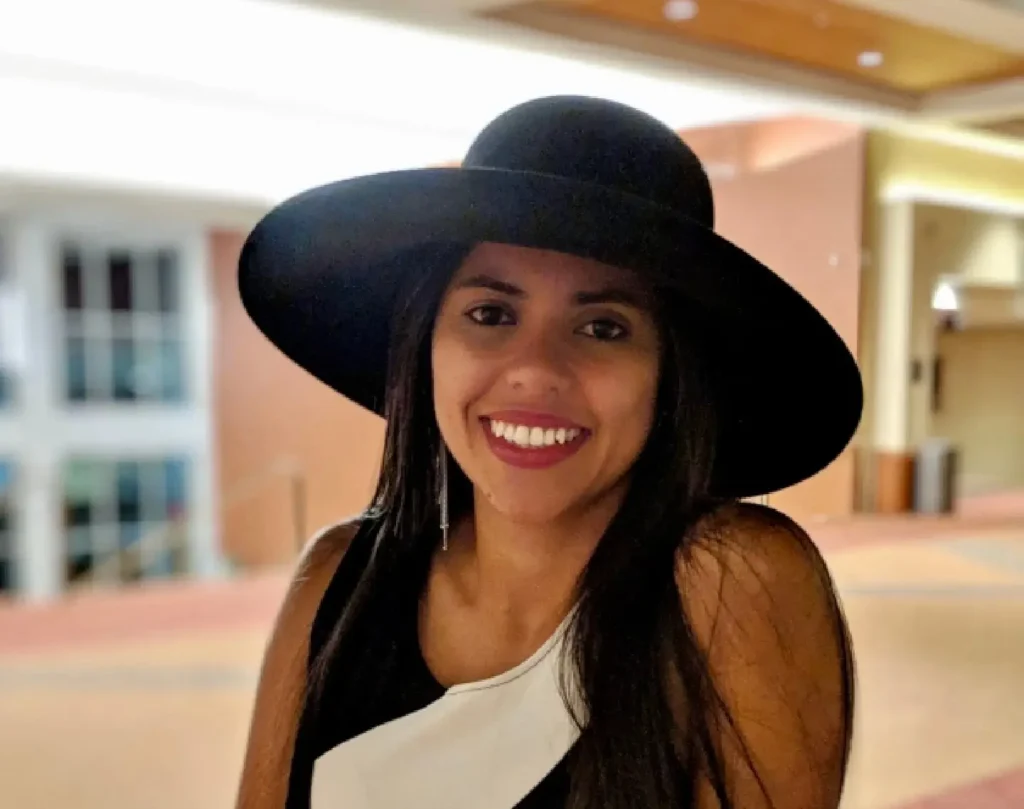
Nadya Ortiz
Nadya has many strings to her bow, but one of her most impressive achievements is that she is one of the top female chess Grandmasters in the world, despite growing up with nothing. She pursued her dream by couch surfing all over the world to be able to play in chess tournaments, improving bit by bit. She studied relentlessly and achieved the title that very few have. Since then, she has landed a top job as a software developer at Apple, and lives in Silicon Valley. She literally lives a dream life to many.