No Bullsh*t Talks · Season 1 · Episode 2
Creating A Successful Business From Linkedin Posts
With Jack Gaisford.
 Watch on YouTube
 Listen on Spotify
 Apple Podcasts
The source Episode has no valid video still. ▶
About this conversation
On Content, Creators and LinkedIn
Sabrina and Jack discuss life as a young entrepreneur and what it’s like building a business using social media at your disposal. Jack managed to grow from a young 21 year old freelancer to running his own video agency, because he posted on LinkedIn.
Find out how in this episode.
Watch
See the full video conversation.
Listen
Take the conversation with you.
 Audible
Watch the moments
that travelled.
Watch, share and continue on the original platform.
Read the full conversation.
The transcript is organised by timestamp so it can be generated from the master transcript, edited once, and published here without designing a new section every week.
Introduction+
Hi everyone, welcome to this week’s episode of No Bullsh*t Talks, and I’m so happy to be welcomed by Jack Gaisford from V21 today.
How are you guys?
I’m not too bad, thank you.
Thank you for having me on.
Very excited to be in the first season, which is notoriously known as the best season, so absolutely here we go.
Very excited to be here.
So you run a video marketing
How old are you+
Agency, and although we’ll talk about exactly what you guys do, but one of the first things I wanted to ask you is basically you’re super young, right?
How old are you?
I’m 25.
So a little bit of a baby.
Yeah, you are.
And I think I met you when you were like 22, 21 or something like that.
Yeah.
I was like, God, this guy’s so young, and I was impressed, don’t get me wrong.
But how often do you get told, okay, you’re far too young, you have no idea what you’re doing at this game?
I think it definitely was a lot at the start, but I think a lot of that was my, I guess, preconceived impression that a lot of people had of me a little bit.
It was, no, I was a young guy coming into an industry I’d never really been in before, trying to play with the big dogs straight away, trying to run before I could walk, so to speak.
And yeah, I used to get it a lot, people saying, you know, obviously you can’t be very good at what you do, you’ve literally just started, or you’re 21, how the hell?
But it’s just, and it is the truth, you just got to show people.
I could have sat there and told everybody that I was amazing, but actions speak louder than words.
Show, don’t tell.
And now, not to toot my own horn, but I’d say that I’m probably one of the biggest videographers on LinkedIn, which is pretty cool.
I’ve got a really good network behind me, especially in my area as well, sort of Southeast England, which is big up Southeast.
Yeah, I used to get it quite a lot, but not so much anymore.
I think I’m sort of getting up there in the world, which is good.
But I’m still young.
I’ve still got a long way to go, and I totally, totally appreciate that.
But that is pretty cool.
I would actually have to agree with that.
You are definitely one of the most prolific videos on my LinkedIn.
Like everything.
It makes me feel really cringe when I say that though.
Really cringe.
I feel like you’re a big part of my life every day.
I’m like, oh, there’s Jack again, another video.
But it’s a great thing.
It’s a great.
How many times have you been dismissed+
Thing, but you’ve had the chance to actually prove yourself, right?
How many times do you reckon that you’ve had people just not even give you a chance and think, oh, he’s too young?
Yeah, a hundred percent.
It’s especially within the first year and a bit, you know, coming into the industry, I didn’t have any experience.
I never worked for a company either in my life.
I worked for a camera shop when I was about 18 at uni, but came out, didn’t have a proper job, started working with my dad.
And it is just, you know, sometimes you’ve got to have people that just take a bit of a risk, let you really sort of sink your teeth into it.
If you do something wrong or if you maybe don’t do it well, at least you’ve learned a lesson.
But I think I snapped on very quickly to offer free work just for experience.
So the first year was really just doing a lot of passion stuff, a lot of stuff that I wanted to make to show what I could do.
To the point now where, you know, we’re charging pretty good money for the work that we do because it really works.
And it’s just that, I guess, sort of snowball effect.
It’s just increased and got better and better the longer I’ve been in business.
So absolutely, yeah.
Yeah, if you go into your LinkedIn and go to experience, it’s basically your company.
They’re like none.
Have your dad been more popular+
It’s like I’m guessing loads of people probably go in there but like, okay, this guy knows squat, but it just shows you that people can’t judge you.
Because if you actually look at your content, it’s brilliant, and if they gave you the chance, they’d actually get this great thing.
But yeah, I want to take this opportunity, because you mentioned your dad.
How does it feel to have your dad be more popular than you?
That is just so rude.
I just can’t believe you even said that to me.
That’s just awful.
It’s just awful.
Right, great, we’re on this conversation already.
It was only a matter of time, right?
Yeah, it’s weird.
It’s weird.
It’s always a bit awkward, especially when I meet people for the first time and they go, oh, I know your dad.
It’s like, yeah, great.
But I can’t complain.
He’s my old man.
We used to work together.
We used to do some cool stuff together.
That’s, I guess, essentially what started the business really.
You know, I used to make content for his business, Red Sprout at the time, which has now developed a lot as well.
It was me, him, and one other person.
I was guest head of content at that point.
Couldn’t work with each other for the life of us.
It just wasn’t working.
And he just said, look, go and do your own thing.
I just can’t be around you for longer.
But no, I get that all the time as well, and it is super cringe.
But yeah, I get it a lot, so thank you.
I’m sorry, but you know when you’re a kid and everyone was like, oh my God, parents are so embarrassing, and like they’re like shut up.
Like yeah, do you think he
Parents are so embarrassing+
Says that about you when you make your posts.
I don’t know, you know.
I don’t know.
I believe I was sort of having this conversation about him the other day.
It was sort of saying what’s the point where I supersede him, when people go, ah, you’re Jack’s dad.
Yeah, that makes sense.
Not far away, I don’t think, but we’ll see.
Right, tables will turn soon.
So I think you should definitely, at your next event, you should go together and then you should like split the room.
Jacks next event+
Like, who’s here for Jack?
They’re just like, see who wins.
Can you imagine?
Red side, blue side.
Who’s more popular?
That’d be pretty good.
Yeah, I’d be interested in that.
But he did do an event quite a couple of years ago called Look, I think, if I remember it.
And it was kind of everyone there was there to see Mark Gasford.
And I know it sounds a bit, you know, a bit egotistical, but yeah, I guess, you know, we’re fairly known in Kent, which is good.
But for everybody else in the world, maybe even people listening to podcasts, they’re going to think, who the bloody hell is this 25-year-old kid jumping on acting like he’s famous?
I’m not.
I’m just a general average bloke who runs a company, and I’ve just done alright for myself on social.
So, actually, you know, that’s why I like you, and I think like I saw your post.
What got no back story+
The other day about you bought a house, you made a congrats, Megan.
And I loved that post because you were just like, do you know what, got no backstory.
Just, I’m just me.
I’m a regular guy, and I’m just working my bloody ass off, and I’ve got here.
And I really appreciated that because I’m the same.
I’ve done it a bit later than you, but I am in my new house, which I finally bought.
Congrats as well.
So very, very, very, very recent and very real.
Nice, you know.
It’s just the best feeling.
But I don’t have that backstory.
I don’t have, you know, I feel like on social, that’s what people try to do.
They try to find the saddest thing about themselves.
It’s like X Factor.
That’s what it feels like.
Using pity as leverage+
I need to find anyone who’s related to me that has cancer and then put stuff about it.
Obviously, that’s the saddest thing ever, and everyone knows someone who does, and obviously my heart goes out to anyone who does and is fighting it, but it shouldn’t be a marketing ploy.
And I really hate that.
And I don’t know, I just, there’s that tone, and it’s completely…
I agree.
I completely agree.
It’s using pity as leverage a little bit sometimes, because especially on LinkedIn, you’ve got that sort of level of people where maybe they’ve got kids, maybe they’ve been through that experience themselves, so they’re going to be a bit more experienced in life than maybe the younger guys.
And there is a sense of achievement there, as there is with their own kids as well.
So, you know, when you are younger and you achieve something, a lot of people… well, let me step it back.
When you’re older, you achieve something, you almost have to, especially on LinkedIn, you’ve got to add something else to it that makes it feel more of an achievement.
And it’s kind of like, just say, just be normal.
Be human.
I only posted that because I saw a lot of people that week have pretty big achievements, and there were huge sub-stories there.
You know, being young and being homeless and not having any money, and again, that’s really sad, and that’s a horrible experience to go through.
But I’m just an average guy.
I’ve just worked my absolute ass off.
I’ve bought my first property.
I’m very happy, and I just wanted to share that with the world really.
And I think a lot of people appreciate that because it’s just very much like your business, zero BS.
You know, just real, being completely honest, and that’s what I stand behind.
Well, I thought it was great, and congratulations.
You must love being in your new home.
It’s honestly the best feeling, I think.
It’s amazing, yeah.
It’s amazing just to be able to make holes in walls that my partner doesn’t necessarily agree with, but you know, just to drill things and have a say as well.
You’re not going to lose your deposit for it at the end by a landlord.
That’s true.
Well, my landlord, the reason we moved, my landlord ended up buying a brand new Range Rover, and I was like, right, that’s where my money’s gone, so let’s get out of here and let’s find somewhere else.
So yeah, but no, it’s a big achievement.
At 25, you know, there’s a lot of my… especially my grandparents saying, you know, it’s very hard when you’re in your 20s to get on the property ladder, and it really is.
But it comes down to how hard you want that, how hard you work.
You know, some people spend a lot of money on going out and having drinks and fashion and materialistic things.
I would much rather save and invest it and get into property, and it just depends on how you spend your money.
So, well done.
That is good inspiration.
I mean, I’ve done mine.
Hard work great determination+
Several years later than you, but you know, I did do the whole buy loads of fashion stuff and go on holiday all the time.
I was very irresponsible in my 20s.
I woke up in my 30s though, and I got a little bit more sensible.
But, you know, I made it here.
But I’m so glad that you said that it is like hard work, great determination, because I’m also sick of people and like so many posts.
If you scroll through Instagram, how many posts do you see where it’s like, oh yeah, my four-hour work week?
Hashtag manifest and it will just happen.
Yeah, if you just write down a figure, 10 million pounds, it will just turn up on your doorstep the next day.
Just believe, and it will come true.
Like, oh my God, that stuff annoys me so much.
That is such a load of crap.
You have to still work your ass off.
There is no other way.
I’m sorry.
100%.
But people buy into that though.
That’s why that sort of content does so well, because the more you say it, the more believable it becomes, right?
You know, some people have some pretty bad things going on, some really serious problems in their lives that they don’t address.
And it’s just sort of, just be human.
Be yourself.
You’re going to have people that hate you, enough people that like you.
Just spend time with people that you get on with.
That’s just sort of how I’ve always done it.
Yeah, yeah, I love that.
Why LinkedIn+
So, you know, you’ve mentioned LinkedIn.
You are big on LinkedIn.
What made you choose LinkedIn for the platform to kind of promote yourself?
LinkedIn, yeah, it’s a good question because at the time, I think again I was working with Mark, and at the time there wasn’t even an option to post a video onto the platform.
There wasn’t anything like stories and polls and, you know, different types of engagements that you can put, like the likes and the loves and those sorts of things.
It was just you post a piece of content.
It was a big old job board.
But I think we saw together, you know, I can’t even put this down to myself, it was me and my dad at the time that put this together and thought there’s potential that this is going to blow up.
Because video is becoming more prominent, especially in the business world.
You know, it was quite white papers, quite bloggy at the time, but videos were starting to come out.
And it was only a matter of time until video was natively introduced.
So we just kind of went ham on it and posted a lot of content.
He started to grow very quickly, and it was at that point where I thought, actually, you can really monetize this, and you can actually capitalize on that monetization side of things.
So I sort of branched off, did my own thing, started a LinkedIn page, got my own.
I think it was, I want to say May 2018, I think I started my LinkedIn page.
So only two or three years ago, so not far off.
But I just went absolutely ham on it.
I really just tested a lot of things out.
It also gave me the opportunity to just be a bit creative and just see what happened on the platform.
At the time, Facebook and Instagram were really hard to get into, as they still are.
It was very pay-to-play.
But LinkedIn was just, you could really grow on it.
And I think that, again, I sound like I’m sort of blowing my own horn on this, but we kind of pioneered that social content sort of thing on LinkedIn.
It was going to come at some point anyway, but there was nobody doing it at all.
We looked and we looked and we looked, and there was no content on the platform, and just thought, screw it, let’s give it a go and see what happens.
And then to this day, I don’t think I’ve missed a week, unless I’ve been on holiday.
I don’t think I’ve missed a week of posting content.
That is so impressive.
Commitment+
Oh my God, that commitment in itself is just insane.
Yeah.
How much time?
Yeah, how much time, like a week, are you spending on your page?
A lot.
So yeah, we do this thing in the company now, there’s more of us now, it’s not just me.
But we do it bi-weekly.
So every second Friday is always our content day, whether that’s the boys in the team, whether that’s myself from the team.
It’s just purely our day to make content that’s fun, that we like.
And especially in the creative industry, sometimes you work on projects that, you know, aren’t necessarily fulfilling creatively.
And you have to have that as a creative.
You’ve got to have that passion that really fuels your fire to keep going sometimes.
And we use that to relight that fire a little bit, put some more kindling and kind of keep that fire burning.
So it’s a long time spent on content.
But the thing is, the ROI on that and the return that we get from that is massive.
It’s absolutely huge, and it outweighs the time that we spend on it.
But this is what makes me laugh about businesses.
They don’t see that value.
They’re purely based on instant results, instant sales, and it just doesn’t work like that, and it never has done.
I have no idea where this sort of misconception comes from, that if you post a video, you suddenly go viral and you get millions of pounds worth of business.
I’m sorry, mate, if that was to happen, everyone would be millionaires and running their own agencies.
It’s ridiculous.
But yeah, honestly, I’ve just never stopped.
Most of my business comes through LinkedIn.
We now are at the point where we’re getting a lot of referrals and stuff because we’re getting a little bit bigger as well as an agency.
But it’s just, like I said earlier, it’s just hard work, consistency, sticking at a platform for a long time.
But then, saying that, I’m not the biggest.
There are many people that are much bigger than I am on social who have done it in less time than me.
They’ve maybe figured out a different route or they’ve tapped into the right market at the right time.
It’s just experimentation, testing things out, and just going with it, you know, just enjoying it.
Because yeah, I genuinely, genuinely love doing it.
Yeah, and you can tell, and that comes.
Passion+
Across, and that’s I think super important.
Like you can, I think your passion that drives it, and I think that’s why it’s great.
And I said I noticed you because it was different.
You said you were one of the first people that did it, and that’s it.
It was a breath of fresh air to see someone like, my God, that’s actually funny.
That’s actually genius.
And it was funny because it was true as well.
It wasn’t funny because he was just doing something ridiculous.
It was funny because it’s actually factually true.
And so it was like creative but useful and actually meaningful content.
And I think that’s so difficult to do.
So how do you actually sit there and actually come up with this stuff?
And obviously not everyone’s wired to be a creative genius, but what goes through your head?
How do you sit down?
It’s such a hard question to answer because, and I know it sounds a bit weird, but most of my ideas just come when I’m just in the shower.
And I’m just sort of sitting there, not thinking about anything, washing my hair, and I go, oh my God, that’s a brilliant idea for a piece of content.
I don’t know how that works.
I’m not sure if maybe more logical thinkers have the same sort of thing or other creatives, but I get ideas when I’m not thinking about ideas.
They just come from doing things.
So your advice is take more showers, right?
Yeah, definitely.
Just spend more time thinking about nothing, basically.
That’s useful time.
But I don’t know.
I just find it’s when I’m not stressed out, when I’m not overloaded with, you know, hundreds of things in my to-do list of the day to do.
I can just sit there and go, cool, you know, let’s just have a think about some things, sort of chill out a little bit, relax, and they tend to come.
I think a lot of the time it is doing things as well as being quite proactive.
It’s sort of looking at every situation, thinking what can I make out of that situation.
Let’s say recently we’ve had a bit of, and I’m happy to be open about it, we’ve had a bit of an issue with culture in the company because we’ve grown the team, doubled it in literally three months.
There’s a lot more of us now.
But with that comes a very different approach to how you deal with people, how you manage projects, etc.
There’s company days out.
You’ve got to think about how people feel.
And I knew that was an inevitable thing to have to do when you grow a business, but again, I’m 25, and I’ve never done it before in my life.
And it kind of sprung on me.
And the guys said to me, look, you know, we’re happy, but we could be happier.
We’ve never done anything as a team.
I don’t really feel like we’re massively valued here.
And we just thought, right, let’s change it around.
And it’s content there that, again, going back to the be human, I’m happy to share because it’s showing my journey learning about business.
It’s showing the company’s progression as well in terms of culture, hiring people, expanding, growing.
And it is just not hiding that.
And some people don’t like that, and they see it as maybe, oh, you know, you’re jumping on something that, of course, people are going to like and share around because it’s businessy.
But it’s never… it’s innocently motivated.
It’s always just purely in the moment.
I think about let’s make a video around team culture, and let’s make a video around a vlog of going and doing stuff as a company.
It kind of happens in the moment a lot of the time.
And that is very hard to think of on the spot.
But yeah, and I guess it goes back to that Gary Vee mantra years ago of document, don’t create.
You know, you can think of loads of ideas just by not really having to think about things.
Just what happens in the moment.
I think that’s it.
Like you’re saying, it’s real.
The stuff that you’re documenting, it is just your real everyday business life.
And you’re just.
Authenticity+
Coming up with ways that people can learn from your experiences, and I think that’s what makes it so much easier.
Like a lot of people say, you just said you’ve not missed a week on LinkedIn.
That’s incredible.
But a lot of people say, oh you post quite a lot on LinkedIn, like how do you come up with content?
I’m like, I’m not even trying to come up with content.
I just only post when I have something to say, and then if it’s real, then it’s easy.
It just flows, and it just comes to you.
So it’s not even like you’re trying to actually create anything, so it’s actually not even effort.
So that, I think, is the difference.
But that’s the benefit of coming at it from a much more authentic point of view.
Because the problem that businesses face is when they’ve come up with these amazing strategies, which I do understand the value of and I see the importance of them.
We have one as well.
But when you’re creating things like pillars for content or different categories that we can focus on as a business, if they’re not, and this is going to sound really cheesy, but if they’re not actually in your heart and you don’t follow those in your day-to-day life, you’re going to forget them.
The beauty of being authentic about it is you’ve already kind of got those content categories.
You’ve kind of got those ways that you position yourself, and it just comes across naturally.
You don’t have to think about it.
You don’t have to be concerned that, oh crap, we haven’t got something in the conversion category.
It just comes naturally as a byproduct of just being yourself.
So that would generally be my advice, as it always has been for the last couple of years.
It is just be a bit more human on content.
You know, we miss that.
People have always bought from people, and it hasn’t changed, and it never will change.
We are emotional beings.
We build relationships.
We fall in love.
We have relationships.
It’s the same thing in business.
You’ve just got to be yourself and also have a good product or service, and then people will buy what you do.
If it’s not going to be great, that’s very true.
That’s very true.
I love that.
And you’ve mentioned the word authentic like four times, and that just rings true with me because I just believe that that is one of the most real values that you should have.
Like authenticity.
And I’m definitely one for that.
But, you know, I’ve written several posts on authenticity, and you know, I get a lot of backlash about it.
Because I think, like personally, I just think there’s a lot of phonies out there.
Like there’s a lot of people just posting because they want those vanity metrics.
Yes, they are just like, you know, waiting for that like and that comment to be like, oh my God, you’re so amazing, and then just get this big build of their ego.
It’s like I feel like they’re sitting there refreshing like, oh my God.
It’s just like, and then I said, oh how can I come up with content to make me popular?
It’s just that’s what it feels like.
And I think that it’s really obvious when stuff’s not authentic.
Like what do you think?
I mean, and I’m not going to ask you to name names, but do you have people in your industry who you think just put that sort of content out?
100%.
100%.
As there are in any industry, right?
There’s a lot for sure.
But I think it is because, and like you said, it’s now a mainstream word.
It’s a businessy jargon buzzword that people use to seem real and to seem authentic.
But actually, by saying that, it’s kind of counterintuitive and makes you just look a bit of a dick.
But it’s hard though, right?
It’s sort of like you have the people that are being real and are being authentic, and then they say that they are, and it does the opposite.
So it’s very difficult.
But I guess it just comes down to not really caring about what other people think from a personal perspective and just sort of doing what makes you happy.
You know, there’s content that I post sometimes and go, screw it, let’s just give it a go and see.
You know, it’s not any reflection of my business.
It’s purely based on myself, my own personal brand, my own opinions.
And if people don’t like that, fine.
You know, I can’t please everybody.
It’d be very boring if you could please everybody.
But I think that your attitude is so impressive at your age.
I have really patronized that.
I’m really old as well.
Am I saying this?
I’m like, God, back in my…
Attitude+
Back in my day, and I could tell you I was as white as… yeah, I feel so old saying that.
But what I mean is, what you’re saying is so true, but you have such confidence saying it.
I definitely didn’t have that confidence, like to think, okay, like screw it, I don’t care about pleasing everyone.
I was just like, well no, what if someone doesn’t like me?
What if I post this and then they’re going to be like, oh no, look what Sabrina said?
I was always a bit like that, and obviously now I don’t care as much, but it takes a lot to do that.
I mean, I don’t know if you’ve got any advice for anyone out there who’s probably thinking that every day.
Like, I don’t want to post this, do I hit send?
Because you know someone’s going to think…
I do actually.
So the biggest piece of advice I could give is think logically.
Think logically, not emotionally.
So don’t put how you feel emotionally above the benefit of what you do, or the benefit of the business, the benefit of your own life.
You know, you can spend time thinking and worrying about what will happen and sort of how, you know, maybe someone won’t like that.
Maybe Karen will complain, which she always will do anyway.
You know, focus on making stuff that… yeah, exactly.
Just focus on doing stuff that you want to do.
Think logically.
You know, what is the worst that could happen if you put that out?
Or let’s say, the thing that makes me laugh in businesses is when companies will spend months and months and months reviewing a video or making a piece of content and then not tweaking it three months later because it’s not quite perfect.
Because they’re concerned that it’s going to do this, that, and the other.
But you never know.
It’s all just wasting time thinking about ifs and buts instead of absolutes.
So my advice is be a logical thinker, don’t be an emotional thinker, which is very hard to do and it takes a bit of training.
But I think it helps when you run a company because you have to, especially in, you know, maybe some tense situations, whether you’re hiring people or, you know, making people redundant or, you know, some tough situations.
You have got to cut off the emotional side, and you’ve got to be completely logical.
You know, benefit of the business, this is what I need to do to grow.
And it can be a little bit cutthroat sometimes, but you can either spend your life worrying about what people think, or you can earn some really good money and just, you know, do what you want to do and live your own sort of life.
That’s what I would rather choose to do.
Emotion+
It’s interesting that you say it’s sometimes easier when you’re in business.
I feel like it would be harder because when you run your own business, it’s your baby, and you’re so connected to it.
So the emotion is just there.
You can’t detach yourself from it because it’s like every decision you make, you’re like, this is my baby.
It means everything to me.
Whereas I feel like if I could hire someone to write my content and make the decisions, then they’re a bit more detached.
Maybe they can be a bit more of a logical thinker in that sense.
So I don’t know, maybe that’s just me.
I feel like I’ve still got that worry in me when I do it, clearly.
Yeah, I guess.
But I guess that’s sort of like the risk factor.
Some people have a greater level of risk than others.
Some people are quite safe people and slow burners.
Some people are much more risk takers, really aggressive growth.
It depends on the sort of person.
There’s no side that is wrong or right.
It’s subjective, I guess, at the end of the day.
I am a bit of a slow burn, so I am quite a methodical thinker.
But I do remove the emotion when it comes to business a lot of the time because it is purely business.
And I know business is about people, but sometimes you have to make decisions that you can’t go on emotion.
You’ve got to make a completely logical decision.
As an example, you can’t just work with a company because you like them.
You’ve got to work with the company because they have a good product or service.
If they don’t have a good product or service, then you can’t work with them, even if you do like them, even if it is your best mate or you’ve known them since you were a kid.
It’s not going to work.
And even though that’s going to suck for both people, and you know, it might make a few people a bit upset and those sorts of things, the benefit of the business is that, well, that’s not going to grow.
And I’m investing money, which is hard to earn, into something that I want to scale.
So yeah, you’ve just got to think logically.
But it just takes a bit of training, I think.
And, you know, I’m still not quite there at the moment, but I think it’s just, you’ve got to be a little bit selfish sometimes.
I think, you know, you’ve got to do things for you a little bit.
I kind of wish people did that more often.
A lot of the time people are too busy trying to please other people.
Just do what you want to do, and it would be fine.
But, you know, you say you’ve got a little way to go, but it sounds like you.
Advice for young entrepreneurs+
Forever.
Like honestly, I can’t believe that you’re 25.
Like listening to you, I feel like you’ve had years and years of experience.
But I mean, like, let’s think about how people view business and education and stuff like that.
People pay hundreds of grand to go to, you know, to do an MBA at university.
And they believe that you must do an MBA and learn all this in order to be good at business.
But you’ve already proved that you can grow a successful company and be really good at what you do, and you haven’t done any of that formal training.
So how have you done this?
And what advice would you give to other people who can’t afford that, because it’s astronomical fees, right?
And they’re probably never ever going to pay that off.
Like I’ve actually spoken to a couple of MBA courses and asked them what percentage of people actually see an ROI on their MBA degree, and it’s disgustingly small.
So no one can really afford that.
So what advice would you give to those who are young and want to start out and do their own business?
How would you suggest that?
Yeah, I guess I can only talk from my experience, and everybody else’s would be different.
But it is, and it was taught by my dad, you’ve got to fail, and you’ve got to fail fast.
So when I find when you get older… let me start from scratch.
When you’re younger, you make a lot of mistakes, and you fail a lot because that’s how you learn things.
It’s like when a kid puts his hand on fire, he goes, oh, I’m not going to do that because it’s hot and it burns, and you’ve learned that lesson straight away.
When you get older, for some reason, you seem to really care about status, and you really care about how people view you.
Again, it goes back to perception of other people in terms of how they judge you and how they think of you.
But we are very scared to make mistakes, I find, and we don’t want to take risks because there’s fear that we’re not going to be successful and we’re going to lose that bet or it’s not going to work out in our favor.
But that’s how you learn things, and that’s how you kind of evolve as a person.
You’ve got to make mistakes.
So you’ve got to put your hand in a few more fires.
You’ve got to take a few more risks.
Chances are that a lot of those won’t work out, but you only want one to go bang.
Then you’ve kind of won in that sense.
You’ve got the big win.
But you know, I started out, I gave things a go.
I really didn’t do very well for the first year.
And it was only after doing a lot of research and being really passionate in it and spending a lot of time, again working hard, really investing time into what you want, that you progress and you learn new things and you adapt and you scale.
And you use those every day.
But you know, there’s a lot of failures on the way as well.
So I did go to uni as well.
I studied design at uni, and you know, I’ve still got a student debt now that’s going up because of the interest that you don’t pay off, which is ridiculous.
So I have that debt, and I don’t think it will ever be paid off.
But I can confidently say I didn’t learn anything at uni.
It was so outdated.
I’m very opinionated on it, but I won’t dive into that today.
But everyone that I’ve hired, I’ve never checked a CV.
I’ve never worried about what degree they’ve done.
We’ve just hired literally a guy who’s finished his first year.
I looked at his work, not his CV, and I hired him straight away because he’s a nice person, because his work is really good, and I see the progression that he could make.
I just think that’s how people should do it.
I think everyone’s got a degree now.
What makes you different is your work.
If it is your work, go and do some experience.
Do stuff for free.
But people don’t want to.
A lot of the time they’re lazy.
They just want everything to come to them on a silver plate with a silver spoon and knife.
That isn’t going to happen.
You’ve got to make it work.
You know, I’ve managed to get to where I am, which isn’t maybe where I thought it was.
I thought I’d be a little bit further on, but I guess it’s about perspective.
In 10 years’ time, I’ll look back and go, actually, I was doing quite well.
But it’s just time.
So yeah, I think fail or fail fast.
Please give things a go and just try it.
You can spend time wasting your life worrying about what will happen, what could happen, when will it happen.
Just go and do it and test it out, and then you’ll know.
You’ve got absolute fact.
You’ve got confidence, and then you can go ahead with that.
So I waffled a little bit there, but I love it though.
I love it so much.
Wisdom.
It’s true though.
I feel like, yeah.
You have to try+
That’s it.
You have to just try, otherwise you don’t know.
And you know, people always say, oh I’m not ready, I’m not ready.
You’re never ready.
You’re never ready for these things.
You just have to jump and go.
I guess it’s like, you know, how have you got to where you are now yourself?
How have you… you know, how have you got… quite a million times.
Yeah, that’s it, right?
Yeah, that’s it.
That’s just how it works.
And my path was really random.
I started off at medical school.
Like I didn’t have, you know, I didn’t expect to do this, and I kind of stumbled into it.
But like you said, you have to do what you love.
And mine always came back down to, you know, the design, the marketing, all that kind of stuff.
It was always a part of me, and it was very much always there.
And I just followed that path, and it led me here.
And it’s been a rocky road, trust me.
Like there’s been…
But the thing is, when it’s your own business, the highs are really high, but the lows are really low.
And you just have to ride those waves.
And I just think, like, if you really, really love what you do, it is just the journey.
It isn’t just like, oh my God, I can’t believe I’m here.
I mean, I’d just quit.
If you ever feel like that… and don’t get me wrong, I feel like, you know, at some point, why am I doing this kind of thing?
But then when you sit back and you think… because I’ve actually done that when things were rock bottom.
I’ve sat there and reflected and thought, what do I really, really, really want to do with my life?
And every little path I took was like, this is actually what I really want to do in my life.
I am doing it.
And so I just need to find a way.
There was nothing that I want to do more than this, so I just have to find a way to get through it.
I have, and you know, you bounce back, and you get through it, and it’s great.
And I think that if I didn’t have the passion and love for what I do, I would never have been able to get through those tough times.
I think that’s super important.
So for me, you have to love what you do.
And if you don’t, go do something else.
There are so many opportunities out there now.
Like you’re saying, everyone’s got a degree, but you don’t even need a degree.
Like you said, you don’t look at CVs.
I don’t look at CVs.
Most people don’t look at CVs.
No one cares if you’ve got a degree.
My criteria is, you know, turn up to work, be honest, do a good job, be respectful.
Just don’t be a general idiot.
You’re on the money.
And it’s just like, I don’t care if you, you know, trained at NASA or whatever, like you’re a super genius.
I honestly don’t care.
Or, you know, you’ve only worked at McDonald’s.
You’re undiscovered talent probably if you’re working at McDonald’s and I decided I want to hire you.
I don’t actually care.
So that’s the thing.
And I think that’s really important.
I think people often end up in jobs because their parents pushed them into it, or they were told this is what they were meant to do.
But it’s not really there.
If you don’t have that real passion, then you know it’s not right for you.
I completely agree.
Something else I heard is obviously your dad again, the wisest guy in the world by the sound of it.
Like, you know, listening to that, he’s obviously been a big influence on you and where you are today.
How important do you think it is to have a mentor, like someone like that you could look up to and, you know, to support?
Yeah, I think it’s a different relationship, isn’t it, family though?
Because you are also emotionally attached to that person.
A mentor is very different because it can be quite unemotional.
I’ve had a mentor before, so I’ve kind of been around that a little bit.
Again, going from my dad, it’s, you know, it’s a much more personal experience.
They genuinely, genuinely want you to do the best.
A mentor, you never really know that because sometimes you’ll be paying them a bit of cash or a charge, an hourly rate for their time.
And it’s kind of like, cool, I get that, but how emotionally invested are you in my journey and my growth?
There was a person, I won’t say his name here, but he was really helpful, and it was completely free of his time, and he just wanted me to do well.
And I think that person helped a lot because it comes from a place of generosity.
They’ve been there themselves.
They want to help educate the next generation of business owners, and I really appreciated that.
It did get me quite far.
But just having somebody else to bounce off, I think is really important.
Even if that’s maybe not necessarily in business, but even if that’s counsellors or, you know, a mentor or a family member or a friend that is genuinely there, I think is really important.
Some people don’t have those, which is horrible.
But if you can find somebody, and that’s maybe where counselling or just a mentor that you can just buy time from is important, because they will just be completely cutthroat honest.
You know, really just, this is going to work, this isn’t going to work.
Because sometimes the problem with family is that, oh, every idea you have is a great idea, and you should just go and do everything because it’s amazing.
Your nan loves it, and she wants to be part of it as well.
And it’s kind of like, I don’t know how true that is now.
Is it just pushing me to go for it and see what happens?
But I think, Jack, you’re so brilliant.
All your ideas.
That’s exactly it.
That’s how it goes.
But sometimes you need people to be like, you’re actually really wrong.
You’re completely incorrect here.
You know, and I know this because XYZ.
I’ve done this myself.
Or, you know, this is why.
You back it up with a bit of fact there.
But yeah, it’s very important.
It’s so important to talk to other people.
Because business is very lonely.
I think a lot of times people don’t talk about that a lot as well.
On the authenticity trend, it is sometimes you’re sitting there, especially when you haven’t had a great month or something’s happened, and you’re kind of sitting there, the world is on top of you, and you don’t know what to do because you’ve never faced that particular challenge at that time.
It’s very stressful, and you kind of feel like you can’t talk to people because everyone else around you just isn’t at that level.
It’s very hard.
And I think we’ve all been there in business when it’s sort of like, how the hell am I going to solve this problem?
At that point, it is important to talk to people, as it is just in general life.
If you’re facing a problem yourself, go and talk to somebody.
You know, we are social creatures.
You’ve got to get that out.
You’ve got to chat with people.
So yeah, I’d say it’s been really helpful.
But my dad’s definitely been a bit of a mentor to lean on, I think, for the last couple of years.
And I still ask some questions now.
I’ll call him up every now and then and say, do you think this is a good idea?
You know, should I do this?
Sometimes I don’t agree.
Sometimes I do agree.
But yeah, it’s nice.
He’s helped me a lot.
That’s so nice to hear.
It’s so lovely, and especially like with his family and it’s all… yeah, it’s.
Instagram vs TikTok+
Beautiful, yeah.
Oh, thank you.
I’m going to bounce back to the whole LinkedIn versus other social platforms because what I was curious about is, you know, you’ve chosen LinkedIn.
You said for the reasons why.
What are your thoughts on Instagram now and TikTok and the rise of TikTok and stuff like that?
Because, you know, Instagram has already announced that it’s going to lend its favor towards video more than static images and stuff like that.
How are you seeing brands respond to this, and what are your thoughts with video on Instagram?
Yeah, well I guess, and this ties very nicely to not putting how you feel emotionally above the benefit of a business.
So you’ve got to think very logically here, because what’s happened over the last couple years, especially since I’ve been on LinkedIn, is consumer behavior has changed very quickly.
People engage with content in a much shorter time now as well, so content is getting faster.
You’re getting a range of content called ephemeral content, which is content that lasts 24 hours, that even some people can’t be bothered to watch because it’s too long.
But the trend we’re noticing here is it’s all around convenience.
It’s convenience in engineering, it could be convenience in medical, it’s convenience in content, in social.
Convenience is essentially what sells.
So if you can get a message across or sell something in less time, you’re probably going to win.
So things like Instagram, where I think they’re focusing a lot on real content, so it’s very short-form content, and the photos, I think it’s a smart move.
Because we digest things a lot faster when it’s visual, when it’s sent to us, when we can kind of engage with that and connect with that visually, as opposed to a static image.
Same thing with TikTok.
Even though TikTok is not necessarily… I would say I haven’t seen a lot of businesses jump on that.
It’s been more influencer-type people, which is still good, but then you sort of get brand endorsements and influencer marketing there as well, which is another conversation.
I think they’re really good.
I think they’re very powerful, but you’ve just got to know how to properly use them.
The problem is that especially well-established brands tend to be run by people that aren’t that sort of generation and, for whatever reason, can’t quite click with that, which is fine.
But that’s the point in business where you’ve got to go, right, I’ve got to hire people who are actually going to challenge me now and who are going to say no to me and who are going to offer something completely different and challenge my thought process rather than be yes-men.
And go, no, you’re absolutely right, you know, you’re the company owner, this is all exactly what you want to do.
You need to have people around you that go, no, you’re actually really wrong here, and this is why.
But I think just in general, social is getting faster.
Consumption is getting faster.
It’s just the way of the world, I think.
I read something the other day about Mark Zuckerberg trying… he was saying something around completely getting rid of the mobile phone by 2025, something like that, because it’s too inconvenient.
How is lifting up your phone for a couple of seconds inconvenient?
But it’s going to get to that point where that is inconvenient, and you’re going to have it in your contact lens or the back of your head, and you can just flick it on and it’s there and everything’s in front of you.
Sounds like Black Mirror.
That’s what it sounds like, but I reckon that’s where it will go.
I reckon that’s where it will go.
Oh no, I would be horrified at that thought, actually.
That would be… I could just see people there with their holograms, like walking down the street, just with it in front of them, just like bumping into each other.
It could get to that point.
That is horrifying.
I would give it sort of 20 years, and I think everything will be constantly right there and then, in demand, right there and then, conveniently right there and then.
Even down to, I know we’re completely going off topic here, as I said I would do, even Amazon stores where you go into an Amazon store now, you don’t have to pay, you just walk out.
It’s convenient.
Oh my God, that freaks me out as well.
Yeah, they’ve got crazy Amazon Fresh stores, and it just knows what you’ve bought.
Like mad, right?
It’s crazy.
But it’s all around convenience.
It’s delaying the time for delivery, and social is exactly the same.
TikTok and Instagram, I think, are definitely leading in that space.
LinkedIn is very far behind.
You know, we were saying earlier today in the team that memes are kind of starting to become a thing on LinkedIn.
But for the Gen Z generation, millennial generation, they kind of happened.
They’re kind of done now.
But what we’re seeing is memes posted from Reddit about six months ago and now coming up onto LinkedIn, and it’s hilarious for all these people.
It’s like, what is going on here?
So Instagram and TikTok are leading the way in terms of what’s happening today, what’s happening in conversation now.
LinkedIn is very much what happened six months ago, and that’s regurgitated for likes.
So yeah, Instagram and TikTok are very powerful.
TikTok vs Canva+
You feel about the people, for example, TikTok is incredible in terms of creating your own content.
You can be a professional photographer, videographer on your phone and just edit with all these cool effects.
How does that make you feel?
Because it’s like, take for example, there’s something that’s a recurring thing in our agency.
We hate the word Canva.
Oh my God, it’s like the plague.
It’s like someone just…
And then we’ve got a client at the moment, and all the time they’re just like, okay, so can you do all our social media graphics, but can you make them all in Canva?
And I’m like, oh my God, no, I can’t.
It’s Canva.
And it’s just so annoying.
And it’s like we’ve got other people.
I remember two years ago I had a friend who’s just like, oh my God, I’m basically a graphic designer now.
And, you know, if you want to hire me, let me know because I’ve just created all this stuff.
It’s a brilliant tool called Canva.
I’m like, oh my God, right, yes, so you can take a template and you can drag and drop stuff into it, but you still have no design eye and don’t realize none of that works, and it still looks hideous.
And I feel like now there are video platforms that do the same thing.
Canva is allowing video editing, but there are platforms out there where you can see them on social media.
You just replace the text, and they’ve got stock videos, and TikTok is obviously making everyone feel like they’re a pro videographer.
How does that make you feel as someone who’s actually good at the job?
Yeah, that’s a very good question.
I have to say, I’m not nervous about it.
I’m not concerned about it.
It’s a very different level of service, right?
As it is with you guys, you know, when people work with you, there is a premium there.
There’s a level of execution that you just simply can’t do on those sort of softwares.
Those softwares are, again, I guess going back to convenience, really decreasing the barrier to entry for people, for consumers to actually participate and sort of interact with that sort of industry.
So we’re getting people that are now making content on their iPhones because the new iPhones are ridiculously high quality.
I don’t know how they fit that much tech into such a small body, but it’s all about convenience.
They can do it right there and then.
They can do it on their phone.
The thing is, there is a difference in quality when you spend time on something, when you’ve learned it for the last couple of years, you know, you’re really experienced in that industry.
And people can tell that.
And I guess it comes down to brand.
It depends on perception.
It depends on how you want people to view you or your business.
And there is a certain perception that you get when you see iPhone content or you see Canva designs.
It’s kind of like, well done, you’ve tried.
You really tried hard.
Like something an adult says when you’re a kid and you’ve done a really bad drawing.
At least you tried.
It’s the same sort of thing.
Yeah, A for effort.
That’s it.
You get an award for effort.
It’s the same kind of thing.
But it’s the same with any agency or any good service provider.
There is a quality there that costs money.
It’s a premium.
You pay for that level of service, and it will generate better results.
It’ll look better.
It’ll help you brand it better.
It’s the same sort of thing.
I’m a car guy, so I tend to use a lot of car references.
It’s like if you want to go from A to B, cool, you could get, I don’t know, a Nissan Micra, a used one.
What’s wrong with that?
My partner used to have a Nissan Micra as well.
Very offensive, but you know.
You get a Rolls-Royce that’s a million pounds.
It’s such a different experience.
It still achieves the same kind of thing.
A to B gets you to your destination, but it’s that journey again.
Going back to maybe starting your business, that journey of experiencing that, not getting to the final destination, but experiencing that service or that sort of transition.
So how do you communicate that value to your clients?
Communicating Value+
What it is really, it’s like, you know, a professional brand who respects themselves, who want the most out of it, want the best experience.
They will look for an expert, and they will listen to what they say and believe their experience.
But you know, you’ll often get someone who just goes, well, I can do that myself, or I can go to Fiverr.com and do this or whatever.
You know, you get those, and obviously those aren’t the people you want to work with.
But let’s say you get a brand who is the sort of person you want to work with, and you know maybe they’re just not educated in what good videography really means.
How do you then communicate the value that you guys bring in your creativity and your experience and your innovation?
How do you actually communicate that to them?
Value is a very hard one to sell because again it’s all around perception.
So if people… and there’s an amazing book, I can’t remember the guy’s name who wrote this, but it’s called The $100M Offers.
I want to say Alex something, but I don’t know if that’s right.
He came up with this equation called the value equation, which essentially breaks down how people actually define value and what makes that up.
And it’s really interesting.
It’s broken down by a couple of things.
One of them is the dream goal, so essentially what you’re going to be getting from that.
The second is the likelihood of achievement, so how likely it is that you’re actually going to get that result.
The negative side of value is how long is that going to take to actually achieve, so what is the delay there.
And it’s also the level of input that a person has to have.
So again, it all goes back to convenience.
If you can decrease the time that a client has to wait for that piece of content or that finished piece, the better that experience, the higher the value.
If they’ve got to spend less time on that, the higher the value, because it’s done by the experts, not the person who wants it done.
And again, if that achieves the dream outcome and the likelihood of achieving that dream outcome is massive, the value is huge as well.
I can get really technical on that, but I won’t because it’s going to be very boring for people listening.
Essentially, the nutshell version of that is you’ve got to do it yourself a lot of the time.
You’ve got to show people that you know what you’re doing.
Again, show people, don’t tell people about what you do.
Be visual as well.
The types of people that we want to be working with are visual people.
They’re not necessarily analytical.
They’re very focused on how they look, how they feel, brand perception, brand image.
And it’s good because it’s an emotional reason to purchase.
You either buy through emotion or you buy through rationality and then back it up with emotion as well.
So you’ve got to tap into that.
And I guess that’s just business learnings over the last couple of years.
But you’ve got to tap into that emotional buy.
Make people want to work with you guys, not just to fill a service, but genuinely want to work with you because they perceive you as the best.
And that’s why I’ve been personal branding for the last couple of years, because I want to show that I’m very, very, very good at what I do.
I want to show people that I’m a real person, that I’m very easy to get on with, as are the team now as well.
But you can’t tell people that.
You’ve got to show people that.
The way that we do that is, I guess, through video.
So that’s where our value comes from.
It’s through showing how we do things, the types of clients we’re working with, the stuff that we’re making, stuff that we do for ourselves, and the results that we get.
And then that is essentially the slow burn, and we just let prospects or clients just sort of sit in that a bit and do a bit of research rather than go, do you need video, get in touch.
It’s a much slower approach, but we end up working with clients that genuinely want to work with us, which is amazing.
So that is exactly where you want to be.
100%.
And when they really want to work with you as well, they show you respect, they listen to you, they value everything that you’re saying.
It’s just a way better experience for everyone.
100%.
And that’s what everybody wants, right?
They just want clients that will pay their invoices quickly.
They’ll trust them implicitly, do a good job, won’t mess them around and delay things and forget things.
It’s a two-way relationship.
But I also find that when you charge a bit of a premium to a service, people seem to be more involved.
Because there’s not necessarily more risk, but it’s more of a purchase.
There’s a real desire to work with this particular company, so they’re going to be more engaged.
We found, especially through COVID, when we lowered our prices, which is again a massive failure from my side, we found that we were getting some pretty awful clients.
That didn’t respect our time, wanted things done amazingly quickly, wanted the highest John Lewis, most professional grade of videography for 300 quid.
And I’m like, it just doesn’t work.
You get the Apple website for 50 quid on Fiverr, brilliant.
But when you respect your time, when you respect where you add value, and when you charge genuinely what you feel your value is worth, I think clients can see that.
And I think that’s what sets a lot of people apart, especially in the creative industry.
You know, it’s getting to the point where there’s a lot of people that offer the same thing.
You’ve got to really think about how you define your value, what really makes you different.
Whether that’s your speed, whether that’s your price, whether that’s how you execute things or the people there, you’ve got to figure that out.
I think for us, it is just that we show people.
I think it might be different for you as well.
We’ve just always shown people what our worth is, I guess.
So yeah, that’s how we continue to do it.
That’s great.
I love it.
I definitely want to ask you something.
Best and Worst Performing Videos+
Because I feel like you’ve got such good content.
Like you’ve been doing it for years, like you said now, and like you said you’ve been doing it every week.
I can’t believe that still.
It’s honestly incredible.
Incredible determination, and that’s impressive.
So, you know, you put a lot of content out there, and you must analyze your stats and everything.
What has been your best performing video?
What’s been the worst performing video?
Oh, that’s an awesome question, and I know this because I was actually looking earlier.
So the best piece of content I’ve ever made, that was a video, was actually the first week that I started making content on LinkedIn.
I made a video around how long it takes to make a piece of content.
It reached, I think, 1.2 million people on LinkedIn, which is crazy.
Yeah, it smashed it.
Absolutely smashed it.
25,000 likes, something ridiculous.
It was ridiculous.
But it makes me feel glum because I’ve never been able to do the same again.
It’s kind of frustrating, actually.
Honestly, it really is the definition of it.
And the worst piece… I mean, I have a lot of bad content that I post a lot of the time.
There’s not a particular piece.
But then this is the beauty of it.
I can do that because I have a team of people.
We’ve got the equipment here, so we can make those mistakes quite quickly.
But I don’t know if I can pinpoint a particular piece.
I guess I would say one that you thought was going to do really well.
You were like, guys, I’m so proud of this.
I can’t wait for this to go out, and it just bombed.
Okay, yeah, that’s a good one.
Actually, I think I know.
So during COVID, I shaved my head, and I thought it was going to go viral, and it didn’t.
It absolutely flopped.
And I thought, why have I just done that?
It was the most traumatizing week of my life, basically.
But yeah.
Oh my God, I love that stuff.
I’m sorry, I should be laughing, but that is funny.
That’s okay.
It just flopped.
It completely flopped, and I thought, brilliant, great.
How long did your hair take to grow back?
About four months.
So yeah, it took quite some time.
But that was probably it.
And I guess it just goes straight to, don’t try and make something go viral.
It’s usually pretty crap content.
I’m not going to lie.
But I made very good content at the same time.
So that’s why I like doing it.
You just get to test lots of different things, and you can really get hands-on with different styles.
And yeah, I just genuinely love what I do.
I wouldn’t change it for the world.
Ah, that’s so lovely.
I think that’s a perfect note to end on as well.
And I wanted to say thank you so much for being on today’s show.
Outro+
How can all our listeners get in touch with you?
Like website, LinkedIn obviously, but are you on any other socials?
How do we get…
Yeah, I’m on absolutely everything.
I’m even on TikTok, so please don’t go and watch it because it’s awful.
But just search Jack Gaisford, or you can check out the website v21.com.uk.
And then yeah, give us a buzz if you fancy chatting.
But LinkedIn’s probably the place to message me.
I’m always on it.
Just DM me really informally.
That’s the sort of person I am.
Really chilled out chat, and let’s just see where we go.
But I’m always… I think it’s like you kind of hand it down to people.
I had a mentor that really helped me.
Now that I know that I’ve gone through a lot of pain with video, I’m very happy to sort of share that with other people and give advice and support people there and then, as I do a lot of the time anyway.
So if you’ve got any questions, just ping me a message on LinkedIn.
Genuinely happy to help out if I can, because it makes me happy.
So yeah.
That’s so nice.
It’s been such an honor to have you here, Jack.
I’ve loved this.
I have genuinely loved this.
And it’s nice as well, sort of after the last year or so, just chatting for an hour with someone.
It’s just so… yeah.
Thanks for having me on.
Thanks so much, and thanks everyone for listening.
And we’ll be back next week with another guest.
Thank you.
Meet the guest
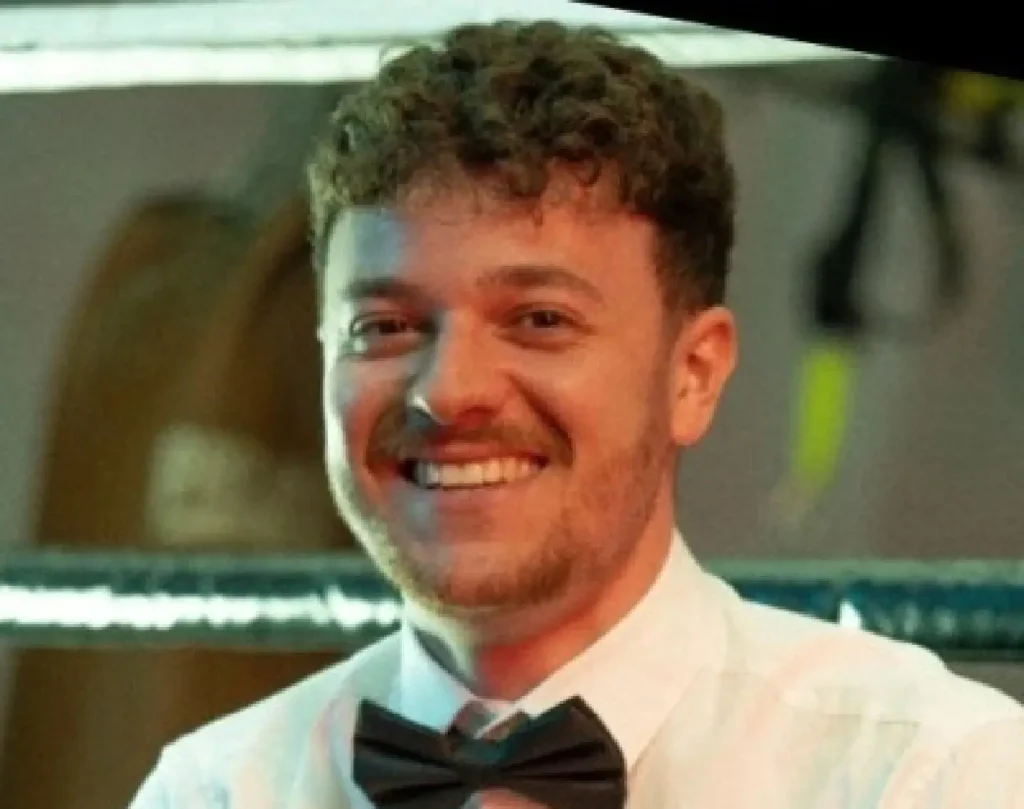
Jack Gaisford
Jack Gaisford is just 25 years old, but already owns a successful agency called V21, offering video production and video editing services. And they’re stuff is GOOD! He comes from a creative family, with his dad, Mark Gaisford, running Red Sprout Media. However, Jack did not learn everything from his dad – he’s a super driven, ambitious, young entrepreneur who is not afraid to work hard for his success. V21 continues to grow and they are working with huge brands all over the world, producing stunning video content.