No Bullsh*t Talks · Season 1 · Episode 10
Stand-Up Comedy, E-Sports Commentary And Podcasting Life
With Flobo Boyce.
 Watch on YouTube
 Listen on Spotify
 Apple Podcasts
The source Episode has no valid video still. ▶
About this conversation
On Creators, Entertainment and Film
Key takeaway: Sabrina Chevannes-Denman: Hi everyone, and welcome to this week’s episode of No Bullsh*t Talks.
Flobo Boyce is everywhere in digital entertainment!! He’s an e-sports commentator, DJ and podcaster, but also a stand-up comic and author! This guy has an insane journey and has learnt some epic lessons along the way. We explore the world of e-sports and how people can become successful nowadays on the likes of TikTok/YouTube, but also how to deal with mental health issues in a world filled with rejection.
Naturally, a great listen when you’ve got a stand-up comic on the show!
Watch
See the full video conversation.
Listen
Take the conversation with you.
 Audible
Watch the moments
that travelled.
Watch, share and continue on the original platform.
Read the full conversation.
Meet Flobo Boyce+
Sabrina Chevannes-Denman:
Hi everyone, and welcome to this week’s episode of No Bullsh*t Talks.
I’m so pleased to be joined here today with Flobo Boyce. You have like a million different job titles, right?
So you’re like a digital creative, entrepreneur, stand-up comedian.
Like, you do everything. I feel like you must get this a lot, but you’re a stand-up comedian, right? So do people just come up to you and go, “Tell us a joke?”
Flobo Boyce:
All the time, and it is fresh.
I’m not a one-liner kind of comedian. I don’t have like, “What do you get when you cross a…” So I’m not that kind of guy.
So it goes, listen, I can sit here and give you a whole premise, but then you’re kind of like, “Oh, I guess that’s cool.”
It’s kind of awkward after that.
Sabrina Chevannes-Denman:
But I always want to say, buddy, because I guess comics take like months, right? Like, you know, people don’t get how difficult it is.
And they’re just like, “There’s a joke, you’re supposed to be funny,” and then they do knock-knock jokes or whatever.
Flobo Boyce:
I’ve never gone to a plumber and been like, “Oh, you’re the plumber, can you do my taxes?”
It never happens, but for comics, all the time.
Sabrina Chevannes-Denman:
I feel like doctors get that a lot. It’s just like, “Oh, you’re a doctor, so I’ve got this problem, can you take a look?” That must be the most annoying little party trick.
Flobo Boyce:
What are you doing?
Sabrina Chevannes-Denman:
Exactly.
But how would you identify yourself? Like, if you had to pick one title of what you do, what would that be?
Live Entertainment Life+
Flobo Boyce:
Well, you know, I always like to say I’m a live entertainment professional because of the different jobs I do other than stand-up comedy.
Whether it’s hosting, whether it’s video game commentary, whether it’s DJing weddings, it’s live with people or alive in that moment.
So that’s the best way to do it. It does sound kind of bougie in that way, but I think it’s the best way to put everything in one box — live entertainment professional.
Sabrina Chevannes-Denman:
Okay.
So all those things that you mentioned are so cool. You do esports commentary and stuff, which I think is really cool, by the way.
And you’ve got to have like a good energy to do stuff like that because I find with live stuff, you have to maintain that energy.
Imagine being really hungover and tired and being like, “Yeah, so this is happening. It’s really cool.”
Flobo Boyce:
Oh yeah. Well, you’re a CEO, you know how it is.
You may spend hours working on a project, bags under your eyes, going like this: “This is the best app, you have to get it. It’s the best way you can transform your brand.”
And when it’s done, you’re like, “Oh gosh.”
Sabrina Chevannes-Denman:
I do that all the time.
And it’s like I’ve done things where I’ve had really big pitches or big meetings and I had vodka or whatever.
And I’ve been really sick and I’ve been sweating, and I’ve been vomiting before, and I go in there and I’m like, “Fine, I’m fine. So everything’s great.”
And also, as I did, she fell on the floor.
Flobo Boyce:
Amongst yourselves.
Sabrina Chevannes-Denman:
So I get it, but what you do has got to be a lot of energy as well.
So you mentioned like a million things within that whole line of commentary things. Of those ones, which is your favorite?
Flobo Boyce:
Why? Oh wow, you know, it does change every day.
Because for me, I was a comedian first. I think I still am.
But when I was basically sitting home with the rest of the world two years ago, my job became, “How can I put comedy into other things?”
So I started doing comedy podcasts or I would do reviews of shows, but I’d add a comedic element.
So I was a big podcast guy for a long time. That’s my favorite thing.
But now, I mean, esports is just blowing up, and even though I’m an old man in those areas, I like to be able to share my passion for video games or video games that I play personally to people who may not know what that is, and give it a really, really cool hype-filled, really big sport feel.
So right now, it’s that. They can change anytime — any week, any month, any day.
The Rise of E-Sports+
Sabrina Chevannes-Denman:
What do you think about that thing? I thought that video games would never become like a thing, like a career path.
Like, these guys streaming stuff on Twitch are millionaires, multi-millionaires, right?
And all that time when they were teenagers and their parents were coming in the room going, “Get off that PlayStation.”
Like, who would have thought that it would turn into this, right?
Flobo Boyce:
It blows my mind.
So I am an old man in gaming, in my 30s, which is just so sad to say.
But I come from a time where, you know, my parents scrimped and saved and got that NES Classic, and it was, “You do it when your homework’s done, one hour.”
And now there are kids who are pulled out of school and are homeschooled to be professional esports athletes, and there’s fans that travel with them.
It’s such a great time for that because I know growing up, it was like you had to play a real sport.
Now, real games are real sports, and it just blows my mind.
Here at UCLA, here in Los Angeles where I’m recording this, UCLA has put three million dollars into an esports program to use as a recruiting tool to get professional players at the collegiate level.
It’s just bananas.
Sabrina Chevannes-Denman:
I can’t actually fathom that at all. Like, I just don’t get it.
Like, I don’t even understand video gaming. I mean, I do, but I can’t imagine that you want to sit there and watch a screen for hours and hours and hours.
Like, your thumbs must bloody kill.
It’s just like, you get more injuries with your thumbs than you do with actual football.
Flobo Boyce:
It’s the sweat and working with a team and being with the communication or comms with them. “I’m going left,” or “I’m going right,” for those little shooting games. That’s where I hope it comes from.
So I understand that because I’m from that era where games were just clearly leisure.
When I commentate, I try to basically interpret what’s going on for those who may not be hardcore gamers.
So I go, “Here’s why this matters. Here’s why this person is sweating. This is a mistake for this reason,” to really get that whole casual audience.
And I think that’s really benefited me well personally in that because I get it.
I remember going to the arcade with 14 quarters, and if you were done, you were done. Go home, it’s over.
There’s no hours and hours of playing, you know?
So really cool.
Making Commentary Entertaining+
Sabrina Chevannes-Denman:
I love that.
You’ve actually made it so it’s for the masses to join in, and that’s so important, I think. That’s the same part with any of these sort of things like creators. That’s how you get more people into something, like you’re saying.
And for me, this really resonates because I used to be like a professional chess player.
Chess is one of those weird things. Did you ever try commentating on chess? Oh my God, that is like a totally different level, right?
And it’s intense. It’s complicated. It’s how do you get the masses to enjoy a game about just so, so many different things that’s going on?
Flobo Boyce:
Oh yeah.
So chess commentary is very, very unique because of the slight commentary I’ve seen. It’s intense. It’s in the moment. It’s kind of like, “We don’t do that. There is a possibility,” you know?
So it’s kind of like this whole psychological aspect of it.
So with moves in chess that maybe the players understand, but someone else may not know, it’s that with video games, it may be a gambit or some corner move that everyone knows is happening, but someone outside might not know.
I usually go for the time element. “Hey man, this happened late in the game. We have this much time to react to this.”
Or even a psychological element. “You have a plan, but now they did this move and you’ve got to ask yourself, if you’re person number two, what do you have to do to counter that?”
And those are the things that everyone gets into.
My sport is professional wrestling, so I bring professional wrestling to it. I go, “Hey look, that’s the move. How are you going to counter?”
I think that’s a lot easier to get on board with than being like, “I can’t believe you castled so late in the game. I don’t know why you, bro, that’s a mistake.”
Sabrina Chevannes-Denman:
Like, I love that. I want you to do commentary for me because so much of it, I get bored. Sorry guys, to all the people I’ve offended who are actually my friends.
Well, I think it’s so difficult. I mean, there are people who do it really, really well.
There’s also a chess commentator who I’m a big fan of. His name is Grandmaster Robert Hess. He doesn’t just do chess.com, but he also did sports commentary at university, for example.
And I think you can so tell. His voice is so great for sports commentary. I just think he does it really well in terms of the drama that goes with it and the general stuff that goes with it.
It’s less about, “Oh, and all the technical measures.” And that’s what I can’t get on board with as a layperson watching it.
Then they come on, “Bishop takes E4,” and then after this and another and all this stuff.
But like you said, it’s just not really relevant to people who are not into the game that much.
That should be chess commentary for chess players, and then there’s chess commentary for the masses. I think that’s what needs to be done.
And I talk a lot about this because chess wants to be more mainstream. I think it’s been a struggle because of how complicated it is and how technical it is.
But yeah, if you could do commentary like that and make it more generic so that everyone can understand it, I think you’ll do something.
Flobo Boyce:
What I like about chess specifically as an IRL or in-real-life game, like a player virtually versus esports, is that it’s eerily similar in structure and format.
There are camps. People have their teams. They work out like MMA fighters. People are really about their ranks.
No one goes, “Hello, I’m Joe.” They go, “I have International Grandmaster.” They’re really serious about it.
Same with little games. You have a right to protest as a supersonic legend or platinum.
People say that when they enter a contest. It’s so much fun to watch the similarities.
The worlds have gone full circle in the way we hate, you know, playing and player games.
Sabrina Chevannes-Denman:
I love that side of chess. It’s like this whole entitled thing. It’s not just like, “Haha, whatever.” You have to do things. All of them. It’s crazy.
Flobo Boyce:
Right? I love it.
I can play chess. I can’t win at chess, so I come from an area of respect.
Sabrina Chevannes-Denman:
Yeah, but you can commentate on it. I think that’s a big skill. That’s a big skill.
I’ve got to see this happen. I’m gonna make it happen somehow.
But then sometimes I’m like, with Twitch stuff and all this stuff, what do you think the future looks like with that sort of thing?
So I think it’s a strange place. Like I said, ten years ago, all those sloppy teenage sons that bet their moms were like, “Can’t believe my luck,” are now the highest-paid entertainers in the world, right?
So what do you see? Do you still see this building?
And what do you think it’s going to look like with the metaverse and all that stuff coming up now? What do you think the future is looking like?
The Future of Content Creation+
Flobo Boyce:
Again, I benefit from being an older person going back because those commentators, those Twitch streamers in their teens and twenties, are seeing this as a viable career path.
There is a dream in life to be a YouTuber for Gen Z.
And so when that happens, there are many different paths within that. You can be a commentator, you can be a content creator.
A lot of these esports teams are looking for people just to go out there and make videos and comedy pieces to get their name out as a brand.
And these brands are valuable.
In the United States, there’s a company called AEG. I think they own a couple of soccer football teams in Europe. They own the LA Lakers. They have a hockey team called the LA Kings. They own actual esports teams.
So just being able to hire people to make content for them, it’s not going anywhere.
I do think it’s cyclical. I do think there’ll be ups and downs, and maybe games can contract and new games can be released, like how Fortnite came out two years ago and really changed the game for first-person shooters.
But I think it’s pretty much here to stay.
Whereas some careers, like TV repairmen, are gone forever, now your kids can be esports commentators. That’s a viable way to make money.
Sabrina Chevannes-Denman:
I’m not gonna lie, how does a kid make money too? It’s so bizarre.
At careers day, it’s like, “I want to be a doctor. I want to be a lawyer.” But now it’s like, “No, I want to be a content creator.”
That is now a real thing. That is attractive.
Well, I think it’s better or easier to get into as well. Hardly any barrier to entry.
It’s bloody difficult to actually be good at it, obviously, and that’s what people don’t realize.
But how would you recommend someone do that as a career path?
Building an Audience Online+
Flobo Boyce:
Yeah, so you have to want it and do it consistently.
So one of the craziest things that kills anyone, and this is the podcasting thing too, is that you have to treat yourself as a network.
You can think of your favorite TV show, and if it comes on air whenever it feels like it, you’re not going to tune in.
If people know, “Tuesdays at 8:00, this is my time,” or “I’m streaming Sunday mornings at 10:51,” whatever the matter, how infrequently or how often you do it, if you do it consistently, then people come out there and support you.
And always find a niche.
One of my most popular podcasts is about professional wrestling, and it’s a show called Draped in Gold.
And I can tell you, for those who don’t know, there are literally hundreds of thousands of podcasts about wrestling worldwide.
But what our show focuses on is a very small promotion called NXT UK because no one watched British wrestling at the time.
And we’re two guys in Los Angeles commentating or recapping a show coming out of London.
Sabrina Chevannes-Denman:
I didn’t even know we had wrestling.
Flobo Boyce:
Yeah, yeah. It is like eight hours away, so it comes on at like 12:00 p.m. on a Thursday afternoon here in Los Angeles.
We’re commentating it, and so people who like that particular show look for us, and we’re the only podcast that touches the show right after it goes live on air.
We got a fan base that way.
So content creators, find the niche. Find the niche you love or else it will be work.
And if you have a schedule, make sure that schedule is followed.
Sabrina Chevannes-Denman:
I think that’s some advice that loads of people say about that. You know, consistency, consistency is always key and all that kind of stuff.
And I was just thinking about it, but it’s about the channel. I was thinking you could release a season on demand like Netflix. I think that’s funny.
At least with shows on Netflix, you have a whole season. That absolutely works too. People binge it if it’s good, you know?
Flobo Boyce:
That’s everyone. Every Monday, every month.
Sabrina Chevannes-Denman:
It’s just consistency in general anyway.
And so I love that because mine’s really new, and I’m still learning now.
But I’m quite competitive, even with myself. So I was like, right, this year I’m starting a podcast.
I packed a couple of episodes I had recorded over a year ago, which is really bad, but I finally was like, “I’m gonna launch it this year.”
I’ve decided, and I launched in January, and I’ve released an episode every week, and that’s what I’ve done so far, and I’m still going.
And I’m like, great, I’m trying to be consistent. But obviously I know it takes time to build an audience.
But you know, podcasting is one thing, but say there’s content creators in terms of influencers, YouTubers, or people on Twitch.
So other than consistency, where would you start?
Like you said, to find a niche that you enjoy, and I think that’s huge because if you don’t enjoy it, it’s quite clear you’ve got to have passion for it or it’s just not going to work.
Because a lot of people feel like they’re not good at anything. They don’t feel like they’ve got anything to give.
But I feel like everyone’s got so much to give.
Like you said, you’re in the most randomly tiny niche, but actually that worked really, really well.
So they could be the best at something so obscure, and then they can build a following.
So what would you say to those people who really want to do this and feel like they’ve got something to give, but they think they’re not good enough?
Flobo Boyce:
Everything.
So yeah, there is very much a link between content creation and self-esteem because you are the engine for whatever you do.
So if you’re not feeling yourself on any level, or even mentally healthy, you’ve got to take a break.
But I’ll give you an example. One of my friends I went to college with — or university in England — she is a realtor in Florida, and she works out of Cape Coral.
And she’s like, “I don’t know, no one really cares about me. I’m just trying to get my listings out there.”
And I go, “You are somebody who lives in Florida. Just post that.”
And you don’t really know what that niche is. Someone sees you in this warm state with these giant homes, and if I’m freezing my butt off in Chicago in the winter, I’m like, “I’m going to check this person out.”
So there’s a lot of things that you’re into, the things that make you go, “I’m kind of into it. I’m not sure if anyone’s going to be into it.” That’s what you have to lean into.
Because again, I’m a guy in my mid-30s and I talk about video games, professional wrestling, Star Trek, and all that.
These are things where I used to be embarrassed. I used to get made fun of for being interested in Archie Comics. I love Jughead Jones.
Once I leaned into that and go, “Look, this is goofy, but it makes me happy,” then it won’t feel like a job.
If you’re chasing clout and go, “I’m going to do a workout Instagram,” but you’re not working out all the time or you’re kind of like, “I like runs here and there, I’m not about that life,” it’s going to seem like, “Oh man, it’s constant.”
But when I get up now and I do the things I like, I go to bed with a good tired.
Like, you know what? That was a job well done today.
I had two shows about Star Trek, talked about esports for a day, and now I’m taking a nap.
Sabrina Chevannes-Denman:
And you never know what might just blow up in the world.
So like you just mentioned, you used to get ripped on for liking Archie Comics. I was getting picked on for being a chess player.
And now Netflix made both of them famous. I never thought I’d see the day.
You go over there, you’ve got The Queen’s Gambit. It’s still one of the biggest things.
Stand-Up Comedy & Hecklers+
Sabrina Chevannes-Denman:
The same thing as well. It’s really important.
I think you’ve got to have a lot of confidence to do stuff like this, and you know, imposter syndrome kicks in for a lot of people. It’s so real.
And you know, you go through it. I feel like being a stand-up comedian though, I think so many people think they can do it because they think they’re funny.
Like, I mean, I’ve worked with people here. I’ve worked for someone who apparently was an upcoming comedian. Didn’t think it was very funny, but you know, fine.
Well, I do feel like it’s a really tough gig, and I think people underestimate how tough it is.
But you’ve got to get there on stage, you’ve got to impress them so quickly. Your openings must be so quick, right?
Because if you bomb in the first bit, no one’s actually listening to what you say after that.
And it’s like, how do you deal with hecklers? Oh yeah, but also your preparation to get up on stage and do a set and all of that, because oh my God.
Flobo Boyce:
Well, step one, it’s absolutely terrifying.
Now, to answer the question, anyone can do stand-up, and the actual mechanics of daily life help you do it.
I think the mistake people make is thinking, “Do I want to go on stage and be funny?”
Jokes are actually secondary to doing stand-up, which is the thing I had to learn years into it.
Because my first thought was, okay, the five minutes I’m going to post are joke, joke, joke, joke, joke, make them laugh, call it a day.
What happens now is humor has shifted.
Thirty years ago, it was about jokes. Seinfeld, Jay Leno — “Hey, can you tell me your joke?”
What has happened, and a lot of it can be attributed back to the original version of The Office, right? Ricky Gervais and that kind of class, is that humor is really about people not knowing where it’s coming from. The silver screen, the background of things, what perspective.
So I would say the most important thing about being a comic now is being able to entertain how people connect with you.
So you can come out there and be absolutely awkward, not tell a joke at all, but if you have the right mannerisms or confidence, people go, “This guy’s goofy. Heck, I’m gonna know what’s he doing?”
Andy Kaufman was a legend at this before that time.
So when it comes down to that, I understand. I think it’s like being a firefighter in that way.
You can practice your jokes, you can practice your technique, your progress, your craft. You know it works.
But you have to treat the audience with respect because they can turn on you like a wild blaze of fire and totally envelop you.
And there are times rarely in my career where you bomb in the first minute, but you can work it out by saying, “Hey look, sorry, I’m doing this. I feel awkward.”
Let’s work through it. You can get the crowd back. It’s not either/or.
However, if you’re heckled and you get dunked on and you just take it and go, “Sorry,” then it’s done. That fire is totally gone.
Sabrina Chevannes-Denman:
It will miss you. It’s gone.
Flobo Boyce:
You’ve got to make sure. “Okay, you’re killing me now. What’s wrong with you?”
I think one of the coolest ways about dealing with hecklers is that you can really call them out. Like, “You’re coming to a comedy show tonight. Laugh. What’s wrong with you?”
And I just go over there, you know, this guy was doing jokes by himself to no one in particular, and everyone goes, “Okay, this guy’s being rude. Let me go back to the guy who’s a professional, who’s actually here to tell jokes,” and move on.
But yeah, it really is coming down to respecting the audience, respecting that you put the time and work in as a craftsperson, and just riding it out.
Sabrina Chevannes-Denman:
And I love that.
I feel like it’s relatability, like everything.
When I look at the comedians that I think are funny, it’s because I’m like, “That is so true.”
That’s the bit when it’s funny for me. I would laugh because it’s actually true as well.
You’re laughing about it because it’s amazing, not because I just made up some scenario and it’s quite funny.
Vulnerability & Personal Branding+
Sabrina Chevannes-Denman:
Yeah, okay, that’s funny too, but it’s relatable.
I think back to business and how I’m just gonna relate this to being a stand-up comic.
So being a business owner here, I don’t know how similar it is, but I feel like I am on display the whole time.
I am on display there for hecklers as well, for them to give me shit. Like, “Why are you good at what you do?”
Because that’s what the hecklers are doing. They’re also trying to be funny themselves, and they’re usually the insecure ones trying to put you down to kind of make themselves feel a bit more superior.
I feel the same thing in business as well. I feel like I get a lot of people who try to put me down to show me up, just want to show how much they know and prove what I’m doing wrong.
I feel like, you know, if I go out there and I write something on LinkedIn, for example, like people saying, “Oh my God, I’m amazing. This is what I achieved,” whatever. Cheers, what an achievement.
And I feel like people don’t relate to that. Like yeah, okay, that might be great.
But I get up there and I’m actually quite real, and I actually say, “Right, so actually I had a really crap week this week. This is what happened, but I learned this and I learned this and I’m gonna come back and I’m gonna beat this and I’m gonna get better.”
And a lot of people criticized me for that approach before because it made it put a bad light on my business because I was honest about where our business wasn’t doing well.
But then I would talk about what I learned from it, how I bounced back, and other people wrote to me going, “Your posts are inspiring. They really resonated with me and they helped me.”
And that’s why I do it because I know there are business owners out there who stress over things that I stress about, and they just want to know that other people are going through the same thing and that it’s okay, that on the other side there is a silver lining.
I feel like that relatability is what has helped me power through and helped me build a better personal brand and have impact.
Flobo Boyce:
Absolutely. Yeah.
The people who are most insecure about their space worry about the actual craft. Like, “Oh man, I would school her. Let me show something up in this meeting.”
And really, the people that have that experience and go, “Hey look, this is what I learned and this is how it’s applied,” it seems like perspective makes everything easier.
So when I have a problem, you go, “I wonder what Sabrina would do.”
“Hey, social media, look, I heard your speech. You said you had something similar with your business. You came out looking fabulous. How did you do it? Let me know.”
And I think that’s way more valuable. That’s a social currency you can build with your clients.
And on stage, same thing.
Hey look, I do a joke and it bombs, and early enough where I can do it, like, “Okay, you guys didn’t like that joke. Moving on.”
And people go, “Okay, he gets it. He understands that one missed. Let’s see what he has next here.”
Sabrina Chevannes-Denman:
Right? The bombs can achieve a reaction you must remember because they paid for it, right?
Not feeling like, “I was gonna crack up at this,” and you’re waiting and there’s like nothing. Like, my God.
Flobo Boyce:
What happens if I had soccer commentators follow me around, right?
Because the whole thing is, I can’t do a British accent, but I love how commentators kind of narrate everything.
Like it’s never like, “Wow, what a shot.”
It’s like, “It’s just a little bit of strike there.” They use these really weird big words to emphasize their points.
So imagine if they followed me around with my girlfriend and I missed her anniversary.
It’s like, “He totally missed it there. Astounding.”
Everyone’s like, “You missed your girlfriend’s anniversary? Boo.”
And I was like, “No wait, that wasn’t the joke. Okay, I’m sorry guys, I made it up.”
It was a weird time to bail on this joke and plead for forgiveness in the middle of a show.
Sabrina Chevannes-Denman:
And I feel like that is where you have to be really quick-witted because it’s like, okay, you could then try to spin that.
Like, “Oh, you have missed a lot…” and then have a funny comeback to make up for it.
If you’ve got that, then you could kill it. But it’s gotta be hard.
I think emotions are a big thing for me.
Okay, so for me it’s like an emotional thing, right? And everyone hates the fear of rejection. Everyone’s scared of rejection.
I can’t imagine a single person out there going, “Actually, I quite like being rejected. I could do that more.”
I don’t imagine a single person in the world ever thinking that, right?
But this fear of rejection should be able to build you up.
Like, what do you do and how do you handle it? Because I feel like it’s the same in business, right?
You know, you lose pitches. I do creative agency work, so obviously we pitch services like website design, marketing, and all that stuff.
And if they just say, “No, sorry, we’re just not interested,” or actually look at your portfolio and say, “It’s just not good enough,” that’s never gonna feel nice either.
I don’t think you’d ever get used to it.
But you must have to deal with that. Like, how do you deal with rejection?
Because I think that’s the emotional side of things that’s hard to take.
So how do you deal with the emotional side?
Flobo Boyce:
In business or on stage? Because they are different.
Sabrina Chevannes-Denman:
I think on stage.
Because for me, the on-stage thing and that quickness, I am so impressed at how comedians can do that and bounce back from it.
Because it’s like insulting you. You can always be offended. You could sit down and cry, but you have to be really quick-witted, right?
And it’s like, for me, if that’s how I feel, say a client is gonna be nasty, I could sit there and be like, “Oh my God, that’s actually really mean,” and I could sit down and cry, but I have to be really quick and professional.
So how would you do that on stage? Then maybe people can relate.
Flobo Boyce:
Absolutely.
I think my technique on stage when that happens is really to address it.
So in that particular moment, I was like, “I didn’t know you guys were all lovebirds here. You guys never messed up there? You guys never forgot a date?”
And then kind of turn that into my next bit about being in a relationship.
So understanding you messed up, acknowledging that, and then quickly pivoting into something like, “Okay guys, we’re still having a good time.”
That one missed for whatever reason, but it’s no different from being rejected professionally.
As long as they say, “Hey look, we’re going another direction,” or “Budget cuts,” those are kind of indefensible ones, right?
Kind of like, I don’t know what this direction is. I don’t know what this budget is, so I can’t really argue.
I know some people say to always ask what that is, but if you’re going to tell me it’s a different direction and don’t tell me it’s budget, then you’re not helping me with anything.
I’m not going to beg and plead because I know I have years of training and expertise. I have happy clients. I know I do hard service.
I don’t know what your direction is, but it’s corny, but bad times happen.
But when someone gives a specific, “Hey look man, we saw your stuff and it’s just not good,” and that’s happened to me recently in the DJ space because I do weddings and weddings are a little bit different than club DJs.
My mixes are really more to show what I can do.
And someone goes, “Not really feeling this.”
You know, like feeling it how or why?
I think it’s okay to have a dialogue.
Is it my song selection? Is it the mixing? Is it the fact that I respond to emails in two hours instead of six hours? Let me know what I can work on for the next client.
I think misery is small on that level. You never place the ask and how you put it in there.
And if they gave you a reason and you put off your BS detector there, you go, “Oh, this is making something up.” Then you can trust your instinct and go, “Nah.”
But if someone goes, “Hey look man, this mix was great, but this one sounded kind of distorted,” you go, “Okay, noted. Thank you so much. I appreciate your time and your candor.”
Always use the word candor because it sounds like you’re not being defensive.
You say that: “Thank you for your candor. Talk to you later.”
Sabrina Chevannes-Denman:
I like it.
Constructive criticism is great. I always want to know stuff.
We had a patch last year and I basically lost every pitch that I went to. It was really hard.
But I lost every pitch because I got advice on how to pitch and what I should be doing and how I should run my business.
I followed everything they said to do, and it just wasn’t right for me.
And then it was clear that obviously I was trying to do this, but it wasn’t comfortable.
But I always ask for feedback.
Like I said, sometimes it’s like, “No, your price is just too high.” That’s easier to say because they don’t actually give any constructive feedback.
But I actually think that real constructive criticism, even if it hurts at first, no matter what, even if it’s constructive, it still hurts.
I feel like when they go, “Actually, you know, this wasn’t that good,” I’m like, “Oh man.”
But then I’m like, “Wait, great. Let’s never let this happen again. We’re gonna work on this.”
And it’s actually so valuable.
Asking those questions gets you to the next level, I feel like, but you have to have the boldness to do that.
I don’t know, that’s not so easy to do either.
Flobo Boyce:
Absolutely.
I think also always allow yourself to be mentally injured.
Like with mental health, we go, “Okay, if I double down and do more pitches,” and it just becomes a self-fulfilling prophecy.
If someone says something and you feel hurt, take a week, two weeks, do something else.
Work yourself back as if you strained a muscle, right? Then get back into it and ramp up to it.
That way you have time to really sit and think about it and how you can apply it best for you.
Sabrina Chevannes-Denman:
I love that analogy. That is actually the best analogy I’ve heard in a long time. Honestly.
I think it’s really good.
Because I love people talking about mental health at the moment, but I think you’re right. If you injure a muscle, you’re not going to immediately go back to the gym again full on.
So why is it that if you get mentally hurt, you want to keep going for that same thing over and over again?
Because it is demoralizing.
And that’s what happened to me. I was going to these pitches, but I probably just wasn’t actually ready from the last one.
It’s like a rebound from a relationship. You’re still hurting from the last one, but people still go back into another one and it’s never going to end well.
So I feel like that’s what I did.
And I was just like, “I’m taking a break from it. A complete break.”
Reset, went back to basically being me, and we just couldn’t pitch it. So it just changed everything.
It was so crazy, but it’s true. I love the kind of break from it all. I think that’s mental.
So you think my business is exactly like stand-up comedy?
Flobo Boyce:
The same thing.
Sabrina Chevannes-Denman:
We should switch and see how it goes.
Flobo Boyce:
Oh man, you want to lose pitches before? What are we doing? I have no idea.
Sabrina Chevannes-Denman:
I’ll be mentally agile and get really big on stage. I just want one laugh. That’s it.
I’m so worried that one person laughs. I just hear a laugh and I’m like, “Yes, I’m done. Retire.”
Okay, so on that note, doing everything, you seem like you’ve got your life sorted. You seem so happy and it seems like you’ve kind of loved what you’re doing.
And that’s so important.
But how did you get here?
Like I said, you’re in your thirties and you’re commentating on computer games.
I’m guessing you didn’t go to college and go, “Right, that’s what I’m doing when I’m older.”
So yeah.
From Corporate to Creative+
Sabrina Chevannes-Denman:
What was your journey? How did you end up here?
Flobo Boyce:
Well, this could be a long story, so please correct me if it is.
When I was a teenager, I wanted to be a financial analyst. That was the teenage coming because I read this career book, and the way you make money was like, cool.
Remember, growing up in Brooklyn with immigrant parents, they’re like, “Yeah, money.”
Did it for a year. Hated it.
But my internship was at a place called Citibank, Citigroup at the time, and they put me in the media department.
They did what they call industrials, basically video packages that are just made for the bank.
Like, “Here are 10 reasons why our company is great,” one of the videos that play in the lobby when you walk in there.
And I saw the editing team, and these guys weren’t wearing suits and ties. They wore polo shirts and khakis, and they cut movies on the Avid.
I go, “Oh, I want to be a movie star, movie maker, or whatever.”
So I got to California with college first, with graduate school in California, because I wanted to be a filmmaker.
I wanted to be a video editor or film editor.
I did that for three years, got out, couldn’t find work for about two and a half years.
A friend that worked at Fox Broadcasting got me on the show. I think it’s actually bigger over there, The X Factor with Simon Cowell.
I was on that show doing the digital stuff, so I was just cutting the clips for Hulu.
Like, “Here’s what you missed last week,” that for a while.
One day, my boss was Googling me on the interwebs and found out that I wrote short stories and I published them in books on Amazon.
He goes, “Hey, look, can you write some of the copy and content for these clips?”
So now, we went to Hulu and it’s like, “Here are the top seven things you missed.”
I did that for Fox Broadcasting for about two years.
American Idol seasons 12 and 13, X Factor USA seasons two and three.
Basically, it was the place where Fifth Harmony got their start. Hey, they kicked me out there.
I was trying to make that happen.
I put my job, two college degrees, couldn’t find work, or was overqualified.
I did a lot of odd jobs.
I did groceries here. I was a living person there. I went door to door and sold hand sanitizer.
Until one day, I was DJ Messiah. I was doing it on the side.
So when my day job let me go on Thanksgiving Day.
Sabrina Chevannes-Denman:
Thanksgiving?
Flobo Boyce:
Well, they didn’t quite let me go.
I got a phone call from accounts payable saying, “Hey, how’s it going, Flobo? We want to know where to send your 401k disbursement.”
I’m like, “What?”
Like, “Oh, sorry.”
And so I called my boss, and then I got let go that way.
Sabrina Chevannes-Denman:
Oh my God, what a Thanksgiving person. That is Jesus.
Flobo Boyce:
Yeah, it happens.
Bad USA.
So I went to my closet, dusted off my old DJ deck, and I started a DJ business that day because it was November, engagement season.
I said, “Let me get some weddings here to get myself something to eat, basically.”
And so I was a DJ. I still am.
I was a DJ from 2017 November on, and that was my main day job, and it still is.
But during the week, I work as much as not many Tuesday weddings are happening.
I was always free time. It was like, “Whoa. Okay, I’ll learn my comedy here. We’ll do more stuff there.”
Got into esports. I played the game in my downtime, so I’ve been kind of based off that.
I didn’t want to be a business owner. I had no plans to be.
I grew up in a household where it was like, “Get a good job, work in a good office, wear a good tie.”
But I was basically pushed out there by corporate America, and so I was out the plane without a parachute trying to make things work.
And so why I got here today is because everything that I love, I had the time to do it.
Because I’m sitting here right now, it’s Presidents’ Day, it’s a holiday, right?
But I’m sitting here at 11:00 in the morning talking with you. If I was in an office, I couldn’t even do that.
So I am grateful.
And on days I’ve got to pay rent, those things are scary, but every other day, I’m grateful to be here, you know?
Sabrina Chevannes-Denman:
But that story is so intriguing because people always say that, you know, what kind of stories are quite interesting of how it happened.
But you took a job in a financial institution, but actually found your media career because of that job.
So it shows you that stuff happens.
But also, what I thought was enlightening was that you had what was a good ideal role as well, like, you know, writing that content and creating content for the likes of Hulu and obviously X Factor and stuff like that.
So you lost that job, but surely those contacts would have set you up for another job.
Like, how did they not set you up for another job?
That’s what I would have thought.
Like, that’s such a big position, surely, like saying, “I did this, guys. My contacts are here.”
You probably wrote it, watched it, all that stuff.
How did you not land another job with that background?
Flobo Boyce:
So this is interesting. There’s two things.
One, we’re in Los Angeles, so everyone says things to your face that doesn’t happen. Not saying people are fake. That is very cynical.
But it’s like, “Oh yeah man, I’ll keep my ear out for you.”
You have to realize, do they mean that or not?
But Fox, even back then, was going through reorganization.
So it’s going to get into the weeds of it, but Fox basically started off as a print company, The Wall Street Journal, and they had print.
It had everything else, and after everything else got cut off, this is different sections and kind of different silos.
Digital writing are like this.
The structure didn’t make any sense. No company runs like that.
So when I was working with them in 2011-12, they were trying to reorganize that because there was obviously way more money in digital than in print.
So jobs got eliminated. People were all out of work.
So my contacts were out of work themselves.
So it was kind of like the ones that really wanted to be helpful had no means to, and the ones that had their job were pretty much holding on to a life raft and being like, “Yeah man, I’ll look for a job for you. No problem.”
So that’s kind of what happened.
Sabrina Chevannes-Denman:
That makes sense, because obviously we see LA on TV all the time, right?
I’m sure that you have perceptions of London, right?
Everyone thinks that we sit around just drinking tea. I mean, I am literally drinking tea right now, so I can’t say anything.
But I guess, per se, it looks cutthroat, like Hollywood.
Like in all the movies, people save their last dollar to try and get a Greyhound to LA to start their media career.
And they just, like you said, sleep on the streets or couch-surf anywhere they can.
They do anything they can to make their way in Hollywood.
How realistic is that to what we see on TV?
Flobo Boyce:
I think that there are people that come out to LA with their last thousand or two thousand dollars and make it happen.
And I would say people from Los Angeles are really good people. They’re wholesome people.
It’s really transplants that want to come with a new persona. That’s where the fakeness of LA comes from.
But there isn’t like a soap opera main villain guy with salt-and-pepper hair in a suit looking down at you doing this.
It’s unfortunately people you meet who go, “Oh man, I love what you’re doing. We should have you on our show,” and never follow up.
So if anything, I’ve found so many people where I think this might be the opportunity, this will be the break, and it fizzles out more than anyone else ever telling me, “You’re not good enough.”
Plus, the housing market isn’t that great here.
Thankfully, I have rent control.
The average one-bedroom now is about $2,100 US for a bedroom, maybe $1,200 US.
So you have to be in a certain position to even afford to put yourself in the lottery to get yourself successful.
This is why, compared to most other cities, it’s okay to have flatmates.
I’m going, I’m trying here.
Flatmates until you’re in your 30s, 40s, until you’re married, basically.
So it gets kind of a high difficulty, but it’s not ruthless in terms of personalities that much.
It’s more like, “Oh, this is set up for me to fail financially almost every day.”
Because how do you go to an audition at 10:00 in the morning on Tuesday if you are working 9 to 6 in an office to afford the apartment you can’t afford?
Sabrina Chevannes-Denman:
I guess in some ways, then, that lifestyle forces you to kind of get into a creative entrepreneur mind.
Because if you want to make it big in Hollywood and, like I said, you want to do all these auditions, you need a flexible schedule.
You can’t just butt out and say, “I’m just going to go do that.”
I mean, I’m a big Friends fan, and everybody has watched Friends, the TV show.
I’m like a massive Friends fan. I can relate everything to Friends.
There’s an episode where Joey is obviously trying to be an actor and it’s newer, but still.
And he gets a job in Central Perk cafe.
He wants to go to this audition. He’s been left in charge, so he just closes the cafe.
He’s like, “What, guys? Okay.”
And goes to the audition, and then goes back and gets fired.
That’s how I imagined it would be.
So you’re kind of forced into entrepreneurship, surely, if you want to make a career in Hollywood.
Flobo Boyce:
And this is why it will roll into influencer stuff or content creation because they can schedule that content to release whenever they want.
So they’ll say, “Hey look, Sunday is my content day. I have a lot of kids do that Sunday.”
They go out to all these photo shoots, all these videos to cut, that and today it was like meal prep, and they roll out for the week so they can have that illusion they’re doing something while they’re at their jobs.
And that’s what makes it difficult.
Plus, you’ve got your friends and family. They throw it in your face.
“How’s it going, Hollywood? I don’t see you on TV,” right?
But I don’t mean that. It becomes an extra psychological pressure to go out there and achieve this, to be successful.
Sabrina Chevannes-Denman:
But yeah, I think that’s also the problem that you’ll find the same, I get it, probably, is your family doesn’t get it.
Like you said, you’re from an immigrant family.
Parents who came to the US probably trained you to be like, “Right, I want you to have a good education. I want you to go and be whatever kind of profession that’s got trusted money.”
What did they want you to do?
And how did they react when you decided to be a rebel and go and say, “I want to do this?”
Flobo Boyce:
The first thing was, “I want to be a filmmaker.”
And it’s funny, that was the first one because my mom, she’s from a time and place where there weren’t many opportunities for women on the islands.
It was like you be a nurse or teacher or a banker.
So Mom picked to be a nurse because it allowed her to go to Scotland to do her midwifery, as she did.
So I was like, “Oh wait, that was her way out.”
So she was like that parent, like, “I don’t know what filmmaking is, but if it gets you out and you want to do it, then go do it.”
Just to give her a bit of background, I am left-handed.
My mom is too.
When she was a kid, they tied her left hand down and forced her to write with the right hand.
So when I came out left-handed too, she was like, “Why not just be left-handed?”
Because, I don’t know if you know this.
Sabrina Chevannes-Denman:
No, I don’t know this.
Flobo Boyce:
So in some cultures, in Latin, right, the word for right, like right-handed, is Dexter.
The word for left in Latin is sinister.
Sabrina Chevannes-Denman:
A lot of people are sinister.
Flobo Boyce:
For a lot of people who are devout Catholics or devout Anglicans or Protestants, it was seen that if you write with your left hand, that is the devil’s hand in my mom’s time.
So when she was a kid, they tied her arms behind her back and they forced her to write with the right hand.
So when I came out writing left-handed, she was like, “Whatever, just do what makes you happy.”
Because I’ve been in situations where I was forced to get something in a certain way.
“I can’t understand what you want to do, but go ahead.”
My dad was not nearly as accommodating because he came up here as an engineer in the United States.
Being an engineer, he got a job with the New York City Transit Authority.
He got a good job and worked his way up through racism, through everything else.
He’s like, “I can do it, you can too.”
So as a compromise of all the ways to make a film, I had to say, “Dad, I want to be a film editor,” because they are actually using the computer to make this happen.
He could understand the computer science aspect of it, rather than me being like, “I want to be a writer,” which I really wanted to be.
I want to be a writer. I want to be a director.
But I said, “I want to be an editor,” so they could understand it.
This is because I wouldn’t have got the blessing, even though now looking back, I go, “Who needs these blessings? Am I right?”
But back then, you wanted it because I was going from Brooklyn, New York, to Los Angeles, Orange County, California.
I wanted my parents to be like, “At least, hey look, you have faith.”
You’re going to be stressful.
Sabrina Chevannes-Denman:
How do they feel now?
Do they look at you and be like, “Okay, I’m really proud. I get what you do,” or do they still not get what you do?
How does it help them feel?
Flobo Boyce:
My dad is kind of like, as long as you’re alive.
“I lived my life. I’m old and sick in my 70s now. I lived my life. As long as you can feed yourself, fine.”
He’s given up in that way.
Sabrina Chevannes-Denman:
Great, I’ll take it. I’ll take it.
Flobo Boyce:
I’ll give you a perfect example about how my mom feels.
So as I record this last week, Rocket League, which is the game I commentate on, had its first ever Black History Month special on the main Twitch channel, and I was asked to be a commentator for that.
I didn’t know it was going to be on the main channel. I thought it was going to be some side thing because, you know, Black History Month, and I say it’s kind of like it’s there, but more like, “Is it over yet?”
So anyway, I’m commentating this game, and it blew my mind.
How many people do you think tuned in to watch me commentate this video game? Just I’m curious.
Sabrina Chevannes-Denman:
I have no idea what the numbers are. I mean, it’s obviously going to be loads, otherwise you wouldn’t be telling the story.
Flobo Boyce:
On average, I’ll get like 20,000.
But yes, 30,000 people at the time came out for a specific Black History Month special.
Sabrina Chevannes-Denman:
Wow, that’s huge.
Flobo Boyce:
That’s huge because that’s way bigger than any comedy show I’ve ever done.
So I clicked it out, showed it to my mom, and she’s like, “I don’t know what’s going on here, but you sound so happy.”
I was like, “Yeah, you got me.”
Sabrina Chevannes-Denman:
Because my parents are the same.
My mom’s quite traditional. She’s like very much like, “What do people do for a living? They must be doctors.”
And this occurs as Chinese culture.
And my brothers are both doctors.
I went to medical school originally, and then dropped out because it was not for me and I went into entrepreneurship.
My parents don’t really understand what I do.
They don’t really get it.
I think for several years when I struggled, they were just like, “What is she doing?”
But then over the last couple of years, they were like, “Okay, she’s bought a flat in London. She actually seems to be doing well.”
And I went out to visit them for the weekend, and they are in Portugal at the moment.
I had some of the best weekend seeing them and spending time with them, and I was catching them up on all the stuff I’m doing.
And when I was leaving, my dad said the same thing.
He was just like, “It’s been so great spending time with you and seeing you. It’s just even better to see you so happy.”
That’s what he said to me as well.
It’s the same thing.
I don’t think they still quite understand what I do, but that was the first weekend they sat and listened about everything about what I do and listened to me explain how different it is in my industry compared to what they went through and how the times have changed and the difficulties I’m facing.
I think they sort of understood it, and they were like, “We’re just so happy to see you happy.”
And it was just so nice.
Flobo Boyce:
Yeah, it’s a weird feeling because you’re at the age now where, honestly, validation wasn’t given to me anyway.
Sabrina Chevannes-Denman:
So she’s from Malaysia, but she’s trying to hide it.
But Asian Chinese, yeah.
Flobo Boyce:
You get the same pressure to get a job? Like, the job?
Sabrina Chevannes-Denman:
Yeah, 100%.
I love the mix of cultures. I love traveling. I love understanding all that stuff, right?
Maybe it’s because I am so mixed, but I’ve got Chinese and Jamaican, but I live in England and am very British brought up as well.
So obviously, I had such a range of cultures in me.
I love finding out about people’s cultures for that reason.
But yeah, definitely did have the pressures of that.
Like, I played the piano and I played the violin and played chess. I mean, come on, baby.
But you know, the thing is, when my parents say they are very, very good parents, they’ll be there for you no matter what.
So I bet they were definitely disappointed when I decided not to get a traditional path, but they always supported me and they were always there for me.
And I feel that did quite sadden them, but they’re still always there for me, which is really nice.
But it definitely did feel weird.
It was a very strange kind of thing.
Flobo Boyce:
It’s a question that a lot of my creative friends and I, please roll with me here.
Assuming you have children or theoretical children, is there a job that they would do that would give you the same kind of like, “Are you sure you want to do that?”
Because I kind of feel like I’ve been to so many different odd jobs, unless they wanted to be a career Uber driver.
But even then, I’m like, “Well, I was like…” Yeah, I can’t even think of a job.
Sabrina Chevannes-Denman:
I mean legal jobs, because I’m gonna start the London Mafia.
Like, I don’t know, something like that.
I was like, let me watch The Sopranos with you and educate you as logo.
Yeah, but I don’t know. That’s so funny.
Influencers vs Content Creators+
Sabrina Chevannes-Denman:
We’ve been having this conversation doing what I do, I think.
So if I had a teenage daughter or something at this stage, and my teenage daughter came home to me, “Mummy, I want to be an influencer,” I don’t think I’d be that happy with it.
But depending on what type of influencer she wants to be, because there’s a difference to me between content creator and influencer in terms of how some people do it.
Content creators are freaking genius, in my opinion.
The other stuff that they have to do on a day-to-day basis, people don’t realize how much hard work goes into what they do.
It’s hard, and being that good at something.
Like I said, you’re an entertainer.
Even with the TikTok videos that people do, that’s pretty impressive what they do.
But then there’s certain influencers I don’t necessarily agree with, and they just look pretty and then essentially post a picture of something.
I guess it’s like being a model, but they didn’t even work to get that modeling career, if you see what I mean.
They just do a bunch of selfies.
The reason why I’m saying that is because I wouldn’t want my supposed daughter to grow up thinking that’s the only thing, that looks are all it’s about, that that’s all I care about.
There are some fantastic influencers online, by the way, who obviously have other angles of what they do, and they influence in other ways.
For example, there are lots of women out there now who are trying to do that body-positive stuff, and that stuff is unbelievable.
Because I know even I’ve scrolled through thinking, like, they posted this stuff and there’s always, “You’re beautiful. Oh my God.”
Okay, so you know, you don’t have to be stick-thin to be hot these days, and I really like that. That’s got an angle.
But if all you’re about is selfies with a duck face and then like, “Thank you, Barbie, three thousand dollars please,” then I’m like, yeah, you know, at least have a message.
At least have a purpose behind it.
So say you’re doing that.
But even people who do makeup tutorials, for example, they are artists.
People who sit there and show you how to do makeup, that’s art as well.
That’s a skill.
Whereas I think if you’re straight up just taking selfies and you don’t really have a higher purpose, I don’t agree with that.
I think that probably applies to any job.
If you don’t have a purpose and you’re not actually positively influencing someone to do something, I don’t think I’d be okay with that.
Which is interesting.
We’re having this conversation, and this is obviously what I deal with on a daily basis, but I don’t know.
Flobo Boyce:
It all comes with a craft, you know?
If it’s the person that is the model or doing content out there, or someone doing beauty tips and crafting things and saying, “Hey, look, I bought this. This is where it worked for me,” that’s fine.
Because you can say, “Hey, look, I employ the funnel. I know how money works. I know transition, where I know how business works.”
But you’re right.
If you’re in your room, I know I said it’s kind of ironic, this is what I’m doing, but if you’re just saying, “I’m making content,” it’s like, great, but you don’t really know the value of it because you have nothing to base it off of.
If my kid races go-karts and takes pictures of that, you can say, “Hey, look, they went out, they paid the fees or whatever, they know the time and money put into it, it could have a return.”
I think that, to me, is enough to be like, as a dad, job is done.
You get the value of it.
But I can’t imagine being in my room like, “I’m gonna do it. I’m gonna do a selfie today.”
Sabrina Chevannes-Denman:
The thing is, they must offer value to other people because millions of people follow them.
So most people are interested in that stuff.
And I think that’s my issue, is that I don’t really like any of the reality TV stuff.
In the UK, and I don’t know how it is in the US, I think it probably is the same, but the most famous people in the UK right now are reality TV stars.
Those are the most famous people in the UK.
If you asked anyone to name the top 10 celebrities, I reckon they’d all be reality TV stars pretty much, bar maybe footballers, if you asked them.
That’s what would happen, and that’s what’s huge at the moment.
Again, they got famous for being desperate to be famous, and that’s not cool, in my opinion.
As parents, we just talked about traditional families and what our parents went through.
So I can’t imagine that, even if I had millions of pounds or whatever, and I was really famous, but I got it for sleeping with David Beckham or whatever.
Back in the day, there were all these people who were desperately trying to claim fame off of sleeping with a celebrity or whatever.
I don’t think that’s cool.
That’s not cool at all.
I just think that my parents would be disappointed, I would like to think.
And I think I would be hugely disappointed in my children if that’s all they had to offer.
Obviously, there are people out there who do that, and there are people out there who just try to hunt down celebrities to get pregnant by them and stuff like that.
That is disgusting, and I just can’t ever imagine anything like that.
I think you need to actually have a skill.
And like I said, there are influencers out there who are influencers because people care about it.
So I feel like it’s not them to blame.
They are using what they’ve got given and they’re using their popularity, but it’s the people who are watching it, following it, and commenting on them who are the problem.
Flobo Boyce:
I think it’s a good balance then.
So you’re open to do whatever you want as long as you do it by something you’ve done on your own.
And so then you can learn or do on your own.
Sabrina Chevannes-Denman:
Yeah, I guess.
Flobo Boyce:
Because getting pregnant or getting someone pregnant, depending on the gender, is not really an achievement in that sphere.
But if someone decided to be like the best tap dancer in the world and then get a reality show for tap dancing, then we’re good.
Sabrina Chevannes-Denman:
That’s different.
Being the best at anything in the world, however ridiculous I might find it, is still a bloody good achievement.
I think working hard at something is honorable, regardless of what it is.
I think working hard at trying to steal someone’s firm, however, it’s not.
I draw the line.
Flobo Boyce:
This is some advice for the future.
Sabrina Chevannes-Denman:
Baby, baby, I’m on it.
By that point, I’ll put it into it.
Flobo Boyce:
It was to be a vet or something.
Sabrina Chevannes-Denman:
I think I need to ask you for some Flobo inspiration advice before I can’t leave it on that note.
How do you make it in this world?
It’s finding something to be good at and being good at that.
It’s all about different advice you could give to people who are starting out.
But there are other people who have also had this journey, and it’s not so easy.
But what if someone doesn’t necessarily have the right equipment, for example?
All you need is a cell phone, I guess, these days, people say.
But is that all you need?
How would you advise someone to build up a following?
Should it be on TikTok? Should it be on Instagram?
Where do you go these days?
Should it be a podcast?
I feel like all of it’s so time-consuming, and if you try to go on every different platform, you’re going to be so overwhelmed.
So where would you recommend people start, and how would they start?
Flobo Boyce:
So yeah, you really nailed it on the head.
To be everywhere at once is hard.
You should park your social medias in case you want to go there someday in the future. Think ahead.
But you don’t want to go everywhere because it can be too much.
A lot of times, you are by yourself.
People who can do that everywhere have achieved The Rock probably has a team of people out there posting for him wherever.
But I will say, go where you’re most comfortable.
Don’t try to chase trends.
I have just YouTube stars, just TikTok stars.
In fact, next Saturday, next Sunday, I am commentating a celebrity boxing match versus Instagram influencers against TikTok influencers.
Yeah, who decided to pick those platforms and wrap their following that way.
I kid you not, it’s true.
So they can pick and choose what works for you.
Personally, I’m not a fan of TikTok.
I just do some other things and put them on TikTok.
If you do the TikTok dancing thing, I’m more of an Instagram Reels guy myself.
If you want to do the TikTok thing, why not lean into that?
Because if you can find the following, you can find a tribe there more willing to migrate with you than you putting the same content in eight different places, hoping.
Sabrina Chevannes-Denman:
Yeah, I think so.
But how would you determine which is the right platform for you?
Some people think with TikTok, you have to dance on TikTok.
There are lots of other things to do on TikTok.
This is a common question.
Should businesses be on TikTok?
I’ve commonly seen people ask that.
I think you could still be on TikTok and offer actual good advice.
It doesn’t have to be a shuffle dance or whatever, you know?
Flobo Boyce:
Well, think of marketing.
Because I was a one-man show as well, even testing.
I do my Reels content.
I had what was called podcasting advice tips on my Instagram, @flobito, plug the plug.
I tried them on TikTok and I tried them on Instagram, and I got a lot more return engagement on Instagram.
I had a bigger following on Instagram to begin with.
So my followers essentially shared that content where I can determine with the data and go, “Okay, I’m going to lean into my content there.”
You’re right.
It’s me sitting here.
I make sure it’s at night, so it looks exactly similar with a little bit of the caption, little gimmick, and the title, and that’s it.
So there are no dances.
There’s no voiceover.
It’s me shooting straight stuff.
So don’t underestimate the power of A/B testing.
You have an Instagram post, a Twitter post, try it out two to four times a day.
I know my fans are engaged in the hours of 6:00 a.m. and 11:00 a.m. Pacific Time on Twitter and Instagram.
That’s where most of my content goes as far.
So I say don’t be afraid to experiment and see what works for you because there isn’t one answer for everyone.
And yes, this can be on TikTok.
And yes, your art project can be on WhatsApp.
You can have a Telegram group.
There are other ways to do traditional social media, which is kind of weird to say now.
But social media isn’t the only way.
In fact, I actually had a guest on my podcast, Knew Amsterdam Radio, which is my arts and culture podcast.
She did those kind of real TikTok-like content, but on Rizzle, which is the biggest TikTok of India.
TikTok is actually banned in that country.
So imagine you’re in California.
You’re doing this content on this Indian app, and that has two million followers for her.
And those two million followers are mostly Indians, of course, but they are able to follow other things.
So please go out there.
Experiment.
A/B test.
See what works for you.
Sabrina Chevannes-Denman:
Wow, I didn’t even know Rizzle existed.
Flobo, thank you so much for being such an amazing guest on today’s show.
Where can our listeners find you?
Where do you want them to hit you up?
Flobo Boyce:
Oh, well, I am all over the interwebs, flobito.com, F-L-O-B-I-T-O dot com.
It’s a personal website.
If you want to know more about the podcast I run and host, knewamsterdam.com, K-N-E-W Amsterdam dot com.
And if you want to know more about my life lessons, Graduation Day: Life Lessons from the Real World, available now on Amazon.
The story goes, when I graduated college, the person doing my commencement speech was a store manager at Walmart.
I said, “I can do better than that.”
So I went out and wrote this book, Graduation Day.
I look back on certain inspirational stories from my life and how I can apply it to my life.
Like how I went to Italy with no money in my pocket but beef jerky to make sure a wedding went well to really grow my business.
Or how I rode a motorcycle the first time and almost killed myself.
Graduation Day is available now at Amazon.
Sabrina Chevannes-Denman:
That’s the next podcast I’m gonna get you on to do because I’m going to read that book and then I’m gonna ask you all these again.
Thank you so much.
It’s been amazing.
And I’d like to thank everyone for listening today.
Go hear that Flobo and check out some of his commentary.
And I’ll definitely try and rope you into doing some chess commentary. That would be hilarious.
So as they say, watch this space for that.
Thanks everyone, and I’ll see you next week on the episode of No Bullsh*t Talks.
Meet the guest
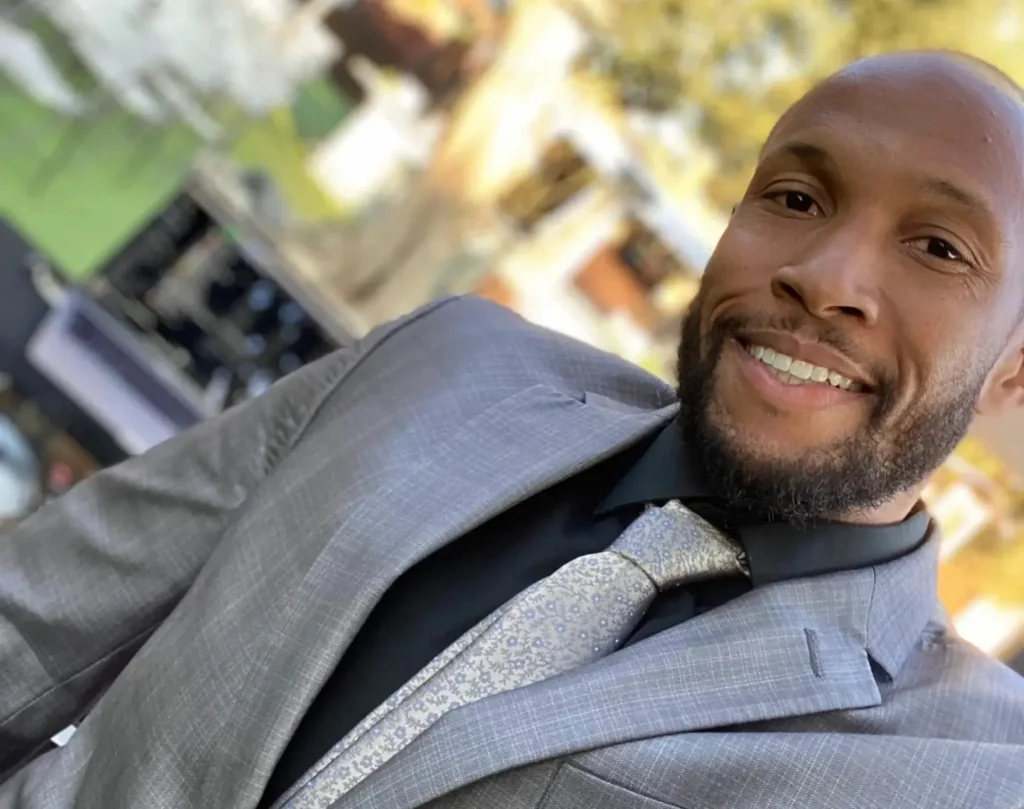
Flobo Boyce
Flobo Boyce is what is known as a digital entertainer. He is a professional e-sports commentator, and commentates regularly on professional wrestling. However, in addition to this, he’s a professional DJ and MC, plus is a stand-up comic! So, if you’re ever in need of entertainment, Flobo is your man! He runs multiple podcasts himself, including Knew Amsterdam Radio, The Cast and the Furious and Wasup Flobo. He’s also recently published a book, which is a memoir of his journey to where he is now.