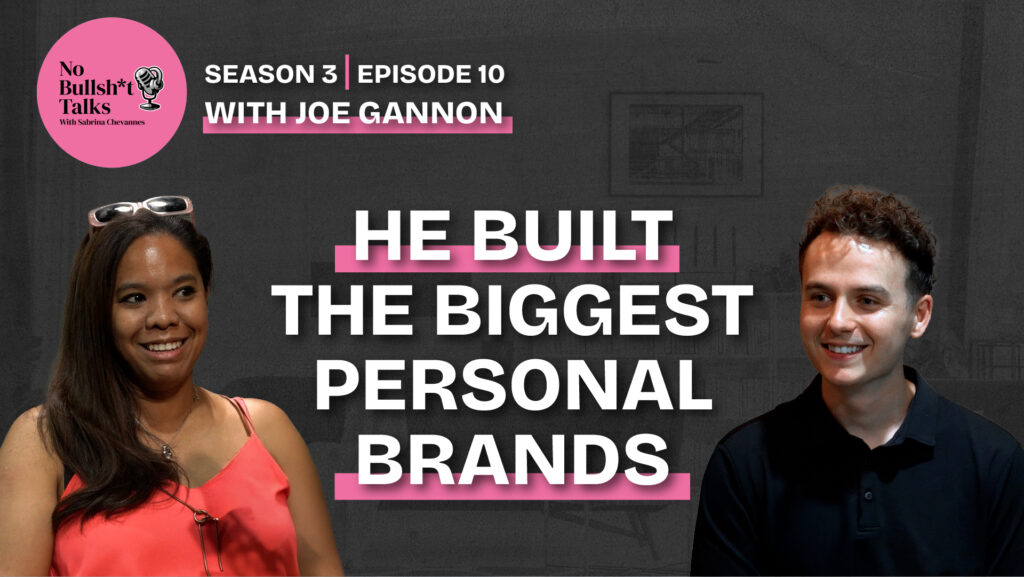
No Bullsh*t Talks · Season 2 · Episode 15
From Professional Footballer to Agency Owner
With Jidé Maduako.
 Watch on YouTube
 Listen on Spotify
 Apple Podcasts
About this conversation
On Agency and Personal Story
Key takeaway: My biggest learning from agency is that building an emotional business is one that sustains economic cycles.
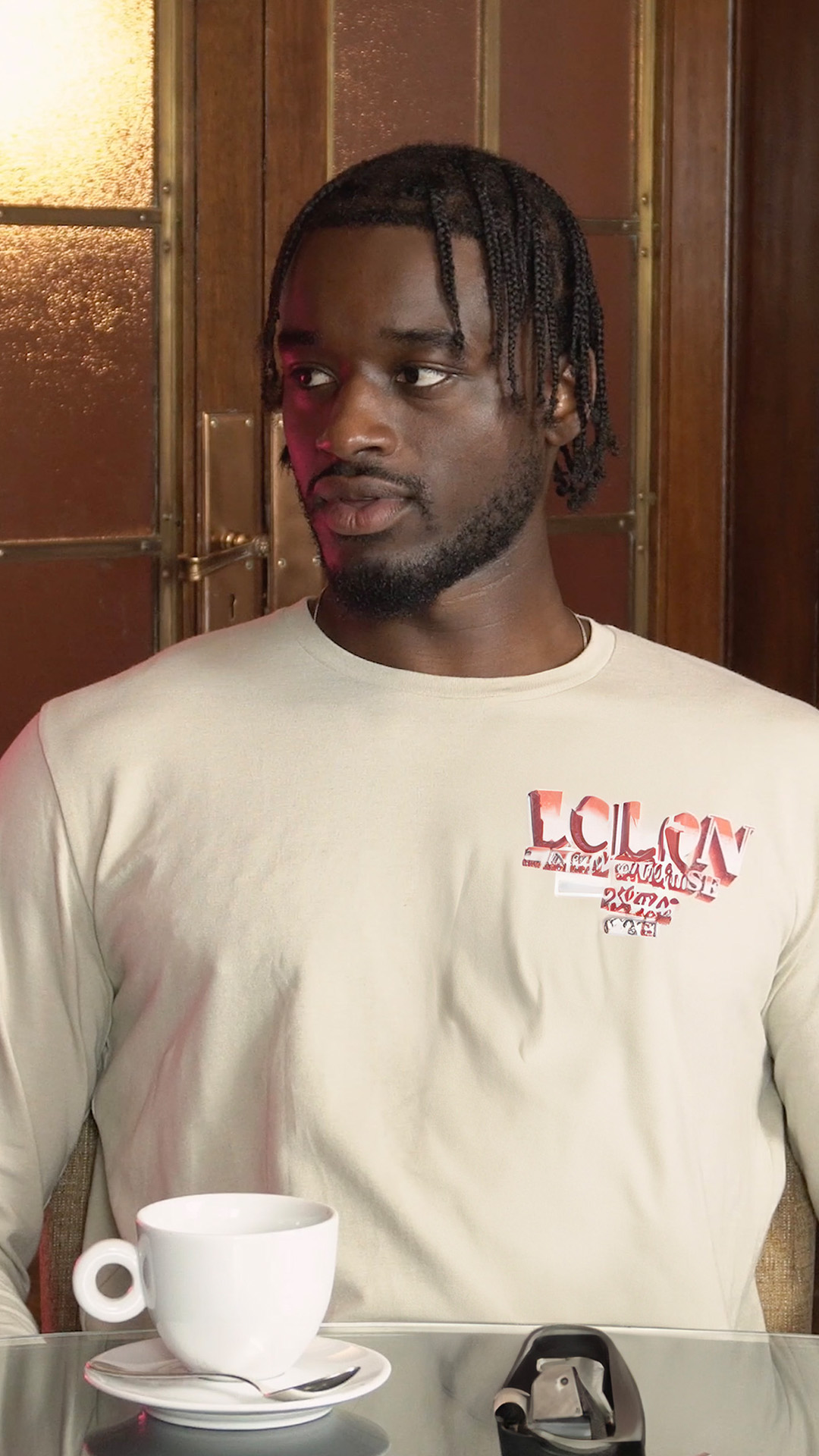
Jidé Maduako is a former professional footballer, playing for Leicester City Football Club, but now runs his own influencer agency – Yoke Network. He talks about what life was like as a professional footballer and how it felt to give up a career that he worked all his life for to start something completely different.
Find out how Jidé has created a community of thousands and is also launching his own AI!
Watch
See the full video conversation.
Listen
Take the conversation with you.
 Audible
Watch the moments
that travelled.
Watch, share and continue on the original platform.
Read the full conversation.
Trailer+
My biggest learning from agency is that building an emotional business is one that sustains economic cycles.
I’ve been through the growth of startups when interest rates were really low to now when interest rates are a little bit higher.
It’s not the highest it’s ever been, but what I’ve seen sustain throughout is that if you have an emotional resonance with a business, it will survive the cycles.
You can also get exponential gains from that because you can charge a premium.
NBST Intro+
No Bullsh*t Talks is a podcast. For entrepreneurs, by entrepreneurs.
There’s too much bullsh*t out there, especially when it comes to business.
This podcast aims to highlight what’s true and what’s not in the world of entrepreneurship, bringing you honest and raw conversations about the rollercoaster that is entrepreneurship.
Each week, my guest will be a high-performing entrepreneur sharing the ups and downs of their journey and helping you prepare for the road ahead, while providing you with actionable insights and absolute gems of knowledge.
Stay tuned as I introduce this week’s guest.
Speaker Intro+
Jidé Maduako is a former professional footballer, playing for Leicester City Football Club, but now runs his own influencer agency.
He’s an expert in short-form content, going viral frequently on TikTok too.
He’s also a TEDx speaker, but has now launched his own AI and is taking his agency in a new direction.
I present to you this week’s guest, Jidé Maduako.
Who is Jidé?+
So Jidé, welcome to No Bullsh*t Talks today.
Thank you very much.
I’m excited to bring you on because I think you’ve had a very interesting journey, one that’s pretty unorthodox, I’d say.
So you, I feel like I should let you introduce yourself first because I feel like people won’t know who you are.
So let’s have you introduce yourself.
Okay, so I’m Jidé.
On social media, I’m saintjidz.
I’m the founder of Yoke Network, which is an agency.
We’ve been going for seven years, and we’re kind of in a transition period where we’re moving the business to new pastures.
I’ve done quite a bit.
I did a TEDx Talk, obviously.
Thank you.
I travel a lot.
I make content, mentor younger people who are younger than me, and just try and give value to society, really.
But I think it’s quite interesting how you’ve actually come from a totally different path.
So you’re doing that now, and we’ll talk about your influencer agency and all that sort of stuff.
I know you don’t like to call it an agency, so we’ll also touch on that.
But you were once a professional footballer.
You actually were in the Premier League, right?
No, I wasn’t in the Premier League, but I was in a setup.
So in terms of I was in the reserve team at Leicester.
But still, that was a Premier League team, Leicester City Football Club.
You’re playing it down, but I mean like how many thousands and thousands and thousands of people out there try and get into academy, and how many tiny percent actually make it?
And you made it, and you did.
That was crazy.
Yeah.
So I got to the reserves, and I signed a pro.
So I was there for a year, and it was an interesting experience just because as soon as I signed a pro contract, I was like, yes.
I think that was where my biggest mistake was because I should have at least been thinking like, all right, now the hard work starts, not that I have made it, you know.
So it was a good experience.
Obviously, I was at Ipswich before in the academy there.
And then after going to Leicester was a good experience as well because it was a very small city, but it was a more competitive club.
And yeah, it was a good experience.
I think that’s incredible.
What you just said is so eye-opening for a lot of things.
Like you said, you saw that you’ve hit that goal, and you saw it as like, okay, great, I’ve done it.
Now I don’t need to do anything.
But you’ve just correctly realized actually that’s when the hard work starts.
Because if you don’t, then you’re not going to make the first team, and everyone else is going to overtake you.
And I think that’s the same with anything in life, especially in business.
People hit goals and milestones and think that’s it done, but actually it’s the opposite.
You’ve got to keep working.
Yeah, I think there’s a Frank Sinatra saying, which I heard from LJ on our podcast, but he says, it’s not how good you’re doing, but how long you’re doing good.
And I think that’s just something that stuck with me in terms of especially if you’re going to be in the public eye, or be in front of people, or even if you’re not, you’re in an industry that is competitive.
It’s all about how you can consistently perform well, not just one-off sporadic moments which are good.
And it’s good to have that, but even if you’re an investor, you don’t invest in like a line that’s trending up.
You don’t just invest in like a one-stop point, you know.
Yeah.
Yeah.
So yeah, that’s crazy.
I feel like you worked, I mean, you must have lived and breathed football for most of your life growing up.
Life as a professional footballer+
Like how is it to have such a huge dream that you work for that is your sole purpose, basically, you’re doing it day.
And day in and day out, to get to that level, you have to be non-stop training.
How is it to do that for one thing, get there, achieve it, and then realize, oh my God, this is not what I should be doing?
And does it feel like that was a waste, or do you feel like, well, it was something that I wanted to do, I just never got another contract?
For me, it was kind of soul-crushing because I felt like I was good enough.
I felt like I was going to work.
I did work hard, but again, in hindsight, you look back and you’re like, well, maybe I could have focused more.
Maybe I could have done other things.
But football is a game of opinions, and so is a lot of things in life.
I just felt I got to a stage where I could have continued, and I wasn’t in a position that I wanted to be in.
But I felt that there are a lot of players that go to non-league after they play, and they work their way back up.
I just felt that that was too high risk for me because I feel like I was blessed with things outside of football in terms of academically.
There was always pressure from my mom to do well, and I did perform well there.
I always had interests in business.
But in that period in my life, it was very soul-crushing, and it was a deep loss of my identity for a while.
But at the end of the day, you’re only given challenges that you can complete.
It’s a blessing because the night is darkest before the dawn.
At the end of the day, you’ve just got to kind of work through it, and that’s why I ended up doing it.
I mean, I can’t imagine working that many years for something and then it does get taken away from you.
But you’ve obviously really bounced back.
How prevalent is that in football?
I feel like you mentioned also being in the public eye.
As we’re recording this, and it’s going to come out a few weeks later, we’re in the middle of the Euros, right?
These guys are under so much scrutiny and pressure.
How much do you think that adds to what they’re doing?
Every kick of the ball is being analyzed by all the public, who none of us can play football anywhere near as well as them, and they’re all criticizing them.
How is that?
I think if you’re playing at that level, the pressure is something that you should just be used to.
Because at the end of the day, anyone that plays football to a good enough level, or is in football, knows that it’s a game of opinions.
So they shouldn’t worry about what anyone else is thinking and what anyone else is saying outside of their team and their dressing room.
Because at the end of the day, one thing I was always taught when I was playing was control the controllables.
You can only control what you’re doing.
You can only listen to your manager.
You can only support your teammates.
So I actually feel as though the personalities within the team, there’s a lot of Champions League winners, there’s a lot of Premier League winners.
Psychologically, I think they showed that yesterday, coming back and getting a win.
Their skin is very thick, and it doesn’t matter what everyone else’s opinion is.
It’s about the collective and working with your team.
There’s no pressure when you have to support the people that you’re playing with.
You know, you’ve said now a couple of times that football is a game of opinions.
What do you mean by that?
Because everyone looks at it from a different perspective, and people don’t know.
There’s a lot of asymmetric information.
There’s a lot of tactics that the coach might have said.
I’ve even seen it when there’ll be a dressing room and the coach will say, this is what we’re doing.
If anyone else says otherwise, then play into it, but we know that this is our game plan.
You don’t know what’s being said in the dressing room.
You don’t know what’s going on behind the scenes.
Also, people have different styles.
Because it’s such a big sport, it’s a global sport.
There’s so many different styles and tastes.
People will give their opinion on something based on their own style, their own experience, and stuff.
So it’s just a game of opinions, which it really is.
I guess that’s why that All or Nothing series is really popular because it’s the only time you actually get real insight into what happens in the dressing room, right?
Yeah.
But I think what you’ve just described is not just in football.
I think it’s in everything, right?
Running a profitable business+
People have an opinion on everything, and we’re seeing this in business at the moment.
This podcast is for entrepreneurs.
Most people tuning in are generally going to be entrepreneurs, and there is so much content online about how you should run a business and people telling them their advice on what it is.
If someone does something different, it’s like, no, but so-and-so says this.
Whoever has built themselves up to be an authority figure kind of gets to dictate how things should be.
So it seems to be like this is the case across everything.
You guys are very much in the influencer world.
How prevalent is this in what you do?
To be honest, it’s part of the reason why I kind of don’t like it.
In terms of running an agency and speaking towards clients, the way that we look at things is completely different.
We have our own data that we’ve built up.
We’ve got our formulas and hypotheses on how to execute content.
What happens within a lot of businesses is that you’ll sell into a CMO, and then the social media manager will have a different taste.
But the CMO has KPIs and objectives that they’ve discussed with the CEO in terms of the direction that they want to take the business or the brand.
But in terms of a platform like TikTok or Instagram, you need to optimize content that’s going to work.
A lot of it is too fragmented, which is why I don’t like doing the agency side and why I’m moving away from it.
I just think that it is, again, a game of opinion.
The barrier to entry now for content is so low that anyone can kind of perceive themselves to be an expert.
What happens is that the actual business model of it, you’re kind of fighting for lower margin, lower margin.
When I think if you’re really good at it, then what you’re going to do is go out and build a brand with the ideas that you have, or build products and build a community, which is why I focus on that.
I think a lot of people are now.
Obviously, I’m also in the agency world, and I’ve migrated away from agency life to my own community.
I see a lot of people now doing that because I think there’s definitely a fundamental flaw with the way that agencies are run and the lack of respect that the creative sector gets in general.
Like you said, there’s a massively low barrier to entry now thanks to AI tools and thanks to all this other rising technology.
So many people think they can create good content, but actually all they’re doing is creating generic content that everyone else is doing.
To other people, it looks okay, and they’re so hung up on vanity metrics, which again can be forged.
I think there’s this delusion with lots of people.
Like you said, there’s often a disjoint between the CMO and the social media team.
We have that as an agency all the time.
Someone in the team will love our work, and then they’ll put it to someone else higher up and they don’t like it.
Agencies just get disrespected.
Then they say, actually, why are we paying this agency so much money?
You could just do it in-house for half the price.
I think there’s a problem.
The thing about it is I don’t actually blame a lot of the businesses for that.
In terms of doing it in-house and hiring somebody, the goal of a business is to maximize profit.
What you want to do, especially in this economic climate, is be as efficient with your capital as possible.
But for me, being on the receiving end of that, I feel like because I’ve operated a business for nearly seven years now, I feel like I can compete and I can fight and build my own.
Also, what we kind of get caught up with a lot, especially with creators and influencers and stuff, is that that’s actually just one distribution channel.
There are actually so many distribution channels.
That’s why I think businesses, sometimes if it doesn’t work, can rely on something like Facebook ads.
You can rely on something like newsletters.
Even if you go back to leaflets, all this stuff can convert depending on the business.
It’s just about if there’s something that you believe that you’re an expert in, which I know I’m an expert in, in terms of short-form content, building communities, growing pages, and things organically, I’m just doing that for myself.
That’s how I feel.
Would you recommend that to other people as well?
Because a question that I get asked a lot at the moment is..
Should you go agency or freelance in 2024?+
How do I start an agency?
Should I be starting an agency. You know, I’ve been running my agency for 11 years.
It’s a long time, right?
Even before that, I was a freelancer for another five years.
Every day, I think I should just be going back to doing it myself.
Parts of me definitely regret starting an agency and wish that I had done things differently.
I guess if I had to start all over again from scratch now, the question is, would you start an agency?
What would you say to those out there who are in that position, who are not sure, or maybe they’re running an agency but they’re not sure whether to pack it in?
What would you think?
I think, yeah, you can start an agency.
It’s just in terms of what you’re arbitraging because that’s what an agency is.
It’s an arbitrage business, and it’s an asymmetric business where if you have more knowledge in one sector, then you can do it in a more efficient way.
I think that there are still massive opportunities for agencies.
It just depends on what for.
I think for content creation, it’s a race to the bottom in terms of profits because it’s such a low barrier to entry.
But then there are other sectors.
If you were to do an AI agency where you’re building models for businesses, then that’s an opportunity.
Even other sectors of the market.
You can even do a social media agency, but in more traditional sectors that aren’t as shiny.
I know somebody who’s absolutely killing it helping doctors.
What I think, and where the market is going now, is that there are a lot of businesses becoming more efficient and smaller.
What’s actually happening is that the bigger businesses, because of AI and because of content, are building out their walled garden and working very efficiently within that.
Outside of that, there are a lot of smaller businesses that are doing one to five million a year that don’t have a massive team.
They don’t want to overhire.
They’re the ones that will leverage agencies.
The only thing about that is that it isn’t as consistent because they’re always looking for efficient ways.
I think there are massive opportunities to start an agency, and I would say try it if you see an opportunity.
But the business model of an agency is that you either grow it and bundle services to scale out, or you grow it to sell it into a more walled garden.
By doing that, that’s how you kind of achieve what you want to achieve and obviously get the profits from it.
So that’s what I would say.
So you’re moving away from the agency world, you said.
What are you focusing on now?
Building digital products & communities+
I’m focusing on building products that can have a cultural impact and that are around communities.
The reason why is because I feel that my biggest learning from agency is that building an emotional business is one that sustains economic cycles.
We’ve been through, like I’ve been through, the growth of startups when interest rates were really low to now when interest rates are a little bit higher.
It’s not the highest it’s ever been, but people are a lot more conservative with their cash, and businesses are about efficiency.
What I’ve seen sustain throughout is that if you have an emotional resonance with a business, it will survive the cycles.
You can also get exponential gains from that because you can charge a premium.
Obviously, every product always has to have value, but it gives you a lot more of a barrier to entry and a sustainable business that you’re running.
I saw it the other day.
Earlier in the year, because I’ve always loved Nike since I was a kid, I was doing some running when I was on holiday, and then my trainers snapped.
These were nearly £300 running trainers, so I was fuming.
But I was like, it’s cool, I’m just going to speak to Nike when I go back.
When I got back to London, I was in the Nike store.
I was like, yeah, I need to get a refund anyway, or I need to at least get an exchange.
I had a lot more patience with them because I said to them, look, it’s not that I’m not going to wear them no matter what, but just don’t take the piss.
It’s because you have that relationship with the brand.
I think what you’re seeing a lot now is that building communities online and then taking them out in person is something that is strong.
I think people are sick of being online and not getting a lot of value.
They’re sick of being served things that are inauthentic.
There’s a lack of trust with the government, and there’s a lack of trust with even actual traditional influencers.
People who appear to have a perfect life.
What you’re seeing now is that everybody wants to connect.
They want to feel.
They want to be surrounded by people that are like-minded.
That’s how you can actually be more powerful.
So that combined with building products, creating content, and building products is what I’m focused on.
Yeah, I mean, what you’ve said about the brand loyalty there is so important because that’s it.
Nike have amazing brand loyalty.
When you think of Nike, you think quality, you think high performance.
You don’t think the trainers are going to snap in half.
That’s unheard of.
So when that happens, you’re not going to think these people are crap and I’m never going to buy from them again.
You’re going to think that’s an anomaly, something went wrong there.
Presumably they fixed it and they gave you…
Well, it was a bit long because there’s something in terms of the way that they communicate with their stores and their online systems.
There’s a disconnect.
Yeah, a disconnect.
So it got resolved?
Okay.
Again, I love Nike.
But at the same time, for me, I feel like creating content that’s of value, helping and inspiring people, and I think now I’m at a stage in my life where I’m turning 30 this year and I want to invest myself in my life’s work.
I want to every single day be focused on something that is authentic to myself.
I feel like there’s a low yield on my ideas by just saying them through an agency.
I feel like you get a lot of creative freedom.
You get to attract people that think like you by creating content.
The only sustainable way to create content is to obviously do it at a profit and do it in a business way, or else it’s not going to be sustainable.
That’s why attaching a business to something that is truly of value to yourself and your core principles will mean that I’ll never work a day in my life.
Well, let’s talk about that because I think there’s a lot of people out there who would love to be a content creator full-time.
Life as a content creator+
I know that lots of people talk about it, but they don’t realize how hard it is.
We were just chatting before this about how hard it is for me to do all this camera stuff myself and things are going wrong.
You had to give me a memory card.
People don’t talk about those things that go wrong, but there’s a lot to think about.
You were just saying you’re walking around with all this gear on you all the time.
It’s a mindset as well.
I always talk about being in a content mindset.
You can’t just be free and in the moment as a content creator, I think.
I think it does take away a little bit of that.
That’s what I’ve noticed anyway.
I feel like you’re always thinking, oh, there’s great content, got to go capture it, instead of just living in that moment.
I think it’s a lot harder than people think.
I’d love to just explore some of that because, for example, this podcast, I love doing this podcast.
At the moment, it’s not monetized.
At some point, I’m going to have to monetize it.
The amount of time and effort I spend on this, and money that I actually invest in it, it can’t just go unmonetized.
Otherwise, I’m just going to go broke eventually.
A lot of people are out there creating content, whether that’s on TikTok, Instagram, blogs, newsletters, YouTube, whatever it is.
How does one go from just creating content for the sake of it and becoming a full-time paid content creator?
Like I said, value to yourself and your audience.
The first is to start creating content around something that you actually love and would do without getting paid for.
You have to be able to make content around stuff that you genuinely love and would do without getting paid for.
You said you’d never work a day in your life.
That’s what you meant, right?
Right.
Because being a content creator is literally starting a business, and it’s hard.
When I say it’s hard, I mean it’s because there are so many different variables that go into it.
But over time, if you work on each of these variables, it compounds in a way that makes it look easy.
I’ve always thought about making content, but I didn’t for a while.
I started to make content about stuff that I actually do, like a lifestyle that I actually live.
I travel a lot, and I’m always outdoors doing something.
I’m either trying to work for Hyrox or do something related to fitness goals, or I’m outdoors exploring.
I found that I love going to places that people haven’t been to, different parts of the world, and actually experiencing culture and being around people.
I realized that this is stuff that I’ve always kind of captured.
After that, I started to make more content about it.
Because I actually deeply cared about it, you can hear that through the storytelling I do.
So that’s number one.
Find something that you love.
Number two is, you can’t give a sh*t about what anyone thinks.
That’s the truth.
Because actually being a content creator, the only time you get to a point where you can probably make the best content that you’re capable of is when you don’t really give a sh*t about anyone’s opinion.
When I first started making content, a lot of my friends took the mick out of me.
You feel kind of this shame as well because you’re exposing yourself.
You’re exposing your life.
It also feels like a distraction because you have your core business, then you have your real-life hobbies, but then you’re making content.
It’s like, what?
You have no followers.
You’re not speaking to anyone.
That’s why you need to actually do something that you love because then you’ll never feel shame in doing something that you love and that you’re immersing yourself in.
That’s number two.
You shouldn’t really give a sh*t about what anyone says.
Especially because as you start to gain an audience and you hit new audiences, you get negative comments and other people’s opinions.
If you don’t care about anyone’s opinion, then it actually helps you.
When you see negative comments, I actually like negative comments.
Yeah?
Because it means one of two things.
One, it means that my content has split opinion and it’s actually driven emotion.
Two, it means that the algorithm is pushing me to a new audience.
That means there’s an opportunity for me to grow and connect with more people.
Yeah, that’s a big reframe.
I like that.
I mean, I get a lot of negativity, and I get that’s what it means, but I don’t necessarily like it.
It’s still hard to take, depending on what people say, obviously.
Negative comments are always going to happen.
There’s a song where Dave says, “If you ain’t got hate, you ain’t popping.”
It’s like if you’re doing something right, people are talking negatively about you.
The game of content is also relevancy and attracting attention.
For part of content creation, there’s an element of just attracting attention.
With attention comes opinions.
Then also with our content, the final thing, because the first two are more or less psychological and mental, the last thing that you should focus on is the execution.
If you do step one, which is do something that you love, and step two, which is not give a sh*t about what anyone has to say, then when you actually get to stage three, which is making the content, it’s a lot easier.
You’re in a frame of mind and you have the time to actually do it well.
That’s when, with this part, you have to work on audio.
You have to work on the cameras that you’re going to use.
I’d say just start with a phone because the iPhone is at a stage where it’s unbelievable for what it can capture, and it’s also the most cost-effective.
Then start researching different content styles.
Look at some of the creators that inspire you in your category and also outside your category.
Look at the content that resonates with you most.
What are they saying?
What are they talking about?
What do their best-performing posts look like?
Then you’ve got to steal like an artist, take inspiration, and start to make content.
Even if you’re getting a couple hundred views, most people can’t even talk in front of 20 people.
If you’re getting 100 views, then that means you’re talking in front of more people than most people would ever speak in front of.
So start.
Then just be consistent.
By doing that, you should be on your way.
But that’s a long way of saying the MrBeast saying, which is, make 100 videos.
Yeah, I mean that’s it, right?
Just start.
That’s basically what it is.
I think you also mentioned Steal Like an Artist, which is a great book.
I’m going to recommend that to other people because that’s exactly what you should be doing.
No one created anything from scratch.
You’re essentially stealing it and making it yourself.
Which is why I think that whole “steal my trend” came about, which I don’t like.
But you are trying to take inspiration from other people, right?
Yeah.
I think just get out there and do it.
I put off this podcast for two years because I was so worried about making it look great.
You naturally compare yourself to people like Steven Bartlett, and you think you’ve got to look as perfect as that.
But I don’t have Steven Bartlett’s crew and the budget to be able to develop these videos.
I think just doing it yourself.
Like I said, I love these conversations.
I love doing this.
So it doesn’t feel like a chore.
I totally resonate with what you said about how if you’re running your business, this is a distraction from the business.
I’m about to start a YouTube channel, and I still feel like I keep putting that off as well because I’m like, well, it’s not going to make me money.
It’s taking time away from my business.
How do you justify that?
If people are there now and want to create content, I think the biggest..
Tips for content creators+
excuse that everyone has, and I say the word excuse very lightly, the biggest reason everyone has is that they don’t have time, or they feel like they don’t know what they’re doing.
They just do it.
But time, how much time should we be dedicating if you’re running an agency, running a business, or you’ve got a full-time job?
What is realistically enough?
Don’t be like, “Oh, you can spend a couple of hours a week.”
Is that worth it?
That would be a lie.
It just depends on your format, though.
For me, because I have a storytelling format and I actually want every word that I say to be of value, it takes me a lot longer to make content.
I don’t push out content at that much volume.
But then there are other people who have more podcast formats, which they can record in one hour and they’ve got content for a month.
It really depends on the format.
For me, some of my videos take like eight hours to make.
But that kind of works for me because I know that my videos and my content stand the test of time.
What I’ll do is make some videos, and for weeks they get reshared.
People reshare my videos on their stories.
People drop me messages and say, “Thank you, that was inspiring.”
For me, even if I get one message for eight hours of work, I know that I spent eight hours changing someone’s life.
So it’s completely fine for me.
Also, because of the type of content I make, I think people would understand that it wouldn’t be massive volume.
If I was doing it every day, I think it would saturate the message and devalue it.
So that’s just me.
That’s why I say if you run a business, then you should try and have it aligned with either a hobby or your business.
Even if you have a business, at times you’re going to be away from it and doing something else.
If you play golf on the weekends and you’re making content about golf, then it’s not bad.
You’re just recording what you do.
That’s another thing that I’ve learned recently.
I actually split up my activities now.
I’m going to do this activity with content in mind, and then I’m going to do this activity and I’m not recording.
I actually make it hot and cold.
I’ve been on trips recently where people have expected me to just be chilling, but I’m making content.
It kind of ruins the experience, and it ruins the content because what actually happens is that you can’t capture everything how you want to.
But when it’s actually a trip where I’m focused on just getting content, you get the best results because you’re around other people who are expecting that.
When you’re on camera, you’re on camera all the time.
You get a lot more from it.
I think split your time in terms of the activities that you’re capturing.
I think that’s so important, other people knowing what to expect.
That’s the same with everything, right?
It’s just providing expectations.
Like I was saying earlier, would you enjoy it if you’re just doing content?
But if you’re going on a content creation trip, then everyone around you knows that.
They’re all geared up for it, and they’re all going to help each other.
I think that’s incredible.
Then just having times when you’re not doing it.
Would you recommend that?
I find it difficult to create content by myself because it is overwhelming.
Would you recommend content creators going to do stuff together, meeting up and helping each other?
Yeah, definitely.
I think there’s a lack of that in the UK, which makes content in the UK lag a lot from where it could be.
I think the audience in the UK doesn’t get that much innovation with the type of content they get on short form.
But in America, if you go to the For You Pages in New York and Los Angeles, you see brand-new concepts all the time.
In terms of concepts, in the UK, who’s the guy who did Transporting You?
McGregor?
You know who I mean.
The big guy.
No, you know there was a creator.
Francis.
Oh, the guy who’s now a Gucci model?
Yeah, that guy.
Think about how many times in the UK each year someone like him comes around.
Yeah, completely different.
Then there was obviously the girl who was making TikToks on the Underground.
I don’t know if you saw her.
No, I don’t think I saw her.
She kind of blew up.
But even within that, there isn’t sustainability.
How does she evolve that?
I haven’t seen her on TikTok for a while.
Really, what she should do is go to New York and do it on the Metro.
Scale out that content.
The reason why people liked her wasn’t just because she was making content on the Underground.
It was the fact that she had higher-than-average confidence in herself.
To scale her concept is to do things with that same level of confidence.
Go and speak to the England manager and just walk in.
You know what I mean?
Do stuff like that.
Or she’s someone who you’re going to look up to and say, “Wow, I wish I had her confidence.”
That’s why everyone liked her content.
Francis, the train guy, the reason why they loved him is because he was so obsessed with trains.
It was just such a simple thing that he was obsessed about.
He could then go on and talk about engineering and stuff.
But this is not the way people think about content in the UK.
They think about this more in America.
I think he was also respected because he was just being himself.
Like you said earlier, don’t give a sh*t what anyone thinks.
I don’t think he did.
He showed up as his slightly dorky, goofy self and was like, screw it if I love trains.
Screw it if I’m going to have this weird GoPro thing on my head.
He just loved life about it.
I think people kind of respected that because they can’t do that.
Most people don’t have the confidence.
You were talking about this insane confidence that this girl has.
I think most people don’t have the confidence to truly be who they want to be.
I think most people are holding back and are too ashamed to do that.
He’s just there with the ultimate freedom of being himself and being a bit of a goof on camera, but just loving life.
I think there’s something liberating in that that most people can’t do.
Yeah, 100%.
I think I kind of missed that part of my analysis of him, but I 100% agree.
That’s why I say do things that you actually care about because then it’s so authentic.
You can capture it from your own perspective.
Most people don’t realize, but their greatest barrier to entry and their greatest value is that it’s them.
How unique they are themselves.
No one’s got your life experiences.
No one’s grown up the way that you have.
No one’s had the worst experience that you had.
No one’s had the best experience that you had.
So by creating a story around that, it makes you unique and makes people actually connect with you.
You’ll find a tribe.
Even on Facebook, WhatsApp, and Instagram alone, there are like three billion monthly active users.
Something crazy like that.
If you think about that, even if it’s 20,000 people across the world that are very similar to you, that’s your tribe.
That’s your audience.
I have a WhatsApp community that has like 2,000 people in it, and now I have a waiting list of over 2,000 people.
For the adventure side, we’ve got these adventure hikes and these open-night hikes.
Then we’re going to places like the Jurassic Coast and Snowdon.
People are going to have to pay.
They’re going to have to get hotels.
I’ve basically got packages for people.
I know the cost price, but I don’t know people’s price sensitivity.
I just think people would pay to be in a community like that.
People want to do those sorts of things.
They’ll pay anything to go with other people because there might not be people in their friendship groups who want to do that sort of thing.
If you’re getting that networking and genuinely like-minded people, I think most of the time you spend ages trying to get your friends to go, and you can never boil it down to a day.
So I think charge what you want to charge.
Also, they get access to you, man.
They pay a premium for that.
I know, but I wanted to see people’s price sensitivity.
Obviously, I think in America and in the UK, value is different.
People will even think the higher you charge, the more valuable it is.
But here, the price sensitivity is different.
That’s why I was like, all right, cool, let me do a blind auction and then I’ll see what people pay.
I have a base price because I know the cost.
I’ve asked a few people, and I know roughly how much.
That’s still my side hustle with content.
But I have big plans for it to build a big business from my actual socials themselves.
That’s really cool.
We’ll definitely talk about that at some point.
But I want to talk about how you can understand your audience more because…
Understanding your audience+
You know, we’re talking about creating all this content.
Like you said, you might not have many followers, but say even if you do get followers, how do you know who you’re really speaking to?
Of course, there’s lots of data out there.
I think people forget the biggest plus about digital marketing is the access to analytics.
If you stick a billboard out, how do you know who responds to it?
But you put posts out on social media, and you know exactly who’s responding to it.
You know who they are, where they’re from, their age range, and what they like.
You know everything about them.
But people aren’t using that data properly.
What would you recommend to other people?
How can people use data to actually do well?
In terms of myself, since the beginning of me making content, I have religiously looked at the watch time, the analytics, and the actual profiles of the people that follow me.
Then I started to build up a mailing list months ago.
I actually see their names, and there are onboarding questions.
I actually look at that.
Then coupled with AI, what I started to do was download reports of the engagement, my performance, and data.
I started to realize, okay cool, these are my avatars.
These are the people who I speak to.
These are what their interests are.
These are the types of posts that work.
Then what we did, because we already have tech internally, was build out a tool.
Now we’re actually going to launch it.
It’s called Shroomy.
Shroomy?
Yeah.
The reason why is because when people are trying to get creative, they usually say, “Are you on an AI trip?”
Oh my God, that is so good.
I love it.
Do you know what?
That’s so appropriate for someone who runs a business called N0BS.
Like, come hang out with the N0BS and take some Shroomy.
So it’s literally Shroomy.
What it does is analyze your social media profile.
It looks at your engagement, your comments, your best-performing posts, and watches the videos.
Then it actually gives you bi-weekly reports or weekly reports on what works well.
It’s super relevant because it looks at the hooks, the body of the content, and even takes into consideration your competitors.
It does competitor analysis as well.
It literally comes in an email.
So instead of having to hire a consultant, anyone can, for a little monthly fee, a super affordable monthly fee, have insights into their content and actual actionable ways to improve.
How does this compare to the analytics that’s already out there?
Every platform has built-in analytics that people don’t look at.
Every social media management tool, whether it’s Hootsuite, Buffer, or all that sort of stuff, has its own analytics.
How does Shroomy compare to those?
Those are looking at analytics in terms of engagement, but they don’t actually take into consideration what the video actually is and how the video is structured.
They’ll look at your posts and say this engagement is good and people are talking about this, but they won’t tell you how to execute.
With videos, what you have to do is look at the hook, the body, the call to action, and how to optimize.
You can get suggestions in terms of keywords.
You can use this keyword in your hook to understand how to make content.
There are so many different variables and factors of content creation.
Even sound and lighting.
There’s so much.
For me, because I know I’m an expert at making content, and I have done this to grow a core audience, I now have over 120,000 people across TikTok and Instagram.
For me, this is not even doing it full-time.
If I doubled down on it and focused on how to grow it, I know I could do more.
I have formulas in the background.
I know what type of video resonates with what type of audience.
I understand what type of video will get more reach.
I understand what keywords to say in the hook.
I understand all of that through years of working and then coupling it with AI and the data available on these platforms.
Obviously, when you’re building a mailing list and understanding other people’s interests and why they’re resonating with you.
Now we’ve had to migrate from a WhatsApp community to Telegram because we basically hit 2,000 people in the WhatsApp community.
WhatsApp has a capacity of 200,000, so I was like, the only platform that we can really host for my audience is Telegram.
I did a poll, checked it out, and saw that Discord was obviously an option.
But the adoption rate of Discord is way lower for my audience, so there’s no point.
You can make these decisions because I understand my audience.
You know what I mean?
People aren’t asking the people they’re actually talking to.
I think that’s a really key point.
People make decisions unilaterally as a business owner, and they don’t actually think about who they’re talking to.
At the end of the day, it’s all down to the members.
If you suddenly move to Discord, which is more of a gaming community, I think people don’t like it.
Every time I get an invite to a Discord channel, I just can’t be bothered to go on it.
It’s not the same.
Also, people don’t use Discord as much on their mobile phones.
Yes, exactly.
So what I actually did was three polls.
I did one on my community page, one on my main Instagram, and then I actually sent a form into the WhatsApp community to get different data points.
If I was just to do it on my story, then people who aren’t even in the community would vote.
If I did it in the community, then on Instagram, you still may get people who aren’t as engaged.
In the form, I asked them the reasons why they preferred that platform as well.
Basically, what ended up happening was that Discord won on my main Instagram, 51% to 49%.
Then on our community Instagram, Telegram won.
It was like 75% to 25%.
In the actual community itself, Telegram won by about two votes for every one Discord vote.
When I was looking at who voted, I was actually looking at the profiles of the audience.
I was like, okay, this type of person wants Telegram, this type of person wants Discord.
But I felt as though by picking Telegram, it would still convert those who wanted Discord because of the profile type.
It’s so interesting how much detail you go into with the analytics and the data because,
Using data analytics to grow your audience+
Like I said, I think that’s what people are failing at that.
No one’s looking at how many people actually know exactly who their audience is and their profiles.
Like I said, you know probably what they do for their jobs, what their interests are, whether they have pets, whether they’re married.
People don’t even know this stuff, and I think it’s actually relevant.
Yeah, it is relevant.
The craziest thing is that it’s important mainly because you can actually use it to provide way more value for them.
We do hikes and events as well.
Our last hike had over 120 people come down and hike, which, especially for people from my background and culture, is a lot of people.
But it’s only just a start as well.
It’s still good.
I understand who came and why they came.
When I’m there, I’m speaking to them.
I look at being a content creator the same way that I look at a music artist.
If you’re actually going to be a music artist, the only way that you can sell out the O2 or Madison Square Garden is by doing smaller shows and building up because you actually build connections with people.
It’s actually real.
Even for me, I look at the community stuff as a great way to meet people and for everyone to be aligned under one message.
But I also actually look at it like these are my small gigs.
Ultimately, if I was to then have a festival in two years and we’ve done hundreds of community meetups, you can get 10,000 people to buy tickets, and that is actually of value.
The hardest thing that brands can’t do is get someone off their ass and out of their house to come to something.
If you can do that, then that’s the most powerful use of your platform.
I’ve seen so many people make sh*t content, do crazy things, and achieve crazy things within the industry.
It’s not any disrespect to them, but I know that if I was to execute it, then I think I can actually do something that will be more valuable to society.
I love that you mentioned video.
Obviously, I think you create a lot of video content, but ..
Is video the future of content+
Is Shroomi only going to be available for video content at the moment?
Yeah, initially it will be for video.
Do you think that’s the way things are going?
I know that video can be intimidating because it’s a higher barrier to entry.
Do you think that’s where the future lies?
I think content is cyclical.
I think in the short term and immediate term, yes, short-form content is.
But ultimately, different platforms tailor us to different types of people.
I even realized that my TikTok algorithm serves different types of content to parts of your audience.
I did a carousel, I call them swipes, but like a carousel post.
One of the comments was, “I haven’t seen you since you were on Everest,” which was six or seven months ago when I was posting it.
When I was doing that, that’s when I was doing a lot of carousel content.
So I realized, ah.
Even if you think about how you consume content, a lot of people watch YouTube when they’re sitting down having their lunch.
Or if it’s a Friday night, it’s less likely you might watch YouTube, you might watch Netflix.
But then if you’re during the day on a commute, you might scroll on Instagram or TikTok.
Or if you’re in bed, you might just be scrolling on TikTok.
So there are actually different content formats for different times of your life and day.
That’s why I believe that it just depends on the type of content that you’re making.
Every piece of content has a place.
There are platforms like Pinterest, but those types of creators are still on Instagram doing photos, and it’s performing really well.
How do you decide which platform?
Because I feel like there’s something, there’s so many,
Which social media platform should you be on?+
And it can be really overwhelming as a content creator.
Of course, there’s lots of advice out there saying create one piece of content and repurpose it across all the channels.
But like you said, different pieces of content do well on certain platforms, and it may not look right.
If there are people who follow you on different platforms, they might get sick of the same stuff.
How would you recommend people work out what platforms they should be on?
Well, firstly, think about the platform that you consume the most yourself.
Then see how you would execute there.
I consumed a lot of TikTok, and I knew I was pretty good on TikTok.
I’d say I was an expert because we even had a meeting with the ByteDance CEO.
Nice.
Business partner.
TikTok called us in.
That’s why I was like, if I’m learning from him, and he’s asking me questions, then I must have something of value.
For me specifically, that’s why I focus on TikTok because I felt like I had an advantage on it.
If I was to start from zero, I would test TikTok first because the way the algorithm works is that it’s about the specific content, and that gets pushed.
Instagram Reels has also been very easy to grow.
Now that I’ve actually thought about it, to evolve my argument and evolve my advice, it would be to think about what format the platform is pushing.
If your goal is to grow as a creator, make content and get good at that.
Amazing.
I think the Shroomy platform sounds really good.
I’m definitely going to sign up to it.
Where can people sign up to Shroomy?
We actually have a website.
It’s Shroomy.ai.
You can sign up at Shroomy.ai.
Initially, it’s only going to be about $20–$25 a month.
By the time this podcast airs, it might be out, right?
Yeah, it will be out.
We’re in beta, and then you can obviously sign up, analyze your content, and improve it.
If you want to speak to me, my name’s Jay.
On social media, it’s @SaintJidz, S-A-I-N-T J-I-D-Z, on TikTok and Instagram.
I’m going to start YouTube soon because I’ve got a lot of adventures to share there.
Oh, I’m excited.
I’ll pop all the links in the show notes so people can hit you up.
I know that you actually do respond to your community, which is amazing, and they love that.
Yeah.
I mean, you’re just always on your phone trying to respond to people.
That’s so nice because I think people see someone real at the end of it.
I think people would really value your input.
I’ll make sure people get those links.
I can’t wait to try Shroomy.
I can’t wait to subscribe to your YouTube and, of course, see where it goes.
Thanks so much for being here today.
No, thank you very much for having me.
Appreciate it.
Yay.
[Music]

Meet the guest
Jidé Maduako
Jidé Maduako is a former professional footballer, playing for Leicester City Football Club, but now runs his own influencer agency. He’s an expert in short-form content, going viral frequently on TikTok. He’s also a TEDx speaker but has now launched his own AI and is taking his agency in a new direction. Jidé’s Socials: