No Bullsh*t Talks · Season 2 · Episode 29
How to land more sales for your business in 2025
With Katie Street.
 Watch on YouTube
 Listen on Spotify
 Apple Podcasts
About this conversation
On Agency, Events and Networking
In this dynamic episode of No Bullsh*t Talks, Katie Street, founder of Street Agency, joins the host to discuss the importance of authenticity and transparency in business. They dive into the challenges and realities of running and marketing a business, emphasizing the need for genuine engagement and content that reflects the true ups and downs behind the scenes. Katie shares her strategic decision-making journey, the shift from traditional lead generation methods to more human-centered approaches, and the significant role of events and content in building trust.
The conversation covers valuable insights into the current state of the agency world, the efficacy of showing up authentically on platforms like LinkedIn, and navigating the fine line between transparency and professional stability.
Watch
See the full video conversation.
Listen
Take the conversation with you.
 Audible
Watch the moments
that travelled.
Watch, share and continue on the original platform.
Read the full conversation.
The transcript is organised by timestamp so it can be generated from the master transcript, edited once, and published here without designing a new section every week.
Introduction: Embracing Imperfection in Business+
I do not run my business perfectly. I am not a perfect, polished—no one is. I’m not the perfect, you know, up here.
But this is the shit that’s happening behind the scenes because I think that helps people connect with you and trust you and authentically engage with you in a way that builds trust.
So for me, it’s about building trust. And by that, I think you’ve got to overshare. You’ve got to, you know, be really real about what you’re doing. You’ve got to show the good, the bad, the ugly.
And yeah, just get more real with your content so people can actually buy into you.
Podcast Overview: No Bullsh*t Talks+
No Bullsh*t Talks is a podcast for entrepreneurs, by entrepreneurs. There’s too much bullshit out there, especially when it comes to business. This podcast aims to highlight what’s true and what’s not in the world of entrepreneurship.
Bringing you honest and raw conversations about the rollercoaster that is entrepreneurship, each week my guest will be a high-performing entrepreneur, sharing the ups and downs of their journey and helping you prepare for the road ahead while providing you with actionable insights and absolute gems of knowledge.
Stay tuned as I introduce this week’s guest.
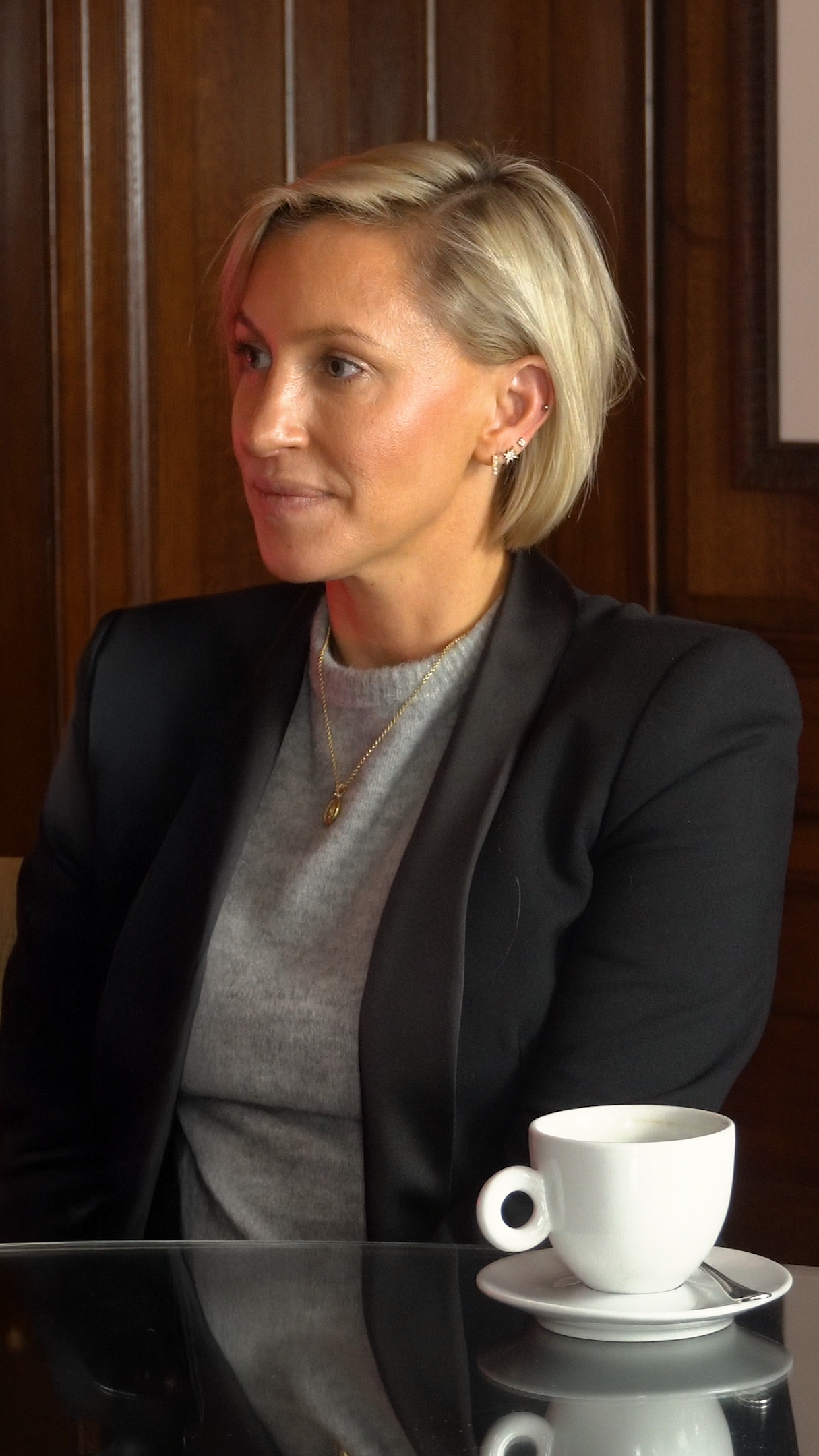
Katie Street is a founder of Streets Agency, a business development agency based in the UK helping businesses win more clients. She’s an award-winning marketing and sales leader with over 20 years of experience and is also the host of her own incredible podcast, Marketing Made Easy.
I present to you this week’s guest, Katie Street.
Guest Introduction: Welcome Katie Street+
Welcome Katie to No Bullsh*t Talks. Today!
Yay, Sabrina, thank you for having me. Like, literally, I feel like this has been, like, fucking years in the making.
I know! We’ve been saying this for absolute ages. I don’t know why it’s been taking so long to get this on the road. Like, I feel maybe it’s just the fact that we both run businesses, and it’s bloody exhausting.
Yeah, I know. We just don’t have any fucking time. Sorry, there’s going to be a lot of swearing in this episode, just putting that out there early.
So, yeah, but it’s happening. We’re here.
I’m so excited. It’s funny because you’re going to be the last episode of this season, and it’s gonna go out with a bang.
Totally.
So, headliner.
I’m the headliner.
And it’s going to be at the end of the year, so I feel like it’s a good kind of, you know, episode to kind of close the year out and be like, “Right, this has all happened. What’s next year about?” What we’re talking about. But I think we want to just be really real. I think that’s the thing. So, this is what this episode’s going to be about.
So first, I’m going to get you to introduce yourself so people know exactly who you are, why you’re here, and what we’re going to be talking about. So, go for it.
Okay. God, I mean, how far back do we need to go here? I’ll just give you, like, who I am now, not all the past versions of Katie.
Katie's Journey: From Sales to Street Agency+
So, I am Katie Street. I run an agency named after myself, which was a strategic decision. I called my agency Street Agency because everyone knew me.
You know, when I launched my agency, I’d been working in sales and marketing, leading new business strategies for mainly kind of digital agencies, so I was quite well known in the industry.
Innovative Lead Generation Strategies+
And I thought, “This is fucking broken,” the way that lead generation and agencies market themselves to develop leads is totally crap.
I was doing a fantastic job in-house, doing things in a more human way that was not bloody cold calling like every single lead generation agency used to do.
So, off I went with, you know, a different idea that kind of broke the mold of what was happening in the market and launched, essentially, an agency for agencies, where we were very much focused on—not a new business agency as such, because we didn’t do the end-to-end—but it was that front piece, like how to fill the funnel, develop leads, you know, drive meetings and opportunities at the front end. And that was what we were always focused on.
Today, sort of five and a half years in, we’re probably actually going to have our best year ever.
Exciting.
In terms of turnover, I don’t know. Profit-wise, we might not quite be the best, but it will be pretty similar to our best ever yet.
I know.
Which is amazing.
That is exciting.
Transition to Working with Tech Giants+
And do you know why? Because we don’t really work with agencies anymore, which has been such a huge… I mean, we do. We’ve got some great agencies, like large agencies that we work with, like VML and EPAM—really big companies who probably position themselves more as tech transformation businesses than actually, you know, the traditional agency model.
But yeah, we kind of transitioned almost by accident originally because we did a fantastic event for one of our clients. The event had some partners sponsoring it—tech partners sponsoring the event. So it was an agency called Appnovation. They had BigCommerce, Algolia, and Contentful sponsoring.
We did a fucking fantastic job, of course, and then all the other clients—BigCommerce, Algolia, and Contentful—were like, “Can you start doing that for us?”
Then we won contracts and retainers with them to kind of deliver ongoing, very human-centered event and content strategies. Then that’s spread. They got other partners involved, and we’ve kind of migrated and, over time, stopped working with the smaller agencies and now just work with kind of large-scale, you know, tech companies like BigCommerce. Shopify is also our client.
Yeah, it’s a really fun, exciting place to be.
Yeah, and I mean, that just shows you if you do a good job, you do it properly, naturally you’ll put yourself out there in front of other people, and they’ll see you and want to work with you too. So I love that.
But talk to me exactly what you did. So you say, like, you know, it was lead generation, but you didn’t like the old lead generation, and so now you’re doing that and you’ve transitioned. But what is it exactly you do? And like you said, more human. Tell me more. What does it actually mean?
So, yeah, the old ways, to my mind, are broken. No longer can you hope to send an email. I mean, one, it’s really hard to get into the inbox these days.
So you no longer can run kind of traditional email and cold-calling campaigns successfully. I mean, I’m sure there are some people out there that do, but really it’s quite hard work.
You’re never building or nurturing an audience of prospects. You’re just hoping that you’re going to land on someone’s desk on a day when they need you and they’re open to speaking to you. I mean, it’s bloody hard work.
It’s a lot of luck that has to happen.
A lot of luck.
And it’s hard. You’re not building any ongoing relationship.
So when I started Street, we were always about building relationships and building a kind of nurtured audience of prospects that start to begin to love and trust you. So that’s never changed. That’s still there.
I guess how we do that over time has evolved because traditionally we did that a lot by email, sending email campaigns, because you used to be able to send one email to thousands of people, no problem.
Nowadays, you cannot do that. If you do that, you’ll get blocked. You’ll get marked as spam. You just can’t send those when you don’t have the data and when you’re doing it from a B2B perspective where you can break a few rules. You just can’t get into the inbox like you used to.
So what we do now is very much focused on, you know, person first.
Event Strategies: Creating Memorable Experiences+
So it’s all about, “Make it fucking human.”
Like, events are huge for us. Probably 80% of our strategies for clients are centered around events. So we tend to put on, I guess, quite different, more collaborative events that encourage conversation and are immersive and memorable—more like B2C events but in the B2B world.
So they’re fun. They’re not just another room with a panel discussion and everyone sat there really bored.
Yeah.
It’s about—I mean, we do do panel discussions—but it’s about, you know, roundtable discussions, getting everyone to have a voice at the table.
Actually, from our client’s point of view, sometimes bigger isn’t always better. We do launch reports. We’ve done really, really big conferences, like 100- to 200-person conferences, and they fill a different part of the funnel.
But on the whole, if you’re looking for lead generation, smaller, more intimate events where you can actually speak to people around the table are far more effective.
Like next week, we’ve got our final two events of the year.
One…
I’ll tell you about the events because that probably tells the story a lot better than me rambling on about it.
So one on Tuesday morning next week is kind of CTO for CTO. One of our clients is a fantastic business that’s growing really, really quickly. They’re kind of like a tech startup called Fuse Fabric.
They are doing a roundtable. They’ll probably have between 10 and 12 prospects in the ICP, but really, really high-level CTOs.
They’re launching a report. They’re going to be discussing exclusive findings from the report. They’ve got Boden speaking on the digital transformation journey they’ve been on.
But it’s a really nice roundtable discussion where people are going to be inputting what they’re doing within their business and how they’re approaching certain things.
So that probably is a bit more of a traditional kind of event, but the importance is everyone around the table is going to have a voice.
Everyone worries about the numbers. They’re like, “We need to get more people. We need 30.”
But you’re not going to speak to 30 people. You’re not going to understand or build relationships with 30 people.
Especially if you’re a smaller business—they’re a startup. I mean, there’s still about 100 staff—but they’re going to have two of their team in the room.
Realistically, speaking to five or six people each is actually achievable. Having a conversation around the table with 10 to 12 people means everyone can have a voice and contribute.
You’re then listening to them, learning what challenges they’ve got. That better feeds your marketing plan going forward and helps you understand how to follow up with them in a sales conversation.
If you’ve got someone in the room but you’ve not spoken to them, how are you supposed to intelligently follow up with the conversation to get a meeting? It’s going to be really, really tough.
So we structure a lot of events like that—these smaller events. That’s really C-suite only, mainly CTOs.
My clients are ex-CTOs of ASOS and M&S. They’ve been in their shoes, so they’re coming together and they host these events regularly, building that kind of community and ongoing relationship.
So that’s one example.
The other—and we always film the content and stuff. I’ll talk about that in a minute.
Then the other one, which I love, is my client Contentful.
We’re doing Bake Off.
I know! I’m so excited for this.
So we’ve got a talk. It’s all around personalization. The idea is that they’re getting all of the brands—we’ve got 24 CMOs and heads of digital from various different brands—and pairing them up with other brand leaders to make their own personalized bake.
It’s all around personalization.
So Contentful have just bought another company called Ninetailed. Ninetailed are going to be there talking about AI personalization.
We’ve also got EPAM next, case studying Trinny London because they sit behind the “Match to Me” technology that sits on there.
So it’s a really short educational talk—this is what’s going on, these are the exciting things happening in the world of personalization.
Then we’re going to take everyone to the Bake Off tent, and we’re filming all the content. We’re going to be doing jokey, Paul Hollywood-style handshakes.
They’re going to get a really immersive experience that they’re never going to forget.
That’s what, to my mind, we need to start getting braver at.
I’m getting my clients to do things like events at Dans Le Noir?, which is dining in the dark.
Trying to do things that are not just the typical event. Whenever we do them, we’re trying to match the venue to the subject and tell a story around it.
Make it fun. It doesn’t need to be boring.
So events are huge.
The other thing—sorry, I will stop talking about what we do in a minute.
You wish you hadn’t asked this question.
This is the longest intro ever.
It’s okay.
Sorry, guys.
So, the other thing that we do—I mean, this is kind of talking about what we do. I’m getting into the nuts and bolts so you guys can do this stuff.
The other thing is the content side of it.
The Power of Authentic Content+
So every single event, everything we do, is a content capture opportunity, and it’s very much person first.
We’re doing talking-head interviews—not just interviewing you. We’ll often record the panels, but a lot of the time it’s just really lovely, human-centered, two-camera, nice, kind of raw-ish content that really brings to life the people and the experts.
It’s very much thought leadership-led. You know how to do this—having some kind of hook that gets people interested and makes them want to continue to listen.
We’re not really doing slide shares and things occasionally, but less designed content and much more human-centered content because, in a world where AI is creating everything and everything is fucking fake, the only thing that is real is in-person events.
Only thing that is real.
And that is why, when you post content on LinkedIn—we were saying this earlier—if I create a video in my bathroom where I’ve got my makeup on and I’m just doing something really quick to camera, and they can see that it’s real, that performs way better than the curated content that I’ve spent hours, if not sometimes weeks, creating and polishing.
Because people want authentic, real content, because everything’s fucking fake.
Yeah.
And every person who’s ever created a video resonates with that. They’re like, “I’ve spent hours and hours—days, weeks, months even—on a video, and they’re like, ‘This is going to go viral. It’s so good. I’ve put all my heart and soul into it. Blood, sweat, and tears.'”
Then it just flops because people scroll past. It’s like, “Oh, it’s another perfectly chiseled video.”
Or now it’s like, “AI video. Is it all fake?”
They can’t tell. It’s high production quality, so they can’t relate to it as well. That’s the thing.
Whereas if you just get up and… I’ve done quick videos walking down the street because I’ve got something to say. That will go to way more people because it’s just so real, and everyone can do that, and everyone can relate to it.
So I think that’s the thing.
And I think I’m obviously a massive in-person advocate. I’ve been preaching my “Go, Go, Go” thing, which I don’t know if you’ve seen.
Go on.
So, “Go, Go, Go” is my new way of doing business.
So I’m like, you’ve got to Get Out, Get Offline, and Gain Opportunities.
That is amazing.
Yeah, I love that.
I know. So I’m like, actually, Get Out, Get Offline, and Gain Opportunities.
I’m like, in person, in person, in person.
So let—Go, Go, Go.
That’s amazing.
I know. I wish I’d thought of that.
Stealing it.
No!
It’s on a…
Now it’s all…
Yeah, we know who started this.
In-Person Networking: Building Real Connections+
Because I’ve been doing this for a while. I’ve been saying that every time I talk to someone, when I build relationships, every time you do it in person, it’s just so much better. Every time.
You know, you have a conversation with someone over Zoom, and it’s like, “Okay, it’s fine.” But then, as soon as you meet in person, it becomes something more tangible.
Even recently, I met some guy at an event, and we got on really, really well. It was really nice. Then we were trying to meet up, and we just couldn’t. We jumped on Zoom, and it was a bit like… it was okay, but it felt very forced, right?
It’s like I’m having to have this conversation with this guy online.
Then he basically started telling me that he’s really starting to get into poker. As you know, I play poker, and we’ve been talking about it a little bit.
Then I was like, “Oh, why don’t we do our next meetup at a casino?”
So we decided to go play poker together as our next networking thing. Obviously, then we just sat down at a poker table for hours together, chatting a little bit in between hands and stuff like that.
So we got to know each other. We obviously both came away with big profits as well, so we were loving it.
Now we’ve become friends. It’s just so funny. After just a few bonding experiences, now he’s come to a poker event with me.
Because of in-person relationships, that would never have happened from a Zoom meeting.
When we jumped on Zoom, it felt probably more awkward and more forced. Now that’s become an actual, real friendship.
Every time you do this with clients, it’s the same thing, right? Or any sort of relationships.
You could see each other online. We probably saw each other on loads of Zoom calls, but it wasn’t until we actually met in real life that we actually became friends.
I feel like it’s a much, much, much different thing.
Yeah. I mean, look, there’s obviously a place, as you and I both know, for posting content, and I’m a big advocate of posting content on LinkedIn.
But you can’t do that and not do the in-person side.
Also, you have to be the same person.
I think so many people see others putting out great content and think, “Oh, I need to be like them. I’m going to copy them. I’m going to copy how they write their posts, or I’m going to copy the way that they speak.”
Fuck that.
Literally, show up as yourself.
Because I think as soon as you start getting inauthentic, when you do meet people offline, they’re going to be like, “Oh my God, that person’s totally different online to how they are offline.”
People don’t trust you.
So I think people have got to stop worrying about being this polished, amazing version of themselves.
Not everyone—you and I are probably quite confident and, you know, out there, and exactly the same online as we are offline, if that makes sense.
But lots of people aren’t like that.
So I would also advocate that if you are more introverted, then own that.
Actually, just be honest. Just say, “I’m an introvert. I’m really not confident doing this, but I’m trying because I want to, and I know that I need to put myself out there.”
So I do think there’s a lot of… not everyone is born to do this.
You know, in another lifetime, I probably would have quite liked to be a TV presenter or something.
But that’s not for everyone.
I think some people are so worried about feeling like they have to show up in a certain way, when actually there’ll be loads of people who can relate to them being introverted and not being as confident talking on camera.
They’ll create their own audience of people who love and trust them.
So I think you’ve got to stop worrying about everything being perfect.
I mean, other people have built a brand from being introverts or from being different.
Take, for example, Ellie Middleton, right?
She was one of the first people I had on my Intellectual Talks.
I picked her as a speaker because she was always putting out content about what it’s like to have ADHD and autism.
She’s not confident in terms of speaking and public speaking.
I wanted to show the world that someone who is really shy and isn’t a confident speaker can get up and do a TED Talk.
She had a fidget spinner while she was doing it, and she needed some slides and everything like that.
But her talk’s done really, really well.
She’s now got books published by Penguin. She’s huge. She’s got a following everywhere.
It’s crazy.
I went on holiday, and one day I was in a bookstore, and her book was right at the front.
I was like, “This is wild.”
So she’s built a whole brand around telling people, “Look, I don’t want to be up here like this. I don’t want to show myself up.”
There are a few people who are like that.
I feel like you don’t have to be loud and boisterous or have a fucking podcast title full of swearing or whatever.
You don’t have to do that.
If it’s not for you, then that’s fine.
Just show up as who you are.
As we were saying about the in-person stuff, people think I’m really confident and outgoing.
Someone asked me on a podcast yesterday, “What’s one thing that people don’t know about you?”
I said, “I’m actually really shy.”
People don’t know that because they’ve only seen me in situations where I’m comfortable. I already know you.
But when you first met me, I probably wasn’t as confident.
A lot of the time when I go to networking events, I’m hiding in the corner.
I’m actually not as outgoing.
I’m a true ambivert.
I need my alone time.
But when you get me in the right situation, I’ll be loud, I’ll be boisterous, I’ll get up on any stage and do a public speaking talk.
Actually, sometimes I just don’t want to have those big conversations.
I want to sit around and do nothing.
I think there are a lot of people who relate to that as well.
But for me, the difference is that I will always still be the same person wherever I am.
Whether I’m in front of a client, in front of my partner, online, or wherever, I’ll still be the same me.
You’ll just see slightly different versions of me, but it’s still me, and it’s always real.
What I’ve noticed about people who are purely online—we’re talking about LinkedIn and other creators—is that some people are producing content all the time.
Most of the time it’s ChatGPT writing the content.
Then it’s their VA who’s writing the comments, putting the posts up on their profile, and managing the engagement.
They’re not actually doing anything.
Then the live webinars they’re doing are actually pre-recorded.
These days, it’s not even them in the videos. It’s their AI avatars.
Have you seen this now?
They create AI avatars of themselves.
Actually, none of it is them.
They don’t interact with any of their audience.
It’s all completely fake.
That’s why a lot of these people don’t even turn up in real life, because they have no connection with anyone.
Even if they do, if you were to meet that person you’ve been sending so many DMs to, or leaving comments on every single one of their posts, as their most loyal follower, you think you’ve built up this relationship with them.
They have no idea who you are.
For me, that’s horrifying.
I think it’s wrong as a creator.
These are the people who put money in your pocket.
These are the people who spend hours and hours of their time showing up for your content on a day-to-day basis.
You can’t even spend five minutes replying to them and getting to know who they are and what their wants and needs are so you can help them.
I just think it’s really distorted.
That’s why I also believe in this in-person thing, because there is no VA you can hide behind.
You can’t be having a conversation and then say, “Hang on one minute, I’m just going to ask ChatGPT.”
Can you imagine doing that in person?
I’ve actually seen that happen. It’s wild.
But at least you don’t get that as much.
For me, I’m so sick of how much is faked online now that it’s actually terrifying.
Challenges of Scaling a Business+
I have met quite a few people who are like that, who have got hundreds, if not nearly a hundred thousand, followers online.
When I’ve spoken to them in real life about business—in fact, you know, I won’t say too much—but when I’ve spoken to them in real life and asked them questions, they literally do not know the answer.
These are founders of huge businesses. Huge. I’m talking seven-, ten-, fifteen-million-pound businesses in the agency world.
They literally have no idea. They can’t even answer really quite basic questions, but they’ve made themselves famous online.
That is really fucking scary.
I mean, it is fucking frustrating. I’m just going to put this out there, right?
Because my business is quite small. We’re just under a million pounds in turnover.
It’s hard fucking work.
I’m not perfect. I try my best. We’ve got a real niche. We do fucking brilliant work for our clients. Our clients love us.
But I’m certainly not a seven-million-pound turnover business.
Yet there are people that are.
Yes, but do I even want to be? I don’t know if I want to be anymore. Who knows?
Maybe.
There is this whole thing in agency land about scaling, going over a million, and doing that. The pressure to do that sometimes—and then to sell.
Do I really want to do that?
Or do I just want to enjoy running my business and do great work? Because that would actually keep me really happy.
So that’s a whole thing.
But it’s dangerous.
Then I’m thinking, “How? How has someone”—not being big-headed or rude, but maybe I am a bit—”that is clearly not as intelligent as I am been able to build a business that’s seven or ten times bigger?”
Because they’re showing up online more, and they’re being fake.
Well, this is it.
It’s not that they are more intelligent. It’s that they are willing to lie more.
This is what I’ve noticed: in business, a lot of the people who have done so well so quickly have business models that aren’t quite right.
A lot of the ones who scale that big have done something shady, or they’ve lied to get there.
I was so naive at the beginning when I was running my agency.
I just thought, “Oh, the best agency will get the job.”
If I just show up, demonstrate that I’ve done good work, I’m nice to people, and show that I’m knowledgeable, then I’ll get the job.
How naive is that?
It doesn’t work like that.
It sounds stupid because it feels like that’s what it should be, right?
You know, I price within their budget, I have a really great portfolio, I’m really knowledgeable, I’m a nice person, I’m easy to work with, I get on with them.
You should get the job.
No.
That’s not how it works.
It’s who you went to school with, whether you take them out to the pub, how much pitch theatre you do, and whether you give them backhanded bribes or whatever.
Or how much you lie and pretend that you’re going to do X, Y, and Z, and then actually increase the price later down the line.
It’s totally different.
I think, for me, what I’ve realized is that a lot of these people are just more than willing to fake it till they make it—lie, cheat, and steal to get there.
It doesn’t matter who they walk over, as long as they become successful.
Yeah.
I think…
And if you actually look…
Who’s the guy who founded Apple? As in…
Wasn’t…
No, no.
Yeah, Steve.
Yeah, him.
The Ruthless Path to Success+
Steve Jobs. Steve Jobs. There we go.
Steve Jobs—the original.
I watched that movie, and do you know what? That really made me think.
In order to run a successful business, you’ve got to be a total fucking asshole.
You’ve got to.
If I really want to scale my business to even five million, I’m going to have to upset people, probably make lots of people redundant at some stage.
You’ve got to be totally fucking cold, totally aggressive, and totally money-driven if you want to be that successful.
And that’s not even being mega successful.
If you look at the things that he did, how he treated people, how he didn’t spend time with his family, how he didn’t put his family first—he was obsessed with his business.
I mean, I know that’s Apple. I’m not expecting to be Apple.
But isn’t it sad?
If you look at most big businesses, you have to be fucking ruthless if you want to seriously make money.
You’ve got to put money and your business before everything else.
Balancing Success and Kindness+
But that’s why I don’t want to do it.
Because I felt like that as well.
For so long, I was like, “What is the point? I might as well just be an asshole.”
Because I just feel like the world rewards assholes.
That’s how you start to feel.
You start to feel really cynical and really down about it because you see all the bad people doing well in life, and you see the good people getting walked all over, over and over again.
It makes you feel really quite depressed about it.
But you have to kind of stay strong. Otherwise, it just gets really depressing.
I just think, you know, I don’t ever want to change, and I don’t ever want to be that person.
But I guess you do also need to hire people who maybe are a bit more cutthroat.
That’s the only way to do it.
I still think you can be successful even as a nice person because you just need other people who are assholes on your team, basically.
Creating a Community of Genuine People+
But I feel like…
I think…
I think, like…
But you know what? I’d like to hope that…
I guess it’s the whole purpose of why I created NOBS, right?
I was sick of the bullshit, so I created NOBS because I was like, “I want a place where everyone is nice.”
Like, NOBS—No Bullshit, but no actual knobs, right, in the club.
I’m sick of those people who are cutthroat, who come to places and claim to want community, but all they want to do is sell to you. That’s all they care about.
Like I said, it’s money first, everything else later.
I want to be surrounded by people who are super passionate, who have that drive, who don’t necessarily want to sell their business, but actually just want to create an amazing place to work, do great work for their clients, enjoy what they do, want to make a big impact, and actually make a difference in the world.
That’s why I want to be surrounded by people like that.
Sure, we all want to get paid. We all want nice things too. We don’t want to work to the bone and then not get paid for it.
But I would rather be surrounded by those sorts of people.
There definitely are those people out there.
That’s why I want to create a place where we don’t have to be assholes to be good at business.
Do you know what I mean?
I just want to have that.
Let them do their thing. Let them screw people over if they want to.
But I don’t want to be a part of that.
So that’s what NOBS is about.
I want to have a place where we can do good business and make a decent amount of money without being a prick.
Yeah.
The Future of Authenticity in Business+
I do think, because, you know, we’ve got the younger generation coming through, and they have come from this TikTok generation.
You know, my daughter watches some really random stuff on TikTok. There’s some woman who’s a mom who does cooking. She absolutely loves her. I can’t remember what her name is. She’s massively TikTok-famous.
But all she does is chat. She talks about her day, she talks about cooking, and Lola just watches her.
It’s totally authentic and real.
So I do wonder what’s going to come through in the next few years because there’s so much fakeness, and because you can see the bullshit a lot more.
I don’t know. I mean, AI may fix things into not appearing like so much of an asshole, but I think authenticity, being real, and being a nice person will start to come through because people care more about the impact.
You look at people like Tim Spector. I’m hoping—I love the whole ZOE ethos and what he’s doing. I’m hoping he’s genuinely a really nice person.
He always seems to show up like that—genuine.
Again, he’s not like a polished… even listening to his podcast, I’m like, he doesn’t sound like your typical super-confident podcaster.
But he’s making some fantastic waves and changes, doing things differently, and he’s authentic.
I do think there will be less of the really, I guess, narcissistic, very bold personalities that maybe we’ve bought into previously.
It’s going to be less of that, and it’s going to be more of the authentic, real kind.
Hopefully, that might mean that, as an authentic, real kind of business owner, we might actually get a bit more cut-through than just being a fucking asshole.
Okay.
Challenges and Strategies for Agencies in 2025+
So talk to me then about what we should be doing in 2025 because it’s the end of 2024 now.
You tend to say this has been your best year, which is great, but only because you’ve shifted from the agency world to non-agencies—non-traditional agencies now.
Talk to me about what you think is wrong with the agency world at the moment and what needs to happen in 2025.
Because I feel like it’s not just agencies. It translates to other businesses too.
But let’s talk specifically about agencies first.
What went wrong in 2024 for a lot of people, and what do we need to correct in 2025?
Oh, big question.
I think specifically for agencies, it’s been really, really tough because we’re still in this kind of COVID overhang, in my mind.
People haven’t got the money.
People have been… I think the government was propping us up. It was up, up, up.
We grew amidst COVID, as did lots of other agencies that I know. Not all, but actually the market didn’t seem to be that bad.
We’ve had a year or two after COVID where everyone took out fucking bounce-back loans, whatever, so we’ve kind of been okay.
Now I think probably from the end of 2023 throughout 2024, it’s got a lot tougher.
I mean, we experienced the toughness as well, but it was sort of the end of 2023.
Luckily, that’s when I transitioned away from working with so many agencies because I think budgets have been pulled.
Businesses are struggling.
Even my clients, who are huge tech companies…
But I think the tech companies we work with appreciate that, in order to speculate, you have to accumulate.
Basically, you have to invest.
I will never stop investing in marketing.
I think agencies traditionally have gone, “We’re up against it. We can’t invest in marketing. We need to hunker down and not spend so much.”
When the reality is they actually needed to be spending more.
I think the agencies that succeed—and the businesses that succeed—in 2025 will be the ones that show up.
Because if you’re not fucking there, no one’s going to find you.
How are people going to find you?
There’ll be someone else showing up, helping your audience, giving them the thought leadership they need, helping them overcome the challenges that are keeping them up at night.
Because we all can do that.
We’ve talked about that a lot.
LinkedIn and the platforms that are available to us now—TikTok, wherever it is that your audience lives and breathes—you can show up there and help people.
Anyone can do it.
You don’t have to be polished anymore.
So if you’re not doing it and you’re going, “Oh, I can’t do it. It’s too expensive,” or, “I can’t…”
No one’s going to find you.
If no one finds you, your business is going to start to decline.
Sales is everything.
So do not…
I think I’ve really seen so many businesses this year cut their budgets.
Do not cut that.
Look at where else you can cut money.
I’m not just saying this because I do marketing, because I don’t need that many clients, to be quite honest.
If I look at my clients, the ones that are doing the best are the ones that are overinvesting. in their marketing.
Like, you have to their are strategies, those kind of human sentenced strategies. It doesn’t have to be expensive.
You are like a human founder found listening to this, it doesn’t have to be a big thing. Just start recording stuff in your phone or if you are not a big fan of showing yourself in a video, think about how else you can do it.
A photo and some really nice text can do just as well.
Show up in a way that feels comfortable to you, but start showing up.
Because I think when you don’t show up, that’s when the problems arise.
I think so many agencies turn that off first, and it is honestly the biggest mistake I see.
If you’re not there, no one’s going to fucking find you.
You can’t rely on referrals.
Also—sorry, last thing—people don’t even ask for referrals.
They just wait for referrals to happen.
I know.
It is very silly.
I think people say referrals are the most powerful, but they just expect them to land in their lap.
It’s really silly.
The Importance of Consistent Content Creation+
But everything you’re saying is so true.
I was thinking about it.
Like I said, there’s a medium for everyone.
Literally, Medium was one of the things I was thinking of because I was blogging as well.
If video is going to be huge in 2025 and everyone’s moving towards videos, you’ve got YouTube, Instagram, TikTok—they all have video. LinkedIn now is pushing video, right?
So you’ve got video everywhere.
That sucks if you hate video and you hate putting your face on camera.
But you’ve also got podcasts. You’ve got audio.
You can then take that audio and put it on a visual graphic. Use Canva, make a waveform, and that becomes a video.
It tricks the algorithm into thinking it is video, and you can make that content work.
So if you’re fine with audio, you can do that.
If not, you can just write.
You can blog.
Blogging is still a big thing.
People are using Substack or Medium, and they’re publishing content all the time.
If you hear every success story, it’s always, “I started posting every single day, and suddenly now I’ve got millions of followers,” or whatever.
But it’s that consistency of showing up over and over again.
The reality is, I think, with founders, we have a little burst of energy, then we stop.
We have a little burst of energy, then we stop.
Because we’ve got to put out this fire, this fire, this fire, this fire.
We don’t actually have the time—or rather, we don’t make the time—to create content consistently because we’re doing all these other things that, as founders, we need to do.
We’re trying to hire people, trying to sort out internal politics, trying to deal with an unhappy client, chasing invoices, as you said.
We’re doing all of these day-to-day things.
We don’t spend the time because we also don’t see the instant money coming in from that.
If we wrote a blog post every single day, eventually that would pay off.
If we created a video every single day, eventually that would pay off.
But by the time it takes to create it, edit it, and post it, we’re like, “Actually, we should be working on an actual billable client at this time.”
So we prioritize the wrong thing.
I think it’s because of the delayed gratification.
I think that’s why we don’t see it as…
That is such a good point.
Like, it’s weird, right?
Because I am possibly…
The Long-Term Benefits of Persistence+
I would say I’m one of the most impatient people ever.
In life, with everything, I can’t wait for anything. I need it now.
I’m very impatient.
But I have always understood the investment that I need to make in marketing.
I don’t know. I mean, I’ve grown up in sales and marketing, so maybe that’s why.
I know deals aren’t going to sell overnight.
The amount of agency founders that I speak to—traditionally, when we used to work more with agencies, and this is a big reason that I don’t want to work with so many agencies anymore—they work with us for like three or six months and then go, “I haven’t seen the results.”
You’re not going to fucking see the results in three to six months.
You’ve got to hold it out for a year because we’re only just starting.
If you think about even the length your deals take to convert…
We were just talking off camera.
One of my biggest clients—I first engaged with them a year ago. They’ve only just signed the contract and started working with us in October this year.
So that’s taken ten months.
Ten months for me to actually land the money in my bank account—or not even the money—but to send the invoice and actually get the contract signed.
It takes a long time.
If that’s your sales cycle, that’s from creating the opportunity.
The opportunity was created months and months before that.
So you’ve got to give this stuff breathing space.
You’ve just got to keep on keeping on.
Everyone, in my mind, that I meet usually gives up too early.
I have made it muscle memory.
Like I go to the gym most mornings, it’s muscle memory that the first half an hour of my day is dedicated to LinkedIn.
If I’m in the office, or if I’m still working from home, then I’ve got my headphones on, and the guys know Katie’s crafting her post for the day.
That’s really important to me.
It also kind of is cathartic—is that the word?
It gives me time to reflect.
What do I think about the world of marketing?
What is going on?
What have I learned recently?
What do I actually want to share with my audience?
It actually helps me.
I write stuff and I’m like, “Oh yeah, that’s a good idea.”
Maybe I should make sure I’m actually doing what I’m saying I’m doing.
That time and effort that I put into showing up on LinkedIn, creating my podcast every week, delivering the events that we do internally for Street and for our audience…
I am never going to stop that.
Because as soon as I do, goodbye to all that community and lovely audience that I’ve been nurturing over time.
They go.
People expect it.
Someone said to me the other day, “I love going onto LinkedIn in the morning. I wait for you to do your post. I log on to see what you’ve said that morning.”
I’ve got a small amount of followers—I think like 15,000 or 16,000 maybe—which is still kind of good.
The other day I was in the park on a walk, and a lady ran past me and was like, “You’re Katie from LinkedIn.”
I’m starting, in a small way…
That feels really good.
She said, “I love your content.”
Even in the pub the other night, a guy was like, “Oh my God, yeah, I know you from LinkedIn.”
I’m getting to that inflection point where it actually feels nice that people are saying, “I really find your content helpful.”
A guy messaged me yesterday.
He loved my post.
This is interesting.
I did a really basic post where I stuck my camera to my French doors where there was nice lighting and literally recorded something about the importance of showing up.
If you don’t show up, no one’s going to find you.
Exactly like what we’re saying now.
He messaged me about that post.
He doesn’t message me about all my lovely podcast posts that I spend fucking loads of money and time on with my staff.
But he did like that one.
People now message me asking questions like, “How should I start doing it?” or “What do you think is important?”
It’s kind of basic.
Under 60 seconds.
Really, the new LinkedIn video format…
I think it launched with a limit of under 45 seconds.
Under two minutes now.
Oh, is it two minutes now?
Oh, that makes so much better because I talk for way too long.
Yeah.
It’s 9:16, under two minutes.
You just taught me something.
I know.
I speak to the LinkedIn team about it, and they’re talking about trying to promote that.
So it’s under two minutes.
That makes so much better because I talk for way too long.
Yeah.
And 9:16.
It doesn’t have to be polished.
I know there’s lots of podcast stuff, so actually, if you do run a podcast, just clip it all up and put it on there.
You’ve got no excuse really.
There are all these AI tools that do it.
I use, for example, Opus Clip.
I don’t know if you use it.
They’re great.
It basically automates everything.
You just take your podcast—or even put your YouTube link in if you’ve already posted it.
Put your YouTube link into Opus Clip.
Then you choose however many clips you want.
I normally put less than 60 seconds because then it goes on Shorts as well.
I was going to say, Shorts perform really well for us.
Exactly.
Same as us.
My Shorts get thousands and thousands of views.
Much better than the actual videos, which is crazy.
So when you think about it, it’s short-form, snappy content.
People don’t have much attention span.
But the thing is, for me, I know that short-form performs much better.
For those who love vanity metrics, that’s probably what you want because, like you were saying, you get that dopamine hit when you see those results.
If you’re impatient, you understand the long-term benefit, but maybe that’s the short-term gain you’re getting.
It’s like, “Oh, I’m getting those views.”
It’s exciting.
I know that short-form content performs much better.
But for me, I want to build long-term relationships.
I think long-form is where you do that.
If someone’s tuning in and listening to you for an hour or more, they must find you tolerable, right?
They’re hearing my voice over and over again.
It’s ridiculous.
I feel like they’re the people that I really want to connect with because they’re my real tribe.
They’re the ones who really, really listen to me and actually stick around for the whole thing.
There are going to be loads of people who flick past and think, “Okay, that was interesting for ten seconds,” but not any longer.
I know that’s the trend, and I will keep doing it.
But I still believe in long-form content.
I’m investing in my YouTube channel for next year, and I’m going to consistently make those YouTube videos.
I know they’re not going to perform as well as the Shorts, but I believe in them.
I know they’ll pay off over time.
Same as this podcast.
The first season did quite well, I thought.
The second season…
I’ve invested so much time and effort into this setup.
Obviously, it’s a lot of money and a lot of time every week—getting great guests, editing it, and putting it out there.
I just showed you the notification, right?
Fifty thousand streams.
I think that’s really good.
Again, no Diary of a CEO stats, but 50,000 streams on Spotify is pretty epic for a small podcast.
I’m really proud of that milestone.
This doesn’t make money yet.
Yet.
But season three is going to happen.
It’s going to happen.
I just think that, with time, it pays off.
When you listen to this…
Do you know what the average number of podcast episodes is for a podcast?
Have a guess.
Is it something like under ten?
Yeah.
It’s eight.
I think it’s somewhere between six and eight, they said.
That’s the average number of episodes for any podcast out there.
That’s crazy.
So many people film a podcast, realize how much effort it is, and then don’t want to do it because there’s no immediate return on investment.
Apparently…
Do you know how long it takes to monetize a podcast?
Look at me breaking out all these podcast stats.
It takes three years to monetize a podcast on average.
So if you’ve been going for less than three years, you want to keep going.
The thing is, though, when you finally get that sponsorship, it’s totally worth it.
You should only be doing it if you love it anyway.
If it becomes a chore, then you probably should be switching to another medium.
I believe that if you stick to it…
They always say success is just on the other side of when you’re about to give up.
Just at that moment.
That’s why I want to keep going because this will be my third year—my third season.
I’ve just hit 50,000 streams.
I think you’ve just got to keep going and keep showing up.
I believe in video, and I want to keep doing it.
Like you said, this is a natural thing for me, but it’s not for everyone, so I totally get it.
But whatever you do, you’ve just got to keep going.
Sharing the Real Journey+
So I think I actually also want to ask a question.
Obviously, most of the people who watch the podcast are founders, and I know that you obviously deal with different, bigger clients now, but you still work with a lot of founders and have done in the past.
What type of content should founders be creating in 2025?
I feel like you’re doing a lot of content, you’re out there all the time, I kind of don’t know to speak and you’re absorbing a lot of content as well.
What content is going to work in 2025?
To make it more human.
I personally think there’s so much AI and fake shit out there.
People need to first have a strategy.
Why are you doing this?
What’s the purpose?
Most of the time, right, let’s be honest, for me as a founder, it’s lead generation.
I’m putting content out there not to have millions of followers.
I don’t need millions of followers.
My main aim is that I want a nice niche audience of people that I can potentially sell to.
Strategically, I think you’ve got to start upfront and ask yourself, “Who am I? What am I trying to do? Who am I for?”
Then create your content pillars around that.
I think a lot of people forget that.
They just think, “Oh, because you could post about…”
I could post loads of really interesting stuff about my life.
My husband went to prison and left me with a 30-month-old baby, and he didn’t come out until she was seven.
I’ve had some really difficult experiences.
My mum has bipolar.
There are loads of things that people could relate to me about.
I have sometimes talked about those things, and it’s important to layer the real version of Katie into my content.
But if I posted loads about that, I could have hundreds of thousands or even millions of followers.
I know I could.
But it doesn’t serve me because I’m not just here to be famous.
I think you’ve got to be really clear about what your objectives are.
Strategically, for me, most of my content is about how people in the world of tech can generate more leads through their marketing.
Actually, that’s the same for any industry.
Whether you’re a founder, a big business, or not, the same rules really apply.
You might need to differentiate how you do things slightly because a big company needs to operate differently from a small company, but essentially that’s what I post about.
I understand lead generation is hard.
Marketing is changing all the time.
So that’s the content I share.
I share helpful, insightful content about what people should do, and I’m really open and honest.
The biggest thing I hear people say is, “I don’t want to give away our secret sauce. I don’t want to tell them how I do it.”
I literally recorded a podcast in the office yesterday—just me talking to the camera, which is not what I usually do because I’m normally interviewing people.
I literally told people the exact process of how we deliver really successful lead generation events, how we avoid drop-offs, and how we get really senior C-suite people into the room.
I shared every single step of the journey and exactly what we do.
I don’t care.
The reality is someone else isn’t really going to have the team, the people, or the ability to do that.
People are so scared about sharing the real stuff because they think someone else might copy them.
There are hundreds of thousands of businesses that I could sell to.
I don’t actually need that many clients.
Ten, twenty, or thirty maximum.
I can’t even deal with ten at the moment.
I don’t need that many clients.
Someone else might copy me.
Yeah, they might.
But they can’t be you.
Exactly.
That’s one of the biggest things.
When I speak to other founders, they say, “I can’t share that because everyone will know.”
Are they really going to be able to do what you do?
Probably not.
I think it comes back to knowing who you are first.
If you really believe that someone else can copy you and do what you do, and that’s why you won’t share it, then your business probably isn’t watertight enough in the first place.
It shouldn’t be that easy to replicate.
Most things aren’t innovative if you think about it.
Everyone talks about innovation, creativity, and all this stuff, but how many things are really brand new?
Nothing really is.
I’m now running a members club for founders.
There are so many founder communities out there.
I’m in half of them.
But how many of them are doing exactly what I do?
How many of them have the same values as me?
The reason mine is now getting people talking is because everything is about going in person.
Everything is really raw, really honest.
It’s no bullshit.
I am also me.
I bring a certain energy to it.
How many people have my energy that I bring to events?
That’s rare.
People come because you’re you.
That’s the importance of showing up as your real self.
People will buy anything from you because they’re buying into you.
I think that’s what’s really important.
Like I said, you’ve got to always show up.
If you’re constantly showing up, then people will buy anything from you.
If you turned up tomorrow and said, “Katie is selling some shoes,” I reckon you’d get loads of people buying your shoes.
Maybe that’s what I should be doing.
Oh my God, I’ve got way too many business ideas.
Honestly.
But you’re so right.
You’ve got to show up.
You’ve got to be authentic.
Don’t worry about oversharing.
I’m a massive oversharer.
Massive oversharer.
I also think a really interesting thing that I’m going to start doing is showing more of the behind-the-scenes, the real moments, the fuck-ups.
No one wants to hear how amazing everything always is.
People message me all the time saying, “Oh my God, you’re doing so great.”
I’m like, “Okay, we are doing pretty well, but that comes with a lot of blood, sweat, and tears.”
I’m going to be much more honest because I don’t think enough people talk about the shit.
I know you’re very good at doing that.
Let’s just be real.
I don’t run my business perfectly.
By any means.
I do not run my business perfectly.
I am not a perfect, polished founder.
No one is.
Sometimes I feel like I look online as though everything is going so well.
People say, “Oh, you’re doing so well.”
I’m actually going to start sharing more of, “It might look like I’m doing well, but this is the shit that’s happening behind the scenes.”
I think that helps people connect with you, trust you, and authentically engage with you.
For me, it’s about building trust.
To do that, I think you’ve got to overshare.
Well, you don’t have to, but I’m going to.
You’ve got to be really real about what you’re doing.
You’ve got to show the good, the bad, and the ugly.
Just get more real with your content so people can actually buy into you.
Yeah, I agree, and I love that.
I do share a lot of stuff.
Some people say it looks weak and makes it seem like I’m not as successful as I am.
But I just think it’s more real.
People trust me because I’m not lying to them.
I’m not saying, “Yeah, we’re a multi-eight-figure business,” and all that malarkey all the time.
People don’t need or want to hear that stuff.
They just want the truth.
I believe showing up and being real…
There is a difference in marketing.
Don’t say every little thing that happens because then your life would look like a disaster and you’d only be focusing on the bad stuff.
But I do think people need to show up and be more real.
I think more people appreciate that.
For sure.
Yeah.
Be real.
Be fucking human.
Yeah.
No bullshit.
Love that.
Final Thoughts and Future Plans+
Thank you so much for coming today.
It’s been such a pleasure having you.
Stay tuned because, obviously, we’re going to have a new series potentially coming up soon.
So, we’ve just got to stay tuned, right?
Yeah, stay tuned, guys.
Honestly, you need more of this in your lives.
Yeah, definitely.
Thank you.
Thanks for having me.
[Music]

Meet the guest
Katie Street
Katie Street is the founder of Streets Agency, a business development agency helping businesses win more clients. She’s an award-winning marketing and sales leader with over 20 years of experience and is also the host of her own incredible podcast marketing. Katie’s Socials