No Bullsh*t Talks · Season 2 · Episode 17
Balancing Being a Business Owner with Family Life
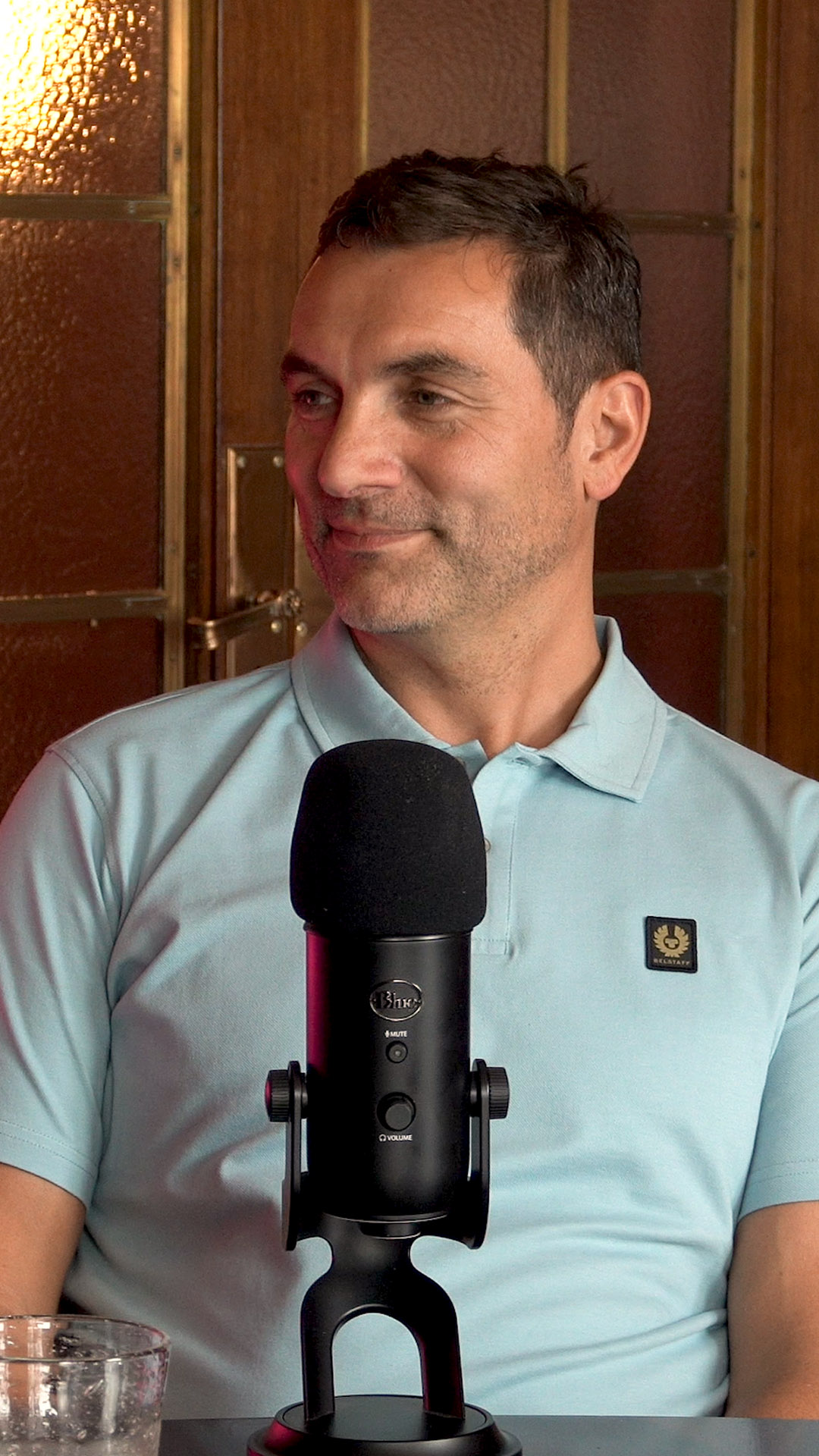
With James Cuss.
 Watch on YouTube
 Listen on Spotify
 Apple Podcasts
About this conversation
On Burnout, Personal Story and Wellbeing
Key takeaway: I guess I made the jump to my first business in 2010, so that’s about 14 years ago.
Join James Cuss as he shares his journey of balancing entrepreneurship with family life. Discover how he navigated challenges, found support, and prioritized self-care while building a successful business.
Tune in for insights on maintaining relationships, fostering connections, and finding fulfillment in both work and family. Don’t miss this valuable conversation on achieving harmony in your life!
Watch
See the full video conversation.
Listen
Take the conversation with you.
 Audible
Watch the moments
that travelled.
Watch, share and continue on the original platform.
Read the full conversation.
The Entrepreneurial Journey Begins+
I guess I made the jump to my first business in 2010, so that’s about 14 years ago.
In the last 10 years, I’ve started eight businesses. Six have failed.
But, you know, I do not have regrets.
I think the failures I’ve had, or the businesses that haven’t worked out, whether they’re failures or whether they’re just learnings, I have no regret and I would probably do it all over again.
But I think having that self-belief, but maybe just, you know, pause, give yourself time to reflect and be real with yourself.
Surround yourself with people that will be real with you, because I can be quite a force.
So I think, yeah, be real.
Introducing No Bullsh*t Talks+
No Bullsh*t Talks is a podcast for entrepreneurs, by entrepreneurs.
There’s too much bullsh*t out there, especially when it comes to business.
This podcast aims to highlight what’s true and what’s not in the world of entrepreneurship, bringing you honest and raw conversations about the rollercoaster that is entrepreneurship.
Each week, my guest will be a high-performing entrepreneur sharing the ups and downs of their journey and helping you prepare for the road ahead while providing you with actionable insights and absolute gems of knowledge.
Stay tuned as I introduce this week’s guest.
Meet James Cuss+
James Cuss is an eight-times Founder with a strong specialty in sales.
He recently exited a business and now specializes in M&A.
He also runs a successful podcast called Rocky Pod, where he interviews celebrities and other inspirational visionaries.
But more importantly, James is a proud husband and father.
I present to you this week’s guest.
[Music]
J, so welcome James to No Bullsh*t Talks.
Thanks for having me, Sabrina.
A Chance Meeting+
I’m really excited to have you on today. Because, um, we were just saying a minute ago that we don’t actually know each other that well, so this could be a very interesting conversation.
We just met at the random dinner party.
We did.
And, uh, I think mutual connections were like, “You two should speak to each other. You’ve got interesting stories.”
And here we are.
And that’s what we’re going on.
In fact, I’ve actually intentionally not really found out too much about you either, so this is kind of a throw-it-on-the-wall, seeing-what-sticks.
Yeah.
Uh, and no, I’m excited to be here.
Thanks for having me.
Yeah.
Why am I here exactly?
I like this because it’s like I usually know a lot about my guests.
I usually have either followed them for a while or done a lot of stuff, and I’m just quite intrigued to hear your story in full, like, you know, full flow for the first time and see what the audience thinks too.
So I’m excited.
Okay.
So I’m trying to think what angle to take because obviously I could take it in lots of different directions.
Well, I think first of all, let’s start with who you are, what you do, and just a general intro so we get context.
James' Early Life and Influences+
Okay.
So if I kind of go right…So, if I kind of go right back to a bit of context, and hopefully I won’t ramble too much.
So my parents worked for the airlines, so from a very young boy, my parents’ only place they could relax was in East Africa, so in Mombasa.
From six months old to about 16, I spent about two months of the year on the African continent.
You mentioned Nairobi a minute ago, so obviously passing through Nairobi and then either taking the train, flying, or driving to Mombasa, which is about 800k, I think.
My parents were kind of quite hands-off parents, and I was kind of left to my own devices.
It’s amazing that I’m actually still alive because I literally used to let myself out when I was a bit older.
I’d let myself out of the chalet at like 5 in the morning before sunrise and go off and kind of befriend the night watchman and just basically hang out with the locals because that’s what I did.
Then I’d disappear and they wouldn’t really worry about me too much.
You know, with snakes and, I don’t know, stonefish and all kinds of stuff.
So I had quite a free childhood and actually made some really good friendships along the way.
I think one story that, well, my friend S, he taught me how to handline fish.
I think I was about 12 years old and he was 14.
He really wanted a boat so he could fish in the deep water.
So I always knew that over the number of years going out there, I knew he wanted a boat.
So I kind of saved up my
First Angel Investment+
Pocket money and before I left one year, I had enough money that he could buy a mango tree, but he had to do the rest of the work.
It was about £10 at the time.
So I was, uh, yeah, 14 or 15. He was 17.
Then the next year I came out, he actually had built a boat.
He had a really cut-up hand and I asked him what happened.
Long story short, he hooked a 132-kilo shark with a handline and before he could tie it off in the front of the boat, it cut through his hand.
But he landed the shark.
Then fast forward 10 years, he had a fleet of boats.
He was a chairman fisherman in the village.
He expanded his shamba.
One thing that really touched me, just hearing, you know, obviously keeping in contact, there was a mango tree in the shamba that he gave to the poor.
Basically, I think what it showed me, and it kind of gives me a bit of shivers, it showed me that we all have the answers inside of us.
It doesn’t matter whether you’re a fisherman or whether you’re an entrepreneur.
We all know what we need to do and sometimes we just need to have someone give us a little head start.
I think having now raised a family, I’ve got three daughters, 20, 18, and 16, it’s really time for me.
I’m in a bit of a transition where I would like to do more for entrepreneurship.
So I’m kind of a fledgling angel investor because I’d like to kind of give back a bit because I haven’t really done anything since then.
So now it’s my time to think, how do I add value to the world?
But anyway, there you go.
That was your first angel investment though.
It really was.
And that’s actually kind of incredible that that was, you know, now you help invest in probably one of the most ambitious businessmen in your local town or whatever it was.
What a story.
And the fact that he tore his hand apart from a shark incident, that could have put him off.
That could have been like, “Oh my God, I’m never doing this again. Look what it’s done to my hand.”
And he sailed it off.
But actually, instead he was like, “No, but actually I can still build on this and this is just a setback.”
There’s so much in that story.
I love it.
Yeah.
And actually, a bit about S, he was very, very smart and he was very kind.
When we went fishing as young boys, he would always give me his fish.
He was a much better fisherman than I was because he did it for survival.
So I saw that kindness and he never really asked for anything.
Again, it’s about having that judgment of character.
You don’t always get it right, but I think that kind of stuck with me.
It’s like that story about the beggar, isn’t it?
Have you heard the story?
Sitting on the box and someone comes along and he begs and says, “Can I have some money?”
Then this wise man said, “Look under the box.”
So the beggar looks under the box and it’s full of gold.
Again, it’s the analogy that we’ve got all the answers inside of us.
We’re always sitting on a pot of gold, but we just don’t realize it.
Interesting.
I do like that.
And what an intro.
So, I mean, that was your introduction to, I guess, entrepreneurship in a way and what you could do with such little money and how you could turn it into this massive thriving business with, I guess, someone who can support you and actually believe in you.
Lessons from Failure+
So I guess my question is, you said you haven’t done anything since then, not in terms of angel investment, investing in others, but obviously you’ve run your own business.
So what did you do in your own business?
So I think I’ve always kind of been…
I spent most of my adult life in the US, and I think what that taught me is that what I love about the US is it’s very much that can-do attitude.
Business is quite transactional, but almost success is celebrated.
If someone’s doing well or they’re driving a nice car, that is like, “Good. Good for you.”
Whereas in England it’s a little different.
I mean, I know there is that, but I don’t want to generalize here.
My experience in the US, I worked in lots of different industries, but I was always kind of a top-line revenue guy.
Okay, did I really say that?
If I repeated myself.
So it’s always about how do we get more sales.
In my career there, I started actually in recruitment, so understanding industry and both sides of the market.
So I represented candidates and companies, and it was in IT.
It was actually through the dot-com crash.
Then I moved to sell enterprise software to grain surgeons and then ended up selling air charter, fixed and rotary-wing aircraft into places like Afghanistan.
I jumped around the world a little bit as an international sales guy.
So I’ve managed territories in the US.
I’ve jumped around the world in international sales.
Just knowing that I was always in the top, I don’t know, 5% of salespeople, always the one bringing in the revenue.
So just having that confidence that I could actually make things happen and bring money in.
I’ve always been quite entrepreneurial.
But I guess I made the jump to my first business in 2010, so that’s about 14 years ago.
In the last 10 years, I’ve started eight businesses.
Six have failed.
But, you know, I’ve got one really good one and a few other ventures.
I did that with a family, with a young family.
I’ve done some crazy, crazy things.
But it’s just having that belief that you can make it work and then trying to be resilient.
But I’ve learned the hard way, believe me.
It’s amazing I’m still married.
Do you know what?
I love that so much because you said that so bluntly.
Like, “I’ve run eight businesses and six of them failed.”
You said it as a matter of fact, that’s what’s happened.
But you also said it like you didn’t really care.
You said about how in America people celebrate success, but I also think they celebrate failure.
In America, I feel like the attitude to failure was definitely more progressive than in the UK.
We’re catching up now.
I think people are more embracing failure.
But in the US it was always about that.
It’s like, love your failures.
Celebrate the failures.
The reality is most of the top business moguls have had a ton of unsuccessful businesses in the past, but we don’t hear about those.
They’re not the ones put in Forbes magazine or whatever.
They’re not the ones that sound sexy on social media.
They don’t talk about all those failed businesses.
They talk about the unicorn that was founded and the overnight success that actually took 10 years.
It’s that sort of stuff.
I actually just found that so refreshing, the way you said that.
Because it was just like, “Yeah, I’ve done a bunch of failed businesses, but I’m still here.”
Well, you know, and actually a lot of people might be listening to this and think, “What an idiot.”
I have made some serious errors.
I’ve certainly tried to make things work.
So I think there is a dark side.
A lot of the failures have been very, very painful.
It’s been because I think you do get quite attached to your businesses.
They’re kind of your baby.
I think I need to get better at failing faster because I’ve kind of hung on to things too long.
You know, I’ve hired salespeople before there’s actually a product-market fit and spent tens of thousands of pounds on that.
So I think every experience, it doesn’t define you.
The failures.
I think that’s…
We’ve all got impostor syndrome.
We all have that little voice on your shoulder saying, “What are you doing?” and “You’re failing.”
But actually it’s just having that belief to keep going.
I think resilience is a lot about rewarding yourself along the way.
That’s something that I didn’t realize.
I would pay myself nothing and really suffer and think resilience was all about suffering and pain.
Actually, that isn’t necessarily a good healthy way to go about it.
So I think you learn a lot from each thing that doesn’t work out, but it doesn’t define you.
I think that’s the message I’d want listeners to take away.
It’s good to start things and try things and have the balls to go out of your comfort zone.
I think that’s something that really…
Actually, having that time in Africa as a young boy, you realize how lucky we are to even live in England or live in the Western world where we’ve pretty much got everything we need.
We’ve got food and shelter.
A lot of us do.
If you have those basic needs, then you can do anything.
Anyway, I love it.
Actually, my daughter said, “Make sure you don’t ramble, Dad.”
That was my advice from Anna.
So a little shout-out to Anna.
Thanks, Anna.
There’s me rambling on here.
I love it.
I love how you also shout out your family.
You were saying, “I’m surprised I’m still married as well.”
That comment made me laugh, but it also made me think that you are obviously lucky to have a supportive family.
Like you said, entrepreneurship is hard.
We fail a lot.
It’s not as glamorous as people say it is.
That’s the entire point of what I do as my brand on this show and everything I talk about.
It’s talking about what entrepreneurship is really like.
Genuinely, the highs and the lows because it’s a mixture all the time.
But we only ever hear the highs on social media because it’s not sexy to talk about the lows.
But, you know, how has your wife been through all this?
Through the 25% of successful companies or whatever that you’ve got.
Balancing Family and Business+
How has it been?
I would say that, to be honest, I have I acted a bit like an ass, and I’ve been very boneheaded and selfish.
I’ve barreled through when I wasn’t really paying much attention to my wife.
Actually, that’s changed a lot since then.
There have been really painful times, but yeah, I do have a wonderful, supportive wife.
I think it’s been banded around a lot, but you can’t have self-development without self-awareness.
I think the last few years, since the failure of my fintech e-commerce startup where we burned through half a million pounds, I’ve learned a lot.
My investors were very supportive.
I put a good six-figure sum of my own money in as well, so it hurt.
Just not being available emotionally because I was so obsessed.
Actually, in some parts, I realized I was pretty delusional through some of that process.
But I think in some ways you have to be.
It doesn’t mix with family life.
But since I’ve kind of woken up and realized what I had, and you know, my kids suffered a little bit too, I think that isn’t glamorous.
But I think now I’m more in the present moment and I can actually be there.
Because there have been times in my life where I’ve been there physically but not being present.
Being in my head trying to figure things out.
You know, pacing around at 3:00 a.m. in the morning trying to figure out where that £14,000 is going to come from to cover payroll and stuff.
That’s not glamorous.
Where is it going to come from?
Then you fix it the next day, and then three months later, or a month later, you’re in the same position.
It’s painful, right?
It’s not glamorous.
So I would caution anyone that has a family.
I’ve got three daughters, as I said.
Whether you want to take this path, and actually if you do, just make sure you’re aligned because I did things anyway.
Which is like, that’s the bullsh*t bit.
But I’ve actually learned that that’s not sustainable.
No, so that’s the unfiltered answer.
No, but I love that.
There’s no bullsh*t, right?
It’s the whole point of what we’re doing.
But I just think that I totally get it.
What you said about the payroll thing, it is the reality of it.
It’s tough, especially when other people’s livelihoods depend on you and your decision-making.
I’ve been there as well.
But I think that I hear so many stories of business owners who slave away for their business and they finally get that exit and then they get that big payout.
Then their wives leave them and go, “Thank you for that money because I deserve that because you treated me like sh*t for the last 10 years.”
“So that’s my payoff for the fact that you’ve neglected me.”
“I’m now divorcing you so I can enjoy my life, and I’m going to take half that money that you just got paid out.”
I’ve heard that story a lot.
It sounds brutal, but at the same time, I kind of get it in a way that they’ve been sick of it.
I don’t necessarily agree with taking half their money, but I feel like it’s a tough ride.
I hear so much conflicting advice.
It’s like if you’re not putting everything into the business and sacking off all your friends and all your family, then you’re not serious enough about your business.
But then on the other hand, there’s all these people going, “You can have work-life balance straight away.”
The reality is I don’t think you can have work-life balance from the get-go.
That’s obviously what you’re aiming for, but there has to be a sacrifice for it.
Since you’ve done it the hard way and you’ve been through it, you said you’ve been an ass, using your words, and now you’re in a place where you’re much happier.
What is the middle-ground advice?
Because I don’t think you can have immediate work-life balance.
I don’t think you should be all in and sack off all relationships.
If you could do it again, knowing what you know now, how would you achieve the best of both worlds where you are putting your business first in the sense that you’re doing what’s right for your business, but you’re also doing right by your family?
I think my understanding now is that I always thought throughout my marriage, you know, I’ve been married nearly 24 years, that I was a good communicator.
But I think I’m just maybe listening more now.
Actually intently listening.
I think sometimes you have to do things because you believe in them.
When you have that conviction, only you have the conviction.
Recently, I’m part of a group called Roma Mastermind.
It’s kind of a stoic view where there’s a wheel and you’ve got your health, your professional life, spirituality, your family life.
I think the conclusion from one of our recent masterminds was that sometimes you have to dedicate everything to one of those focuses.
So if you’re starting a business, you’ve got to give everything.
But I think it’s just having that understanding if you’re in a relationship that, okay, you’re going to do this and it’s going to take everything you’ve got.
It’s a hard one because there have been times when I haven’t had the support from my lovely wife.
But actually, things have come around really good and thank goodness I did have the conviction.
So there’s a bit of a conflict.
But I think if I was to do it again, I would carve out more time for me.
Whether you’re into meditation or just quiet time.
I might have prioritized my health a little bit more over working all the hours that God made.
If I think about some of my routine, it was getting up at 4:30 in the morning, doing a HIIT workout in front of the TV, getting on my motorbike, buzzing down the Shoreditch, getting in the office at 6:30, working through, then driving home.
The idea was to leave at 4:30, but I’d normally be there until 8:00.
Then start it all over again.
It was a bit full on.
I am quite full on.
It’s all or nothing.
That’s me.
I’m full on.
And that’s full on.
So I don’t do that anymore.
Now, you mentioned you enjoy spas.
Okay, I haven’t been around for a few weeks, but normally my routine is being in the spa at 6:30, going to the gym, sitting in the sauna, doing an hour of meditation or whatever, spending an hour reading, and then starting my day at like 10:00.
It’s much healthier and I’m getting more done.
You’re in a mindset where you do feel ready to get stuff done.
But here’s the irony.
I can because I’ve got the resources to do it.
Back then, I would borrow money to pay my mortgage and borrow money to keep things going.
It’s like a vicious cycle.
Then get more and more into debt.
But that’s the thing.
You’ve got that financial stability now, which you may not have had before.
I think that’s why I don’t like some of the “just get work-life balance now” advice.
Some people just don’t have the option.
If you’re sitting there in a rented home, or even if you’ve got your own home but you’ve got a mortgage to pay, bills to pay, and no money coming in, you have no choice but to work your butt off.
Either go get a job, but let’s say it’s your dream to be an entrepreneur.
You’ve taken it upon yourself.
You’ve got to work your butt off.
You’ve got to do everything it takes to be successful and earn that money.
I spoke to someone this week who started their own business only about six months ago and they’re really like, “Yeah, it’s not working for me.”
I’m like, “Okay, so what’s happened?”
“I’m not really getting many clients.”
To be fair, you’re in a financial crisis here.
So tell me what you’ve been doing.
Have you tried this?
Have you tried that?
No, not tried any of that.
They’ve basically not done anything.
They’ve posted on LinkedIn once a day and think that’s how you should get business because they’re seeing other people going, “I post on LinkedIn every day and get £100,000 a month.”
They’re seeing all this other stuff and all these posts go viral and they’re like, “Why aren’t mine doing that?”
“I’m following everything they’re saying.”
I think there’s so much bad advice out there making it look easy.
Five simple steps to business success.
Buy my course and I’ll show you how easy it is.
It’s making it look like there is just a simple formula for business success.
I think that’s putting people off.
Yeah, it’s interesting, isn’t it?
I actually spoke to a really interesting guy yesterday, a guy called Felix.
He was talking to me about being a transformational strategic coach.
He was talking to me about how people are like rivers.
Rivers will always find the easy route.
There are certain things in my life and my business interests where I need to toughen up a little bit.
How do you hold yourself accountable?
Certainly if you have a team.
People think it’s an easy fix.
I think there are a lot of wonderful things happening in the world.
I do see a move toward more individuality.
I know everyone’s trying to be their authentic selves.
But a lot of it is rubbish.
It is important for you to connect with yourself, but you need to figure out a route to making a living or money, don’t you?
I like the Ikigai thing where it’s like, what’s your purpose?
What do you do for money?
What do you do for fun?
What do you do because you believe in it?
I haven’t actually spent the time to do mine, but I’d like to.
Finding Your Ikigai+
That’s what I’m…
I only found Ikigai recently and it was because I was in Italy.
I was at a conference and I just didn’t enjoy what I was listening to, so I decided to just go for a walk.
It’s weird because I travel a lot by myself as well, and people are like, “You’re a solo female traveling in a country where you don’t speak the language. That’s so dangerous.”
I’ve been to Jordan by myself, so I feel like, done it, done it.
Maybe completely idiotic, but I’m still here alive and nothing bad happened to me.
I just went for a walk and, you know, when you’re just in a new place and you’re absorbing everything, which is amazing for creativity.
There was always an idea that I wanted to do.
It was a business plan I wanted to do five years ago.
Somehow it just all came together and I had this aha moment that I was supposed to do what I was meant to do.
It was the idea for N0BS, the members club that I now run.
I was thinking about the Ikigai and I was like, yeah, obviously it’s called N0BS, which has made it quite brilliant.
I don’t know how I even made that name all come together.
But I just went back and took a notebook.
We were talking earlier about analog versus digital.
I run a creative agency, I’m digital as hell, but I just took a pen and paper and sat with an espresso looking at the Colosseum, whatever it was called, that thing.
I was just sitting there and writing it all out.
Looking at the Ikigai, the four bits are: what are you good at, what does the world need, what can you get paid for, and what do you love doing.
That intersection of all four is your Ikigai, which is the Japanese proverb for purpose.
I was sitting there going, yeah, well, I’m good at connecting people.
I’ve got a great network and I’m very chatty.
I’m good at connecting people.
I absolutely love it.
I love talking to people, hence the podcast and hence the reason you’re here.
The world needs more genuine connection.
The world is sick of the Zoom connection and people selling to people and all this fake stuff.
People want no bullsh*t and realness at the end of the day.
People will pay for that.
And they are paying for it.
I was like, this is what I’m meant to do.
It was something I wanted to do five years ago.
I created the company called BYOB instead of Bring Your Own Booze.
It means Be Your Own Boss.
It was the same sort of thing, so it was for founders.
But do you know what’s weird?
COVID happened and destroyed the vision of it because it was all events-based.
But actually, it was a godsend because five years later, I have a bigger network.
I am way more connected.
I’m way more knowledgeable.
I’ve absorbed a lot more information.
I have much more purpose and drive.
Actually, it’s the perfect time to do it.
Suddenly I created all this different stuff and brought it all together.
That was my Ikigai.
I feel so much more connected to it and so much more empowered from it since I found that.
Actually, all the things that go wrong and don’t make me money, I know that they will eventually because I believe that is my purpose and that’s my Ikigai.
So I do think it’s well worth thinking about because I just feel so much more confident about everything I’m doing now because of it.
That’s amazing.
Thank you.
Thank you for sharing.
Introducing N0BS Members Club+
Okay, so this members network, explain the process.
What if I wanted to join?
You know, I’m a newbie.
I’m a newbie.
Give me your give me your 30-second elevator pitch.
No, I hate an elevator pitch.
Okay, your 30-second no bullsh*t pitch.
It’s not going to be 30 seconds.
Three minutes.
Okay.
For me, elevator pitch means I’m going to do an elevator pitch and I’m going to press every button so that it delays it.
For my network out there listening, Sabrina’s going to give us a little…
So how do I get involved, I guess?
Thirty seconds is, N0BS stands for No Bullsh*t.
Everything I talk about is no bullsh*t.
It’s a network, or a members club, however you want to describe it, of ambitious founders who all share a growth mindset and this passion for continuous learning.
They only want to be surrounded by people who are genuinely wanting to grow their business in a sustainable way.
They aren’t looking for quick fixes.
They aren’t looking for the bravado or that sort of stuff.
It’s real talk, real people, real-life connection.
Okay.
I’ve been sick of members clubs that are out there.
I’ve had them all where you get the pitch, you join, you spend all your money, then they disappear and they don’t give any value.
All they want is your membership.
The quality of the members has been quite poor.
I don’t really want random people.
N0BS is completely vetted.
I look at who they are, their business, and their attitudes.
It’s all about partnering with the best in the business.
Once again, I’m sick of the bullshitters who claim to be experts in XYZ.
Every time I go to an event, they’re on a panel and they don’t know what they’re talking about.
That messed me up.
It was because I saw you in a discussion.
That’s what made me do N0BS.
But yeah, I’m sick of all those people who claim to be experts and they’re just saying the same prepared speech as well.
I could have listened to that on a podcast.
It’s the same prepared stuff.
So how often do you get together?
What does it cost?
Yeah, actually, we were together this morning at an event.
Missed it.
I know.
It’s because you’re not one of the N0BS.
Basically, it’s a monthly subscription and there are different tiers.
At the moment, we’re only opening up two tiers because the third one will be when it expands and there’s a lot more scope.
The first tier is £85 a month.
The second one is £195 a month.
The value is insane because we meet up several times a month.
For example, this morning we did a workshop with Mailchimp.
We’re partnering with basically all the biggest brands.
Mailchimp delivered us an email marketing masterclass.
We’ve got a personal branding masterclass at LinkedIn, a content creation masterclass at Canva, a video masterclass at TikTok.
As you can see, we’re going into the headquarters of all these brands and their teams are actually teaching us.
Not just someone who claims to be an expert, but in the headquarters of these companies.
We’re going to the top, to the best.
That’s what it’s about.
As we talked about, having no time or being too busy as a business owner, you’re often strapped for time.
I want to make sure that as an entrepreneur, you’re spending your time in the most valuable way possible.
Every event is about you learning something, definitely meeting someone new and valuable who’s going to be great for your network, and actually enjoying it.
Again, if you’re spending all your time in the business, you don’t want to be miserable.
It’s not just learning.
It’s fun.
It’s that combination of learning, connection, and fun all brought into one thing.
Very nice.
I like it.
That’s it.
Excellent.
That was long, was it?
No, it wasn’t.
Thanks for sharing.
I pressed all the buttons on the elevator and you finally reached your destination.
But what does that sound like?
A place that you’d want to be part of?
Yeah, it sounds good.
I like the fact that you’ve integrated learning into the networking and actually having some grown-ups be the teachers.
I like it.
I like it.
Yeah, I just feel like I like the vetting too.
I think that’s 100%, you know, it’s important.
Really important.
And obviously knowing who’s going to fit with the group.
Exactly.
I feel like I’ve been going to so many different networking events and it’s a bit cringe.
A lot of them you go to, they’re just trying to sell to you, hand you a business card.
It’s sales pitch, pitch, pitch, pitch.
But they’re not actually caring who you are or what you do or anything like that.
For us, it’s a real connection.
Actually, a lot of people who’ve been to our events, they come and we’re not even talking about work.
We’re talking about random stuff.
I’ve been hearing the conversations at one of our events.
Literally, dating stories, ghost stories, random mishaps, sports, and whatever.
It’s real talk.
People understand that business is tough.
Nothing is about bragging or any of that.
It’s actually like, “Do you know what? I’m struggling at the moment. How can I help?”
Then another member goes, “I can help and introduce you.”
The Value of a Support Network+
That’s what I love about it because I think that’s what you really need as a business owner is that it’s sometimes really, really lonely and really difficult.
Like you said, pacing at 3:00 in the morning trying to work out how you’re going to make payroll.
Imagine if you had a bunch of people who totally understood what that was like, who could have your back and be like, “I can help you. This is what I’ve done.”
To me, that’s invaluable.
Yeah, that’s a…
Yeah, I mean, yeah.
It’s amazing, isn’t it?
It just made me think there.
One of my friends, mentors, yeah, he wrote me a check for $25,000.
Well, he wired it to me obviously because he was in the US.
It was on Christmas Eve because I needed it.
I paid him back, but I needed it.
I had no one else to turn to.
Yeah.
And so I can’t wait to return the favor someday.
Not that he’s…
Just pay it forward.
No, but it’s like you need people who understand.
Like you said, it just made me think.
Jim.
No, that’s so nice.
I just think, thanks Jim.
How long ago was that?
That was probably two years ago, two and a half years.
And you still very much remember that when you think about it.
Think network of good people.
That’s what it is.
And I love that.
Yeah.
Yeah.
Hitting Rock Bottom and Rebuilding+
Yeah, but I want to talk about where it all changed for you.
Because, like you said, you felt like you were a bit of an ass to your family or your wife.
But you’re in a great place now.
What did you do to make a change, and what made you make that monumental transition?
I think, again, I don’t want to sound cliché, but I think when you hit rock bottom, you need to evaluate things.
When my startup, Flexi, failed, it was really, really painful.
My marriage was on the rocks and it was bad.
I had my bags packed.
It was really a bad situation.
Actually, my family did intervene temporarily and basically taught me into just chilling out a little bit.
I do thank my family for that.
It was probably the closest I’ve been to being completely unhinged because everything fell down.
So I think for me, that was the moment where I knew things had to change.
That’s when I realized how much I had when I hadn’t really appreciated it.
When I say I was an ass, I was just emotionally unavailable.
I’ve always been as kind and supportive as I can, but I was just in my head and not there.
I think that then led to a lot of self-reflection and reconnecting with the essence of who I am.
If I think about some of the happiest moments of my life, it was when I was in Africa snorkeling and spearfishing and hanging out with my friends.
I kind of reconnected with that inner child.
I am someone that likes adventure.
I think because I’m the eldest of four, my parents were busy with the younger kids, so I had to do quite a lot to get attention.
So, back to the conversation, I reconnected with myself and started looking after myself.
Getting more active, working out, looking at meditation, and just having time for myself.
Then just picking the pieces up and rebuilding.
And then letting go.
Before the business actually ended, I gave myself six months to sell the platform that we’d built.
I said to myself that if I wasn’t successful in pivoting or selling the platform, then I would close it down.
That’s what I did.
I did have that last little spurt of saying, right, I’ve got to fix this.
But I was true to my word.
I came very, very close to creating a CBD marketplace and all the rest of it.
But anyway, I was true to my word and I closed it down.
I treated my investors respectfully and fairly.
I felt really bad.
But then I realized that actually I needed to remove myself emotionally from it.
It’s a business.
We didn’t succeed in executing and finding that product-market fit.
So I was able to separate the business failure from myself.
It was a big learning opportunity.
Then I went back to basics and focused on what I knew.
The last two years, two and a bit years, I’ve focused on rebuilding Rocket Industries, which is my main business.
We provide learner finance to the professional training market.
I’ve built that back up slowly and it’s a really good, solid business.
It was always my intention and ambition to create a business where you can earn while you sleep.
It’s a very nice business that has a lot of scalability.
There’s a lot of growth opportunity there.
We talked about adding value.
Every day I move the needle.
Every day it’s like, what can I do today that’s going to move the needle?
What is that Pareto’s Law, the 80/20 rule?
What is the one thing I can do that’s going to provide 80% of the value?
The idea is that 20% of your inputs are going to create 80% of the value.
By the same token, 20% of your inputs will create 80% of the difficulties.
It’s figuring out what you do rather than just being mindlessly busy.
Because I was in this whole world of being on a hamster wheel trying to find the £13,000 or whatever it is.
Then realizing that actually it’s not working.
I’ve been able to refocus, regear, and now I’m in a position where I can breathe.
But I’m prioritizing my health.
Thinking about the couple of books you were talking about.
The 80/20 rule, Pareto’s Law.
I think Richard Koch did a book on that, a big thick book.
But the one thing you mentioned, “The One Thing,” is that Gary Keller?
I think there’s another book called The One Thing.
The concept is that you’ve got a goal.
We all have this giant to-do list and everyone kind of works their way down it.
But if you could just do one thing every day to get you closer to that goal, what is that one thing?
It’s more about focusing on that one thing rather than this overwhelming to-do list.
So it made me think of those, which I love.
I love both those things.
Those two books are right up there.
But yeah, it’s such a crazy journey that you’ve been on.
I feel like you’ve also done something even
A Life-Changing Decision: Selling Everything+
more crazy at some point. Didn’t you pack up your entire life and just disappear?
Yeah, there’s been quite a few disasters.
Not disasters, I think.
Yes, yes I did.
Back in…
Okay, this was actually a transition from, I guess, working for the man to doing something a bit different.
It was quite drastic.
So I need to hear this.
Yeah, especially now.
So in 2012, bearing in mind, my wife is incredible.
Very smart, amazing mom.
We had three young children basically.
It’s really hard on mothers, especially.
Even though I’ve always been a hands-on dad, we lived in Maine in the US and the winters are very long.
It’s about five or six months of snow on the ground.
Very white and brown and stark.
We had a beautiful family home, but it was really, really hard on my wife.
I was working hard and the effort I was putting in wasn’t giving me the returns I expected.
It was a really tough time.
Do you want me to tell the story?
Okay.
So the impetus for doing something outrageously crazy, which I realize it is now…
One Sunday morning we woke up and it was snowing outside.
My wife was really blue.
Mandy, I hope you don’t mind me talking about this publicly, but Mandy was very blue and actually depressed.
I was working so hard and, even though I was making a living, it wasn’t matching the energy I was putting in.
I wasn’t getting the financial rewards you would expect for such hard work.
I was gone working and Mandy was there with our three children, who at that time were four, six, and eight.
They were very young but very demanding.
I just had this idea.
I said to Mandy, “Why don’t we sell everything we own and travel around the world?”
“Why don’t we just cash out basically?”
I said, “I’ll shut down the business. I’ll sell my share of the business and let’s go traveling.”
I remember this curtain switched on and our eyes lit up.
I could see and thought, that’s the girl that I’m in love with.
That’s the girl I married.
This light literally went on.
She had that spark.
So that’s what we did.
Over the next six months, and again I get shivers, we basically started liquidating.
I literally liquidated everything we owned and sold the house.
Actually, at the time there hadn’t been a house sold in our particular area.
We lived in Maine, New England, which is very beautiful.
The town of Bath, Maine was an old shipbuilding town.
They built all the tall ships back in the 18th and 19th century.
You had all these really big homes, but the economy kind of changed and it became a quiet New England town.
There hadn’t been a property sold in that area in about 18 months.
We managed to sell our house and I knew what I needed for it.
Everyone thought I was crazy pricing it where I did.
A chap came around to look at it.
I pitched it as a rent-to-buy.
Long story short, they wanted to buy it.
When the bank appraised it, the bank appraised it for $50,000 less than what we had agreed.
I didn’t use a realtor because realtors in the US charge about 5–7%.
He called me and said, “Now we get to negotiate.”
I said to him, “I’ll write you a mortgage for the difference because I knew we needed the money, otherwise we couldn’t travel.”
He went quiet for 12 seconds, coughed, and actually came up with the money.
So I sold the house.
It was the first house sold in 18 months for $50,000 above what the bank would lend him.
It made it work.
When we closed on the house, I went to the lawyer to pay for the closing costs.
The lawyer said, “Put it towards your travels.”
We had about ten yard sales.
I got to know all the neighborhood.
We literally liquidated everything we had.
People would come into the house and I’d say, “How much would you give me for my four-grand TV?”
They’d say, “I’ll give you 300 bucks.”
I’d say, “Would you give me 400 if I throw in the Game Boy and the PlayStation?”
They’d say yes.
We had all this expensive furniture.
I think our couch was like $14,000 or something ridiculous.
A big old couch.
Sold that for several hundred dollars.
We basically liquidated everything.
I was unscrewing pictures from the wall with an electric screwdriver.
We sold everything.
Then after about ten yard sales, we bought a 1967 Winnebago, which I renovated.
It had a J.C. air horn on it.
I didn’t realize that it symbolized the Confederate flag, but that’s another story.
I did it for the kids because I used to love The Dukes of Hazzard as a young kid.
The final amount of stuff that we couldn’t sell, I put out on the lawn with a free sign on it.
That night, people came with head torches through the early hours of the morning.
In the morning, there was just a bit of corrugated iron, a Hessian sack, and a few bits and pieces left.
Basically, we gave away everything that we couldn’t sell.
But the conversations I had…
I’ve got to talk about this because material things were another thing I learned from the experience.
All this material stuff in a beautiful house becomes kind of a security blanket.
For a lot of people, including myself and Mandy, it’s part of your identity and security.
But going through the process of offloading the material stuff, let’s face it, you can’t take it with you.
There were sentimental things.
I had an iron cabinet that was my grandfather’s from World War II.
I had carried it over from the UK.
I sold it for $90.
But I had a conversation with a woman whose grandfather had a butterfly collection.
She wanted a filing cabinet to put it in.
I told her the story of the filing cabinet and she shared the story about her grandfather and the butterflies.
I now know that object is loved by somebody else and she knows the background.
By doing that, I was able to have these conversations with people I didn’t know.
Everyone was excited about our trip.
When we left, our kids were five, seven, and nine.
We were off the grid for 18 months and traveled around the world.
We homeschooled our girls.
It was an incredible experience.
I was able to connect with my family because I realized that every single one of our daughters’ minds worked very differently.
I got a new appreciation for teachers.
Before we left, the homeschooling crowd was kind of divided between unschoolers, military and religious types, and more structured families.
I think we fitted into the last category.
We bought the Singapore Math curriculum.
We did an hour of math and an hour of English a day.
That was it.
The rest of the time they drew pictures and wrote journals.
They were off the grid for 18 months.
Then we ended up back in England because we decided while traveling what was more important.
Once you get rid of all this stuff, and you have the joy of having cash in the bank…
We had about £100,000 in the bank.
The Winnebago blew up, so we had to get towed back from Canada.
There was a guy who looked like he was from Deliverance towing us while shooting up on the side of the road.
My family…
There were all these crazy stories from being on the road.
Going from euphoria to a car on three wheels, everyone fighting and punching each other.
It wasn’t all roses.
Anyway, that’s the story.
Then we decided that what’s important is family and people.
We realized that as long as we had our family and loved ones together, that’s all that mattered.
It gives you freedom because you realize that if you lost everything, you could start again.
We literally had nothing back in 2013 when we returned to the UK.
We built it all back up in spades.
Actually, it took no time to build back up.
Yeah, so anyway.
Beautiful.
There are so many things there.
That’s absolutely insane.
I don’t know if I could do that.
That’s funny because I had a realization of something similar the other day.
I had a situation where I was worried I was going to lose everything I owned.
I started to think, what if I did lose everything I owned?
What if I only had my partner, my dog, and a roof over my head?
Would I be okay with that?
I was like, yeah.
Actually, when I realized that, I thought, damn, I’m actually really lucky because I don’t need anything else in my life.
This is me, someone who likes material things as well.
I just realized they’re not important.
I don’t know if I could sell everything I own and move away and do that.
It sounds quite exciting, but I don’t know if I’ve got the guts to do it.
Thinking about it, it’s nice.
But just like you said, all those stories are phenomenal.
You don’t get those stories sitting behind your desk and living a boring life.
You’ve got those stories and your kids have got those stories now.
That’s what I want to hear about.
What have they said about this?
Like I said, five, seven, and nine years old.
They’re very young.
A lot of them probably would have said, “You’re taking me away from my friends.”
But they’ve traveled the world, which most adults can’t even say they’ve done.
They’ve done that as kids.
What have they said about this travel and how it’s affected them?
Okay, it’s quite funny because if you ask them what their favorite place was, they’ll say Disney World.
That was one of the stops we made.
It’s humbling as a parent.
All these incredible places and experiences.
What about when we were in Laos staying on floating bamboo huts?
No.
I think they’ve become very independent human beings and I’m really, really proud of them.
There are things like food that they remember.
Even Anna, who’s now 16, when she was five.
A lot of it she doesn’t consciously remember, but if you give her a mango, she’ll remember.
There are certain foods, tastes, and smells that stay with them, even when they’re young.
They’ll be in conversation and a story will come up.
It’s in them, even if they don’t fully remember it.
It’s kind of interesting.
I think it gave them a good perspective.
They feel very privileged to be living in England.
They have a different worldly perspective about how other people live.
I think it was really good for us as a family.
It definitely brought us closer.
Actually, I repeated some of the same behaviors with my later startups and not being present.
That led to us going traveling in the first place.
I did it again.
But now, the second time, I’m not going to do it again.
You want to talk about my kids a little bit?
My eldest, Eva, is 20.
She’s flying from New York now.
She’s BA cabin crew.
She didn’t want to go to university.
My 18-year-old left home seven weeks ago and is moving to the US in September.
She’s left home at 18.
My youngest, Anna, is 16.
She’s a good street dancer, but she’s very independent and very smart.
She crocheted an entire dress in the last 48 hours and it looks amazing on her.
She only started crocheting 10 days ago.
So yeah, they’re cool kids.
Oh, I love that.
Obviously they’ve built up so many incredible skills from traveling the world and doing all that sort of stuff.
I think that’s amazing.
Lessons from Failure and Moving Forward+
So you’ve been really transparent about failures in your businesses, but I’d love to touch upon what the biggest mistakes you’ve made are.
You’ve obviously learned from them and now you’re in a place where you’re successful and happy and doing things right.
Can we talk about some of the things that went wrong, what you’ve learned from them, and advice for other people in that situation?
What are you doing right now?
Okay.
So I think we touched on it earlier.
If you are in a relationship, then I think just being real with that person, being present, and giving yourself time to be self-aware.
That would be one thing that I wasn’t.
I think it’s important to ask yourself, are you starting the business for the right reasons?
Is there a market need, or is it because you just want to be your own boss?
Be reflective on your motivations.
Sometimes you can make the break and figure it out, but just be real with yourself.
As far as the actual startup, I don’t think it was greed.
I think it was probably ego-driven.
The valuation of my business, I set very high.
I started off at a £10 million valuation and put the board together around that.
Actually, we were reasonably successful.
We ended up raising around £3 million, but it was still overvalued.
I turned away a lot of good investors.
A lot of it was because of my naivety and not really understanding how fundraising works.
Because I’m not really a numbers guy.
I’m not a banker.
Like I mentioned earlier, I’m a top-line revenue guy.
Let’s get the money in and figure it out.
You can only really get this through experience, so it’s a tricky one.
Do you think maybe you should have hired a finance person to help you more with that?
Is that what you’d take away from it?
No, I convinced the finance people because I could sell it.
I could sell it.
The market was big enough.
The other thing is I hired salespeople too soon.
Hiring a £50,000-a-year salesperson when you haven’t actually got product-market fit.
Again, that’s that delusional piece.
What are the numbers saying?
I think you’ve almost got to do it yourself for longer.
That was another mistake.
Then you end up letting people down because the money runs out.
These are all little mistakes, but they add up.
The last thing is maybe fail quicker.
I know everyone says it.
I knew it.
I’ve read about it.
A lot of these things I knew, but I still did them.
I did a lot of things right.
But obviously the Ukraine war happened.
My CTO was Ukrainian and had to go rescue his family.
My other co-founder had a daughter who was very unwell.
Would it have been right for me to fire my co-founders?
No, I didn’t do that because I wouldn’t want to do that.
Again, it’s about separating things.
It’s a hard question.
I probably don’t have any regrets though.
I do not have regrets.
I think the failures I’ve had, or the businesses that haven’t worked out, whether they’re failures or whether they’re just learnings, I have no regrets.
I would probably do it all over again.
But I think having that self-belief, while also pausing, giving yourself time to reflect, and being real with yourself.
Surround yourself with people that will be real with you because I can be quite a force.
That’s not always good.
So I think, yeah, be real.
Well, that’s it.
No bullsh*t, right?
Yeah.
That’s definitely what it’s about.
I do love that.
I think failing is okay.
Like you said, fail fast so that you can learn.
But you have to learn from those mistakes.
If you don’t, then it’s the definition of insanity, right?
Current Ventures and Future Plans+
So what are you doing now?
Like, what are what are you working on?
Have you got any new ventures in the pipeline?
What does it look like now, James?
Okay.
So my main business is Rocket Industries.
We operate in the professional training space.
The main piece of business we do is integrate learner finance into sales operations.
For example, if a training business wants to sell a cybersecurity course for £5,000, that’s quite a lot of money if you’re pushing trolleys at Sainsbury’s.
But if you could spread that £5,000 over three years, then it breaks it down into monthly installments which are affordable.
We’re actually helping learners access courses so they can get better jobs and upskill.
The training business gets paid in full by our lending partners, and then the learner gets to spread the cost.
That is a growing concern.
I think the education system, in the main, is kind of broken.
With the speed of technology, we’re seeing more professional training and commercial training providers pop up.
There is an entitlement mindset in the UK where people think education should be free.
But actually, if you really want to get ahead, pay for a quality course and upskill.
You can learn skills that are actually applicable and relevant.
You can basically go from pushing trolleys at Sainsbury’s, in this example, to making £40,000 or £50,000 a year as a starting salary.
That’s the main business and it’s growing.
We only work with multi-billion-pound lending partners.
We don’t work with small companies.
We work with big ones, the ones that are going to be around for many years.
Then we have another side of the business on the M&A side.
We help training companies exit.
We have a small panel of acquirers, and these acquirers do have money.
A lot of people say they have money, but they don’t.
Because we’re in the market on a daily basis, we know who might be looking to sell.
Most of the transactions we do are trade sales.
It might be a cybersecurity training company looking to get into networking or another type of IT training they’re not currently in.
It’s kind of expansion.
As you pointed out in your questions, there are different motivations for why people sell and why people buy.
So that’s what you’re working on at the moment.
Is there anything else in the pipeline for you coming up, or is it all focused on this now and trying to do a good job with what you’re doing?
The main venture that I’m working on is a podcast called Rocket Pod.
It’s about deconstructing how visionaries can take an idea and put it into reality.
I’m fascinated by how people can have an idea and bring it into the physical world.
That’s kind of the idea.
We speak with gold Olympians, entrepreneurs, and other visionaries.
I try to figure out what makes them tick, what drives them, and how they do it.
Everyone does it differently.
There’s 101 ways to skin a cat.
But as you know from podcasting, on its own it’s very tough.
Right now, it’s not monetizing.
We know we have some challenges with traction.
We’re trying to figure out what product we can develop and sell.
Because it started off literally as a passion project.
We talked about privilege.
I realized I’m very privileged having some of the conversations I have with people like yourself and other entrepreneurs.
I thought, wouldn’t it be great to share those conversations with the world?
If somebody could take just one little gold nugget out of the conversation, maybe they could take the first step toward realizing their dreams and living authentically.
But what started as simple and lovely as that is now costing thousands of pounds a month.
It’s like, where do we go from here?
I haven’t figured it out.
I’m looking for opportunities, whether it’s a JV, sponsorship, or maybe raising investment to develop some of these products.
Then there are the other fun ventures.
We’re looking to invest in a safari company in Tanzania.
My wife and I are actually doing our first partnership venture together.
We’re putting a Toyota Land Cruiser in the Serengeti, cutting it in half, and turning it into a safari wagon.
Then creating a front-end website to book safaris.
The experience I had recently booking a safari, which costs several thousand pounds, was quite scary because you’re sending money to a company you’ve never heard of.
Then you realize the person on the bank transfer is an individual and not a company.
We want to solve that problem.
We’re also investing in a hotel in Rajasthan.
I had a call this morning with the new investors on that side.
That’s going to be in Ranthambore, which is where you go if you want to see tigers.
They’re a bit crazy, but I’m at the stage of my life where we want to invest in things that make us happy and fit into the lifestyle.
Then friends like yourself.
It’s like, “Hey, do you want to go on an amazing safari?”
I can hook you up.
I’m definitely having fun with it.
I kind of like the idea of, how can this become an amazing experience?
When you run a podcast, you meet all these amazing people.
Wouldn’t it be cool to organize an event around a campfire?
Who would you want around that campfire?
I have to do that.
I have to do it.
Who’s going to be around that campfire?
Can I be around that campfire?
That sounds amazing.
Love that.
We can use the safari.
It’s like, do you want to…
Yeah, Africa is obviously close to my heart.
Oh my God, I love it.
I love how you’ve gone from your whole journey.
You’ve told us now about being an angel investor as a teenager, which is a beautiful story in itself.
Being inspired by that, creating all these businesses, having a lot of stress, not being a great husband, making all these mistakes, packing up everything, selling everything you own, traveling the world, coming back to England, and doing it all over again.
Now you’ve seen your kids grow up into beautiful adults who are finding their own way and doing different things.
Your wife is now co-investing with you in a company.
You’re investing in beautiful businesses that are fun and meaningful to you.
That is one hell of a transformational journey.
I think it’s actually amazing.
Thank you.
Well, let’s see if it works, right?
We can catch up in a few years and either say, “That was a disaster,” or, “You know what, it all worked out.”
I think what you learn from every experience is that you learn.
Final Reflections and Takeaways+
I think one thing I wanted to touch on that we didn’t you know, even the selling up and traveling around the world.
A lot of people say, “I could never do that.”
Well, they could if they wanted to.
A lot of people give excuses.
I would say, just do some things.
Try things out and make that move.
Because I said it earlier, I said I couldn’t do it.
All I could think about was excuses in my head.
Then I asked myself, what is my real reason for why I can’t do it?
I realized every single one of those was an excuse and not a valid reason.
So I could do it.
I’m just choosing not to do it.
That’s okay.
As long as you know that you have a choice.
I think all the choices we make in life bring us to where we are today.
The choices that you’ve made and the choices I’ve made, that’s why we’re here, right?
They all compound together.
Some things aren’t right for you.
But it’s about pushing your comfort zone every day.
Whatever it is.
Is it making a cold call?
Is it speaking to someone on the tube?
What is it that’s going to push your comfort zone a bit?
If you can get into the habit of doing that, you can build momentum.
So what if it doesn’t work out?
You tried.
Certainly in entrepreneurship, if you try something…
One of my investors, who was also one of my advisers, when my startup Flexi didn’t work, said, “You’re in the 1% that tried.”
He said, “Feel good about that.”
Actually, 80% of my investors said they would back me again.
I was really shocked because I felt like I was going to have to figure out how to pay them back.
But I think angel investors know the risks.
They know that out of 10 investments they back, maybe eight will fail.
As a founder, you’re so attached to it.
But it doesn’t define you.
We’ve talked about that a couple of times.
It’s about separating yourself from it.
It’s a business.
Actually, my mentor in the US, Jim, the guy who wired that $25,000 on Christmas Eve, said to me, “That project didn’t work out. Move on.”
I was like, “Project? This is my whole world.”
And he’s calling it a project.
But actually, he’s right.
If you can minimize it, it’s just a project.
It didn’t work.
Move on.
Get over yourself.
Wow.
So yeah, it is a reframe, isn’t it?
Because you’re like, “It’s not a project. It’s my baby.”
We all build up this monumental pressure on ourselves and call them our babies.
But at the end of the day, like you said, you’ve realized what’s most important.
Your family is.
You noticed that when you didn’t have anything else and your family was enough.
I think that’s what’s amazing.
That’s what’s going to be my takeaway.
I think it’s been an amazing episode.
So thank you so much for joining me.
Thank you, Sabrina.
It’s been a pleasure.
Thank you.
[Music]

Meet the guest
James Cuss
James Cuss is an 8x founder, with a strong speciality in sales. He recently exited a business and now specialises in M&A. He also runs a successful podcast called Rocket Pod, where he interviews celebrities and other inspirational visionaries. But more importantly, James is a proud husband and father.