No Bullsh*t Talks · Season 2 · Episode 3
How to Become a Profitable Trader and Trading 101
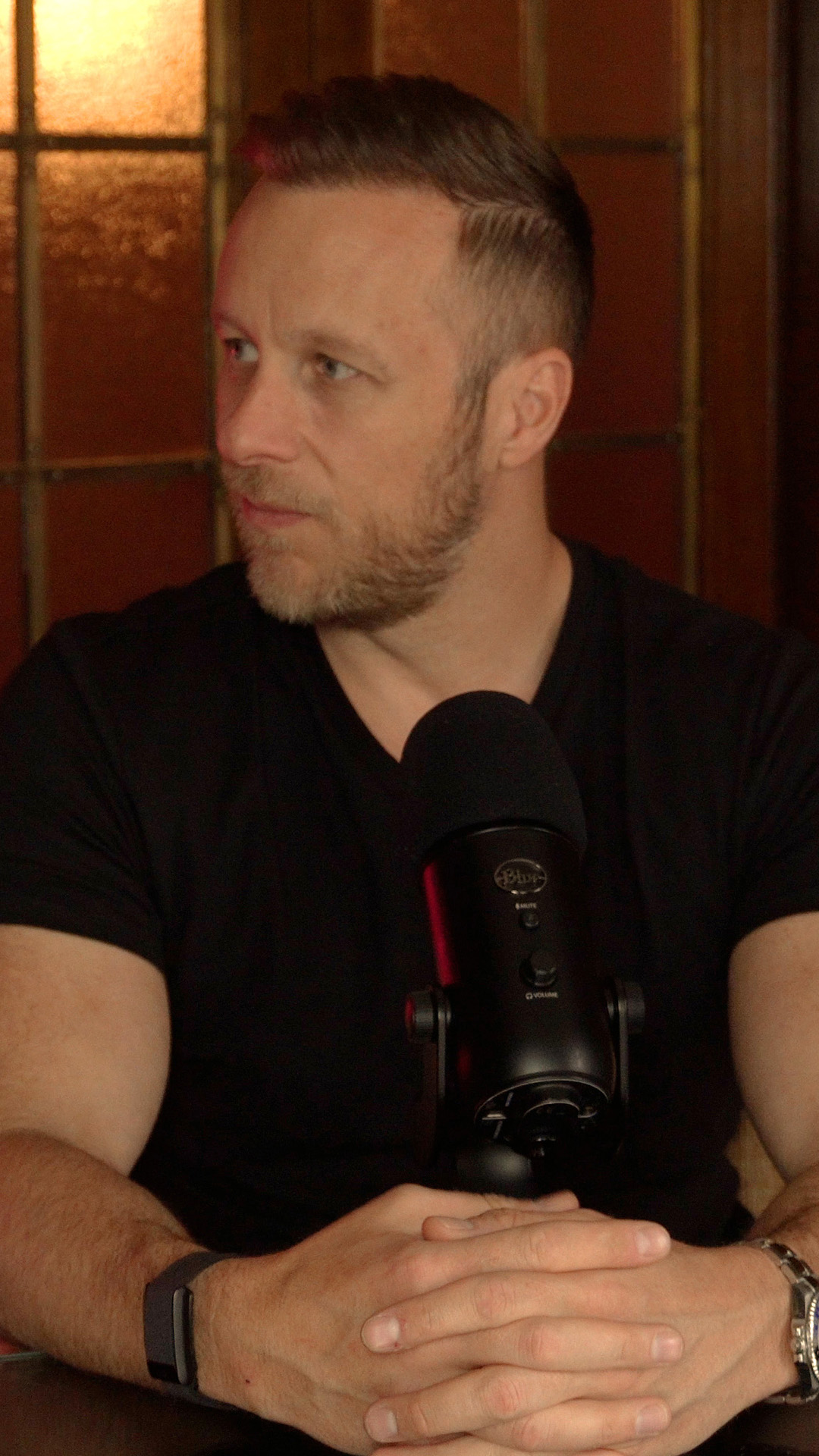
With Jason Graystone.
 Watch on YouTube
 Listen on Spotify
 Apple Podcasts
About this conversation
Trading, risk and financial independence
Join us in this captivating episode of No Bullsh*t Talks, where we uncover the truths of entrepreneurship and trading with Jason Graystone, an award-winning YouTuber. Jason shares his transformative journey from an unfulfilled trader to an ethical educator, highlighting the common misconceptions in the industry. We delve into the challenges entrepreneurs face, including the spread of misinformation and the rise of anxiety and depression.
Furthermore, we explore what makes content successful on platforms like YouTube, the importance of audience satisfaction, and industry predictions around scams and regulation. Tune in for an honest conversation packed with actionable insights and tips for creating impactful digital content.
Watch
See the full video conversation.
Listen
Take the conversation with you.
 Audible
Watch the moments
that travelled.
Watch, share and continue on the original platform.
Read the full conversation.
The transcript is organised by timestamp so it can be generated from the master transcript, edited once, and published here without designing a new section every week.
Introduction to No Bullsh*t Talks+
When you are closer to poverty, your ability to make logical decisions is deteriorated.
I realized that I actually felt like I’d lost a little bit of meaning and fulfillment because I was trading numbers.
It’s just not really fulfilling. It’s not very inspiring. You don’t feel very useful.
The fact that it wasn’t a deliberate career, and I was doing it because I truly wanted people to get the truth, that will outperform and outlast and out-stamina anyone who’s trying to copy me or anyone who’s trying to jump on a quick buck.
Because I wake up every morning wanting to share this stuff.
No Bullsh*t Talks is a podcast for entrepreneurs, by entrepreneurs.
There’s too much bullshit out there, especially when it comes to business.
This podcast aims to highlight what’s true and what’s not in the world of entrepreneurship, bringing you honest and raw conversations about the roller coaster that is entrepreneurship.
Each week, my guest will be a high-performing entrepreneur sharing the ups and downs of their journey and helping you prepare for the road ahead while providing you with actionable insights and absolute gems of knowledge.
Stay tuned as I introduce this week’s guest.
Meet Jason Graystone+
Jason Greystone is an award-winning YouTuber with one of the most successful YouTube channels on trading in the world.
His “Trading for Beginners” video has over 4 million views on YouTube, meaning Jason is educating literally millions of people all over the world about how to make money.
Jason’s aim is to educate people in an ethical and sustainable way, helping them stay safe online and protect their wealth.
I present to you this week’s guest, Jason Greystone.
So welcome, Jason, to No Bullsh*t Talks.
My kind of podcast.
Thanks for having me. Great name.
Yeah, I thought, well, I feel like there’s a lot of bullshit out there, as you know.
Yeah.
And people should talk about it.
This is a podcast where we talk about what’s bullshit, what’s not, and be really honest about the industry.
That’s how I’ve always been doing business, and I think that’s the right way to do business personally.
Yeah, and social media has just provided this stage for anyone with a little bit of confidence to really get bullshit across, right?
Yeah, spread the wrong information.
And that’s what we’ve seen.
It’s terrifying, actually, how much out there is just a load of crap.
There are all these people who are trying to run a business and thinking it’s super easy, or like, “Try these five simple things and skyrocket your income,” and all this stuff.
There’s so much of that.
Then they do it, and they end up in so much trouble.
Actually, it’s doing more harm than good.
Absolutely.
It’s about not seeing the full picture.
Like you say, some of it isn’t bullshit, but some of it is just not the full picture.
I think we need to be giving people realistic expectations because there’s a rise in depression and anxiety, and it all stems from looking up to people and seeing only one side of a journey or one side of a result.
Not seeing, like we were talking about just before we got here, the battery overheating in a camera.
You don’t see that sort of stuff going on, but no one’s going to share that.
No one’s going to say, “Well, your battery might overheat.”
No.
As soon as your battery overheats, you think, “I’m a failure,” or things like that.
You know, people coming in in the middle of your podcast.
That’s the shit we’re dealing with on a daily basis.
But they try to make everything look super shiny.
Like I said, the battery overheating, I’m learning all these things.
The amount of times I’m panicking that the cameras are actually working.
And I know that never goes away.
“Are you actually recording, guys?”
And yeah, I don’t know who that is and why he was here, but he decided to just come in in the middle of the podcast.
We’ve got so much trust in Sammy right now.
The Reality of Trading+
But tell me a bit about what you do, Jason, because you do a few things. How would you describe yourself and what you do?
Yeah, I don’t like labeling myself, but I am an investor, I’m a trader, and I’m an entrepreneur.
Basically, I like making money to create a lifestyle-type business, and I’ve been able to do that through investing, angel investing, and creating leveraged income streams in the real way that you can create leveraged income streams.
Which I feel like people call it a portfolio kind of career these days.
Yeah, they like to label stuff.
People do, absolutely.
And that’s more like what it is, right?
Yeah, yeah.
If I was to summarize, I would say I’m an investor because I invest in businesses or money-making assets.
Okay, well I definitely want to talk to you about your industry because you said trading, and I feel like that has got to be one of the industries filled with the most bullshit.
Definitely.
That’s why I got into it on social.
And what you do, you do videos about helping people trade.
That has also got to be one of the fields filled with the most bullshit.
I feel like that’s been going on since I can remember.
That’s a lot of years.
A lot of years it’s been going on, and it’s still going on.
Yeah.
What made you go into an industry where people immediately think you’re a scam artist?
That exact thing, right?
So, yeah.
Back in the day, I had just spent about 18 months, a year and a half, trading very, very successfully.
I moved my family into this massive house. We had a pool, and we were living the life of Riley.
I had really cracked it, and that was off the back of three years of really struggling to make that work.
I wasn’t broke, and I’d done other things. I’d had other investments and other businesses and stuff.
Trading was the final piece of the puzzle that I wanted to nail because that was the kind of the tipping point that would allow me to replace every portion of my active income so I didn’t have to work, so I didn’t have to go and do other jobs.
So, three years of struggle, struggle, struggle, and then bang, done it.
A year and a half later, I’m sitting in my house, living the life of Riley, getting a bit of weight on, getting a little bit complacent.
I realized that I actually felt like I’d lost a little bit of meaning and fulfillment because I was trading numbers.
It’s not really fulfilling. It’s not very inspiring, and you don’t feel very useful.
On top of that, my extended family were like, “Has he got a gambling habit?”
You really do get looked at and labeled.
It’s really bizarre.
Anyway, after becoming successful at it, I was looking around and thought there is so much crap, so much misinformation.
It wasn’t anything near what it is now, but it was still bad then.
I thought, “You know what? I could just let people watch me trade my live account in my house.”
It would give me some company every morning. I would feel like you know feeling useful, and it would dispel those myths.
Because I had no incentive to make money from teaching people, I could really give this authentic, kind of real, “Here’s my account.”
There’s nothing bad you can say after watching this because this is me in my pants, eating my cookies and drinking tea in the morning whatever.
It’s as real as it gets.
So I did that.
I created this little webinar thing. It was free.
Everyone could come and watch me, and it just grew this amazing community of people that felt like they’d had a breath of fresh air.
It was like, “This is so needed. This is what I’ve been looking for.”
We built this community until the point where I had to pay out of pocket to upgrade the space on this thing.
I was like, “Look, you’re all going to have to start chipping in, and we’ll keep this thing going.”
That’s what happened.
Then it just grew and grew and grew.
My goal for talking on social media was always just to share the truth, share everything that’s real.
You can go back and look at all my content from 2014, ten years ago, and it will be me saying the truth.
There’ll be no shiny object, no get-rich-quick nothing it’s just that.
Honestly, that has given me the most fulfilling life.
It’s quite incredible because I think that when you hear trading, and you definitely hear about people who teach trading, you definitely think there’s some sort of scam going on.
The fact that you’re showing it live as you’re doing it, you’re not hiding anything.
I think loads of people probably tuned in just to see what was going on, whether it was a scam or not.
Then half the other people were like, “Okay, how do I do this as well?”
It’s intriguing more than anything because no one else is being that transparent, which is huge.
So I totally get why people tuned in.
Trading vs. Gambling+
I think you mentioned something really interesting when you said gambling.
Now, I have always said that I think trading is a lot like gambling, except you’re gambling with other people’s money a lot of the time as well when you’re an actual trader.
It’s funny because I recently started playing poker, and a lot of people are saying to me, “Oh, that’s gambling.”
Like, isn’t there a lot of bluffing?
I was like, “No, it’s a strategy game.”
I think there’s more risk in being a trader than there is in poker.
At least you’ve got a certain amount of variables, and you only know a certain amount of things that are coming up.
With the market, you’ve got a lot of other things that are totally out of your control.
I just find it remarkable that people’s impression of trading is this really powerful career, Wolf of Wall Street and all this stuff.
It’s glamorized on TV versus the degenerate poker gambler sort of lifestyle.
Actually, there’s not that much difference to it, in my opinion, in terms of how you go about things.
I just find it interesting that you said the word gambling and what your family thought.
That’s great.
I was speaking about this earlier.
First of all, I went into poker first.
Basically, I saw it as a high-speculation endeavor to give me some higher returns.
That’s what I was looking at.
But how I approached that would decide whether I was a gambler or not.
I could approach it as a professional, or I could approach it as a gambler.
I’m going to Vegas next week, and it’s funny because you watch everyone in the casino.
They’re all having a laugh on the one-armed bandits, and there’s no consistency.
But when you look at the tournament tables, it’s the same people every night.
Every night they’re at the semifinals.
So why are they at the semifinals every night?
There’s a plan.
How can it be gambling if it’s the same people winning every single time?
It’s the approach.
Gambling is your decision to approach it as a gambler, right?
Or you can approach it as a businessperson with a strategy and a game plan and know when enough is enough, and so on and so on.
I do think poker is harder, though.
Yes, yes there are variables in the market, but with poker, you have to make a decision every 60 seconds, whereas with trading you don’t.
You can kind of tailor it to your personality a little bit more.
With poker, you have to play every second.
I think that’s harder.
On a side note, I’ve got a friend called Casper Barry who went to Vegas as a professional.
He went out there for a month or so to make some money playing poker, and he stayed there for three years and made a living out of it.
He consulted on Casino Royale.
Yeah.
And he does TED Talks and all the rest of it on risk.
He’s a great example of that.
It’s how you approach it that determines whether or not it’s gambling.
Absolutely.
I totally have that mindset with my approach to poker because I don’t intend to be a professional.
I feel like if I became a professional, it would affect my decision-making skills and how I approach it.
I feel like that would be if you rely on that money that as I thing it would totally change.
That’s another good point.
I love the strategy of it.
I love the skills it has taught me for entrepreneurship because I definitely think there’s a parallel there.
I’ve been finding it fascinating.
It’s also interesting other people’s perception of the game because they only see what the media portrays.
You’re off to Vegas. Are you doing the World Series, or what are you doing?
No, no.
I’m there for a podcast.
Yeah, yeah.
I’m going out there for a podcast, but we’re going to be running an event at the end of June.
It’s a trading education event, but we’re going to be doing it heavily around gambling awareness.
So, you know, no bullshit.
Totally appropriate for this conversation as well.
I love that.
I want to hear more about that because, like I said, I feel like I wouldn’t trust most people who say, “Oh, I can help you trade.”
You’ve seen the bots on Instagram.
Most of them have got my picture.
I guess it’s flattering at the same time, but it also just like must be so difficult for your reputation as well.
If those scammers are there with bots trying to scam people using your face, then how are you going to do it with your actual we with you doing it validly.
Like it’s really hard.
I feel like you write a post, and suddenly all these people are saying, “So-and-so helped me trade. I won loads of money,” or whatever.
It’s just all fake.
Yeah.
How have you found building your career in this industry?
It must be a consistent uphill battle.
Yeah, I think the fact that it wasn’t a deliberate career and I was doing it because I truly wanted people to get the truth that will outperform and outlast and out-stamina anyone who’s trying to copy me or anyone who’s trying to jump on a quick buck.
Because I wake up every morning wanting to share this stuff, whereas they’re doing it for different reasons.
They’re fighting against it.
As I say, imitation is suicide, right?
They’re trying to pretend they’re someone else.
That’s going to get very tiring.
The guilt is going to eat away at them eventually.
They’re never going to be one step ahead of me. Ever.
They’re always going to be behind me because they’re always sharing secondhand information.
I do appreciate that there are people like that, and it’s been very tiring over the years.
But for me, it still doesn’t feel like work.
I’m still going to talk about what I’m inspired to talk about.
I’m still going to help people.
Anyone who does end up getting scammed by those people should try and see it as a lesson in the long run.
You trying to see it as yes you might have lost £500 being scammed, but how much has that experience earned you in the long run?
What has it taught you?
That’s really the only positive spin I can put on it.
It’s hard to feel like that, though, at the time when you’re being scammed.
Of course.
There’s always a positive lesson to be learned, but you feel like crap at the when the time happens.
It’s not so easy to say, “Okay, I can learn from this.”
But you are humble.
You shouldn’t be thinking about trading if you’re making silly decisions like that, in my opinion.
That’s a good point.
You should think about making money in a more sustainable way until you’ve got some money.
Then go into trading when whatever you’re trading doesn’t matter.
The Truth About Entrepreneurship+
But you mentioned like you know obviously building a business in a more sustainable way or doing something income but I think what sort of people go into trading because I feel like those who turn to trading I guess are a mix of different people some who are really ambitious already like you know they are already very smart, got a career but actually want to do stuff on the side and then there’s others who think it’s a get rich quick scheme right and what other people have you found.
Yeah there’s people that go into trading, there’s people that tend to do well in trading and from working with quite a lot of traders now we’ve found that people go into it either to make a lot of money quickly which you know is kind of true, you can make a lot of money but you can lose a lot of money just like poker you know it’s the same thing.
Or they go into it because they want to take control of their own financial future so they don’t want to rely on other people managing their money which is great.
And the ones that usually do well first are process oriented thinkers so a lot of military, a lot of engineers, people like that who just take orders and know that if you follow a process you get an inevitable outcome.
And it’s like a plan driven, process oriented thinker who does well because it’s not so much focused on the million pound account, it’s just if I just get 2% per week and then 2% per week and then that’s 2% of a million account or 2% of a 10 million account, it doesn’t matter, it’s just if I just do that it will work.
And those people tend to really do well, they’re the ones that do the best.
I love that because I’ve been talking a lot about that recently just in general with business and mindset and I think that process oriented approaches are way more sustainable than results oriented approaches.
And I think that a lot of social media content is so focused on the results, it’s like do this and you’ll get X, it’s like put in X and you’ll get Y and if you don’t get it you’re set up for failure and you just feel depressed and it’s not great.
And the same as in poker right, I’m very process oriented with learning poker because if you go results oriented you get lucky, you think you’re good and I think that’s the problem with a lot of gamblers right, they do one hand, they’ll play it badly, they get lucky but I won that so I’m going to play it that way every time, that’s not how it works.
And winning is just as bad as losing on the first right, probably worse because they keep playing and they end up losing more.
They’re so cocky you can’t tell them that they’re wrong and they believe it exactly and that’s because they’re thinking about results.
Whereas if you do the process it might suck if you get lucky or variance goes not in your favour but if you’re doing the right thing over time you will end up with better results over time.
And that’s the problem, it is a long-term thing and I think that people don’t see the long-term thing.
And you mentioned getting rich quick, surely those are the people who go into it thinking I’m going to make money really quickly, surely they’re more likely to fail because if you go in there with that mindset you’re not going to do the right thing, you’re going to try and find shortcuts surely.
Yeah there’s so many ironies in the whole approach to trading really.
There was a study done in India in the southern, there was like 56 cities that they did this study in Southern India and they tested the farmers IQ and the farmer’s IQ when there was a drought and there was low trade and the market wasn’t booming and they were kind of struggling for survival, their IQ dropped by up to 30 points.
And then when the trade was good and everything was going well, assumingly it raised up to 30 points.
And what they found was when you are closer to poverty your ability to make logical decisions is deteriorated.
So when people want to learn to trade because they can’t afford to pay their bills, that very approach is what’s going to stop them from learning to trade and it’s flawed.
And I have to deal with that on a daily basis, I tell more people not to trade than you should try and that’s exactly the reason why.
That is exactly that I said earlier that I would never play poker professionally because it would just affect your decision making. And I always find that when I’ve watched like game shows in the past and I think like back when I was a kid I watch like Who Wants To Be A Millionaire or something, the ones who got the million pounds were the ones who were already rich. They don’t care, they just answer the question. They don’t care.
But everyone else is going oh my god if I lose that amount of money and then all that fear and they say something stupid or and to a decision making. And it just shows that you the more pressure you put yourself under the less likely you are to make good decisions.
And so I don’t understand anyone who goes into something like trading or poker with that sort of mindset like I need to make money because I just don’t think you’re going to make that much money because of how it’s glamorized on you know the one-sided truth you see on the internet.
So how do you tackle this? Because it is, and that’s my whole premise of No Bullsh*t Talks and why I talk about no bullshit entrepreneurship because I’m sick of the equivalent in my industry where it’s like you’re on the beach in Bali and you’ve got your laptop and everything’s fine, you wake up whenever you want, you do a bit of yoga and you sip your matcha tea, that’s what it’s glamorized as.
And you work your four hour week and go wherever you want you just have passive income and that’s just how easy business is. In my industry I see this every day and I’m so tired of it. I’m trying to talk about what life is really like as an entrepreneur and actually it’s a struggle, it’s really hard but it’s also amazing otherwise none of us would do it, right?
We all love it but there are things that yo need to do and you have to be prepared to put in the work.
So how are you trying to fight this and put the real truth out there, what is the truth of trading?
Yeah for me it’s been a real long game. I could have made a killing out of trading education because I could have just sold the dream, I would have got rich, there’s a lot of people that have made a lot of money and then they got millions of subscriber and all the rest of it just from selling the Lambos and all the rest of it.
I didn’t need the money so I’ve played a much longer game and in doing so I’ve built a loyal following, no negative reviews, no nothing. And that to me is a much better way, leading by example is a much more fulfilling way to live and I can look my kids in the eye and they’re proud of me and all of that stuff that matters to me.
And I don’t think it does to a lot of these kinds of people. How do I approach?
I just try and educate people that there’s two sides of everything.
Like you mentioned business, most people who start a business for a better lifestyle end up with a worse lifestyle than they would have if they just kept their job, that’s the truth. And if you really want to go into it the people that do struggle are the people that go into it because they look up to the entrepreneur.
It’s okay to not be an entrepreneur, it’s okay to be in a job as long as you can afford the things that inspire you to live the life you want for the short time year, that’s all that really matters. That really is all that matters.
So, it’s seeing both sides when you think you know I’ve just done a I’ve just kind of shred quite a lot of weight and you know I’ve got some photos of me now if I put that up online people think oh look I’m not getting those results you know I don’t have a sixpack I should I’m a failure actually it’s taken me like two years you know it doesn’t take 6 weeks and what they tell you online and there’s always another side there’s always downsides and drawbacks of any Journey that you’re going to to go on.
And I think the more you can see that from day one, the more grounded you are and the more sustainable your journey will be.
So I just try and tell people that to try to see both sides, see the good and the bad the bad and the good at every step.
I love the example you gave because I think the Wai loss industry is another one of those ones which is full of that and I did I’ve got another podcast which is like a just an audio one that’s just me basically rumbling into the mic it’s called sniffing out the bullshit for that exact thing and I did want on overnight success because of that reason that everyone sees all these overnight successes and like I wish I could do that why can’t I do that and it talks about how people like seem that they overnight successes like Mr. Beast the classic one right everyone talks about him and how he’s suddenly the biggest YouTube creator overnight and I’m like he basically 10 years with no one liking his stuff and that’s why I think he totally deserves everything has got because who has that grit to go for 10 years and no one even watches a single video I hear people all the time like crying after two videos going no one like my post and they quit so if you’re doing it for 10 years you deserve every fame of fortune that you’re going to get from that because it most people don’t have that will power.
And it’s the same thing like same principle where he’s waking up wanting to do that the time will come and if you’re waking up looking at likes on your video that’s a massive problem you’re not doing because you want to do it you wanted to do it to please someone.
Yeah.
Which is a totally wrong way to go into anything and with the trading example I think if you wake up and you’re genuinely interested in it and you’re fascinated by the markets and you love process oriented trading systems and you know the numbers that’s great you’re going to do well eventually it’s just like anything but if you’re going into it thinking that you know Guru online got rich using a Lamboo.
I’m not I’m not yet. That’s not the right way to go into it you shouldn’t even be thinking about him or her.
It’s that whole intrinsic versus extrinsic motivation right. Extrinsic is only going to last you a certain amount of time. It’s the same with jobs and they talk about employees and why they feel despondent in a job. If you’re only motivated by the money then you’re not going to do a good job. But if you actually care about it and you have that intrinsic motivation to actually want to do it and do it well then it’s going to last a lot longer.
And the same reason for this podcast take for example. It doesn’t make me money, it’s not something as a revenue driver. Maybe someday it will be. But I need to build up time, I need to show that I’ve got an audience, I need to then get brands to sponsor it. That’s a long time coming, I’m not even thinking about that now. I’m doing it because I love these conversations, I love creating content, I love having great conversations with other entrepreneurs and helping put that out there to help other people.
I think for me it doesn’t matter how much time and energy and the mistakes and screw ups that I make generally, it’s all part of the learning process and I love doing it. And I think absolutely that will then keep going. Whereas I know people who start podcasts thinking I’m going to make money and get all these big sponsorships and they’ll just give up after a few episodes.
You can’t, when you do the approach you’re doing you can’t not make money eventually because people come to you, they want to be part of what you’re doing because you’re inspiring, because you haven’t got that desperation energy that a lot of people have.
But when you mention the jobs, I think even that there’s such a tarnish on 9 to 5. Anyone with a job is feeling depressed because they’re in a 9 to 5 when there’s nothing wrong. Like there’s nothing wrong with it.
I don’t know why entrepreneurship is glamorized so much for that reason.
Part of what you were saying earlier, I was thinking do you know how many times I go thinking I’ll go back and get a job. Why don’t I just go get a job? And my partner says it to me all the time because he sees how stressed I can get over work. He’s like you could just walk into any company and demand a job with your experience.
And I’m like no I can’t. And he’s like yes you can, think about it, you’ve got all these years of experience behind you, go get a normal job, it would just be so much easier. And I’m like no I love what I do. And it’s like if you’re an entrepreneur you can’t go and do that.
But part of me thinks it is so much easier. I’m not ashamed to do it, there never was. And I’d get way more salary that’s consistent and a lot less stress. So I don’t see any problem with that, I think it’s great to have a job and I don’t know why there is this tarnish on it now.
And kids or younger people who do try and be entrepreneurs, if they haven’t got overnight results then they’re like ah this is not for me. And then it’s like I’m the problem. And I think we just need more education on what the journey is actually like.
And it’s very difficult because everyone’s showing the good times. I just posted on Instagram a little scan of the Four Seasons for you. I didn’t take a scan of when I was on the toilet, you know. It’s just the way it is.
And I think it’s important to raise awareness which is why this podcast is so great.
And that’s what I tried to do. And to be fair I need to post more stuff of the Four Seasons, I’m here all the time but I never do.
But that’s a good point actually, maybe I show too much of the bad stuff at least to mix it a little bit so that people listen to me. Because if they don’t see the good stuff then maybe they won’t listen.
Yeah I think you need both. It’s good to have an inspiration of what you can have but then show the contrast of what it takes to get there. And I think that’s kind of what I’ve tried to do online.
Make sure I balance it out.
But I do want to talk more about the trading then, like who…
Practical Tips for Aspiring Traders+
People so who is it like you said the people who do well more process oriented which is a mindset thing and I do think that you can shift your mindset but who should go into trading and like you know what are some practical tips for those who do see it as a potential career like what should they do to prepare themselves for what it’s going to take.
Yeah um so there’s two brackets of people. There’s like the 18 to 25 year olds, those people who want to go into it, stay at home with your parents, have no dependents and just put in all the hours into trading, not worried about money.
And if you don’t worry about the money you’re going to worry about the results and those results will, you’ll have money thrown at you, you’ll be approached by a prop firm or a trading desk or Citi Bank or whoever. And I know Gary Richardson who’s a very similar story from the East End, went into Citi Bank and became their best trader and then was out.
Those type of people do well. And the other type of person is someone who really wants to generate another income stream or do it full time or take control of their financial future, whether that’s managing their own money or their pension or whatever. But go in with a very process oriented view.
It’s for people who have a longer term plan. Whether you’re in the younger bracket or older bracket, you’ve still got to have this longer term plan because with trading you don’t even know if you’re going to have a profitable month. I still don’t know if this month will be profitable.
But I know that over a year I’m usually profitable and over 10 years I’m definitely always profitable. So it’s about just going, if I stick to this plan over this period of time I’ll have a profit, and then I can divvy that profit up and kind of see what I can take from that over the next year.
So it’s a very long term thing. And if that isn’t you or you’re not in a position to do that, don’t think about it because it’s going to take you 18 months minimum to even start being… well that’s what I’m thinking when you’re saying it.
So you say like you might be a profitable year, but how much are we talking? Because again the way trading is put in the media, it’s millions, it’s billions, that’s what it is. Like how much realistically can you start trading with? A few hundred quid right? You can go small what are we looking at in terms of practically what should people be looking at doing? How much, I guess, times whatever they need.
Great question because I feel like this is practical. It’s not just a number, it’s got to be relatable to what you’re already bringing in presumably, and your lifestyle expenses, what life you actually want, but also your performance.
And the best way to look at it without overcomplicating it is: what is a good return for you? You can go and put your money in a bank and get like 1% a year. You could put it into someone else’s business and maybe they’ll give you 5% a year, 2% a year, 3% a year, 10%.
You could go and invest it into a startup business that you start yourself and maybe you’ll get 100% return on that. So who knows. With trading it varies massively depending on your appetite for risk and how you swing the bat.
Anything from 2% per month to 100% a year we’ve seen from our traders. So think about that. If you’ve got £200, and bearing in mind the amount of effort required to learn how to trade consistently, just think of poker right.
All of that effort to learn and then implement and consistently like generate enough returns to do 100% in a year, which is phenomenal, doubling your money in a year. You’ve now got £400.
So the question is, is that worth it to you? Most of the time it’s probably not.
Unless you are that 18 to 25 and you’ve got a plan, then yeah it’s worth it because you’ve got a bigger plan. For some people it would be worth it, but for most people it won’t be worth it unless it’s a hobby and it’s actually genuinely fun like we talked about. Something you don’t mind doing.
But then if you do find it fascinating, you do love it, and it is worth it for a long term view, 100%—if you can do that another year and then another year—you’ll be one of the richest people in the world because people will throw their money at you to get 100% return or even 10% return if you’re managing that sort of money well.
You made an interesting point because I think people go into trading thinking that’s how you make money, but you mentioned you could put it in banks, there are bonds or whatever, and you could get even up to 5, 6, 7% in sub I not seven there but like you know it’s you could get that free money like risk free.
Yeah, like Vanguard. The Vanguard S&P 500, the life strategy, that’s done 7 to 10% per year. That’s free money, so if you’re risk averse stick in there and just put as much money as you can and you’re guaranteed to make money. There’s no need to even think about trading.
Which is why I find it really interesting because some risk averse people must trade, they get all anxious about it. And like you said, you need to put a number on it because actually you can make up to 10% return on your money for free and literally sit on the beach drinking mocktails by doing that.
Exactly.
But why would they go into trading? So it has to be at least over that. You have to be thinking well obviously at least over that because it’s not very much money. But what are we looking at for the average Joe who is in a job because I feel like what I don’t think is sensible is people go “I’m going to quit my job and become a trader.”
Exploring Safe Investment Strategies+
Let’s say the sensible approach. They’re in a job and they want to do a separate income and they want to have an extra revenue stream.
Yeah, a revenue plan.
Like you know, what are we looking at in terms of a safe kind of approach? But you obviously have to invest your time to learn it as well. That’s a big thing. You said up to 100%, that’s obviously pretty impressive, but the average person’s probably not going to do that. What are we looking at? Hoping to see?
30%, 40% per a year?
Yeah, really good.
How many hours of work is required to get to that?
Balancing Time and Effort in Trading+
Yeah, and that will depend on how much time you’ve got. The 18 to 25 year olds, they’ve got all day every day with low dependence, so they make a lot of progress really quickly, which is encouraging to them. They make more progress and then they’re out the gate within six months.
Whereas someone who’s trying to learn and run a family and all that, and got another job, they might only have a couple of hours a week to really put aside for it, which is going to take you 18 months. It really will.
So the question here is, is 18 months of that effort, betting on yourself, worth 20%, 30%, 40% per year? That’s really it.
And it is, you know, I don’t like to say numbers in terms of monetary value because a percentage is different for everyone. It’s all based on what you put in your account. But…
Gaining Confidence and Managing Risk+
For me, my own approach was like if I could get 30% per year, I had a figure in my head of how much I wanted. And also you get this new confidence when you prove to yourself that you can do it. You start finding money everywhere.
It’s like, well I’ve now got the confidence to pull money out of here and put money in there because why wouldn’t I? It’s like a fruit machine that every pound you put in, you get like three out. It’s like I definitely want to put more in there.
So you get this kind of new confidence that a lot of people don’t really see or can’t imagine that you would get at the moment because they’re like, oh it’s risky.
Yeah, for me trading is the least risky thing in the world because it’s just you. There’s no staff. There’s historical data of how every strategy has performed over the years and years. There’s no variables.
So it is literally just up to you to manage risk. And if you can manage risk, you become a good trader.
And yeah, for me I’ve got this confidence where I just find money.
And you’ve been doing it for years and years and the hours and endless hours of study. How do you still study?
The Importance of Continuous Learning+
Because that must have to keep up with every day.
That’s another misconception. You don’t just pick a strategy and then sail off into the sunset forever. It’s constant refining and optimization. Every Christmas I spend 40 hours just optimizing more strategies.
And what do you do? Talk me through your study plan, what you do. Well, not in detail necessarily if you don’t want to share too much, but you generally don’t gatekeep anything, right? You put a lot out there.
Refining Trading Strategies+
How do you refine your strategies? What sort of thing does it look like when you
I take a look at my performance on that particular market I’m reviewing for that particular period and I’ll see where I’ve been right in my thesis but not been involved in the trade.
I’d also look at where I’ve left money on the table, where I’ve hit my target. I’ll look at how tight my stop loss was and whether I didn’t give that enough breathing room and all of these things.
Where I carried too much risk, where I didn’t manage a trade correctly, where I was in trades that I shouldn’t be in, where I was not in trades that I should be in. All of these things I analyze and then I see how much more aggressive I can become.
And the reason it takes so long is because if I can become more aggressive to the tune of 5% more aggressive, I won’t go 5%. I’ll go one and a half, and then next year I’ll go one and a half.
It’s like the thermostat analogy. You see people say, “Oh, I’m cold, turn the heating on,” and then bang, “I’m hot, turn it off.” When in actual fact you just tweak it half a degree and you’ll be comfortable.
That’s kind of how I approach my optimizations on my strategies.
Interesting. So it’s like a sustainable long-term comfort rather than..
Personalized Trading Approaches+
volatile because I kind of handle…
Yeah, I wouldn’t want to lose 10% of my account ever I can’t. I just wouldn’t have the stomach for it. Whereas I know a trader, my friend, he swings and swings. He’s losing like half a million one day and then up 1.5 million, then down 700,000. I just can’t do that.
Most people can’t. I think again, like you said, that’s why it has to be personal because I don’t think most people could do that. And some people live for that, they get a thrill from that and they can manage that.
If you’ve got a steady enough income, like the money doesn’t matter, then it’s like the bigger risk, bigger rewards and all that sort of stuff. People like to do that, but that may not be for everyone.
For sure.
It’s for very few people because anyone who I have met where money matters, money always matters.
So you know, anyone who’s built any amount of sustainable wealth, every penny matters. So whatever portion they’ve got, they still wouldn’t gamble it. They still wouldn’t have volatile punts. It’s still very much calculated.
So very, very few people. I think probably a rarity.
Do you have a guess what the average person can do to study trading?
Introduction to Trading Courses+
Because obviously you’ve got your own things that you do. It’s your courses. What do you offer online and your stuff is you’ve got one of your courses. I saw it, was it Introduction to Trading for Dummies?
It’s got four million views. Four million views. That is actually insane, which is so crazy, but that just shows you how many people want to learn and they are fully willing to admit to themselves that they’re beginners. Not maybe to other people, but it shows you how many people are willing to do that.
So is that the course to go watch, I guess?
Absolutely. The reason a lot of thought and effort went into creating that series, and the reason we called it Trading for Dummies, was because you have to identify yourself as a dummy to click on that video, right?
So first of all, we’re getting people right at the scrape of the barrel, right?
Then two and a half hours into that video, you can go, “I trust this guy,” or “I don’t trust this guy. It’s not for me.”
You’ve got a lot of value and it’s win-win.
If you do like it, there’s a part two, which is another two hours, and then they can go and watch that.
At the end of that, there’s an option to do a 30-day accelerator, which is very low cost.
The whole thing was created so that I could filter out the ones that actually want to do it and not get them burnt, and not have them spend thousands and thousands of pounds.
The question I had in my head when I created that video was, “How can I create a video where they won’t need me after this?”
That’s why it’s got four million views, I think.
People have got so much value from that that it did what we wanted it to do.
Great, if you never ever have to work with me, that’s amazing, but yeah,
It means you’ve done a great job on four and a half hours of investment.
Fine, that is, yeah.
So watch those two videos because they’re completely free on your YouTube.
I will definitely put the links in the show notes because it’s a great start to anyone who wants to do it because you’re not selling anything.
You just completely give it away, all these secrets.
They’re not even emails. You don’t give an email. You just go on YouTube, watch.
And four million people have watched it and left great reviews.
So there’s obviously content in there.
Creating Effective Educational Content+
What then?
What would be the next step? Are there any particular platforms that you particularly recommend that people should go on that are kind of good for the user experience and not intimidating?
I think that’s what a lot of people say. It’s the intimidation of all these stocks coming at you.
What would you recommend?
Yeah, I share everything in that video about all the platforms and everything, but what I would say is the reason a lot of people fail at not just trading but anything is they’ll buy a course.
I remember one of my first talks at the London Trader Show. There were all these exhibitors that had paid like six grand a day to be there to sell their courses.
I stood up on the main stage in the middle of all these exhibitors. I hadn’t paid to be there, and my talk was “Courses Don’t Work.”
The way that they looked at me, I could feel their eyes burning into me.
But the reason courses don’t work is because how many courses have you bought?
I’ve lost count.
You buy the thing, it sits on the shelf, and you don’t log into it.
There’s no accountability, no direction.
The biggest thing is this thing called DDG, which is Deletion, Distortion, and Generalization, which is basically what your brain does to make up stuff to fill in gaps that you think is there.
So when you listen to a song or watch a film, if you watch the film a second time, you’ll see things that you didn’t see.
The same and the same and the same.
Because when you watch it the first time, your brain is just assuming and padding up gaps, going, “Oh, it must be this, it must be that, it’s this, it’s that,” based on what you know to that point.
Then when you watch it again, because that’s all subconscious, it will show you new things.
When you’re watching a course, it’s doing that.
So you don’t actually know that you’ve retained the right information.
That’s a big reason that courses just don’t work.
So we created Tier One Trading.
Before we created Tier One Trading, we went to this behavioral specialist and this data analyst at Brunel University and said, “These are the problems that traders face.”
There were like six things that needed underpinning.
He said it was accountability, a community of like-minded people, courses with coaching and mentorship, a place to ask questions, and a method of learning where they had to write and then read back and then teach other people as well.
That really reinforces learning.
I don’t know if you’ve ever taught anything, but you really become better when you teach stuff.
You learn 80% of what you teach apparently.
Exactly.
Yeah.
So all of those things are encouraged inside Tier One, and because of that, we got a great strike rate of successful traders.
We then have this incentive to go and place traders at banks and prop firms.
We’ve had a great success rate doing that.
Tier One Trading is the platform.
It was in Forbes Magazine.
We were recognized by Dr. Brett Steenbarger, who’s the world’s leading trading psychologist, and he interviewed me because of the innovation in that platform.
That’s incredible.
Yeah, amazing.
I wanted to ask you as well because I feel like your videos have done so well, but you also don’t just talk about trading.
In some of them, you talk about other things that you think people should know about and some of the stuff that’s been out there, trying to correct some of that.
I feel like there are a lot of people out there who are giving advice who shouldn’t be giving advice like you’re saying.
What made you go into other topics?
People already trust you for trading.
What makes you want to do these other topics and feel like you need to talk about those as well?
Great.
During that 18-month period that I mentioned where I was successful trading at home, just getting fat, I tried to get out of my house a lot.
That’s when I started doing a lot of networking.
I was spending a lot of time around really successful entrepreneurs.
I decided to do one accelerator program after the other just to be around these people.
They would always come up to me and ask me questions.
They’d be fascinated with what I did.
I remember thinking, “These guys have got such great businesses. Why are they bothered about what I do? I just sit at home trading.”
I went to lunch with one of them and I said, “Why are they so bothered?”
He said, “The entrepreneurs are great at making money. They’re not really great at managing their money.”
What’s attractive about you is you’ve got the free time to do whatever you want, or you’re here on your own because you want to be here.
They want the time.
They want the choice of how they spend their day.
That’s what’s attractive.
After that, I started asking them questions about money.
I just said, “What do you do? What do you invest in? How much do you make? What do you do with it?”
With all kind of stuff.
I started to realize that these entrepreneurs were great at making money but had no money.
They were really bad at managing it.
So I started to map out what I’d done from 22 years old to 29 years old, which was basically when I got to a position where I didn’t need to work.
I started pitching it to them in a way that this process existed.
I was like, “I’m thinking about creating this program about investing, managing your money, getting out of debt, all these kinds of things, leveraging your lifestyle a little bit.”
They were like, “Oh, that sounds amazing.”
Their eyes would light up.
I just started seeing that there was a bigger picture here.
On top of that, there were a lot of people going into trading without having any money or having ever earned any money.
A lot of people were going into trading as the first port of call, and actually it was my last port of call.
So I decided that I needed to bridge the gap and fill the whole space and fill the whole strategy.
That’s when I created the Tears and Freedom Program, which was basically my entire life’s work from 22 to 29.
I sold it to all those entrepreneurs.
They were the big intake at the beginning of that program.
It was sold to all these people earning like 350 grand a year.
It went down really well.
Loads of them have tattoos now of the logo, which is really great.
Weird.
You’ve got a little bit of a cult going.
Yeah, yeah.
Well, that’s crazy.
Lifetime advertisement.
Yeah, I mean, oh my God.
That’s nuts.
I think you’ve obviously got a lot of respect from your people.
You said they’ve got tattoos and basically a cult after you.
You’ve built that from years of your reputation.
But there are a lot of people out there who are just trying it.
They’re cowboys in this field.
I would say that it’s got to be 90% of people out there in this industry who are cowboys.
Identifying Legitimate Trading Advice+
How does someone differentiate and distinguish who’s legit and who’s not?
Because that’s got to be scary for someone who just wants to learn a bit of trading and they’re just going to get ripped off.
I think firstly, you just look.
To me, it’s really obvious, right?
I don’t know if people don’t see these signs because of an ego thing and they don’t want to admit that they’re being led down a garden path.
But the first thing I look at is testimonials.
Just look at the results that other people have got from listening to you.
Real people.
That’s the first thing.
The second thing is, when you’re listening to the person trying to pitch you, what are they selling?
Are they selling the outcome, which obviously we were speaking about earlier, and not the process?
Are they focused on their innovative education, or are they focused on the Lamborghini?
If it’s there, probably run a mile.
How are they selling it?
Are they pulling on heartstrings and saying, “Do you want to spend more time with your kids?”
Yeah, all that kind of stuff.
Ridiculous.
They all do.
Oh wow.
You should…
I heard one say, “You don’t want to grow up where your kids hate you or remember how much time you spent at work,” and all that.
It’s just toxic as hell, right?
If they’re using that kind of tactic to sell it, then that’s another red flag.
But really, the most important thing for me is, what are they talking about?
Are they telling you it’s going to be difficult?
Are they telling you the realistic expectations?
Because if that’s the first encounter you’re having, where they’re telling you this is bloody hard, these are the realistic expectations, it’s going to take you ages, then everything after that is probably going to be all right.
The more someone warns you off trading, the more I’d trust them.
I think that’s the same with everything.
That’s why I’m trying to say about no BS talks.
But what I realized is that people don’t want to hear this stuff as well.
If you look at all the stuff that goes well on social media, it’s the things that sound nice.
It sounds like a happy ending.
It sounds easy.
It’s fluff.
People love that stuff.
No one wants to be told that actually this is really hard and you’re going to have to work really hard.
You can’t just click your fingers or manifest success.
That’s what people want to hear.
They want to hear an easy way out.
I’ve had it with family members, right?
Extended family members.
Because the people around you closest to you, they don’t want you to be their teacher, right?
They don’t want to listen to you the most.
That’s why you grow up with people and they distance themselves when you have success because they can’t get it in their head that they’ve had the same opportunity as you, but they haven’t got the same results as you.
So they definitely don’t want to be seen learning from you, right?
I’ve had extended family go out and try and learn to trade rather than just ask me or come under my guidance.
Yeah, yeah.
Their opinion would be, “Oh yeah, your dad’s saying it’s really hard,” or, “Your husband’s saying it’s really, really hard.”
“It doesn’t have to be that hard. I’m learning from this guy. This guy says it’s going to be easier.”
They’ve still lost money.
They’ve been bankrupt.
They’ve lost all their money.
I’m still doing all right.
It’s like, sometimes you have to swallow your pride a little bit and go down the route that, yeah, okay, it looks harder, but at least I’m in good hands.
The Reality of Hard Work and Success+
I always think, what in life is actually easy that’s worth having?
If you look at any successful person as well, take one of the world’s greatest at anything, Michael Jordan for example.
People talk about him and his success.
He would say that he would just shoot and shoot and shoot and shoot, nonstop.
How many hours a day did he train?
If you look at any of these people, there are great documentaries now on Netflix that show all the people and the stories behind it.
Name one of those who got super lucky, who just sat there and had overnight success.
None of them.
It’s always like they get up at 3:00 a.m., they train all day, they have no money, they’re broke, they’re struggling, and the family says, “Why don’t you just get a job?”
It’s all of that sort of stuff.
But they have the real passion, and they go for it, and they study, and they work hard.
Not a single person has just been handed that.
Not one great has ever had that.
So I don’t understand where people think that this is possible.
Yeah, I’m totally with you.
One major one is my relationship with my wife.
I’ve been with my wife for 22 years.
We’ve been married for like 15.
That is not an easy thing.
It’s constant growing at different speeds and understanding what they bring to the party and what you bring to the party, where they balance you out, and the things that frustrate you.
It’s appreciating that because it’s making you better in some way.
All of that is such an alien concept to those people, but it is hard work.
There is no dream relationship where you’re going to go and meet Prince Charming or whatever it is.
The dream is having that appreciation and growing together.
That’s what success is.
It’s not easy.
That’s why, what are the stats now, four in five or something?
It’s going up and up because they believe that it should be better and better because other people are saying that and posting all their pictures on social media of the perfect lifestyle and all this stuff.
Exactly that.
Actually, none of it’s true.
I think people are believing all of it.
It’s easier to say that than it is to go, “Actually, I do have to put in some work.”
And admit where your flaws are.
Yes.
That you’ve done things wrong and that you’re not always right.
It’s really hard.
People are always believing something’s better because I think that’s what people do.
They think, “Oh, I can do so much better,” or, “I…”
You know, yeah, whatever.
There’s always something.
They don’t realize how good they’ve got it.
I think that’s the same with relationships, with jobs, with entrepreneurship, with trading, with absolutely everything.
I think the bigger the fantasy, the bigger the downfall.
The bigger the disappointment is going to be for you.
It’s kind of crazy.
I feel like it is.
You had so many great tips, but I kind of want to ask one more because we talked about how you got the video with four million viewers, which is nuts, right?
That is almost every YouTuber’s dream, to go viral.
People talk about going viral.
I’ve been on a call with you and you’ve got your little YouTube plaque behind you, which I think was one of the first things I said because it is really impressive.
People don’t necessarily see it and think it’s that impressive, but those who understand how much hard work goes into it do.
Well, that’s the other thing as well.
I guess you didn’t go into it with that mindset, which probably made it a little bit easier in that sense.
But now that you know you’ve achieved it.
Tips for Growing a YouTube Channel+
Fairly and squarely, I’d love to get some tips from you for those who are.
Because I think YouTube is still a very attractive option to a lot of people, whether they want to become full-time content creators or whether they are just business owners who want a platform to be able to invest in.
It’s a lot of time and money investment to do stuff on YouTube, and as we talked about earlier, it’s got to be for the right reasons.
But I’d love to have some practical tips for video creation, for growing YouTube, and I guess what people can be doing to maybe get a plaque someday.
Yeah.
When I look back at all of my stats and everything, because I am a stats geek, I do track all of that stuff and look at the trends.
Really, what’s most important is the value that you’re going to share.
People think of YouTube as a how-to.
It’s just a video version of Google, and that’s really what most people are using it for.
Unless you’re running one of the three Cs, which is basically education, entertainment, or motivation.
Motivation is going to be really tiring to keep up sustainably motivational video, in my opinion, because you’re expressing one side and not showing the other side, and that is going to burn you out.
Entertainment that’s again is great, but there’s a lot of pressure there to be an entertainer.
Education, we’ve all got something we can share.
I think if you think about what that person is typing into Google, try and answer that question as thoroughly as possible.
The more thoroughly you answer it, the more trust they’ll build with you, and the higher that’ll rank on YouTube.
Because all YouTube cares about is people watching as much of that video as possible, liking it, and making sure that it’s positive.
That four million-view video has got a 99% score on YouTube, which is crazy, especially for that industry and that length of video.
Yeah, it’s crazy.
So that’s one thing: the value.
Delivering on the question that they might be typing into Google.
The second thing is getting them to click it.
That’s where you’re going to have to have some creative energy around a thumbnail and a title.
Believe it or not, that video we did there that got four million views was the only video where I created the thumbnail six months before I even created the video.
That’s what I’ve been told is the big tip.
Create the thumbnail and your title before you create the video because you need to create the video with that in mind.
That’s been, I think, mostly Paul’s number one tip actually.
That’s really interesting that you kind of learned that accidentally and it proves the point, right?
I haven’t heard anyone else say that.
That’s I’ve been asking a lot of people recently about YouTube tips since I’m now going to be new on YouTube.
That’s one of the things people say.
So craft your titles and your thumbnails before you even create the video.
Yeah.
I was sitting in my office one day, and I’ve got a collection of those “For Dummies” books over the years.
I thought that’s really interesting because everyone recognizes that.
Everyone likes buying those books because it’s the starting point.
That’s what I’ve always felt anyway.
I created a really clean thumbnail, cheekily used the logo and crossed it out a little bit and put “Beginners.”
Then I just sat on it for six months.
I thought, what would a beginner love to see?
I read a couple of those beginner books, trying to pull out as many tidbits as possible.
Then we mapped out the video.
Yeah, it paid off.
But it didn’t pay off straight away.
We launched that video in January, and it took until June until it received about 10,000 views, which is pretty good by June.
Then in June something happened.
Without YouTube starting favoring the video, that’s when it was going up like 600 subscribers a day and thousands of views per day.
It went up to 70,000 views in June.
What happened?
I think it was just the sample size of five or six months of people liking it, YouTube understanding that people were getting what they came to the video for, and then ranking it, boosting it, and helping me out a bit.
What did you do to help promote it?
Nothing.
It just sat there.
Since then, since last May, it started at 500 subscribers per day and it has stayed at that since May.
I’ve got 500 subscribers a day, and it hasn’t dipped or gone down.
It’s absolutely crazy.
That’s insane.
I did learn that the way Google works is that Google’s job is for you to go onto Google, find what you’re looking for, and click away from their website.
If you go back to their website, they’ve failed their job.
They want you to type a question and never come back.
That’s when they’ve nailed whatever it is you’re looking for.
The same is true in YouTube.
If someone types that into YouTube, watches my video, and doesn’t type that in again, that means they’ve found what they’re looking for.
That’s how they rank your video, right?
So if you can answer the questions in your video, then you’re halfway there.
I think you basically summarized the point of SEO.
As that’s obviously one of the things that we do, I try to explain that to people.
People are so bothered about the algorithm and all this nonsense.
Just think, what is Google’s job?
Put yourself in Google’s position.
Their job as a search engine is to provide you with the best quality results.
What are they going to rank as the best quality results?
The ones that actually answer the question.
Like you said, if people bounce away and all this sort of stuff, that’s exactly it.
If they come on the site and click off it, then you obviously haven’t answered the question properly.
People forget that YouTube is part of Google, and it’s the same thing.
Like you said earlier, it’s a video version of Google.
They’re going to come in, watch your video, and stay on it.
That means you’ve answered the question.
Now that leads on to a question I feel like a lot of people have been discussing in the video world, and that’s long-form versus short-form content.
Obviously that video is like two and a half hours long, but you just mentioned that if they stay on that video for two and a half hours, you’ve definitely answered that question.
Do you think there’s more longevity in long-form content then?
I know there’s obviously TikTok and all that stuff for shorts, but what do you think?
Yeah, I think retention rate is a big one.
That is the percentage of the video that they watch to get the answer.
But I also think time is valuable, and people will favor your video if they get the result they’re looking for, whether that’s in five minutes or two hours.
I hate to be crude, but prostitution is one of the oldest professions for that exact reason.
Oh my God, that’s true.
Someone said that to me the other day, and I was taken aback by it.
But it’s kind of the same thing.
How quickly can you get a result for the person and get them to favor your video?
I’ve got all sorts of thoughts in my head by now.
With the algorithm thing, I think everyone’s obsessed with the algorithm.
Just replace the word “algorithm” with “audience.”
How can I give the audience more?
How can I help the audience more?
I think the algorithm, your video doing well, and your channel doing well is this much about hacking the algorithm and that much about your content being good.
That’s it really.
Just focus on the content being good, and the algorithm will work.
That’s exactly what we’re talking about again in terms of process versus results.
Same sort of mindset. Same thing again.
If you’re doing it for the right reasons and you’re trying to provide value for the person and actually help people, then you’ll get paid dividends later.
Like you said about your video, something happened in June.
The algorithm decided that you were creating value for all the people visiting it, and they rewarded you.
You don’t have to worry about the time of day that your audience is online because it’s YouTube’s job to show the right people the right videos.
So just do a good video, and YouTube will sort out the rest.
Or TikTok, or any of these platforms.
Their job is to show the right videos to the right people.
Don’t worry about time of day or anything like that.
Just produce a good video.
That’s the number one thing.
I love it.
Predictions for the Future of Trading+
I love it.
The advice is so good.
I guess I’ve just got one last question because I like to ask everyone about predictions for your industry, which is obviously trading and education around it.
What are your predictions for the next 12 months, or what do you see in the industry?
Do you think it’s going to get worse with scammers?
Do you think that people are going to actually take trading a little bit more seriously and have more respect for it?
How do you see it?
Where do you see it going?
I think, yeah, I definitely think anyone who jumped on the kind of get-rich-quick, teach-people-to-trade thing, as I say, that’s not sustainable for anyone because they will eventually burn out.
They’re not being authentic to themselves.
I think there’s a guilt that creeps into those people that they can’t quite handle, and then they just give up.
They disappear overnight.
Second of all, I think over lockdown and all that period where everyone got this kind of influx of money—believe it or not, everyone got money in lockdown.
They were getting all these furlough checks and all this stuff.
They dumped it all into trading because they were bored at home.
I think they learned.
They got humbled.
I think there was a big learning curve over the last few years.
The fact that people talk about trading as scammy, like you’re now saying it’s a scammy thing, yeah, it is a scammy thing.
But people never used to talk about it that way.
It was like, “Oh yeah, trading, it’s amazing. It’s so great.”
There’s more awareness being created, plus the FCA locking down and clamping down on things.
So I think we’re going in the right direction.
I think the internet is a great place to scam people, but it’s also a great place to get the right information out.
I think, sooner or later, I’ll just keep doing what I’m doing.
Hopefully there are a few more people like that, and we just annihilate the scams.
Yeah, I hope to as well because that’s what I plan to do in FL.
Same sort of thing.
We’ll get there.
Yeah, yeah, yeah.
The Avengers.
Yeah.
But it’s been an absolute pleasure having you today.
It’s been such a good conversation and so much valuable stuff in there.
So thank you so much.
Thank you.
Yeah, thank you.

Meet the guest
Jason Graystone
Jason helps people achieve true financial independence and live their most inspired life. Jason Graystone started his first business at 22 years old. Since then, he has built multimillion-dollar businesses online as well as the service sector. As well as a successful entrepreneur, Jason is a professional investor, speculator and angel investor.