No Bullsh*t Talks · Season 1 · Episode 25
How To Make It As An Actor And Turning Your Art Into NFTs With Katie Chonacas
With Katie Chonocas.
 Watch on YouTube
 Listen on Spotify
 Apple Podcasts
The source Episode has no valid video still. ▶
About this conversation
On Creators, Entertainment and Film
Key takeaway: Sabrina Chevannes-Denman: Hi everyone and welcome to this week’s episode of No Bullsh*t Talks.
Katie Chonocas has a glowing CV – successful actor starring in movies and TV shows next to the likes of Morgan Freeman, Al Pacino, Robert De Niro and Nicholas Cage just to name a few. But it was a hard grind to get there. Katie reveals the strategies she used to land these Hollywood roles and how to get ahead in the acting world.
She’s the first actor to have her headshot as an NFT and is now speaking at several NFT conferences on how to leverage this new technology as an artist. She shares a few tips on how to get started.
Watch
See the full video conversation.
Listen
Take the conversation with you.
 Audible
Watch the moments
that travelled.
Watch, share and continue on the original platform.
Read the full conversation.
Intro and Meet Katie Chonacas+
Sabrina Chevannes-Denman: Hi everyone and welcome to this week’s episode of No Bullsh*t Talks. I’m joined by the amazing Katie Chonacas. So you do a million things, you are actor voice over artist, podcaster, author, public speaker, and NFT artist. I mean if I forgotten anything there’s a few things that you did so many things that you did.
Katie Chonacas: Yeah. That’s all good.
Sabrina Chevannes-Denman: It’s all good, but like you do so many things. Where would you say your true passion lies then?
Finding Purpose Through Creativity & Storytelling+
Katie Chonacas: Hmm. Good question. First of all, thank you so much for having me and for the person tuning into the audio video. Thank you for honoring and being here. We can only focus on one thing at a time, so I really acknowledge that we’re here in this moment together. It’s really, you know, cool. My passion lies in inspiration.
And language, right? So that language can be on a canvas, the language can be in poetry, the language can be in the art of communication, the language can be in scripts that I receive as an actor, comedy, drama, and voiceovers that I do.
So it’s all about the words and how we can make it come to life, right? And as storytellers, and as actors, as humanitarians. And so I like to work and create from my vessel being open, and it’s a practice to learn for that my vessel to be open, so I’m filled with that inspiration.
So I can outpour it and be a ripple effect for humanity. That’s my number one purpose and goal with everything I do. And when I’m going in, that’s my intention. My intention is that to birth. It’s not the outcome, it’s along the way.
And maybe we’ll get into it, holding hands and outsourcing and connecting with other humans to make those intentional visions come to life and to conclude those quote-unquote expectations. But for me it’s about birthing and creating those. That’s the seed of it.
Childhood Dreams Of Hollywood & Acting+
Sabrina Chevannes-Denman: Amazing. And why did it stop there? Like when you were a kid, I’m guessing when you were a kid and someone asked you, what do you want to be when you grow up? That was not the answer that you gave. So I want to know how you got on this journey. What did you want to do when you were kids and how did you get to where you are now?
Katie Chonacas: Yeah. I Remember when I was a kid I wanted to move to Hollywood. I wanted the glitz, the glam, the colors. Like what attracted me was like the shiny things, the glitz, the glam, like the colors, like the red carpet, the royalty, the dresses, the awards, although I would watch the awards.
It wasn’t like, oh I need to win an Oscar, that wasn’t like my intention. Although like yeah it would be cool to have one, you know. I remember being 12, right? I remember being 12 and I wrote my first piece called The Oddball, and I was at school and I felt like the oddball, I felt like the oddball out, I wrote a piece called The Oddball and it was that intuitive language, which I didn’t know then, intuitive language.
I didn’t know that little voice inside but I knew I listened to it and it was ancient wisdom and it was a calling to listen and I followed that no matter what anyone said. I was an observer, I didn’t know the word empathy and path. I didn’t know the word HSP or the acronym highly sensitive person. Sixteen to twenty percent of the population, Asian are HSPs. But I knew I was watching and observing, right? And I’m an actor and artist. So just being a human, just to be observing what other people are doing, what they were saying, what they weren’t saying, their mannerisms, right?
I didn’t know I was doing this, I was following this listening but now reflecting back I was… what they didn’t say, the tone, how they said something, right? Language, like the words, the vibrations, like “oh I have to” or “oh I get to,” those are very different, right? So being that acutely aware, right? I always had those sensibilities when I was a kid.
So I read poetry, I loved Maya Angelou and Socrates and Plato and Aristotle and being Greek I was around fantasies in those worlds of the underworld and all these gods and goddesses. And I’m named after the saint Kilikki. My baptismal name. So it was like big shoes to fill with my culture of Kilikki the great martyr, the saint, like very rare to be named Kilikki, such an honor.
So I put a lot of pressure onto myself, right? And I actually, this is fast forwarding, but I had to do like a spiritual ceremony to dismantle and say, “Hey Katie, I put this pressure onto myself. I got to check in with myself because I’m putting all these things onto myself of these big expectations and dreams from when I was a kid that I need to dismantle.”
I did what I could but I need Katie now in the 21st century and I need to hold the baton and know that you can trust and have faith in me that it’s going to be in the way that I can communicate in the world now through the artistry of who I am in that great honor of being cultured and having a family and respecting ethics, morals and values.
But then also being authentic to myself as a human and as an artist. So it’s been a process and a journey and it’s very emotional, you know, but that’s kind of like when it started right when I was 12. I think. And I had that skill to listen and to know I had to listen because I saw what was on TV, I saw what was happening in circumstances and I saw people upset and I’m like I don’t want to be like that when I’m older, like bitter, judgmental, all the kids don’t know anything and dismissing the kids, right?
When the kids are that energy is everything, right? It’s the birth and where they say we’re closest to God when we’re babies, that natural source of energy. And I didn’t want to be that. So I just had, I listened to that at a very young age.
The Harsh Reality Of Hollywood & Auditions+
Sabrina Chevannes-Denman: Amazing. And I totally, you know, get what you’re saying about Hollywood because I hear so many actors on their journeys. They, you know, they see what Hollywood is like on TV and they move to LA and they just, you know, battle their way through and they think it’s going to be so easy that they just like the hill.
This look, you hear the success stories, right? But you don’t hear what you have to do. You have like no money, you’re homeless, you’re just like going to audition to audition, never really landing a gig and I want to hear what it’s really like in Hollywood. Because obviously from the outside you have got put an awesome showreel to be honest, right?
I like watching the showreel and I’m like Nicolas Cage, like Morgan Freeman, it’s like you’re like CSI, you’re queuing all these cool things and by definition you’re a successful actor. So it’s awesome that you managed to make it and you’ve even done directing and producing. It’s super cool.
Yeah. It’s awesome. But I’m guessing it’s not always been that and from the outside it looks effortless what you do. What is it really like? What was it like moving to Hollywood and doing all that stuff?
Why Actors Need To Create Their Own Content+
Katie Chonacas: Yeah, I mean these are great questions and it can go in so many different directions. But a couple intuitive things that are coming to me is I’m just gonna kind of instead of go to the beginning, I’m going to jump in the middle which is like in 2012. 2014. I was going to the union all the time, right? I was you know, making smart quality choices by going to the union by going to meet ups, to educate to learn to learn to learn.
So my, you know, fruitful advice would be like, Susan Fassett, Susan Batson, Truth, her book Truth. You know, the Haggart Herbalist. So, knowing the basic of the tools of like, who to learn from, soak up, get into acting classes. Now, you can get in Zoom acting classes with Margie Haber and Sherry Shaw and like some of these amazing depending on I want comedy drama and just, you can just contact me on my website and ask me, I can lead you in that direction as well.
Just my website chonacas.com but so around, as I went to Hollywood at the end of 2001, but so I’m jumping like to the middle here of like, you know, the 2012 around there when I was going to the union, all these actors, you know, were coming and they were saying with technology go out and make your own content, that’s what the evolution of the industry was saying that the actors are saying with an iPhone.
There’s no excuse. You can go out there and make your own content and so as a sovereign being as a producer as a go-getter as a self-starter I did just that I you know I was anti short I wanted to make feature films and I was anti short films. And then I have this bug about me and it was in 2013 and I went out.
It was the end of 2013, making the plan to do it and then at the beginning of 2014, I made my through the union. I made a short film. A red egg. And then after I made Red Egg I did Hashtag Selfie, I took that short film. I put it in film festivals. It won awards. I won like Best Director, things of that nature.
And then with the involvement, and I own the IP of the content that I made it in because like shorts were becoming very popular, like, short content, 23 minutes. So, I took that short film and then I it was a dramedy and I made it into a six-part series Hashtag Selfie and I made it into like, you know, six episodes. As for like many arc of a show.
I went on to doing a web series. I went on to just so I went on to create and before that I was already producing and directing music videos. I do spoken word so I write poetry, first and foremost. And then I went to the studio as a vocalist and I liked it. I recite my poetry and I worked with producers who made beats around my voice.
Which was different because normally like you get a beat from a producer and then the writer writes or the talent sings on it. But I was writing my poetry, reciting my poetry and working with producers who built the beats around my voice. So it was like reverse engineering.
And then I would go out in 2006, 2007, 2008, 2009, where I was traveling the world going to Monaco and Brazil. And I was traveling to all these places internationally and I was producing these videos and being inspired by my world travels and my poetry.
And I was the actor, I would be the voice like with the poetry and I was filmmaking. So now I can take all of this content I have over like, you know, 49 videos, 79 videos of acting scripted, non-scripted music videos and I own the IP like I made the content so I can take it all in pivot and shift it and put it into web 3 right into NFTs now right.
So all the projects I was a part of before with Jessica Simpson, major movie star, with Robert De Niro, with Al Pacino, with Morgan Freeman, Paramount or Warner Brothers or independent film companies. They hired me and I’m an actor and I get residuals and you take the money, you run. But I can’t take any of those photos, I can’t take any of those films or TV shows I have been on and put them onto web 3 right. I can’t ethically do that right.
And you know there’s certain laws and more laws are being governed in web 3 about what we can do, what we cannot do. But because I listened to that intuitive hit and because I was a self-starter, because I decided you know eight to nine years ago to pick up the camera and create my own content in film and TV, because as I said I was doing the music videos prior to that, I’m able to take those pieces.
That important thing is as a human when we’re creating, when you want to do something, you don’t have the end result or expectation of what it should look like, but you have the intuitive hit to birth, to create, to do something, to follow that flow and energy.
And even if it’s accumulating on a back burner, like sometimes like an analogy of like cooking in the back, you might have to simmer the sauce and add spices and let it marinate right. And then so that’s kind of what I do with all of my artistry. Like I’ll just write a poem or I’ll make a beat and then they’ll come together right.
Or have all that content and now I’ll load it into web 3 and actually as a being as a spirit, a human being, I need to psychologically empty my vessel and allow those things to be out there in the world instead of hoarding it so I can have a clearing so I can create all new content.
Like I want to have a clear vessel so I can create more, be more, do more, not only for myself but I’m a producer so I like to hold hands with other artists and collaborate and do things with people and share and care. And that’s who I am. And that’s what I was taught through my route. So if you know, maybe just my soul, my purposeful being of being here, being Greek Orthodox Christian, it’s what I was taught and what those are the values that I you know that inspire me that I can put out into the world.
Content Creation Before It Became Mainstream+
Sabrina Chevannes-Denman: That’s incredible. And I mean, I’ve never heard that before that actors also, you know, being told to make their own content to get out there, that’s incredible. I can’t believe that 10 years ago you went out and did that because content creation now is such a thing. Like, you know, that is a real job. That is a well sought-after job, right? There are people out there, that’s what they want. There’s kids in school who say, I want to be a content creator when I grow up. It’s now an aspiring job to have and 10 years ago it wasn’t even a thing. So the fact that you were able to get ahead of the game and like you said now utilize Web3, and you are so ahead of the game.
Which we’re going to come onto in a minute, but I want to kind of go back to that Hollywood thing because you went to Hollywood, you said in 2001 and that’s like 10 more years of, you know, being an actor. Obviously going to auditions, you weren’t creating your own content and I feel like, you know, there are some people listening to this now probably thinking great, I’m going to, I want to be an actor, I would love to be in Hollywood and I’m going to listen to this to get inspired of how I possibly do this and they’re probably thinking, oh that sounds like my absolute worst nightmare. I wouldn’t know where to start to create my own content because that is a problem.
Like even you know entrepreneurs these days, everyone’s saying you’ve got to get on TikTok, you’ve got to get on Instagram, you’ve got to put out there your own personal brand, but like what do I even post? Like it’s a consistently a thing.
So like the thought of creating your own content probably scares the bejesus out of people. So how did you do it in the traditional way? Because like I said you landed yourself on some pretty cool films and TV shows. So like what did your journey look like to get those roles and what advice do you have to budding actors who want to do the same thing?
Practical Advice For Breaking Into Acting+
Katie Chonacas: Yeah, well, this is kind of a two-part question, so I want to address the people who say, oh, I want to start now where I don’t, I don’t know where to go to and that was 10 years ago and it changes.
So now, the important thing to do is to understand what I just shared with you. What I’m saying now is the agent gets ten percent if you’re union, yeah, fifteen to twenty percent if you’re non-union, right.
So it depends if you’re a union or non-union actor.
If you’re just getting started, you’re non-union, right.
So they’re going to get like, you know, 15–20 percent.
So you need representation and it’s really good to have representation and there’s like different tiers of representation.
So you want to make sure like not Craigslist, not like weird things, but your agent is getting you the relationships and they have the relationships and there’s a system to Hollywood and there’s a respect of the systems because everyone plays their part.
Like although I could talk to the casting director directly or I could talk to the producer director or go to IMDb, right.
IMDb is a great tool.
You can do 30 days free, you can look up who’s who, your favorite actors, your favorite shows, you can see who’s casting what, who’s directing what, who’s producing what.
And that’s what I did from day one, which is still relevant for today.
So you could do a 30-day trial, and then pay for it. It’s not very expensive and then that’s your greatest resource tool.
So meet a casting director or producer director, you can, and they say what they’re doing, you look them up.
Like I used to get these business cards back in the day when I used to go out to network at an event, come home with like 50 stacks of business cards.
And I would look everyone up and I would say, okay cool.
These people are like not who they say they are, you throw them away.
They’re duds.
Then these people were doing like C-level projects that don’t align with kind of my vibes of what I like.
So knowing yourself like are you a mental health advocate, are you into LGBTQ+ communities, like what kind do you want to do?
Comedy? Do you want drama? Do you want TV? If you want to do film, do you want to do animation, right?
So answering both questions in one now.
So you check in with yourself and those things.
And when you’re doing those, you can look up those TV shows, you can look up those projects.
You can watch all those shows.
You can get a hold of scripts and read those scripts.
And then that can lift you to, you know, getting a five-dollar tripod with your iPhone.
And then, you know, once a day or once a week, picking Mrs. Maisel.
I like comedy, people say I’m like a walking talking Mrs. Maisel.
So for me specifically, what if I watch, binge watch Mrs. Maisel.
I know the show, I know the directors, I know the producers, I know the actors. I pick out some scenes that I think are very funny and I choose one scene.
And if you can’t get it online, which you can, you can Google and get scripts online for free for TV shows and movies or pay for it or get involved in communities.
I’ll share with you in a second that you can have scripts like actorsconnection.com.
They’re in their database, they have so many scripts for actors for TV and film.
So it’s like, oh I don’t know where to get started. Fine.
If you’re a writer, you want to write something yourself? Cool, that’s okay.
And I do that also.
Sometimes you just want to be the actor and even though you can direct, even though you can write, it’s great to take materials that are already out there, especially materials that are already network TV if that’s where you want to be, a network show or film.
That’s already been made, just recycle it.
You know, it’s simple.
Get that script for Mrs. Maisel and make a dedication for one week.
I’m going to work on this.
Okay, I’m going to do it and I’m going to learn the lines.
I’m going to be off book, I’m going to make my choices.
And then maybe it’s done or you want to work on it some more, so then you work on it a second week or third week or fourth week.
And so you make a one-month commitment to work on this one scene and that’s what you do, right.
And that’s how you can start.
Educate, read IMDb.
You can coach with me. I do coaching so you can just email me and sign up for some coaching and do like a monthly strategy plan, a three-month plan, a six-month plan of all the information I just told you but actually apply it.
And it doesn’t have to be like the best camera, just use what you have.
If you have a laptop you can go to Photo Booth or whatever and just record yourself.
And your mind is a tool, it’s a skill, right.
You know what, I’m getting a script.
I could get 12 pages, 6 pages, 12 or 24.
And I might need to know it the next day, right.
So to have the tool to develop the mind to be off book, right.
So that’s another thing.
When like, you know, it’s like a whole other area of being on IMDb and looking at the different agencies and the different agents.
And there are bigger boutique agencies.
You want to be with, if you’re just getting started, you want to be probably with a boutique agency so it’s reciprocal energy where people are developing, right.
Like huge agencies, CAA or whatever, if you’re just getting started they’re doing package deals or like in a whole other stratosphere.
So for you to get the attention and the energy that you want, definitely jump into some Zoom acting classes.
Do some one-on-one coaching, read those books, soak it up.
It can be educational like watching the shows and same thing with voiceover.
Like knowing the casting directors, the directors, the producers and you know, so keep watching all the shows and movies.
And then now because of technology, when you’re on IMDb, their emails are there, but you don’t want to just write and say “hey how are you, I’m a big fan of your show.”
Cool.
But to actually do the work because you have one chance to make a first impression, right.
So if you’re working on this Mrs. Maisel script or doing this amazing animation voiceover and you have a reel, right, and you’re like I’ve watched all your shows, but then you’re sending an email like “hey” and they don’t like to click on links.
So if it’s on your website, they don’t like to download things, right.
But when you’re sending an email, if you’re like here’s an unlisted link of a Mrs. Maisel comedy thing that I did and you’re contacting like Judd Apatow for comedy, just as an example, then you can show them your work.
But that’s one thing, you can direct market that way and directly contact these people.
Like I said, initially there is a system to Hollywood.
The best protocol is having an agent who can pitch you for projects because they see all the projects and casting directors feel more comfortable working with agents and managers and then producers and people who have these networking opportunities.
So you can also network and meet people, that’s a whole other conversation.
But you want to kind of be a part of the system.
And also be a sovereign being because as a union actor my agent and manager get 10%.
So I’m out there talking to people, I’m out there making connections with casting directors and producers and directors and I probably could do it even more, right.
But by doing great work and by doing these music videos and films and posting on my social media and these producers and casting directors, they follow me, then they can see me for film.
But then they know the system, they go and contact IMDb and they contact your agent to have you go out for a run.
It’s just kind of breaking those barriers of that uncomfortable feeling of like a producer who follows me on my stories and sees me and likes what I’m doing.
Like unless we have a kind of relationship, like “hey I want you to go out for my movie,” they may say “hey I have a movie coming up, what’s the best way?”
Send you the script or go through your agent.
And you know, you can say “hey here’s my email, send me the script.”
And after you read the script, you let your agent know like “hey so-and-so is contacting me about this.”
But it’s very rare.
They prefer other agencies, you know what I mean.
Just like when you watch Chanel, you’re not going to go to Hermès, you’re going to go to Chanel.
If you want to go to the ocean, you’re going to go to the Maldives or Hawaii, you’re not going to go to New Mexico, right.
If you want a spiritual retreat, you might go to the desert, you’re going to Joshua Tree or you’re going to Iceland.
So it’s just honoring and respecting and knowing and just being clear on those things, right.
Which can be very difficult where the lines get blurred and we get confused.
That’s why it’s important.
Like they say, quote unquote, our weakest link is like our weakest, but actually that’s our greatest strength.
We were taught people are taught to shame and blame and think your weakest link is your weakest link.
But by being able to communicate, hey like I’m not very good at this, anyone who shuns you, makes fun of you or puts you down, those aren’t your people.
It’s like someone like you and say hey I’m not really good at doing this, you’re like oh I can do that for you or hey I know I can’t but I know someone who can.
Those people are going to help you get to where you want to go.
So by saying those scariest things within our voices, we were taught to be silenced and not speak up.
And now I’m going in another direction.
But doing those very things with courage and let those people say no because then it’s going to make room for us to get to where we want to go faster and the best way to go far is, you know, you may have heard before, is together, right.
The Mental Health Challenges Of Rejection+
Sabrina Chevannes-Denman: And it sounds like the whole process of being an actor requires an insane amount of coverage. Like everything you just said is so much work, so much dedication. And, you know, obviously I watch a lot of TV and films and stuff and you know, don’t quite appreciate the amount of work that goes into it.
Obviously I know that people don’t just wake up and become like Morgan Freeman, like, you know, and they don’t just have an amazing actor. But that, you know, you’re saying about watching the shows and learning their scripts over and over again in order to like just to do that.
Like that’s the side. Yes, you are auditioning and just to even get a foot in the door for the audition as well. Like
Katie Chonacas: It’s just get the audition. Like depending on your representation, there’s the gamut of not having representation, wanting representation, then getting representation, then going off for projects maybe two or three times a month, and then having representation where you’re getting two or three projects during a week.
There’s like so many cycles to it. And then you like get your hair, your makeup, you’re studying, you’re building the relationships, you’re knowing the craft of acting, you’re making the choices, you’re getting with a coach.
Like every single acting job I have, because now it’s not going to Warner Brothers and Paramount and things like that, like yourself, taping you can be anywhere in the world and yourself taping.
You send in a 25-minute tape and you’re doing the slates by yourself. You’re doing the check by yourself. You’re doing the lighting like you’re, it’s quiet, like someone’s reading with you.
You have a reader, like my coach is on the Zoom or the Skype and they’re like coaching, you’re doing the role, then you’re editing it. You’re taking a deep breath and sending it in, then you’re putting it out there.
And then you’re in a pool of people that the casting directors said yes to for the callback for them to see you.
But then like, then you have to let it go and psychologically you have to dismiss it and not hold on to it because you’re hoping for a callback which 99% of the time you don’t hear anything.
But then you’ve got to keep it going with life and wait for the next opportunity. It’s like a whole thing.
So it’s like then I had to clear my schedule because that’s my number one priority. When a role for HBO comes, my schedule is clear so I can audition for that.
Then I have to clear my vessel as I said from the beginning because I need to make sure I have nutrients, that I’m eating properly, that I’m in a mentally good situation, that I’m in a quiet spot so I can study.
So I can do my process of like Meisner technique, writing it out, getting it out, going over it with my mom or going over exactly like get the language out, get the physicality out.
Like is she standing? Is she sitting? Is it articulate information where I’m talking about astronauts and scientists and like verbiage that I don’t normally do?
And then I feel like look up all these words and then look up the producers and the directors for these shows and know the tone of the show. Like is it TNT? You have to know the tone of the show, right?
And then digesting that all and then getting off book, right?
And for me, relief is when it’s something like comedy, spiritual, fun, that’s great because I can attach to the words deeply.
But like I said, if I’m using some technical term, some scientific term, it’s not something I say every day and these people are like spitting these languages out, right?
So that’s why I said your mind is a tool, it has to be developed and strengthened.
So you’re ready.
Right now I could check my phone when we’re done and I could have an audition for something, right? And I do, that’s exactly what happens.
No matter if it’s voiceover or on screen, when it’s voiceover you can do all that but your iPad is here and you can look at it, right? Because they’re hearing you, not seeing you.
But on-screen they’re seeing you. You don’t want your papers in your hand, the script, those are your friends.
It’s the only thing you have. It’s a priori, but you want to be off book as much as possible, right?
And because by the time you get to set, they know you’re rehearsing, there might be rewrites, things of that nature, but you want to be off book as much as possible.
So it’s really important to watch these shows and know these scripts and memorize these scripts so you’re developing this part of the craft that is so important.
Sabrina Chevannes-Denman: Absolutely. And you just mentioned mental health during that and that has been going through my mind about it. Because you have to go through so much rejection.
And what you’ve just described there is like, you know, you might have an audition on your phone now and that builds up your hope. You’re like, great I’ve got this audition.
Like I said, it’s HBO, it could put your life on hold, drop everything, obviously you’re going to go for that opportunity.
But then you build yourself up and obviously in order to do a good job you need to tell yourself that you’re going to get this audition, you tell yourself you’re going to get a part because you are awesome and you build that confidence up.
But then you start to believe it and then if you don’t get it, that rejection is so hard to take.
And it makes me think in my job, I’m not an actor but I work in an agency and we have to pitch for work.
We have a company saying to us, we love your work, can you come show us what you can do? We do a presentation, a pitch for their services and then we go through several stages and it’s about 40 hours per pitch.
The research, proposal, the actual pitch process, the interview afterwards. And then it’s about 40 hours of work.
You build yourself up, you think that went really well, they loved us, they said fantastic. And then you always get that email saying I’m really sorry but we went with someone else. And it’s so gutting.
And our agency, during COVID, we didn’t win a pitch for a whole year.
Katie Chonacas: Wow. And I mean what kind of pitches?
Sabrina Chevannes-Denman: So we pitch work. We do websites, branding, digital marketing. So whatever the project is we go for a pitch to win that particular project for a client. And that’s our income as well.
We need to get that work so we can pay our staff. And it was during COVID-19, it was a difficult time. I don’t want to lose them. It was a year of no wins.
Katie Chonacas: And you know what, like it’s been an honor.
Sabrina Chevannes-Denman: I struggled really hard. I wanted to pack it in. I couldn’t deal with that. It was so difficult. So how do you deal with it?
You’ve done it for years and years. We see your showreel, we see the great parts you’ve done so well, it’s like you must get yes to every single one. And I’m guessing in reality you’ve had a fair few nos. How do you deal with that? Mental health level. It must be so hard.
Katie Chonacas: It’s difficult. It’s difficult. And the older you get, you just check in and you’re like, man, that’s a lot of nos. Like I want more wins.
And to outside people it looks like oh you have all these wins, but for me it’s like okay yeah I appreciate the ones that are coming in.
Sometimes it’s like we’re zoomed in too close so we have to zoom out.
And when I remind myself, it’s a hack I do, when I’m feeling that way, I have to zoom out. Because when you zoom out you can see the journey of it all.
And then as you get older you’re like oh okay.
Then it’s like improving the quality of the questions and connecting with different people and having the courage to ask for more of what you want. You just keep going.
The other thing is gratitude for what has come thus far.
One of the most important things is self-care. Because if you’re in an environment or family or partner who is a distraction or putting you down and not supporting you, there’s no way you’re going to be able to win and get to those wins.
So the most important thing is check in with your home, check in with yourself, because we are go-getters and it’s exciting and we’re going for it, but we need to check our surroundings to make sure our vessel is clear and we’re in a good state because things come up last minute. Life happens.
The 80/20 Rule For Energy & Burnout Prevention+
Katie Chonacas: It’s just going to happen. So we need to make sure.
And what I do is like with my coaching clients is an 80/20 rule. So my 100, you don’t know, but you’re like, oh my God this girl with all this energy, and I’m like, oh yo, it’s so much energy. Sabrina, you have so much energy.
So I check in at my 80 because you don’t know my 100, only I do. So I check in at my 80s.
So anyone tuning in, check in when you’re doing a project, acting, or on a call or doing anything. Check in at your 80. And when you’re at your 80, am I having fun, do I want to keep going, to see me? Cool, cool. Cool.
Or, you know, okay I’m at 80, let them think this is my 100. I gotta go home. Oh, I’m done, I gotta go.
And then you allow and leave that 20% even if you have nothing going on. You leave it for the unknown, for the 60,000 to 70,000 thoughts per day, right, according to Dr. Joe Dispenza.
We leave those thoughts for the unknown to clear like clouds that come and go, to leave that space. Space for the nothingness, for the infinite gifts of nothingness, of the space in-between.
I call it.
You might take a bath, you might call your mom, you might call a partner, you might have sex, you might do whatever, feed your dog, go for a walk, cry, sleep, whatever you want to do.
Just leave that 20% for self, for our vessel, for the unknown.
You know, instead of grinding to that last 99% or that 101% and grinding it and having the burnout thing that’s been really big for the last X amount of years.
So leaving that space for the unknown, not always filling it up. And if you have your schedule or type, which I am, I’ll create space within my schedule.
Like this three hours is 4K and I’ll leave it for K.
Just so I have like, for example, Mondays and Tuesdays, my assistant books me on nothing because I have voiceovers. My structure is voiceovers in the morning, the top fresh of my energy. I want all my voiceovers, any clients that come, that’s number one.
Everything gets cleared. Acting comes, my whole schedule goes. It’s cleared until my deadline is done, when it’s submitted and uploaded for the acting role.
My weekends are for me. And if I want to paint, poetry, talk business, whatever, that’s my creative space for me to do whatever.
My Mondays and Tuesdays, nothing is booked. I don’t do any podcast interviews.
My podcast interviews are Wednesday through Fridays in the afternoon, period. That’s when I interview people and that’s when I’m on people’s shows.
So even though it’s all over the place, there’s some structure.
I know for my vessel, after my playful weekend, I need to start my entrepreneurship in my life with putting myself first and the things that I want to do first before I can put myself out and honor other people. I need to honor and put myself out there first.
So Wednesday through Friday I get to interact, exchange, and I have the weekend to recover from that.
Sabrina Chevannes-Denman: I love that so much. Like I’ve had Pareto’s Law applied to so many things, but I’ve never heard it for that. And I think it’s amazing. And you heard what Pareto’s Law, the 80/20 rule, does.
This is so, so, I like the fact that you’ve got like 80. It does 80/20 rule applies to a million different things, right? You can apply it to so many different things but you’ve just done it to like your energy and you know, saving that extra 20% for yourself, right?
And I love that. I love that you should, you need to put yourself first because if you’re not your best self, then how can you do anything for other people?
Understanding Web3, NFTs & Creative Ownership+
Sabrina Chevannes-Denman:
And I think it’s an incredible thing.
But I want to kind of circle back to something you mentioned earlier because web 3 is huge and NFTs are buzzwords at the moment.
It’s controversial. Some people hate them, some people love them. Most people don’t understand them.
So it’s something that I think everyone needs to address. I think Web 3.0 is here to stay. I think it’s something that everyone needs to accept. People didn’t think Web 2 was going to be here, like social media has now taken over the world.
So, you know, these things have a thing about picking up.
So but you’ve said that content, all the content, you’ve created United, turning it into entities.
And I want to hear about this, like what made you come up with this and, and for all the other content creators out there right now because there was so many of them that are struggling and, you know, and there’s lots of people who are thinking about dabbling in NFTs, but they have no idea where to start.
They still don’t even understand it.
And because of such negative press associated with it.
There are so many people.
Like I don’t want to start for the Lefty, people gonna call me a scammer and it’s like a whole thing.
So how is your journey going with it?
Like what is your experience of what is your advice for those who are who want to kind of dabble in it?
Katie Chonacas: Oh yeah, it’s so exciting.
It’s such good energy, anything bad that you’ve heard?
If you haven’t heard anything bad, don’t read into it.
But any bad thing.
You’ve heard just dismiss it.
Don’t attach to it because the more you feel that energy it’s going Gonna make it grow.
So just dismantle all of it first and foremost, it’s all about the heart of the community and intentional people, and creating a new ecosystem of our new world that we all want.
It’s about being a sovereign being and everyone can be at.
You don’t even have to be an artist like everyone and it’s where it’s going.
I remember it real quick.
I was talking to a publisher, you know, about two months ago and she was in corporate office.
When web one came and everyone had, she said, I remember the energy of the back and forth and the Uproar of whatever was happening.
And they just thought it was a fad and look what happened to them.
Web 1, you know, the introduction of the internet, right?
And then like you said, web 2 is, you know, TikTok, Instagram, Facebook, all of that, and then it’s people scraping and collecting our data.
And then them, they making the money and they them following us and us not knowing that information.
So, and that’s not okay, right?
And so, and us not being paid money.
So, you know, for our work.
So, Web 3 is on the blockchain and it’s the blockchain.
See where everything is transparent, right?
Could be, which could be scary to people who are hiding things.
It could be scary to people who, you know, are very private, who don’t want their stuff out there, right?
But also, it’s very ethical in a way and when we come into the world to create we were taught, you know, hiding shaming, blaming Business Systems, things of that nature, those were all taught right by man.
Those are man-made or whatever human made those were made when we come into the world.
We’re here to birth and create right.
And so as creators, we can create and put things on to Web 3 and make NFTs and non fungible token, right?
Isn’t just the jpeg, isn’t just the image.
It can also be audio MP3.
Also can be an mp4, which is like a video with audio, right?
So this could be an NFT where it’s like audio and a visceral video of us right now but it’s not just those components.
It’s the utility that comes behind that NFT.
So I’m a one of one artist, right?
So I’m a one of one artist and then you have collectives of artists too and so talking right now, majority to a one of one artist, who’s a sovereign being by themselves.
And it’s very independent and it’s a lot, right?
So it’s one step at a time.
It’s who I am, right?
So I’m a mental health Advocate.
I’m a producer.
I like to hold space for other artists for other humans on a Terry and level.
It’s kind of like the GoFundMe where it’s like, you have a GoFundMe up.
And there are people, you don’t even know who reach out to your community.
But then there’s the GoFundMe of people who just have, who want to help people who have, you know, tax write-offs and just money to spare.
And these people could be helping your GoFundMe project because they’re liking your mission.
So knowing who I am knowing my mission of who I am as an artist as a Creator and then creating an NFT.
And then the people being in that NFT are going to be the people who like me as an individual and you know there’s the Expert Secrets this famous book and you don’t need a million fans.
You need 1000 fans so 1000 and then 1000 is good, but that might even be enough but let’s just start with like ten, right.
Let’s start with the hundred, let’s start with the 10 people, I’m gonna get ten people who are my ride.
I die who like all my posts.
If I have merch they’re going to buy it.
If I have a book, they’re going to buy it.
If I make a painting, they’re going to buy it, right?
They’re going to support me because they like me.
So, rolling.
That is a one of one artist first having that NFT and then there are part of your community.
They’re a part of your community and then you offer things.
So example, like for me I could do like Zoom once a month and if you own that NFT then you get to have a group Zoom with me once a month or like let’s say on a medium scale, there are people in different states who like me and maybe through the community.
I know, oh like Avril Lavigne she goes to the States because she’s popular in those States.
So, like, you know, like you like to travel like, you know, like if I have a lot of people maybe in Florida that like me or in LA or New York.
So once a year, I’m going to do a meet-up IRL.
So we get some meet up, shake hands have a lunch together, like have a meet and greet things of those nature.
And so, while people are collecting the NFTs, you can also do a community wallet.
So it’s like a pool of a wallet where the community gets to decide where those go.
So there’s NFT funds where people are buying the NFT, but maybe you’re allotting some of those like every single NFT for me, I pay it for with the Mental Health Alliance or a non-profit for like young girls or things of that nature that I believe in.
So I believe in paying it forward because it’s just an energy.
It’s not about the money, it’s about the people and connecting and doing it together.
So, I’m all over the place here but there are so many, it’s the Wild Wild West, there’s so many things you can do with those utilities people, who are listening who may have courses, right?
They have like courses that they sell.
Well, they do like yoga courses maybe offerings of that so they could have their courses as NFTs and it doesn’t have to be one person owning that and NFT can be fractionalized like the Bitcoin.
Where like other more people can own like one Bitcoin so you can make your NFT where it’s like multiple people like let’s say they’re on the cusp of it now.
Cool but maybe five years from now they can be a part of that NFT and so being a part of the community and the NFTs, right?
As the community, you could have like DAOs, decentralized organizations, you get to have like people communicating like the ethos of the overall brand.
Like if I’m, for example, doing something I can ask my community, hey, like I’m thinking about going to Arizona, or to New York, or hey, I’m thinking about taking these allotted funds.
You know, and putting it here here.
What is the community think and the communities like oh yeah, we’re all, yeah, go here, let’s put it here.
So these are what’s happening in the world right now with gun violence, and this is what’s happening with like little kids, maybe, in Texas or something.
So, let’s take those allotted funds that we invested in and let’s put it here and then people feel like, you know, we’re doing it together which we are so it’s like spearheading a community but also checking in with the community instead of just me like going to an Avril Lavigne concert paying for my ticket which is an NFT and then having it just be a one-off and then I’m leaving and I’m not connecting with Avril Lavigne.
Right it, team and all the people in between, but now Avril Lavigne.
I’m just using her as an example.
I don’t know if she’s involved in NFT, I just like her, but like let’s say, like now I can like communicate with Avril Lavigne and she can communicate with me right?
Instead of me going to a Christina Aguilera concert, we’re doing NFTs.
Now we just don’t even know it like more than 10 years from now.
You don’t have to print out your airline ticket.
You don’t have to print out your airline ticket, there’s so much toxicity in those papers and receipts and you know, the paper, it’s bad.
You can do it.
You can have it.
Go to your wallet, right?
You can have a QR code, you can go to the airport, you can scan it and that’s your NFT pass for a one-time thing, but sometimes that happens, you have an NFT and it’s just like a one-time pass.
But if you own this NFT and you’re involved in a project, a mental health project or a project that you’re aligned to on the blockchain, my community are other people’s communities are so many I can share more but like you have access to all of their events all the time.
And we as humans we want to go and enter the people who are extroverted or want it.
Some people are introverted.
They don’t like to go to events and hang out with people.
So I’m not talking to those people because that’s not going to be beneficial for like if there’s an event going on and Chainsmokers is going to be performing because they have that NFT in there, involved in that community.
Like if you want to do that, you can do that.
And there’s always events going on, like in New York, LA like maybe yacht trips, so it depends what you’re into.
Or if you’re not an extroverted person, wanting to go to like the real IRL meetups, you know, there’s merch lines so that you might be in like wearing some merch.
I have my own merch, but if you’re not interested in the meetups and you’re not interested in the merch, those are just some perks but there’s other utilities, right?
It could be the one on one, it can be maybe a book club and maybe like you get together and, you know, like-minded people, they’re all like reading a book together and they get up on Zoom and everyone’s reading chapters of the book and you’re being interacted.
It’s just a way for able to interact.
We as humans interact with people and humanity.
It’s what we do.
So however it works for you.
You can find those communities and if you don’t find them right because it’s so earlier on, you can create that of your own anything that you’ve always wanted to be can happen.
Anything you’ve ever done anything.
But the person listening anything, you’ve always wanted to do, you can make happen and you can start it and I can support.
And show you how and introduce you to people, who also know how to do those things.
I had lastly, I have NFT3 resources.
So when people go to my website, tonakas.com, it sends an automation of NFT and Web 3 resources of people, I respect and admire that I learned from that, I do my own research, from 2018 of being involved in the ecosystem.
So it’s, you know, all happening on Twitter.
It’s all happening in Twitter spaces.
I can look at my Twitter right now and there’s probably 15 or more rooms going on.
And it’s about, you know, what’s happening in the space, or it’s music, or it’s chilling.
Different artists, honoring different artists.
It’s the mental health room.
It’s a meditation room.
Like there’s so many different rooms happening.
So,
Sabrina Chevannes-Denman: yeah, be that.
That’s, it’s an incredible community.
And I think that’s what like you’re saying is a should be a community.
So, there’s lots of negativity about it.
They can ignore.
I love what you mentioned about the 100 fans because it’s like, I think you name was Kevin Kelly, I can’t remember his name but Kevin Kelly way different thousand true fans, right?
I love that concept because you know, when people are starting as content creators they because they see posts that go viral, right?
And they hear about things that go viral.
They get intimidated thinking no one’s going to listen, but I love that, he broke it down and said, actually, all you need is a thousand true fans like he said, he would just buy anything that you want but I want to just, I just guess if I can name one thing at the moment for those who want to start in NFTs and do something with NFT is like where would they start?
Like how would they get started right
How Beginners Can Start With NFTs+
Katie Chonacas: Yeah, well that’s great.
So if they’re an actor I’m the very first actor to release a headshot on the blockchain.
So I’m, you know, creating being a spearhead for actors who want to onboard into NFTs so I can help them set up their wallet, I can help them purchase their first NFT, to be a part of a community.
See, I can show them how to make their first NFT so they can have it for themselves and then introduce them into different communities.
If it’s acting or filmmaking or music and just start listening, right?
Do your own research and start listening, like, none of this is financial advice.
If anyone says they’re expert run, that’s the number one thing anyone who says they’re an expert run, because the best way you want to look at it.
And this is what I heard on a Web 3 panel at Art Basel in December, was go to the NFT conferences.
You know like there’s one coming up at the end of July, ExpoVerse.
I’m a speaker there on a woman panel.
I’m speaking in Austin next week at 10X Connect.
There’s three NFT conferences going on, Consensus.
So when you know the community and on my Web 3 resources has a lot of these people in the community, you want to listen to the people who’ve been around, right?
You want to be the people around the people who are transparent, and who are saying, like I messed up or like this effed-up thing happened, like it’s not gatekeeping, it’s sharing.
Like this is my success and this is how I got there and then allowing someone to like go and do that or like this is where I mess up or this didn’t work.
So the best way to think about it is like we’re going to be on the iPhone 14, right?
It’s going to come up soon.
So think of Web 3 is like the iPhone 3, right?
So it’s like these systems and tech and innovators and creators doing things to work and then they fall and they crash and then there’s the builders it’s called The Bear Market.
Now, so people are building, and we’re building the ethics, and the morals, and the values in the ecosystems, and there’s marketplaces and things.
But the very best thing you can do is be a sovereign being and you can be on different marketplaces but you can, you know, get involved with like Manifold XYZ and you can build your own smart contract and have you know the people go to your website, your current website and have your smart contract there.
So people are minting NFTs from your website and then secondary can go to like an OpenSea or another Marketplace, you know, that’s, I’m manifesting and creating my own smart contract friends of mine.
Have their own smart contracting.
You mint from their website, whatever.
You’re minting right?
It can be anything.
It doesn’t only have to be art.
It can be anything.
Sabrina Chevannes-Denman: And that’s amazing advice for people who just clearly start. I think a lot of people want to start, but they don’t know where to start. So it’s great advice.
I have just one more question on this point.
I wish I had to ask because you are also an environmental Advocate, right?
Basically, NFTs must mean something to you.
Now, obviously, blockchain technology and there’s a lot of talk about how detrimental that is on the environment.
What are your concerns there between blockchain and what effect negative impact it’s having on the environment?
Katie Chonacas: Yeah, I can go in so many different directions but basically in a nutshell for people who are keen on that, do your own research but there’s it’s called clean NFTs.
So people can read articles about clean NFTs and Tezos is a great Marketplace that people are doing look for the carbon footprint.
So Tezos is a great project, a currency that you can do if you’re, you know, really keen on that.
And then you can read about clean NFTs, Hic et Nunc, I’ll
Goal Setting, Coaches & Achieving Big Dreams+
Sabrina Chevannes-Denman: Put all that in the show notes, cause I’m sure there’s some people be concerned about that and want to check it out. So that’s amazing.
I guess, my final question because you’ve told us so many amazing things that you’re involved in at the moment and like you’ve achieved so much and it’s incredible. And like I said your energy you’ve just got so much to give.
I guess my question is, how do you set yourself these lofty goals like how? And you know, when you do set yourself these goals, how do you go about achieving them? Because so many people struggle to even achieve one big goal. And yeah, you just so much. How do you go about doing that?
Katie Chonacas: Here’s an example. I have two books on Amazon. I’m releasing my third book June 21st the first day of summer.
And so what I do is I if I want to do something when I when it comes to me saying, I want to do something, I set the date. I give myself a hard stop. I think like how long is this going to take me?
And so I decided, you know, when I released my first book, I was ready to release my second book, but a whole year passed because I didn’t set the date.
And so then I remember to remember to hack myself and instead of being mean to myself, I leaned in and I was kind to myself. I acknowledge that I did that, but then I took responsibility and I set a date.
So I said June 21st. So then I’m like, okay, because I already had the idea of the title, I came up with the title, I had the idea of the pieces. Now I’m still manifesting which photos I’m going to have to go with the pieces, but I have the pieces ready to go.
So I said June 21st. And then I went through a block and I have 45 documents of what I wanted for the bulk of this book.
So I did it like on a huge brush stroke. And now I let it sit and marinate and I thought, and now I’m going to extract the one idea I had because I was going to do like poetry with the photos and then be interactive like a diary style how like James Franco did one of his books.
Before that, I own that he signed and it’s like, you know, like his thoughts and then it’s like scribbles and stuff. And that’s more of like a bigger project that I do want to do and I’ll save those.
But I was thinking not only the poetry pieces, but the diaries of things that I wouldn’t put in, right? Sometimes you just do a diary. And anyway, so I’m still like working that out, but I’m going to extract those and I’m going to have just the pieces.
And then on Fiverr I have someone who did my book formatting before. Outsource it, let them do the book formatting. Let them do the e-book for the Kindle. That’s a certain format that needs to be done and then put it out.
And then I am a healthy communicator and I talked about like oh my website. So pick up my book A Lover’s Fairy Tale.
If I’m on a podcast I went through a whole podcast roll on like a hundred podcasts talking about that. And if people want to pick it up they can go to my website Chonacas.com or A Lovers Fairy Tale dot com. They can pick it up on Amazon.
When they do that they’re going to see my second book, my mental health and NFT selfie series that I released during Mental Health Awareness Month last month. I didn’t promote and talk about that at all. But I am right now. So I’m healthy communicating, just talking about things.
And then I’m going to have my third book and I’m on podcast. I’ll be talking about my book, but then when they go to Amazon they’ll see oh here’s one book, here’s the other books.
So the important thing is setting a hard stop. And the other important thing is start messy. Like I don’t know what I’m gonna do but I have an idea to start messy and then whatever doesn’t work just throw it to the wayside and then just keep going with the flow.
Because when I go to Austin or when I go to Santa Fe I don’t know everything that’s going to happen. I know I’m a speaker in Austin. I know I have to go to Santa Fe because my managers and agents are there. But I don’t know all those things and that gives me anxiety and worry.
And frankly I’ve been needing to go to Santa Fe for over a year and I haven’t gone because I’m holding myself back from those psychological things that I don’t know yet.
So what I’m doing is reminding myself to remind myself to hack. So I just got a ticket. I’m going to go. I’m going to show up. I’m just going to be there. I’m just going to see the lay of the land and give myself permission in that space.
That 80/20 thing. Just that 20% the unknown. I’m going to give myself the space just to be in the moment, to see and feel and then nature will take its course from there, right?
So those are some things to get started. Have a coach 1000%. Have a coach. All the greats have a coach. Nicole Kidman has a coach Susan Batson for over 18 years who does her acting coaching. Will Smith has a coach. All the greats have a coach.
I have a coach for my voice overs. I have a coach for my acting. I have a coach for my podcasting. I have coaches. So you know like you can coach with me. It can be a coaching session that you do. And then I have clients who come back and three months they’re like okay. Because everyone works at their own speed.
So what I could do in a day maybe it’s going to take someone 13 months. What you can do in a month maybe takes someone a year. So you need to just show up. Have a coach, have a strategy, have a plan.
And say okay I can do these things. First get those things done. These things are taking medium term. These things are taking long term. Have the overall outline and then check back in with your coach a month later or three months later and make sure you’re feeding and nourishing and watering, planting the seed and then nurturing and checking on it every day.
And look at it as a garden and check on it every day. Check on it month to month. And then you rake away the duds and not have emotional attachment to it. Just know you’re sowing all these seeds.
Know you’re going to have a bunch of duds and then you’re going to nurture the ones. And then you check in after a month and you’re like oh these are flourishing. Give attention to the things that are flourishing that are making you feel good that aren’t pulling your energy. That’s giving you life force energy.
Sabrina Chevannes-Denman: I love that. That’s so cool. I love it. And that’s amazing advice and I think that the bit about having a coach is so accurate because everyone who is successful like you said has some kind of coach and they’re not doing it alone.
So there’s all this talk about self-made people but in reality no one is self-made. They have support. So I think that’s incredible advice. And it’s something that I’m searching for at the moment to have that valuable coach in my life and I think it’s just going to make a world of difference.
And once I do find that, so thank you so much.
Katie Chonacas: Well I mean yeah we can talk. You can book a private session with me. We could do that and I can hear you out and make a path for you and hold space for you to have your own path and you have those short term, medium term, long term goals.
The most important thing is you have your limiting beliefs and so do I. And if I sit there at that weakest link or that limiting belief that keeps going over and over like a train track, those 60 to 70 thousand thoughts per day and it keeps going over and over.
It’s energy. If I don’t healthy communicate and write it out. So a lot of people journal or podcasting, getting it out, very cathartic. But when you’re getting that thought out to a coach, to a friend, sometimes the closest people to you they just want the best for you and they’re going to give you their limiting beliefs and they’re emotionally attached to you.
So it’s a coach outside of your energy. Like a stratosphere of your day to day. You have a coach who can, you can tell that thought that keeps happening. They can pivot and shift the quality in a gentle graceful way without being hard on ourselves.
So we have to get past our own limiting beliefs and the great ways to do that is to write it out, podcast it, share and communicate it to get it out so it doesn’t have power over us.
Because it’s like the beast within that overtakes us and it’s happening all in our mind and no one else knows what’s going on. And we can’t go out and do all the things we want to do because we’re trapped with this thing in our mind.
So we have to get those thoughts out and healthy communicate those thoughts to psychologically release that energy. It’s just energy. That’s a thought that turns into form that turns into matter.
So those thoughts are holding us back. It’s that energy that’s distracting us and getting in our way. So we have to clear that. That’s why a lot of people meditate and have a clearing so their mind is clear, their soul and their vessel is clear.
So having support system so we know how to clear ourselves. And there’s so many free tools on there. Caroline Myss is a Mystic intuitive and I don’t know about over in England where you are but there’s an app called Overdrive and you can download up to 30 audiobooks per month for free. And it’s just educational stuff that you can just soak in.
Sabrina Chevannes-Denman: That sounds amazing. I’ll definitely check it out. And if it’s available in the UK I’ll put that in the show notes as well. You’ve provided some absolute gems today so thank you so much.
Katie Chonacas: Yeah sure. And just check with your local library because that’s who they have the partnership with Overdrive is the local library. So check with your local library which apps they have for free education for audiobooks.
Sabrina Chevannes-Denman: That’s amazing. And I think like that’s it like you know the fact that we’ve got such great access to knowledge these days is life changing I think.
Katie Chonacas: Yeah I’ll see if they have podcasts too because then you can put your RSS feed on there and have your podcast maybe on there as well.
Outro & Where To Connect With Katie+
Sabrina Chevannes-Denman: Amazing advice, anyone whose listening is going to podcasts. I love that. Thank you so much. So yeah, thanks for everything today, Katie. How will, because I’m sure there’s so many people are going to have a million questions for you. Whether it’s about acting whether it’s about, you know, goal setting whether it’s about NFTs. Whatever it is, how was the best way people can get in touch with you.
Katie Chonacas: Email me on my website, just so there’s a contact form. So just email me there or they can email me. It’s just nftchonacas is my last name Chonacas at gmail.com.
Sabrina Chevannes-Denman: Perfect? Amazing. I’ll put all those details in the show notes, as well. Thank you so much for today. And thank you, everyone who’s been listening. I hope you’ve enjoyed the show and I will see you next week for another episode of No Bullsh*t Talks.
Meet the guest
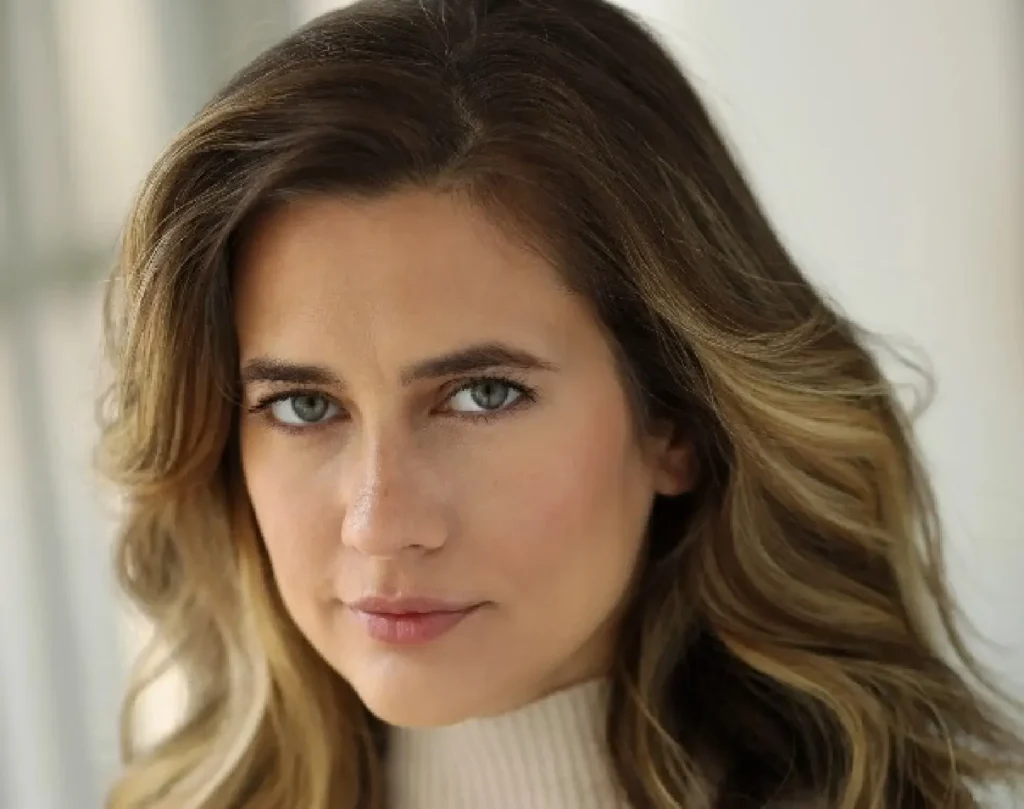
Katie Chonocas
KYRIAKI aka Katie Elizabeth Chonacas is a Greek American actor working in the entertainment industry for two decades. Katie is a multi-disciplinary artist who utilises her voice to inspire change and transformation in people who want to make an impact on the world. She has recently pivoted her artistic craft to NFTs and released the FIRST actor headshot on the blockchain and minted her popular podcast, She’s All Over the Place as NFTs!