No Bullsh*t Talks · Season 2 · Episode 22
Running a Business with ADHD
With Leanne Maskell.
 Watch on YouTube
 Listen on Spotify
 Apple Podcasts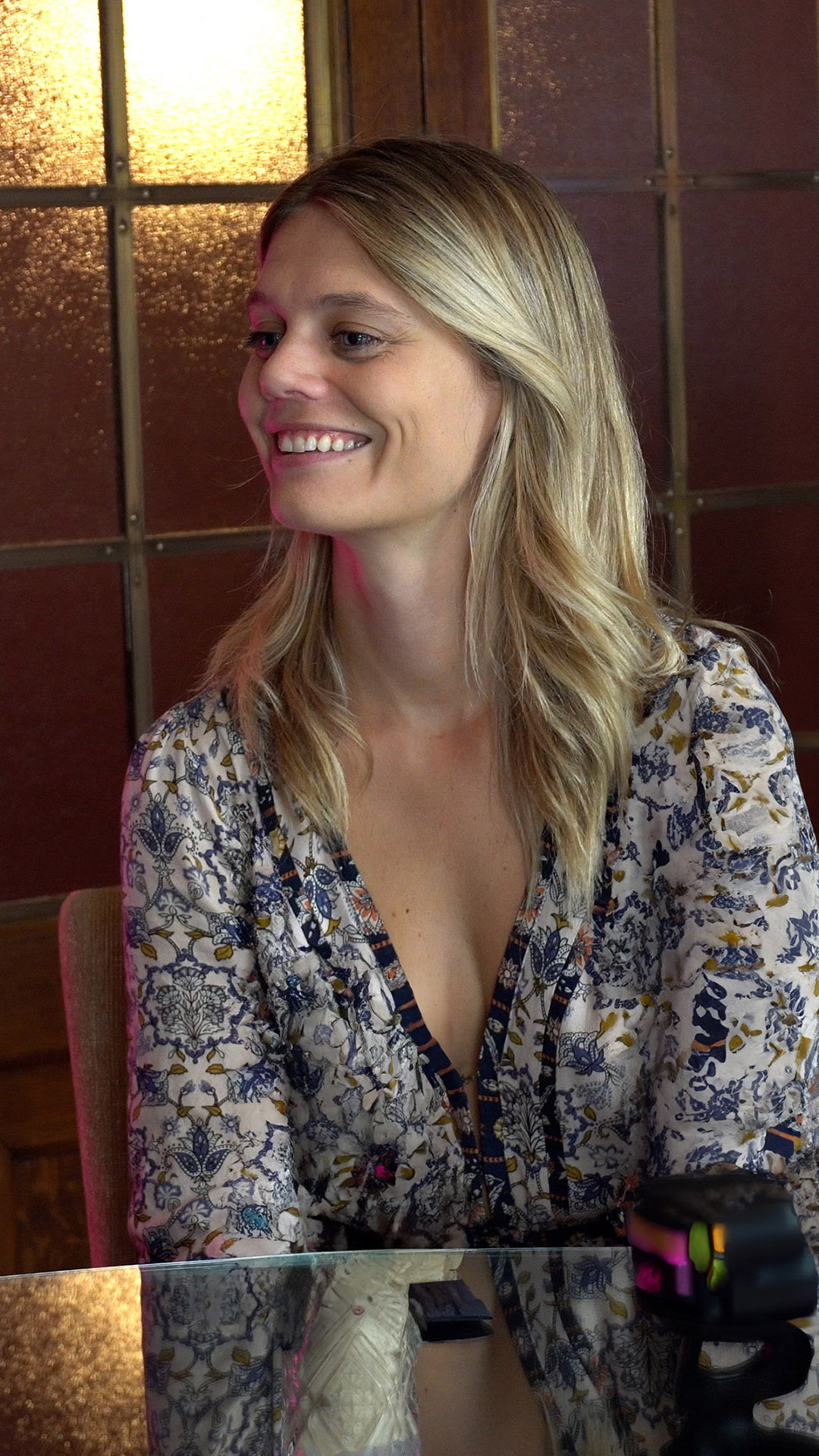
About this conversation
On ADHD and Neurodivergence
Leanne Maskell is the founder of ADHD Works and is one of the countries leading ADHD coaches. Her books on ADHD are bestsellers and she’s a LinkedIn Top Voice on this topic too.
She delves into what it’s like running a business with ADHD and what other founders should do if they think they have ADHD or are struggling with symptoms.
Watch
See the full video conversation.
Listen
Take the conversation with you.
 Audible
Watch the moments
that travelled.
Watch, share and continue on the original platform.
Read the full conversation.
The transcript is organised by timestamp so it can be generated from the master transcript, edited once, and published here without designing a new section every week.
Episode Trailer+
People with ADHD are probably more likely to struggle in normal jobs.
Normal jobs being, um, like employed jobs because our brains have just got so many ideas and fundamentally we are interest-led, so rather than importance-led we’re motivated by what we’re interested in, what we’re inspired by or fantastic ideas. We are nonlinear thinkers.
So like when I started my law job, I was like, I’m going to start up a Twitter account and a podcast and this, and when my manager started and was like, what are you doing? She’s like, you’re a legal policy adviser. I was like, yeah, and we can have a podcast for it. And she was like, no you can’t.
Introduction to No Bullsh*t Talks Podcast+
No Bullsh*t Talks is a podcast for entrepreneurs by entrepreneurs. There’s too much bullshit out there especially when it comes to business. This podcast aims to highlight what’s true and what’s not in the world of entrepreneurship, bringing you honest and raw conversations about the roller coaster that is in entrepreneurship.
Each week my guest will be a high performing entrepreneur sharing the ups and downs of their journey and helping you prepare for the road ahead while providing you with actionable insights and absolute gems of knowledge.
Stay tuned as I introduce this week’s guest.
Meet Leanne Maskell: From Model to ADHD Coach+
Leanne Maskell is a former model who is now a certified ADHD coach, running her own company and working with the likes of Google and Disney. She’s written four books, selling thousands of copies all over the world. Leanne is now dedicated to training other people to become ADHD coaches and bringing awareness to neurodiversity issues.
I present to you this week’s guest, Leanne
Maskell.
Welcome Leanne to the No Bullsh*t Talks podcast today.
Thank you.
Thanks for having me.
Thanks for coming. It’s been exciting to chat to you about what we’re going to talk about today because I feel like it’s a topic that, you know, means a lot to me because I feel like I have a lot of friends as well who are going through some difficult times when it comes to ADHD and, I think it’s a very talked about topic at the moment and I think there’s a lot of misconceptions or a lot of bullshitaround it.
So I would love for you to come on and just bust a lot of that bullshit I think would be great, and just, you know, just I’ll just pick your brains about a few things which would be amazing.
But I would love for you to introduce yourself first to our guest.
Hello, I’m Leanne Maskell. I was terrible introducing myself. I run ADHD Works, which is a company that does ADHD coaching and we also train ADHD coaches. We also train companies like Google, Yahoo, Microsoft and write books.
It’s very ADHD to have that many different plates spinning. It’s fun, it’s never boring.
Yeah, I mean that’s basically the same as me, right? And I think people always ask you that, I hate introducing myself too.
The Link Between ADHD and Entrepreneurship+
But do you know what? It’s fun being a multi-hyphenate. I think there’s a lot of, there’s a lot of stick about that too, and people tell me I do too many things or I need to slow down and I’m like okay part of that’s probably true but you know also it’s who I am and I love doing so many things and I’m actually genuinely really passionate about all those things. It’s not like exactly, it’s not like you’re doing it and then you’re doing one that you don’t really like, you’re like, oh but it’s, it’s you know, that’s who you are and I think it’s great.
And, yeah, see exactly all those sort things you’ve done. So I think I really talk to you about founders and ADHD because I obviously work with a lot of founders, a lot of other entrepreneurs and I just think that there’s a lot of entrepreneurship. I do think there’s a trend between entrepreneurship and ADHD. I think it’s, it makes sense, you know, the way like, you know, an ADHD brain works, it’s like so many ideas, all these things.
It’s natural that they’ve gone into entrepreneurship. So I think that also there’s a lot of entrepreneurs who probably don’t know they have ADHD but I’d love to talk about that and, you know, why, what is it with founders that you’ve seen, that, that, you know, why do so many have ADHD and like, and how can founders who are already super busy doing a million different things cope with running a business while they have ADHD?
Good question. I don’t know. You just try to survive, just trying to get from one day to the next.
Um, but I think there’s loads of research out there linked with entrepreneurs and ADHD. Apparently you’re 300 times more likely to set up a business if you’ve got ADHD.
300 yep, um, okay times or percent? 300 something. Okay, that you, that is very different to like actually keeping the business and running it.
Challenges of ADHD in Business+
And it’s really funny because we are very good at like the new novel, having new ideas like “I’m going to start a new… for women” or “I’m going to make an umbrella that goes across your body,” whatever lovely idea. And then because we don’t have the concept of like planning and time and thinking ahead and like all the boring bits, we just think about the fun bits and then before you know it, we’ve got—I saw a great quote which said, “Not every idea needs an Instagram handle.” We’ve already got the domain name with logo. We’re like, “Oh yay for women,” and like, “Oh I’ve got to actually set this up,” and it’s quite boring.
Yeah, I bought a beauty day. Yeah, oh goodness yeah. The amount of people that I work with who own like millions of domain names and I’m like, stop, cancel all your subscriptions, let’s go through them all.
So there’s that. And then I think there’s also the fact that like people with ADHD are probably more likely to struggle in normal jobs. Normal jobs being, um, like employed jobs because our brains have just got so many ideas and fundamentally we are interest-led, so rather than importance-led we’re motivated by what we’re interested in, what we’re inspired by or fantastic ideas. We are nonlinear thinkers.
So like when I started my law job I was like, I’m going to set up a Twitter account and a podcast and this and that. My manager started and was like, “What are you doing? You’re a legal policy adviser.” I was like, “Yeah, and we can have a podcast for it.” And she was like, “No you can’t.” And I was like, “Why not?”
So it’s like when you’ve got all of these ideas and then trying to fit into an organization where it’s like, no, this is your segment and these other people’s roles. And actually I was just coaching someone this morning and I said your normal is your business is like 250%, but they don’t realize that. You know, you’re just running at such a high speed and have so many ideas and you’re doing so much all the time, but other people aren’t actually doing that much. It’s just that that just feels normal for us.
So I think that kind of brain really lends itself to being an entrepreneur, which is great because on the one hand it’s like having no boundaries—like anything is possible, why not? Why can’t you just write a book? Just write a book.
I’ve got four books. You just do it. After I talked to you last time we had a chat, you said like, you know, what advice would you give to founders? And then I was like, oh it’s a good chat, I’m going to write a book. And I wrote for three weeks nonstop. I believe that when you told me that I was like, that’s amazing. But it’s also exactly what I want to help people do, right? Is to inspire them to do something, just ask questions, have really interesting conversations with people.
But that’s amazing that you just went, okay, three weeks, book done. Just—
Well that’s the big point, three weeks, book done. No, we had three weeks where I did nothing else except write that book constantly, dreamed about it, was like so happy and inspired and was like, yeah, finally got my like inspiration back to write a book, woo.
Can you help, advice? And then I got up to 75% and then I just could not look at it. I woke up one day and I was like, I don’t want to look at it anymore. Couldn’t open it again and still haven’t opened it again.
And so that is like—that’s the thing. Well actually, and then I was like maybe I could turn it into a course and then I was like, and then I’ve made a whole course for it. And then I was like would anyone actually do this course? Is that actually a good idea? I’ve got all of these other things to do.
And now it’s on the shelf of half-finished or three-quarter-finished books. So I think that is a good analogy for like ADHD entrepreneurs. We’re very much more likely to start all the stuff because they’re like “yay woohoo why not,” and then when we lose the interest because it becomes normal then it’s really really hard to sustain it.
Strategies for Managing ADHD+
So I think to your second question of like how do you survive in a business when you have ADHD, it’s being aware of that and knowing that that will um go and then having boundaries and measures in place for yourself like knowing that the high is going to fall off.
How do you do it then? Because I feel like I’m just thinking about—I had someone once tell me, describe me, I didn’t know this, behind my back, described as “the girl who never finishes anything.” That’s how I was described. It’s just, you just get bad memories of this now.
But it’s like, okay, so even if you’re aware that this is what you’re like, it’s one, okay self-awareness is the first step and the most major step for a lot of things. But even once you’re aware of it, how on earth do you get to like—you’ve got 25% of this probably amazing book left to do—how do you complete it? Like what do you do?
Well, nothing has ever finished, right? Like no. That’s what my response would be to them.
And so I think it’s like for me coaching. So I wrote a book called *ADHD and A to Z* a few years ago, they did very well I guess. I was just early on the trend, well earlier than a lot of people. I wrote it after I was diagnosed, exactly the same 75%. Wrote it at work actually. Then one day I just was, couldn’t look at it anymore, didn’t touch it again for eight months.
And then I found out about Access to Work and that they could pay for ADHD coaching, which I was like what, not which I thought about ADHD for eight months, I was just like busy doing other things.
Found out about this, like oh my god, ADHD coaching. And again I would say I’m definitely autistic as well, and like took it very literally in that first coaching session because the coach said, she said “is there anything that you want me to help you stay accountable to finishing for next time?” And I was like oh I need to say something. So I was like, and I was like I’ve got a half a book. I so much.
And she was like really? I was like yeah it’s about ADHD and that’s the people play and—
And then she was like wow that’s amazing. And I was like yeah okay and I like I’ll finish it. And then in that week I finished it. Oh wow.
But then I was like oh god now I have to like do—because then she was like amazing and she was like what’s the next stage? And I was like well I actually don’t, like I didn’t write that book to publish it, I just wrote it kind of out of boredom and like wanting to learn about myself.
So but again then that was a kind of problem with her because she was like cool now what. And then I was like um okay I guess I can publish it on Amazon and I just self-published it. But then at first I really regretted it because I was like I didn’t even want to publish it and I misspelled the title as ADHD which I only realized after putting—
Which is worse. I say nothing has ever finished. And then like another eight months later um a publisher bought it from me and like now it’s still out there doing what it’s doing.
But that’s incredible. And that’s a fair so many—I’m just like amazed about all those things there. Like first of all I don’t know anyone has actually had a book self-published and then a self-published book bought, so that’s amazing achievement because publishers usually don’t do that. So that must have been doing so well.
And I obviously have seen it everywhere, like it’s been—and it looks great as well. So I think it’s just a really fantastic thing.
But also just like the, you know, the accountability things I want again to touch on that because I think, you know, what I want to get out is to everyone out there with ADHD or people who are going through something that think is ADHD and they’re not sure about—we’re going to talk about all this stuff—but I really want to delve into the little things because I think so many people offer this big generic advice but they don’t really get into actual.
Yeah and it’s like okay great that sounds yeah that sounds exact.
But so I’m like right okay so you went from—you finished in a week like what was it that what actually was it like? Was it the accountability that that was I was like…
Oh my god this one has told me that she’s going to read my book and I’ve told her I’m going to finish it in a week and now I must finish it in a week okay so that—
And I think because like I love accountability partners like it’s great.
I was so stressed that’s why coaching is so effective for people with ADHD because it’s like people pleasing to yourself for your own benefit so it’s really really effective for us because it’s like there’s a 30% developmental delay in executive functioning skills of ADHD and particularly self-awareness so that self-awareness part is why we struggle to like do what we know.
So if you’ve got someone that can like be your body double like your coach or can—
God I had this morning like the biggest experience I’ve had a really bad burnout week really really bad like yesterday had a huge kind of meltdown and this morning I went to a personal trainer really randomly they emailed me and offered me a free thing and then I went and was like I don’t exercise I don’t leave the house at all like I don’t do anything.
And I was like this is really going to be really good though. But this is like a coach for your body and he was like yeah yeah it is. I was like oh my god this is exactly what I need because I really really struggle to make myself even leave the house but exercise get a routine.
And I was like oh this guy can get me to come to the gym and like even just leave the house.
So I think it’s recognizing that like you need other people and other—and that’s why you mentioned you have those journals—it’s like you can buy all the journals and try all of the yeah routines habits in the world and be like why isn’t this working but you just have to take it like little bit by bit like do the book whatever one go done like marathons into sprints yeah um and treat it like little hills rather than like huge mountains and beating yourself up for never being able to finish anything and then like scrolling on Instagram being like why can everyone else do this thing but not me.
But it’s just find someone and then get really someone that really gets your brains I think is really important.
And then that’s it because I think that not everyone with ADHD is the same and they have varying different degrees of ADHD and like you said elements of autism plays into it and that really changes the brain.
I think people don’t get it and and you see people getting frustrated with other people and then I think that makes it worse and it’s like if that could actually cause so many more problems yeah so I feel like getting the right person is so important.
Access to Work: A Lifeline for ADHD+
I’d love to talk about that as well because you said Access to Work and I think that so many people don’t know about it. And I think those who do know about it now are still kind of—there’s a massive waiting list with everything in the UK, right? So it’s like I think you have to wait months and months and months for it.
But can we explain just what Access to Work is? Because you said it massively helped you and obviously I know it’s changed a lot of people’s lives. It’s incredible actually what they’re offering. So I’d love to just, like, you know, can you explain a little bit about Access to Work and how it all works and how people are going to get a hold of it?
Yeah, and they have a whole chapter in my book, *ADHD Works at Work*, and a course. And a course. I’ve got three courses.
What Access to Work is, is a UK government scheme from the DWP, which is very ironic because they talk a lot about disability and pensions and benefits, and this isn’t a benefit, it’s a grant. So it’s not like a disability benefit, and anyone with any health condition can get up to £69,000 a year per person of funded support to help them at work.
The whole point is, which I don’t know how good this is, but the whole point is to help someone stay in work because I think it’s more expensive for people to leave the workforce because they’re not able to stay in it because of a health condition, and then to retrain them and get them back into it. But the whole point is that it keeps you in your work.
You mentioned the waitlist. The waitlist now is six to seven months, quite long. The application is not very ADHD friendly. That’s why you may want to do my step-by-step free course because it is incredibly, incredibly helpful.
It’s one of these very frustrating loopholes basically. Like if you can withstand the very, very painful application. I basically fight with Access to Work every single day because we have a lot of coaching clients that get funding from there. We have a lot of employers that we’re helping to navigate through the process, and the process doesn’t always work.
Like if we want to talk to Access to Work, we have to call them up and it takes like an hour on hold on the phone. They’ll only talk to you about like one person’s case at a time.
Adulting. Yeah, it’s a very stressful life.
But I know all the guidance off by heart. But it’s great. It can be really great. Like, you know, it helps me with, what was it called, a virtual assistant, like someone that helps me with all my admin. I would not be here without them honestly. I wouldn’t do anything that I do. And especially the coaching.
But it can pay for all kinds of things like laptops. It won’t pay for reasonable adjustments, which are like what an employer should pay for, but it can pay for people to have support additional to that. So anything like chronic fatigue coaching or any kind of specialist equipment that might be useful or helpful. It can pay for travel. So it’s a super, super, super helpful scheme.
The only problem with it is that it is highly inaccessible. And sorry, I should have said, if you are—and any founder should know this—if you were due to start work in the next four weeks, I believe, or to become self-employed in the next four weeks, then your application will be fast-tracked.
Like, you know, we’ve hired two employees at ADHD Works in the last couple of months and both of these people got their application within the week.
Oh wow.
Yeah, shortcuts.
That’s really crazy. So is that because they want to make sure they’re prepared for the job and that it doesn’t fall through?
I don’t know.
I guess because like you said, it’s more expensive to leave.
You have to know about that. Obviously I know about it, so as soon as I had them apply for Access to Work. But for most people, first of all their employers don’t know, second of all even if their employers do find out, then they’re like what is it? And again it’s very inaccessible, so it’s quite confusing for them to know how to engage with that process.
And then even if they do apply for it and they get that funding, then there’s a huge mix-up on education for the employers of knowing, like, is this a reasonable adjustment? Do we need to do anything else for them? Especially if there’s a delay, which often happens, which is why I write about it in the book, because then they can get a bit mixed up because someone just has to tell their employer about it when they apply.
Yes, so it’s super, super helpful. But I think most people probably in reality wouldn’t tell their employer, especially if they’ve just got a new job, to be like I’m going to apply for Access to Work. Because you obviously have to tell them about how you struggle at work.
So it’s quite a vulnerable thing to do, but I don’t think a lot of people feel comfortable doing that and admitting things, which is tricky.
But I’d like to focus on the founders at the moment just because that’s most people who watch this podcast.
Yeah.
But I think that the question is, I think it’s so difficult with all that sort of stuff. You’re a little bit skeptical about whether the government is actually going to follow through. And like you said, there’s a six or seven month waiting list. How often do you think people get rejected as well, and what are the criteria? Because you said £69,000 is a lot of money, but even if you just got £15,000 or £20,000, that’s a lot of money that would help possibly exactly anything.
Like, you know, that’s going to be life-changing to a lot of people. I know that it’s not a life-changing amount in terms of you’re going to go buy yachts and jets and stuff, but it is a life-changing amount for someone with ADHD who’s stressing as a founder, who can’t do all these million different things and would like to have a VA, an ADHD coach, just kind of help manage their brain a bit more and understand themselves a bit more. It’ll be life-changing literally.
It’s life-changing.
But how? Do people get rejected? I’m guessing they do, and under what grounds?
No, they don’t. No, they don’t get rejected. But they also say they don’t need a formal diagnosis. You don’t need a formal diagnosis of anything to apply, which is great.
Because not to get too technical, as in law basically it’s a legal test, it’s not a medical test. They’re not giving you specialized support, but as I say it’s a very inaccessible process in general. Very admin heavy, very asking questions that are not really very neurodivergent friendly.
Like how many hours a week do you need the support? You’re like, I don’t know the answer to that. What support? Yeah, I don’t know what support is available. Like one week? I thought I worked 100 hours a week and I do. I genuinely work 100 hours a week. I work from 6:00 a.m. until midnight every day.
Even when you’re sleeping, your brain—
Exactly. I work nonstop.
But what does happen very often is that you apply and then it is literally just luck of the draw. You get a case worker. They’ll open your case and they will usually do an independent assessment for you. They refer you to like a third-party person, which actually the majority are pretty nice.
Again, it’s just luck of the draw. If you get a nice person, they might help you.
So for example, if you apply and you want coaching, well I’ll tell you my experience. The first time I applied was basically after being told about it by a coach that I talked to completely by chance, and I was like I need her help.
They did this whole process. The assessor talked to me and I was like I would like coaching with this woman. She understood my brain perfectly. She was going to change my life.
And he was like yeah, it was like self-effectiveness. Then he basically awarded, after all this months of waiting and challenge and having to talk to my employer about it, like £750 for coaching with a provider that wasn’t specific even to ADHD.
And I was so angry. I was like after all of that, are you kidding me?
And then I said, if you’re making me go through all of this process, why can’t I just get the support from this person? I’d rather use that money for her.
And the thing is you actually can use the funding with the supplier of your choice. So they don’t have to. If they give you £750 and you want to use that with a different person, that’s up to you.
But I appealed it. I applied for a reconsideration, which I didn’t think would work, but I was so angry and so emotional and so like this could be the thing.
And I was like also if I get this coaching with these people that are not specialists in ADHD, it’s not going to be helpful. My employer is going to be really angry because they’re going to have higher expectations.
I think they were like, just give it to her.
Then they gave me the funding for my coach. And I was right because it wouldn’t be a useful use of taxpayer money to have given me that funding for coaching that wasn’t specialized to my needs.
But the coaching that I had genuinely enabled me to stay in my job. I was working on all of the COVID legislation at the time, mental health and immigration, Brexit. It was very stressful.
But I stayed in it. I did it. I did stuff for the country. I returned the favor and now obviously hopefully helping a bit with the ADHD crisis that the country is in.
But yeah, it is honestly life-changing. Without coaching I would have just burned out and crashed out. I was living over the road from my job and then just happened to knock. No one made me, I was just so determined not to quit that I was like I’m going to live on chicken.
Oh my God, get it.
Yeah, so that’s not actually that effective of a long-term strategy. And then that office shut down anyway.
Oh my God.
Not my fault. And then COVID hit.
So yeah, it was interesting times.
Sorry, that was a huge tangent for your question.
No, that was great.
You just mentioned the ADHD crisis our country is having, so I want to touch on that because there’s so much in the news and I don’t know what’s weird and what’s not.
But I know that so many people I know who have relied on ADHD meds all their life are now going, oh my God, what do I do? Because it’s this massive shortage and they just feel like they can’t function. They are stripped of everything they know about themselves and some people are turning to recreational drugs now as a result just to compensate for what it is.
And also just again, with the diagnosis, people who sort of have been going most of life having all these symptoms, they don’t know who they are and they suddenly realize actually I might have ADHD. They’re having to wait, what, it’s now two years or something for an official diagnosis?
Seven years. Seven years, ten years.
What? I don’t understand how that can be. I don’t understand how it such a delay but why?
That’s why I wrote that book, *ADHD: Do You Need to Know?* because there’s a whole long story.
But when I was diagnosed, to give the context, I was diagnosed and I didn’t think I had ADHD. I just knew that I didn’t fit into society after studying law, graduating, went over to Australia, kept starting jobs, quitting them, didn’t try living the original life.
And then I basically became really suicidal all the time, but then I would wake up feeling fine. I was like we’re not going to tell anyone about that.
And then I was completely all over the place, being like I’m completely insane because how can I feel that bad and then wake up feeling fine?
Started Googling it, being like I’ve got every single one of these conditions, bipolar, borderline personality. Like how can someone have all of the conditions?
I was terrified. I remember how absolutely terrified I was to go to a doctor. And I kind of mentioned it to a GP once or twice and they were just like, oh you’re fine. You’ve got a law degree.
I was like well they think I’m fine, and then I feel exactly the same that night.
But eventually I became very, very bad and decided to end my life. Fortunately I got ADHD, I’m still here.
Terrible humor to laugh.
I always make that joke and I do talks in companies and they’re like what did she just say?
And then I follow up with no one ever laughs at this joke and I think it’s because I only did half a stand-up comedy course.
But luckily at that point when it got really, really serious, I decided to go to a psychiatrist because I was like you know what, you might as well. I was literally ready to be taken to hospital all the time.
Because I’d never talked to anyone about what was going on in my head properly.
So I just decided to do it. It cost me thousands of pounds and I didn’t even have a GP in England.
And they said, yeah, you’ve got ADHD.
I was like no, I’ve got a rare problem.
And he was like no you don’t. You’ve got really bad ADHD.
I was like well fine then, actually give me your drugs.
I was like that’s actually not that bad. I’m not going to hospital now.
And he was like no, I’m not going to give you drugs straight away. You have to come back. We have forms.
It’s all very painful, part of this process that everything to do with ADHD seems to be an incredibly un-ADHD-friendly process.
He was like we’re going to give you these forms to get your friends and family to fill in and look at your school reports.
And I was like first of all I have no friends and family because I’ve had bites of all of this. And also I have no idea where my school reports are.
And I had a holiday the next day for two weeks to Bali.
So he said come back after your holiday.
I went to Bali and met a stranger on the beach and moved in with him and did a partner visa.
And then a year later I came back and I was like I believe you. ADHD is real. Okay yes, I believe I have ADHD now.
And then I finished off that diagnosis, went on the medication and it was life-changing already.
Because he mentioned ADHD to me, I kind of looked into it a bit more and it was only when I learned about the emotional dysregulation part, which is commonly associated with this thing called rejection sensitive dysphoria, which is basically extreme emotional pain at real or perceived rejection that can lead to very, very strong emotional mood swings including feeling suicidal.
I was like, oh, all right. That I accept.
And yeah, once I got that diagnosis my life completely changed because of the medication.
Although it’s a long story, but that medication made me really, really unwell initially because I had to pay £300 for it every month and I had no money.
So being diagnosed didn’t make things better overnight either. It just made me more like, woohoo, now I know this about myself. I’m going to make all of these impulsive decisions and now I know my life.
And then being like actually nothing has changed.
Struggles with Medication and the NHS+
Even talking to the psychiatrist cost me hundreds of pounds, so it was a really, really stressful time. And the medication nearly almost killed me ironically.
So eventually I went off it completely and I said, like, I’m just going to go for the NHS because my doctor had told me that I couldn’t do that. The psychiatrist, he was like, no, they’ll make you go for all the year-long waiting lists.
I said, I think like I literally cannot afford the subscription. And he wrote me a letter and then my GP who I signed up to told me that they could accept that.
And I was like, so if I hadn’t done that and gone through all of that, I would have never known I could have got this on the NHS.
But many people, again, it’s really complex, which is why it’s so simplified in the media and on social media because it takes a long time to explain these kinds of issues and hear them and to realize it’s different for everyone.
Like some people, their GP won’t recognize private prescriptions. Some people, their GP will.
Some people usually have to go through titration for a period of months before they can. It’s just a complete—some diagnoses cost £3,000, some of them take, like, you know, like my process involving all these steps. Some of them take like half an hour.
So actually my one on the NHS that followed up took like half an hour.
So like it’s a real, real minefield.
The Reality of ADHD and Suicide Risk+
But right now, so that happened to me six years ago and then that’s basically why I wrote this book, *ADHD and A to Z*, because my new GP said, okay, we can give you this medication, but they were like if you want to change your medication or go higher, then you’ll have to go through the NHS again in future.
And he said that’ll take seven years.
Like what?
He was like—
So I was like, if I had to wait seven years, I would definitely be dead. I would not be here.
And I couldn’t believe that was the case. And there actually is a five times higher risk of suicide for people with ADHD than the general population, so it’s a really, really, really serious issue.
Medication Shortages and Their Impact+
And then I think the medication shortage started a year ago and just one day I went to get my medication, jumping through my various bureaucratic hoops each month, and they were just like, yeah, we don’t have it.
And they’re like, this has just run out at the suppliers.
Like where? What? I come from—
And there’s global shortages at the moment. I think it’s due—I don’t know, honestly I’ve got no idea. I think it’s partly due to pharmaceutical reasons, supply and demand, but it has a real, real, really bad impact on people’s lives.
And I have experienced that both myself and personally and professionally, and coaching all of the people that don’t have the medication, becoming suicidal, self-harming, losing jobs, having fights, like really familiar stuff as well. It caused absolute chaos because you don’t know when you’re going to—
Right now you’re only prescribed 30 days at a time because it’s a regulated and controlled drug. So even if you get there, then you don’t know what’s going to happen the next month.
So it basically made me really unwell, as I was when I was paying £300 for it, because similarly back then I didn’t know if I would be able to afford it again.
So it’s bad.
That’s not good. My God, that’s so—
There’s so much.
It is. And I’m just thinking about so many different things right now. I’m like, oh my God. I’m just listening to it and thinking, God, anyone with ADHD is just screwed.
Not to put a negative spin on it, but I’m just like, how on earth do you live with all this?
Because it’s like you just said that the diagnosis changed your life, so I feel like there’s a lot of people who want to get diagnosed because they want to understand themselves a bit more.
And I think when you officially get it, some people are fine with just knowing they kind of have it and don’t really necessarily officially need it, but I guess the reasons for getting officially diagnosed are, A, you can get a prescription to help you.
Navigating ADHD Diagnosis and Costs+
Yeah, well you should be able to get one legally.
You can get one.
I meant like, um, and be I guess it’s just officially knowing that, right?
I guess my questions are like, is it worth doing the private route? Because they say like, you know, the private one you can get it done very, very quickly. Obviously pay for it, but what is that worth to you? What is that bit in your life worth to you?
And like, you know, obviously ballpark, how much does it cost? Like I said, they all vary. I’ve seen different ones as well. But like in terms of getting a diagnosis and maintaining a prescription, can you even do that now privately with the shortage?
That’s a question as well.
So I’m just curious about like what people’s options are now out there.
They have an even more unhappy answer for you because this is why I led a petition and that got 11,000 signatures last year.
Wow.
So pre-diagnosis, like when you’re going to go get an assessment, there are no kind of standard tests or rules of what should happen.
But you can only be diagnosed with ADHD by what they call a qualified person, and that usually means like a psychiatrist or a psychologist, maybe a nurse, a specific nurse that’s had specific training.
Only a psychiatrist can give you medication.
So let’s say you pay like £1,000 for an assessment and you think like, yay, I’m going to get assessed, woohoo, ADHD, and whatever, I’ve scraped all this money together for my assessment and then I’m finally going to get this medication, life-changing medication that’s going to help me.
Which in itself doesn’t help because we say pills don’t give skills. Like it can be hugely helpful, but by itself it still needs adjusting.
The Importance of Formal Diagnosis+
But if you don’t realize, that’s a very big difference and many people don’t because it’s a whole industry.
Then you are diagnosed and then that diagnosis is basically worthless. Because legally there’s a whole issue around the workplace. Like if I wanted a reasonable adjustment from my employer, ADHD could be considered a disability, in which way, for example, they might have to let me work at home if that would help me. Clearly, obviously me living over the road, that would obviously help me. It would help me if I lived further away from work, but it’s different for everyone. That’s flexible.
So that doesn’t require a formal diagnosis either because, like Access to Work, it’s a legal test, it’s not a medical test. But this is really, really confusing for employers.
And then when it comes back to the whole assessment process, so I’d say probably ballpark is like between £900 to £3,000 for an assessment. They’re probably looking at like £1,500.
And yeah, I would say just check your options. Actually, I can’t recommend Dr. Becky Quick of Autism Girls more because they do autism and ADHD assessments, but they’ve been so, so, so thorough.
Which I generally don’t recommend, like any psychiatrists, because I don’t know them. My own experience is not great and it was Harley Street, so it was not the best, and it was a particular person there.
Yeah, so there’s all different kinds, but I would say definitely make sure that you go by recommendation or ask some questions before paying for it.
And I think be really clear about what the purpose is. Because for example, if your purpose is just to know, and I can give you a really great example of me now with my autism assessment.
Personal Experiences with ADHD and Autism+
So I wanted to—well, I’ve been working with autistic people and ADHD for years now, and I very much like how when I’m coaching autistic people, I’m like it’s just normal, and they’re like, no, you’re autistic.
Like yeah.
And then I was like, oh actually, the more that I learned about it, there’s a 50 to 75% crossover of ADHD and autism. I was like, oh this actually is very, very relevant.
Family members of mine have been diagnosed and so I was like, yeah, definitely autism.
But I was like, what’s the point in getting an assessment? So I was very much in this camp for a long time where I was like there is literally no point in me getting told that I have something I already know that I have.
And that’s what I would say for most people out there, is like that assessment—yeah, it’s very amazing and you’re diagnosed—but nothing actually changes.
It’s really an anti-climactic because like I didn’t know I had ADHD which is why I said its life-changing in a situation I said it is really life-changing the diagnostic itself I’m like yeah whatever. Give a drug I was like I don’t really care what this thing is like just sort it out. Because nothing else changed.
It can be a really, really lonely, emotional, difficult process. And so many of us are like, now it all makes sense. It’s not my fault. I’ve been beating myself up for being lazy all my life.
And nothing has actually changed.
Yeah, that’s true.
But also it wasn’t your fault before that diagnosis either. You were just doing the best that you could.
So I’m making a new course called a Neuro-Affirmative Certification Program because basically that’s what I want to—you don’t need that diagnosis to be able to give yourself that kindness and understanding, and the same to other people because we all do think differently.
Sorry, let me think back now.
Yeah, so my autism assessment. I met someone that said that she had an autism assessment of like £750 and I was like, oh, I’m going to do that. And I was like, well I might as well just do it then if it’s cheap-ish.
And I was like, it would be helpful to just know, especially because this year I’ve really, really struggled with the autism symptoms.
And I’ve started dating someone that has ADHD and our manifestations are very, very, very different.
And I was like, oh maybe I’m very, very autistic.
And it was really impacting my life, but again I knew that it wasn’t going to change my life to just be told I’m autistic.
But most recently I was like, you know, I’m just going to do it.
I signed up for this assessment. They booked me in straight away to a three-hour call and then they sent me over some questions to answer.
And the questions were just so bad. I was filling them in and they were just like—they were questions like, do you have problems with your nerves?
And I was like, what kind of nerves?
Also, you don’t know.
Exactly. Like mental nerves? Physical?
And then they just asked, do you take medication for your nerves?
I just really—I guess I’m autistic from their questions.
And then also, question forms for a partner. So my boyfriend was weighing in and he was like, yeah, why are you doing this assessment?
He was like, why are you skimping on something that’s going to change your life so much?
And then I was like, actually right.
And he was like, especially for you. You know the ADHD is such a huge part of your life. Why are you not doing this properly?
Oh, I guess you’re right.
So luckily I canceled it, managed to get a refund, and then went with Dr. Becky Quick of Autism Girls, who I had seen posting on LinkedIn, and the other person, Hattie Richardson. Their posts were just really, really resonant with what I experienced, so much that I was like, oh these people get it.
I think with a lot of women, they are hesitant, similar to me, about going for any kind of assessment because it’s weirdly like an exam that you don’t want to fail because if they tell me that I’m not autistic, then I’m just not liked.
So it’s weird, especially if you have grown to kind of identify with this, to then be told actually by someone else like you don’t fit this criteria because it’s based on little boys basically, and it’s really outdated.
It’s really emotional and difficult.
But I’m really, really, really glad that I’m doing it with them.
And they had a call with me initially, like a free half-an-hour call, going through why do I want an assessment, how is it going to change my life, and they kind of did a bit of pre-work to tell me if it was worth going ahead, which was really useful.
And then she sent me so many forms again, but they were quite fun forms.
They literally sent me like three different forms in the post, forms by email, including ones for other people to fill out.
And she sent me these extra quizzes about masking and a couple of things called alexithymia and monotropism, which are manifestations of autism.
So the first, alexithymia, is difficulty in recognizing and feeling emotions, which I got 99% on.
And monotropism, which is like very intense solo focus.
And even doing these things made me be like, oh my God, I can see myself so, so much in this.
So again, really long answer, but I think it’s just worth thinking about what you’re going to get from it because it can be really, really validating.
And unfortunately, we are in the world right now where labels matter.
If you have a child in school, they’re going to need that formal assessment. And realistically, if you’re going to go to your employer, you’re going to want to have a formal assessment to be able to point to something if you get a bad response.
But it’s not perfect. It’s got a long way to go.
So hopefully things get a bit better.
But if you get the diagnosis, it doesn’t make that much of a difference in some ways because obviously, like you said, it’s not your fault and it never was your fault.
But I do feel like that’s the internal kind of validation and understanding.
But I do believe that it provides external validation.
And I think for a lot of people, like you said, maybe their parents or family, friends, old bosses or whatever, would consider them to be lazy or didn’t understand them or, you know, you’re too manic, or all these things that people get told. All this different things.
And actually they can be like, well there’s a reason why I was that. I wasn’t just being difficult or I wasn’t just trying to be disruptive. That is actually a condition that I’ve got and I can’t help it.
I think that would give a lot of peace to a lot of people because I think, like you said, with the whole social rejection thing, it’s really hard to take.
And then you’re thinking, okay, well this person doesn’t like me because of this and it’s affecting me because of this.
I feel like there must be something in it for that.
No, yes. It can help with external validation and understanding I think.
And that’s basically why I made this course, this neuro-affirmative course.
Because as much as we would like to think that, and as much as when you get diagnosed with something like ADHD, you go on your own very intense journey and your whole life has changed, your identity, for everyone else in your life it depends on the people and their own experiences and opinions and prejudices.
For me personally, when I was diagnosed with ADHD, literally no one cared.
Actually, just one of my family members said it wasn’t real and they were not going to change their mind.
And everything else didn’t really change anything. They were just like, oh, okay.
And I think that’s one of probably the most disappointing and most difficult parts about it.
You do think that you’re like, oh my God, then I’m going to have this reason.
But it’s not—we always say ADHD is not an excuse, but it’s an explanation.
And then you can understand your brain better.
And that’s why I think everyone, if we all treated each other like that, because some people are not diagnosed.
ADHD has only been diagnosed in adults in the UK since 2008.
So many people are not diagnosed. They don’t know that they’re even neurodivergent.
But if you can just appreciate that most people are just trying their best, they’re not lazy, they don’t want to get in trouble.
Like these kids at school that are not going to school, they’re not doing it because they just don’t like going to school. They’re doing it because there’s obviously a reason that they’re not going.
And so instead of fining their parents, the government should understand what that reason is and try and make these environments a bit happier to be a part of.
But yeah, it’s a really difficult thing.
And I think for me now, I’m getting this autism assessment. It’s really funny and sad because I’ve done all this work of ADHD for the last six years and I’m literally the walking ADHD person, stamped on my forehead.
And going through this autism thing now, it’s been strange.
I’ve really not talked about it very much publicly because I felt a bit of an imposter, even though I feel very confident in it.
But I told a friend of mine, oh I’m actually getting an autism assessment, and she was like, you don’t have autism.
Why do people always think that they know you better than you know yourself? I just don’t understand that.
She was like, lots of people are like you.
And I was like, this just—
And she was like, I could get diagnosed with autism if I went for an assessment.
I was like, I know you could because you’ve got a really interesting approach to social interactions there.
And she has got a lot of autistic traits herself.
But she was like, why do you need a label?
And I was like, yeah, I already have a label that’s really helped me a lot.
And I just shut down emotionally and I stopped.
I was just like, I actually don’t even know what to say because it’s so ironic.
She was just saying all of the textbook things that I literally talk about every single day with ADHD.
I hear this stuff every day from people, bad reactions and family and friends and all these people being like, you don’t look like you’ve got ADHD.
And she was just saying all the stuff.
And I was like, you’re one of my best friends.
We’re not friends now. We have not spoken since then because I was just like, oh my God.
I was like, surely you must think that of me for the last five years then as well because why would autism be any different from ADHD?
And I was like, for me, it’s just something that I think is going to help me with this understanding.
I shouldn’t have to justify it or explain it to you.
If your friend is seeking out help, you should just be happy for them and listen to them.
And I guess this inspired me to make this course.
I was like, you know what, I’m going to make a course about it.
But yeah, it’s really difficult because I think we’ve all got our own internal biases.
And that person, I’m sure she didn’t mean to upset me or offend me. It’s just the inherent bias that she has got about autism, whatever it is.
And so it’s really hard to kind of distance yourself and not get really, really angry and really upset.
And I often hear from people after being diagnosed, they’re like, I just want to educate the world.
And the depressing thing is the world is not going to listen.
You can’t make people care and you can’t make them see that about you.
The only thing you can control is yourself.
So it’s annoying by default.
It’s easier to just reach that level of self-acceptance for yourself, whether you have that diagnosis or not, and just be kinder to yourself.
If you can’t do something, it’s not because you’re not trying. There’s a good reason for why you can’t do it.
And maybe just go to sleep and try again tomorrow.
I mean, I just feel like the self-validation is probably always going to be the most important.
If you believe in yourself and you know who you really are, then that can conquer everything.
But I do think it is difficult.
And I think that, like you said, at the moment right now with all the shortage of medication, people are a version of themselves that they don’t know how to manage.
So I definitely want to ask a few questions about that because the majority of people out there with ADHD are unmedicated now.
And a lot of people who even have a prescription don’t want to choose the meds because they’re strong meds.
The stuff that we have to take is strong, so it’s scary because it can lead to addiction, it can lead to other side effects, and lots of people who are kind of anti that sort of stuff won’t take it anyway.
Coping Strategies for Unmedicated ADHD+
What tips do you have for people who have got ADHD or think they’ve got ADHD who are unmedicated? How can they kind of just, you know, get through every day and manage the symptoms?
That’s what I should say.
It can’t lead to addiction. You feel that would be one of the myths of ADHD medication. It actually helps you. If you can regulate your brain, it helps you to stay off addictive substances.
It’s one of the weirdest unintentional parts about this because I often hear from parents, they’re really, really worried about their kids taking it because of addiction.
It’s addictive? Try taking it. I don’t know how a medication that you can forget to take can be addictive.
Every day I’m like, have I taken the medication? I don’t know.
It just makes me feel normal. It’s not addictive in the slightest to me. I’m just like, I feel calm.
And I think that what it did for me, before I was diagnosed and took this medication, I would get drunk literally three or four times a week, like blackout drunk on purpose, just to be hungover the next day so that I could feel calm, which is the weirdest thing to admit to.
But when I took this medication, what was amazing is I just actually didn’t even put myself in those positions anymore.
I didn’t force myself to go clubbing with people I didn’t like to get drunk so that I could be hungover the next day. I just stopped drinking.
And it was a really, really amazing thing that happened.
And that’s what happened to me earlier this year when I wasn’t taking it. Suddenly I was really, really drunk. That’s the impulsivity. I had like a glass of wine on a Sunday lunch with a friend and then we were going to go watch the Taylor Swift movie.
Before I knew it, I was like two bottles of wine down, dancing at the front of the Taylor Swift cinema pretending to be Taylor.
And then I was like, oh my God.
And then by that night I was blacked out in bed and covered in blood because I cut myself on a razor that was in my bag when I was trying to find my phone.
And I was like, oh my God.
I woke up in the morning and had the worst panic attack because I was like, oh my God, whoa, I’ve got a problem.
But I didn’t have a problem. It’s just because that medication had helped me regulate for so long that not being on it was so jarring, and I didn’t know how to regulate myself anymore.
So yeah.
But I think for people that are not on medication, and medication is very much a personal choice, I would completely understand the temptation not to take it.
The thing is, who knows if you’re going to get it next month? I don’t know.
And also it very much changes the way your brain works. So as an adult, if you don’t know what that looks like, it’s really, really scary.
But that’s kind of why I wrote that book, *ADHD A to Z*, because that was what I thought when I heard about this waiting list.
Because I was like, well all of those people on that waiting list, there are things they can do in those seven years. They’re going to be waiting for medication that is not necessarily just medication, and they don’t need the diagnosis for.
So the first thing is self-awareness, like understanding what you struggle with, what your kind of weaknesses are, and also what you want to be doing.
So for example, for me, like I just said earlier, I can’t go to the gym.
But something that did help me, like I know that my phone is really bad, so if I put my phone outside the room then I am much, much, much better at night.
I can sleep a lot better.
Like literally, get an alarm clock. It’s the biggest, best tip I’ve got for anyone. Get an alarm clock and put your phone outside the room.
It is incredibly difficult, incredibly hard, one of the main things we do in coaching.
But if you can do that, your quality of sleep will be so, so much better if you have just an alarm clock.
And then I knew for me actually just going to the gym in my gym clothes would help me to do it.
So I kind of self-coached because I knew that it was when I was getting changed in the morning that then I’d be like, I can’t be bothered to go, it’s fine, it’s cold.
So then just literally getting up and leaving the house.
So it’s kind of like awareness because everyone is very, very different. That’s not going to work for everyone.
But knowing yourself and what has helped you previously.
You can get coaching, like me. It works.
That can be super helpful to have that accountability.
But again, it doesn’t need to be like an ADHD coach, but just anyone in your life that gets it and can help you to create a routine.
Maybe it’s like a friend that you meet every day and you talk about what is your number one objective that you’re going to do today.
Just people that kind of get you is super useful.
Exercise, I was saying it this morning, exercise actually has the same effect on your brain as ADHD medication, but just for a shorter period of time.
And obviously the painful part about this is that we need the motivation to go and exercise in the first place.
So like, it’s very simple. Obviously yes, exercise is very helpful, but if you can’t force yourself to exercise at all, if you have bought a walking treadmill or two and they’ve just sat against your wall the whole time that you’ve owned them, it’s hard.
But doing the hardest thing first in the day and just building a routine and knowing that you don’t have to do it perfectly forever, but just try it one day.
I was saying to this personal trainer this morning, I was like even if I just come to the gym and then go home, that would have been a good win for me.
We got up. We went outside today.
Yeah.
We’ve got medication.
Try to avoid drinking alcohol if you can. It is honestly life-changing.
And try not to put yourself in these positions where you are more exposed to things like drugs because I think addiction is a huge thing that people with ADHD struggle with, and debt as well.
But again, making those things harder for yourself.
So like I try to have delivery apps deleted off my phone because it’s just really easy.
You’d be very surprised at how many people I’ve coached that we’ve looked at their bank accounts and they order delivery three times a day.
Saying that, I did order McDonald’s for breakfast, so I’m not perfect.
Yeah, but that’s the thing.
You will fall off the wagon and then just get back on it.
You’re like, okay, I’m going to delete it off the—
What about like specific tools as well…
Effective Tools and Apps for ADHD Management+
Because I feel like there’s a lot out there and everyone bangs on about their favorite ones out there, but are there any that you swear by that you think really help?
I know I gave you such boring advice.
No, no, they’re practical advice. I’m just curious about the specific tools because it’s real.
That is a—you know, I don’t really believe in apps for ADHD because I would just forget about the subscription and then not use it. So I don’t really believe in specific tools, especially because people always come to coaching and they’re like, “I just want to learn some tips and tricks. What’s the best app for ADHD?” And I’m like, I don’t know. Everyone’s different. Whichever one you use the most, whichever one you’re actually going to use.
But I think, off the top of my head, body doubling. There’s a website called Focusmate, which is really useful, and I think it gives you a few free sessions of body doubling, which is basically you kind of log on to a Zoom, you get matched up with a random person.
Novelty.
Yeah. And you both say what you’re going to do in that time, and then the time goes. It can be really, really helpful for someone with ADHD to have someone there, physically, mentally, remotely rather, to get these things done. That’s really, really useful.
Focusmate.
Like an app that I use as a founder is—well, I don’t use it anymore and now I have to use Xero for the accountant—but QuickBooks was a life-changing moment for me when I discovered that. I was doing all of the tax and the invoices.
Personally, I love QuickBooks, but our accountant forced Xero, which I’ve just about managed to log into now after years.
QuickBooks was super helpful.
For coaching, I have CoachAccountable, which is super useful. Very expensive though, but it keeps all of the notes and things in one place for clients and sessions.
ClickUp and Notion.
Again, it really depends on the one that you’re going to use.
When I first started out ADHD Works, I got this incredible coach called Jacqueline Mallo. I had just started working with ADHD. I had a virtual assistant and it was just chaos. We talked in various different formats like voice texts, phone calls, emails. It was really, really chaotic to keep track of everything and all the emails coming in.
Jackie showed me her Notion hub, which had goals and sprints and what we’re focusing on this week and clients here. I was like, “I would like that.” She just showed it to me and I was like, “Can you make that for me?” She was like, “Well, I can help you make it.” And I was like, “No, I would like your one. How much do I need to pay you for that one?”
And then she basically made me one.
But again, she made me one that was very, very beautiful, but then I didn’t actually use it.
And so that’s what I say again a lot as a coach. It’s pointless to buy some fancy tool if you’re not going to use it.
But this is where the coaching came in super handy because she then coached me and my virtual assistant to use it. So we met every week to make sure we were using it. Me and the virtual assistant met every single morning to make sure that we were putting all of the information into Notion and not like text or email or anything else.
And then that became a habit.
And then that kind of grew so much that we couldn’t really use Notion. I made it so messy. I kept making new pages.
But then now we’ve got ClickUp, which is again an incredibly useful tool because people can fill in forms.
Another huge bit of advice I’d give to any founder is qualify your leads and who can talk to you. I know that if I talk to someone that wants a quick chat with me, I’m going to end up running their business for them for free and not doing any of the things I was meant to do that day.
So now anyone that asks to talk to me basically, or work with me, we send them a form which has got various automated responses on the back end and sorts things out.
So in that way, ClickUp has honestly changed my life. And having that form, because before I used to allow people to just book into my calendar and I talked to you and then I spent the next three weeks writing a book I didn’t intend to write.
Sorry for that.
No, no, no. It was good.
Then I’m sure one day I’ll finish that book and it’ll do something with it, or it led to this chat now.
But you know what I mean. I know that I am so easily distracted that I’ve built these boundaries around me to stop myself.
Oh, Freedom is a great app as well.
Awesome.
It blocks you from social media.
Oh yeah.
It can block you across your iPhone and computer from various websites and it can be set for timers. It also comes up with this green screen for three seconds whenever I try to go on social media, which is really useful.
Like, “Do you really want to do that?”
Yeah, it’s like pause.
Yeah, basically it says that, which is super useful because I’ll often realize I’ve just gone there and actually I don’t need that.
Yeah, I like that.
If it makes you feel any better, you say about Notion or whatever. I now can’t use any of those pretty apps which probably have so many journals because I used to spend so long beautifying them.
I spend more time making them look so pretty and so nice that it became unproductive. Using them was gone.
Right.
And it’s just like, well, it looks beautiful, then I’m like, “Oh, now I’ve just wasted my first two hours of my day and what do I actually need to do?”
So I realized actually just writing stuff down physically.
That’s the tool.
I’m curious because I know lots of people ask. I actually cut down on using tools and the best thing I use is a pen and paper. I squiggle and then I have different colored highlighters and I highlight. That’s the nice satisfying bit.
For me, that’s what I love doing.
But I do like tools. I think people love them and there’s lots of different ones out there.
I know lots of people like Sidekick, the browser that minimizes distractions and stuff like that.
One thing I did quite like is Brain.fm. It’s like a radio and it has all the nice sounds.
Oh, AirPods. AirPods are the most life-changing thing I’ve ever purchased in my life.
No, the Apple AirPods?
And so depressing, I literally lost them the day after I bought them. I left them in the taxi. But then I bought some more and they are the most life-changing, most peaceful—
But why? Is it because of—
Yeah, so that’s why I’ve got the big ones, the same thing. The AirPods Max.
That’s what I was saying. I had the little ones and then I got the big ones because they had better noise reduction.
The Magic of Apple AirPods+
I actually just wear them with no music.
Me too.
I just walk around all the time. They’re my favorite things I own. They are literally my ultimate dream because when I’m at home, if there’s noise outside, I can’t take it. I will often be found just going around outside trying to find a quiet spot.
The library is a great place actually. Good tool: library.
But yeah, the Apple AirPods are just amazing. And there’s these—what are they called—Loop? Loop earplugs. Are they called Loop? They’re kind of like earplugs as well, which are also good.
But the first time I bought those, I hoovered them up the next day. The one time I used a Hoover.
And then the second pair, I wore them at a concert and they were pretty handy. They’re pretty helpful.
Struggles and Financial Challenges with ADHD+
Yeah, there’s all kinds of things, but again it’s just like finding the thing that works for you because everyone has got such different needs and wants.
But there’s so, so, so much stuff out there.
There is, and I feel like there are some people who are trying everything as well. I feel like some people are on medication, they’ve got all the tools, they’re doing everything, but they still struggle. And I really feel for these people because especially financially, like you said, a lot of people with ADHD are not very good with finances and they’re dealing with money problems.
How do they actually manage to do all that, even with all that stuff? Also, how do they ask for help without sounding like a victim? I think a lot of them worry about that, especially in this day and age now where people are actually using ADHD as an excuse even if they don’t have it. They say they’ve got it and they’re just using it as an excuse not to do things.
So people are getting a bit pissed off with it because they don’t want to believe people with it because they think it’s an excuse. So those who actually do have it and are struggling and really want help are too afraid to ask for help because they’re scared of looking like a victim.
So what do they do?
Personal Story: Coping with ADHD+
Good question. I can answer you with a personal story.
The first thing for me to say is that there will never be a point in anybody’s life when they don’t struggle, ever. Especially with ADHD. You know, we’re going to have some days that are great and we’re like, “I’ve got this new business idea and it’s so amazing and I’ve got this and everything’s great,” and then the next day it’s raining and you’re like, “Oh my God, actually I’m a failure.”
Let me kind of say, I’m quite successful in terms of work now, to the point that people mean to me—I mean, I don’t know, life—but God, my blinds. I’ve not had any curtains for like a year.
Well, by the time we finally ordered some blinds, they’re the wrong size.
That happened to me.
Really?
Yeah, and I bought the wrong things for the ceiling so they wouldn’t hang up. Still just got them.
Yeah, same.
And now I still have no blinds, and these gigantic blinds that shouldn’t be there just live in my hallway. I don’t have any hot water and I don’t have a cleaner, and my house is just chaos.
And I’m an ADHD coach and I’ve written at least two books on it, and people pay me to coach them.
Those who can’t teach, coach.
Yeah, I guess so. But I feel like you can also know what you’re supposed to do even if you’re not so good at doing it yourself.
That’s also very true. Most people do.
Well, that’s the great thing about ADHD coaching actually, and that’s I think why we’ve been really successful with ADHD Works, because I’m kind of the face of it and I’m like, well, I’m not going to sell you some kind of perfect tool of how to fix yourself because you’re not broken. You’re just human, and that is the thing of being human.
Life is suffering and life is fun. And actually, that was what came out for me of being so suicidal when I was younger. I was like, “What should I do with my life? What’s the purpose of my life? What is it?” And then eventually it kind of hit me: we’re all going to die anyway. The only point of it is just to have fun. It’s just to enjoy it.
There’ll be bad times, there’ll be good times, but why was I struggling so much and wanting to end it all when anyone could die at any point anyway?
But saying that, you said about struggling and asking for help without sounding like a victim.
Earlier this year—I talk about suicide and stuff a lot and struggles because obviously when I was diagnosed I had all of this happen, and I’ve always been quite open about it, especially more so in the last couple of years.
But earlier this year, when I spoke to you last time, I was so super suicidal. I’ve never been so suicidal in my life. Someone from my company left kind of out of the blue, who had been with me for like two years, and I was like, my whole life just fell apart because it was that structure.
And I was like, “I’m going to close the company.” I was like, “I don’t care. I’m going to do everything.”
I was just so, so, so bad.
But what made it so much worse was I was like, “I literally cannot tell anyone.”
I was in this awful, awful phase of researching the most foolproof way to die and knowing so much shame because I was like, I had literally written an article for *Marie Claire* about how I got out of feeling suicidal six years ago at the same time, and I was like, “I’m such an imposter.”
Because I was like, for me to now say that, first of all, what is it? To just write another article? Say it on the podcast?
The Importance of Therapy and Support+
I was beating myself up so much about it that I was like, I have no one to talk to because it’s so embarrassing to feel like this when I’m literally doing this kind of work and I’ve written this book and all this stuff. I can’t just now feel this way.
And yeah, it was just so, so much shame and silence.
Eventually, I told—oh, I was very lucky. I think having therapy is really, really important, or having people around you, because I was also really annoyed at everyone in my life because I was like, “No one helped me.”
Like, when they were like, “How are you?” I was like, “Actually, I’m really bad,” and then they were like, “Oh no, sorry.” I was like—
And like the person that left, I was like, “God, I wrote her a 50-page book,” the most autistic thing I’ve ever done.
But I was like, I can’t say that out loud because she’s going to feel so awful that she’s leaving. And I was being so dramatic in wanting to close the entire company because she’s leaving. And no wonder she’s leaving because obviously who would want to work for someone that’s so dramatic?
Yeah, so it was a really, really, really awful time in my life.
And I broke up with my boyfriend instantaneously for no particular reason, and they were all compounded by the medication shortages that we’re talking about. So all of these things just kind of spiraled up.
And also for me, because the business had been successful, I wasn’t inspired anymore because I wasn’t doing new stuff. I was just doing the same stuff and feeling really trapped by that.
And then, yeah, I was really fortunate because I had a therapist. She was like, “Leanne, you’re not okay.”
And I was like, “No, I’m fine. Actually, I’m fine.”
She was like, “You should talk to a doctor.”
And I was like, “No, I’m not going to do that.”
And she asked me kind of directly, like, “Have you been feeling suicidal?”
And then I was like, “Not really, but what would happen if I did tell you that?”
And then she was like, “Well, I’m not going to call the police.”
She was like, “But basically we’ll do a risk assessment and stuff, blah blah.”
And then I was like, “Yeah, okay then.”
And then she was like, “Yeah, you should go talk to the doctor. What you’re experiencing is not normal.”
And I was like, “Yeah, yeah, well at some point.”
But that conversation opened up enough for me to talk to a friend that I knew had felt similarly. She was just on holiday and she didn’t respond immediately. I thought she was—she was really lovely about it, but she was like, “You need to tell the person that you’re dating.”
Back together, and I was like, “Yeah, sure.”
And so it took me a really, really long time. It was until things were kind of really falling apart that I then told my boyfriend, and then he helped me to go to the doctor.
And it is crazy because I’ve never told anyone whilst feeling like that that I felt like that. It’s only ever been retrospectively, in the past, like, “Now I’m fine.”
And it was one of the hardest things I’ve ever done.
But with that person, I was like, well, we were about to break up again, and I was like, “I love you. I want to have a nice life.”
And yeah, then I went to the doctor. The doctor was actually great. They put me on citalopram, which is like an antidepressant, anti-anxiety medication, and it has been life-changing.
Since then, I have been a completely, completely different person. And it reminds me a lot of taking ADHD medication actually, maybe even more so, because I’d had a real thing about anti-anxiety medication. I was like, “Oh, it doesn’t really work.”
I took it once for like two days. I was like, “No, I’m not doing that,” because they say it can make you worse before you get better and all that.
But it has been so, so amazing.
So the hard answer for you is that asking for help is just really, really, really hard. And it does make you feel like a victim and all of these things, especially for people with ADHD, because we feel like that impacted self-awareness. It’s like, “Oh, I’m just making it up. I’m just lazy.”
We’ve already got this narrative in our head of beating yourself up, gaslighting yourself, and your struggles.
And then especially that gaslighting is compounded by the fact we can wake up and feel like, “Actually, I’m fine.”
I had a coach the other day that was not in a good place and they were like, “I’m fine.”
They’re like, “Yeah, I’ve been having these panic attacks and dissociating, but I’m ready to be productive now.”
And I’m like, “No, you’re not. No, no, no. Off you go to the doctor.”
But yeah, it’s a really, really difficult thing.
So I think it’s recognizing that you deserve support in the first place and that it is possible to feel differently than how you feel.
And then slowing down bit by bit.
Like yesterday, I was feeling so burnt out and awful, and then today I woke up and I went outside and I went to see this personal trainer and then I had a shower and I was like, “I feel so much better. Wow. That’s really good actually.”
So I think it’s that self-acceptance and asking for help.
It’s really hard to ask for help when you don’t know what help you need, but remembering you don’t need to know what help you need.
And we’ve talked a lot about assessments and how there might not be any point in them, but to be honest with you, that’s why I sought the autism assessment. That was a huge part of it, because feeling like that made me realize, “Oh, it’s not normal.”
And if the ADHD assessment has helped me this much—the whole journey of ADHD, because it wasn’t just that diagnosis that helped me, but it was all of the things that came after that, like writing the book, understanding myself, going on this path and journey—I thought it would be similar for autism.
And I was like, I should at least owe that to myself because obviously I’m still not like 100%.
So I think it’s accepting that no one is ever going to be perfect. Life is not ever going to be beautiful.
But we say you don’t need to struggle so much, to that point where—
It’s not normal to feel suicidal, even though it might feel normal because that’s what you’ve always experienced.
But it’s not.
There is another kind of life out there where you don’t struggle so severely.
And most people do not struggle that much, and there’s no shame in it either.
You’re just living in a world that is not designed for you.
Especially if you’re a founder—being a founder is so fucking hard whether you have ADHD or not.
But then if you’ve got ADHD, we can be great and amazing at some things, and then things like tax, money, or charging money are really, really hard.
And that leads so many founders to give up and be like, “Oh, I’m bad. I failed.”
But actually, it’s just because no one ever taught you how to charge for—or that you deserve money for—what you’re doing.
I know. I mean, there’s a lot of good stuff there. I feel like it’s…
Recognizing and Managing Burnout+
Interesting, and I was thinking about something I read the other day because I read that people with ADHD are also more likely to suffer from burnout because of how the brain works. You know, you’re overdoing it, and they’re also less likely to realize they have burnout because everything becomes normal. So that becomes really difficult, and then they get really sick really quickly and easily and frequently. How would you—what advice would you offer for those who are, you know, maybe like me? You said you could deal with burnout now. How did you avoid it?
It’s so tricky. It’s almost that constant checking of yourself.
Actually, an app really helped me when I was going through that really bad time, which is called Dailyo, and it’s like a mood diary. It was really ADHD-friendly. Sorry, talking about tools, because it just took me like a minute to put a face in—happy, sad, whatever—and you can also put what has related to that day. So it’s like data and dopamine.
And then I realized every single face was sad. I was like, “Oh, maybe that’s not normal. Maybe it’s not normal to be sad every day.” Every day was like an angry red face.
I was like, and that’s what kind of also—it almost was like giving me that proof of like, “Hey, you’re not okay,” because we can kind of convince ourselves otherwise.
So that was really, really helpful.
Keeping a diary or something like that is really useful.
And then I think it’s trying to have a routine. So, for example, I know for myself, if I am ordering McDonald’s for breakfast and there’s no food in my fridge—
Someone said to me, “Just have lunch.”
And I was like, “I don’t have any food in my fridge. Nothing.”
I’d had ice cream for breakfast.
And she was like—
And I was like, “Oh, this is not good.”
Like, I know. And we all know these things, but it’s that we just ignore them.
And then I was like, and I don’t have sleep, and I’ve started sleeping with my phone in my room again because I got out of the routine. I would spend half an hour in the morning just scrolling on social media.
So I think we can all feel it coming.
We’ve got a chapter about burnout and a burnout buddy who can help you realize those symptoms.
Like if you’ve got a friend that is similar to you where you can be like, “Hey.”
For me, for example, I know what my signs of burnout are, which usually involve hating everyone and also booking myself in with everyone, saying yes to everything because I’m like, “I’ll just figure it out later.”
And then realizing it’s Friday night and I’ve got plans with four people, and all I want to do is go home and cry in my empty house with no food in there and surrounded by mess.
And the unfortunate thing is, I think burnout is kind of like this constant—
Many, many people are diagnosed with ADHD after burnout because they don’t realize that their mode of operating is not sustainable on its own.
And then what do you take on?
The more pressure that you’re actually putting on yourself.
So that’s what happened to me this week. I took on so much stuff because I was like, “I’ll just do this new course and I’ll do it in a month and fine, I’ll just make it all.”
And then I also got three articles to write and all these employees and all the—
Actually, this is a lot and not sustainable.
But I think it’s when you realize that.
That’s why last night was kind of my bad point, but then today—thankfully for you, this would be a very different podcast.
But then trying to get yourself out of it as soon as possible and do one thing that will help you.
I know for me, exercise, going to yoga, having a routine is so, so, so important.
And I know that it’s not ever going to stay permanently, but going to that personal trainer was super, super helpful today because I was like, “Oh, this is a new thing that can help me.”
Just get back into doing one small thing.
And then that’s helped me throughout the rest of the day to buy lunch and eat lunch.
So it’s just not beating yourself up and trying to spot it and take some action.
Like today I went through my calendar for next week and I was like, “What can I cancel?”
So it’s not that magical— which is very ADHD— all or nothing.
It’s not like, “Oh, I must go on a retreat,” and then going on the retreat and just working the whole time, being on your phone the whole time.
What’s the point?
Or like, also going on holiday—I find going on holiday really tough because it’s like spinning 50 plates, and you know that if you stop spinning them they’re all just going to crash to the ground and you’re just going to have to pick them back up again and it’s going to be even harder.
So trying to put down just one plate where you can, so you’ve got 49 plates.
And then you’re like, “Oh, actually the world didn’t end when I quit my volunteer job that’s taking up all my time. Maybe I’m going to quit my second volunteer job that’s taking all my time up.”
It’s like little, little steps and trying to be nice to yourself and trying to ask for help as well.
Like my friend yesterday, I was like, “Oh, can we meet at five?” because I was actually having a really bad day.
And then she was like, “Yeah, sure. Can’t wait to see you.”
And I was like, “I don’t want to see you.”
And then she was like, “Should we go for a walk?”
And I was like, “I don’t want to go for a walk.”
But it was actually so, so helpful to be forced to go for a walk.
So having friends that won’t give up on you when you’re like, “Oh, I can’t make it, sorry.”
And they’re not going to be like, “Okay, see you next time.”
But the ones that are going to be like, “All right, I’ll see you then,” and not let you back out of stuff just to go and alcohol yourself to death are really important.
You just mentioned the importance of having good friends in your life,
Navigating Friendships and Relationships with ADHD+
And I really want to talk to you about friendships and relationships and what that’s like when you have ADHD because I think that a lot of people misunderstand.
Again, there’s a lot of stuff out there now. People are saying they’ve got ADHD and using it as an excuse, and it’s obviously pushing people away. But I know that those with ADHD often find it difficult to maintain relationships. They do get overly sensitive, they push people away, they self-sabotage, and it causes problems.
I think there’s a common thing where lots of them don’t have lots of relationships as well. They have a few.
And I know there’s a lot of people who, I guess, feel bad about themselves. They start to feel like there’s something wrong with them because they’re damaging relationships and everything like that. I read that sort of stuff, and I’m sure you’ve known a lot of people who have done the same thing, because I feel like there are a lot of people out there who would resonate with this.
Yeah, that’s why I run these ADHD retreats, and it is the nicest thing.
The last time I did one, everyone there was like, “All my life I’ve always been on the fringe of groups and I’m not really in a group, but here I feel normal and accepted,” which is really nice.
But it was hard for me because I fell on the fringe because I was running the retreat, and I was like, “Same here, but I’m also facilitating.”
No, it was lovely.
I think that when you do think differently to most people, it’s really, really lonely. I think that’s probably how I would summarize having ADHD. It’s lonely, because it’s all happening inside your head and on the outside you look normal, and you may even be high-achieving, so people don’t assume that you can’t feed yourself or shower without extreme difficulty.
And I think friendships… there is a study that says children with ADHD receive 20,000 more negative comments than their peers by the age of 12, and so many people with ADHD that I know have been bullied.
Yeah, me too.
And so when you grow up feeling like the odd one out, then it makes you have a really chaotic relationship to relationships, and you’re very, very vulnerable, at least in my experience. Extremely vulnerable.
And I would say that is very much from both the ADHD and the autism.
I never really thought I could pick friends. I was just like, “Okay, how do I find the other person that’s alone and being bullied?” So I would just have one person to hang out with.
And I also think this is something where, when I did have groups of friends at school or university, the most toxic kind of bullying came from the people I was closest to because they were the ones that got my attention the most.
The ones that were alright and kind of nice to me, the ones that weren’t harassing me all the time and asking me for things, I would never think to reach out to them.
And also, because I was so hectic all the time in my head, I found it really hard to even be around people without masking and having to think about what to say and how to act, constantly helping people and feeling like there was a real transactional nature toward relationships.
Which very much came from this rejection-sensitive dysphoria and probably, for me, was compounded by the fact that I’ve been a model since the age of 13. So I was always so guilty for existing and making people feel bad because I was a model, even though I didn’t want to be a model. I didn’t think anything of it.
And that has definitely carried through my life.
Friendships are strange because there are no rules. No one tells you how often you’re meant to meet up or how often you’re meant to talk.
We’re all living in this world where we get a million messages every day from random people.
Like, I replied to your message today and realized I’d not listened to your voice note from six months ago. Sorry.
Because I just can’t listen to voice notes. If someone sends me a voice note, I’m like, “I’ll listen to that later,” and then it’s gone out of my brain.
Thanks for not hating me.
But I didn’t even know it was you. I read text because I never saw anything.
Yeah, exactly.
Birthdays, oh God, I always forget everyone’s birthday. Last year I thought, “Cannot forget my friend’s birthday again this year.” I had it in my diary and still forgot it.
It’s one of these weird things. Why do we even celebrate birthdays?
I hate my birthday so much. Birthdays were a terrible time for me as a child, and as an adult there have been a few times I’ve organized things, and then I spend the entire time stressing out over other people.
Are they okay? Are these friends of that person? Are they talking?
It’s so stressful.
I take great pleasure in doing nothing.
And dating and relationships are a whole other terrifying experience.
For me, I’m literally in my first relationship ever now where I’ve not just moved in with someone very quickly, which I’ve now realized is strongly related to autism.
That’s how my life is.
I’ve really struggled because if I spend a night with someone, then getting back into my routine, going home, putting on the headset, cooking, and surviving becomes difficult.
So I would usually move in with people really quickly, and that led to a lot of really bad situations that I was very lucky to get out of.
Being impulsive and having this very different, literal way of thinking means that if someone comes up to you and says they want to hang out with you or be friends, I’m incapable of saying no.
Someone asked me to do something yesterday that I really did not want to do, and I was like, “How do I say no to this?”
My boyfriend was just like, “Just say no. You can just say no.”
And I was like, “It’s really weird. If I say no, I don’t like you.”
Often people will very very commonly message me and say, “Hi, my friend’s going through a bad time with ADHD. Can you have a chat with them?”
And then I’ll just ignore the message because I can’t say no and I don’t know what to say.
I’m like, “No, no, charge people. I don’t have any time for myself.”
So I just ignore them, which is probably not great either.
And then I just kind of accept that people don’t like me, and I’m alright with that.
Challenges of Being an ADHD Founder+
It’s so tough though. I feel like, as a founder as well, you’re supposed to build relationships. I mean, I’m literally running a members club, and the whole point of it is that I’m going to build more meaningful relationships. And I know that it’s hard because people with ADHD struggle with this already, but it’s also, as a founder, you need to hire people if you want to grow your business. You need to hire people, and then it’s like, how do you hire people?
And what, like you just said earlier, you’re saying, you know, why would anyone want to work with me if I’m kind of kooky? And then, you know, they have to understand you as a person, and you have all these requirements of the way that you work, and they’re going to interpret it a different way, or you’re going to be in your own head thinking all these things. It’s really difficult.
I know that people with ADHD struggle to hire, and again, you’ve been through that. Is there any words of wisdom that you could offer for those?
That’s what I’m trying to make this course for, this neuro-affirmative course. I was like, then lawyers, accountants, and all these different kinds of people that I’m going to work with can do it and understand me.
Like our accountant, I recently had a huge freakout at them because they didn’t reply, and I was like, “You…” and I freaked out, freaked out. I was like, “I can’t eat because of you.” And then when they replied on the Monday, they were like, “Your payday is the last day of the month, not the last Friday.”
I was like, “No. Okay. Thank you. Sorry about that. I forgot about that.”
Or I’ll get really anxious about doing things wrong or not replying to things. But I was like, if I do this course, it will hopefully help people to have these conversations upfront, to recognize, “Oh, that person thinks differently to me,” and to give a bit of extra context. For me, not to feel like, “Oh, they’re judging me on top of that, and they don’t like me, and I’m causing them all these problems,” but to be able to give that little bit of reassurance.
Because similarly, with all people, I’ve experienced it running this company. You might have people messaging me saying, “I’ve got rejection-sensitive dysphoria, and you sending a template response has triggered me.”
And I’m like, “All right, I’ll add that to my list of things.”
Someone emailed me the other day and said, “You obviously don’t care about people with ADHD.”
And I was like, that’s literally your entire life.
I pulled them up. I was like, “Hello.” They sent it to the hello inbox, and they were like, “You don’t care about people with ADHD if she’s not doing this thing.”
And I was like, “Hi, it’s me, Leanne from ADHD Works. I’m just wondering what I can do for you.”
And I was like, because I’ve been working since six o’clock in the morning.
And they were like, “I’m sorry.”
So yeah, it’s hard.
I actually had a meeting with my new employee this morning, and I was saying to her, “I am a really hard person to work with, especially as a manager.”
And it does make me really self-conscious because that all-or-nothing approach doesn’t translate very well to the workplace.
Luckily, we had such a great conversation because she is also autistic, so we were able to have this really honest, open conversation where neither of us were taking what we were saying badly and able to reassure each other.
There is no magic tool. It’s not going to be like, “Off you go, yay.” It’s just figuring that out together.
Most people wouldn’t have those conversations. I think most people don’t really know their colleagues at all. But if you can have colleagues where you can have that level of self-awareness and vulnerability, to be able to meet them in the middle, it’s a really amazing thing.
Which is why I think a lot of people that work at ADHD Works like it. I hope.
But saying that, I’m also sure that a lot of people that have worked there don’t particularly like me anymore because I people-pleased in the beginning, and I changed my mind a lot.
I was like, “We’re going to have team meetings every week.”
Then the next week I was like, “Actually every other week.”
I think we’ve got like six WhatsApp groups right now. I’m like, “Actually, I’m not doing that anymore.”
So it’s really hard.
People-pleasing is hard as well.
In the beginning, I was like, “I really want to pay everyone super, super well.”
I think I just assumed, “Oh, if I’m really nice to people, they’ll be nice to me.”
And they’re not.
They’re like, “Give me more money.”
And you’re like, “But I’m already giving you more money than…”
And they’re like, “No, I would like more.”
And you’re like, “All right then. This doesn’t actually work.”
So it’s a long journey.
I think finding people like you and having self-awareness and coaching is so, so helpful for this stuff.
Like I mentioned earlier, the coach that helped me and my virtual assistant, having a third party there to help bridge the gap is really important.
I think taking it slowly as well and not being afraid to go backwards.
Earlier, probably at the start of the year, we started with like twenty coaches and a team of about eight people.
Then in March, when this employee left, I ended the contracts for about twenty people, and now we’ve got a team of five, which is so nice.
I’m very sorry to the people that I let go, but I was literally about to kill myself, so there would have been no company.
At that point, I felt like I’d grown this gigantic people-pleasing machine where everyone was happy and taking and also didn’t like me for whatever reason because I wasn’t doing enough, except me.
And I was like, how have I got into this position?
So when this person said, “I’m leaving,” I was like, “I’m not happy. I’ll leave too.”
Everyone else was like, “No, don’t quit.”
Then I was like, “Should I get a business manager?”
But I thought, “Oh my God, if I get a business manager, I’m just going to have to manage them.”
I think trust is a really big thing for people with ADHD because we struggle to trust ourselves, so it’s really hard to trust someone else.
But I think the only answer I have is to try your best to be aware of your own challenges, but not beat yourself up for them or victimize yourself.
Not saying, “No one could ever work with me because I’m unlovable and I deserve to be in a cage by myself.”
People can’t.
No one is perfect.
Being aware of your own strengths and weaknesses, your boundaries, and what you need in place helps you navigate that with other people.
Because those boundaries are like the invisible lines of where me and you end as people, and learning how to communicate that to someone.
Even with saying no.
You know how we’re both like, “I don’t know how to say no because it’s rude.”
Learning that “no” is not a bad word.
And to say, “Actually, when you did this thing, maybe it wasn’t that good.”
That’s why with my new employee, who is ADHD and autistic as well, when we met, we clicked.
That’s why I know that I can say anything to her because she thinks exactly the same way as me.
So I think it’s just finding the right people, not the first people.
Not getting employed, not building your business like you think you should, and not being afraid to go backwards.
I was really fortunate that I went backwards instead of getting a business manager.
At the time, I had various mentor-type people saying, “You should just hire a business manager. They can take you from this figure to that figure in five years.”
They introduced me to a recruitment company that told me they were going to charge me £3,000 to find one.
And I was like, “Never mind. I give up. It’s all right. I’ll just fire everyone. Actually, it’s all good.”
Which was against all of the advice from everyone I was talking to.
They were like, “You just need a manager.”
And I was like, “But I don’t want to give my company away.”
So I’m really glad that I listened to myself and downsized.
And we do exactly the same amount of work anyway with fewer people.
Someone I know started a company and just hired loads and loads of people because they got funding.
They thought that’s what you should do.
Then they came to me for coaching and said, “I’m a bad manager.”
I was like, “No, you just don’t need all these people.”
They don’t have anything to do, so they’re bored, and they’re not doing anything because they don’t have the processes in place.
I think it’s a classic entrepreneurship problem.
People rush. They grow, grow, grow, and don’t actually think about the structures.
We downsized, and we were so much happier.
And I think that’s what it is.
Self-Acceptance and Moving Forward+
Sometimes it’s just better understanding who you are.
Like I said, after everything we’ve covered today, I feel like it’s been incredible. But I think it all comes down to that self-awareness thing, right? If you understand who you are, what your needs are, what you really want, what you really believe in, and what you need—and actually, you won’t always know the answer—but having the patience to learn those answers, I think then it’ll be okay.
That’s it. Self-acceptance.
Before, I would spend so much time beating myself up, and now I’m like, “It’s all right that you ordered McDonald’s for breakfast. Tomorrow we’re not going to do that.”
Then you don’t waste all that time going in circles against yourself. You’re just like, “All right, I know this thing has happened,” or, “We’ve made this mistake,” but it doesn’t mean the world is over. We’ll start again tomorrow.
Or, “Okay, yeah, maybe this isn’t great right now. We’ve got all these people, but maybe we’re going to end some contracts because otherwise you’re going to die.” Right, we just have to get through it.
That’s the thing—you focus on what you can control.
Although it might feel difficult to control yourself, especially if you have ADHD, there are things that you can control.
You can always say no.
You can always delete stuff out of your calendar.
Which is a good feeling.
You can take a sick day.
Okay.
Yeah.
Great feeling.
I think it’s amazing. I think there’s been so much here, so thank you so much. I’m going to put all your social handles and all the things you’ve recommended as well. You’ve made loads of recommendations. Your courses are going to make this the biggest set of show notes ever, but it’s going to be incredible.
So thank you for everything, and I hope everyone’s enjoyed today’s episode.
Hope so.
Yay.
[Music]
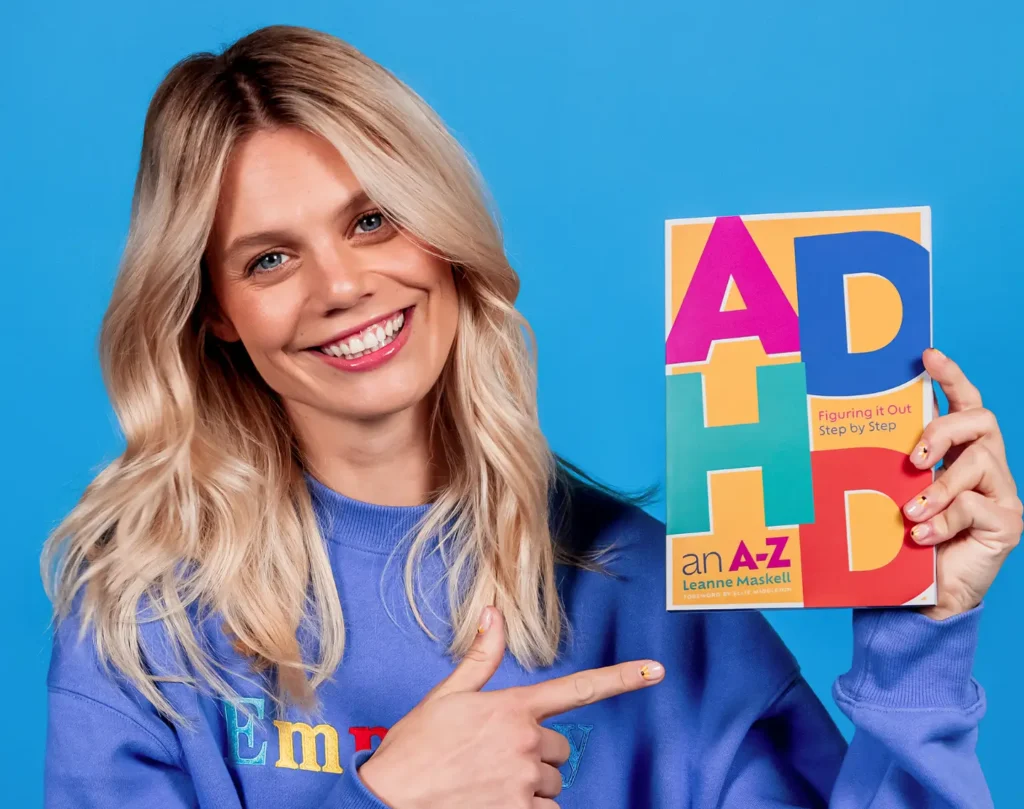
Meet the guest
Leanne Maskell
Leanne Maskell is a former model who is now a Certified ADHD coach, running her own company, working with the likes of Google and Disney. She’s written 4 books, selling thousands of copies all over the world. Leanne is now dedicated to training other people to become ADHD coaches and bring awareness to neurodiversity issues. Leanne’s Socials