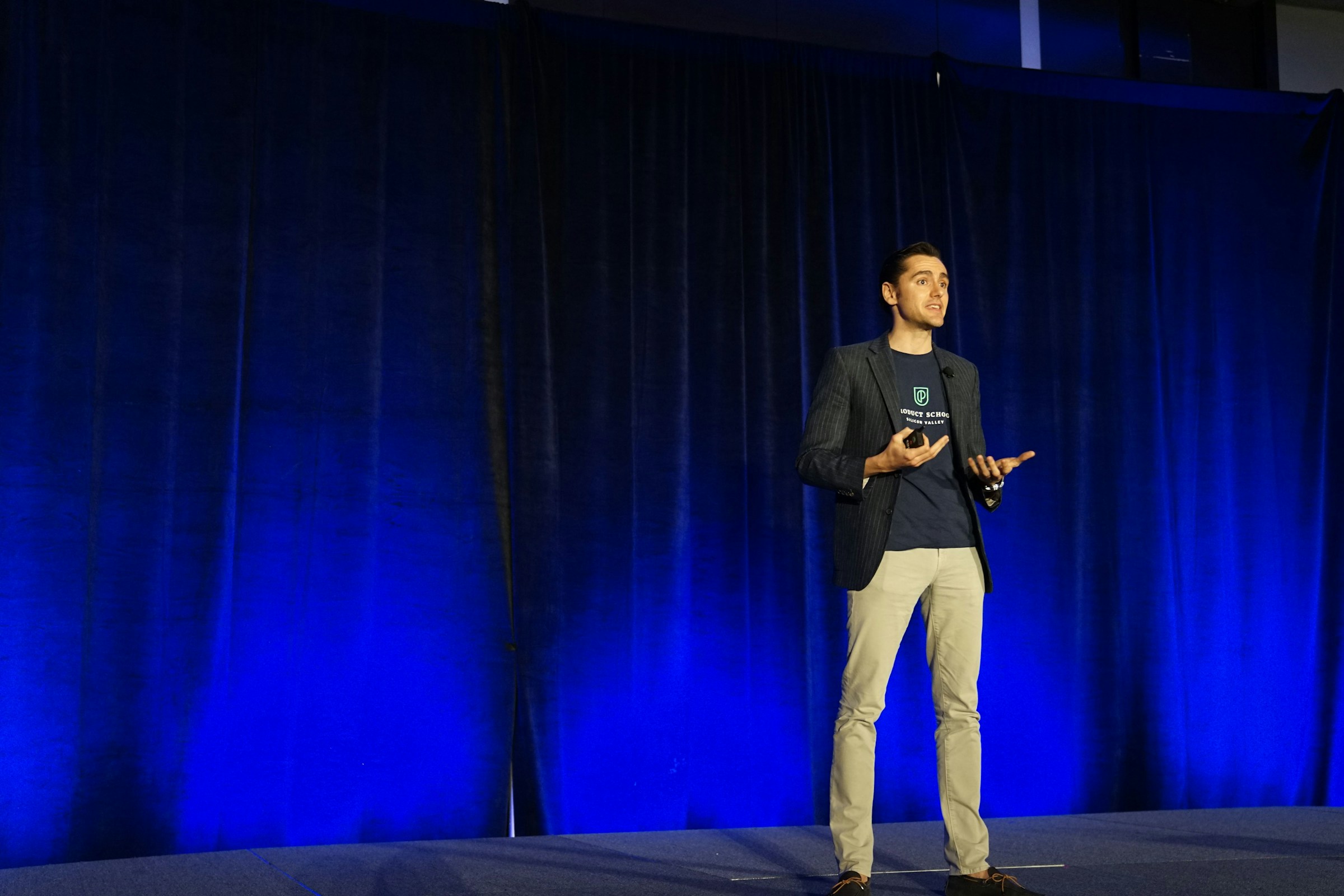
Paid speaking becomes easier to sell when founders treat it as a defined professional service rather than waiting to be discovered.
Speaking is a service, not a reward
A lot of experts treat paid speaking as something that happens after they become sufficiently famous. Build the business, grow an audience, wait for an organiser to notice you, and eventually somebody will offer a fee.
Pascalle Bergmans challenges that passive model. If you want speaking to generate revenue, treat it like a service.
That means knowing what you speak about, who it is for and why an organiser would pay for it. “I can talk about entrepreneurship” is not a proposition. “I help first-time managers have difficult conversations without destroying trust” is much easier to understand and programme.
The shift matters because event organisers are buying an outcome for an audience. Your biography may establish credibility, but the session still needs to solve a problem, create an experience or deliver useful insight.
Build a proposition before a speaker page
Founders often start with the assets: professional photographs, a showreel, a speaker page. Those are useful, but they cannot compensate for a vague offer.
Define two or three subjects where your experience gives you something worth saying. For each, identify the audience, the central problem and what people should leave understanding or able to do.
This does not mean writing the same speech forever. It gives buyers something concrete enough to buy.
Treat speaking like a business
Pascalle Bergmans explains why getting paid starts with treating speaking as a defined service rather than an occasional opportunity.
Watch on Instagram →Proof reduces the organiser’s risk
An event organiser is taking a risk when they put somebody on stage. A weak session affects the audience, the programme and the reputation of the event.
Your job is to make the decision easier.
Proof can include footage, testimonials, previous event names, audience feedback and examples of the ideas you communicate. Early on, you may deliberately accept selected unpaid opportunities because they provide relevant footage or access to the audience you want. The key word is deliberately.
Free speaking should have a strategic return. If it repeatedly consumes preparation and travel time without building proof, relationships or demand, it is not a route to paid work. It is unpaid work.
In order to get paid, you need to start first seeing it as an actual service and almost like its own business.
Make yourself easy to book
A surprising amount of professional positioning is operational.
Have a concise biography, strong photographs, clear session descriptions and a simple way to enquire. Know your fee structure and what it includes. Be able to explain travel requirements, timings and technical needs without a week of emails.
Respond quickly. Ask about the audience. Understand what else is happening at the event. Tailor examples without rebuilding the entire talk from scratch.
Professionalism before the event is part of the product because it tells the organiser what working with you is likely to feel like.
Create demand outside the events industry
The best route to speaking opportunities is not always emailing conference organisers.
Publish ideas. Speak on podcasts. Run webinars. Contribute intelligently to conversations in your field. Let potential buyers see how you think and communicate.
This is especially powerful for founders because the expertise often already exists inside the business. Speaking becomes another way to package and distribute it.
Price the value, not only the hour
A keynote may last forty minutes, but the work around it can include years of expertise, preparation, travel, rehearsal and the opportunity cost of being away from the business.
That does not mean every new speaker can demand a huge fee. It means pricing should reflect the service rather than pretending the only cost is stage time.
Different events also have different economics. A small community event and a corporate conference are not the same buyer. Founders can create a fee structure that reflects format, audience, customisation and travel while leaving room for strategic exceptions.
The important thing is to make exceptions consciously. “This audience is strategically valuable and we will receive professional footage” is a decision. “They said there was no budget and I felt awkward asking” is not.
Paid speaking becomes much less mysterious once it is treated as a business activity. There is an offer, a buyer, proof, marketing, sales, delivery and pricing.
You do not have to wait for somebody to declare you a speaker. Build the service, demonstrate the value and give the right people a clear reason to book it.
Build relationships before you need the booking
Speaking opportunities often come through people who have already encountered your ideas: previous organisers, podcast hosts, clients, community leaders or other speakers. Keep those relationships warm without treating every interaction as a pitch. Share useful work, recommend other people and follow up after events. A professional network compounds in the same way as content. When an organiser suddenly needs somebody credible for a particular subject, familiarity can move you from a cold application to an obvious shortlist.
Keep a record of every appearance as well. Capture audience feedback, questions, photographs, footage and the organiser’s comments while the event is fresh. Over time this creates a bank of proof that makes future sales easier and helps you see which subjects consistently create the strongest response.