Non-Execs Are Like Bidets
With Lawrie Philpott.
 Watch on YouTube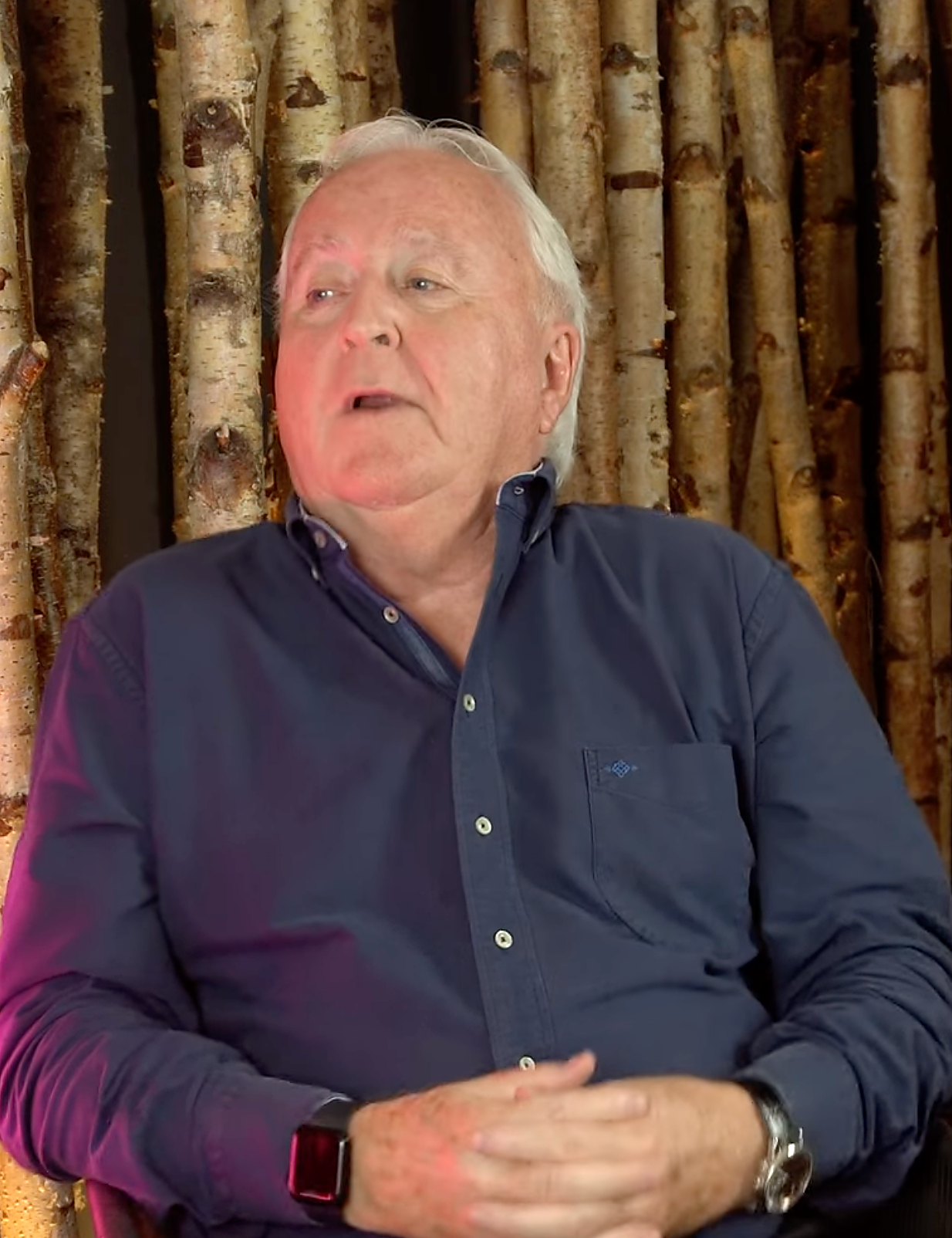
What non-execs are actually for
Lawrie Philpott on consulting, leadership, long-term client relationships and what boards and non-executive directors are actually for.
See the full video conversation.
Take the conversation with you.
Read the full conversation.
The transcript is organised by timestamp so it can be generated from the master transcript, edited once, and published here without designing a new section every week.
Trailer: a career in management consulting+
00:00:00.080 — 00:00:40.080 · Speaker 1
You've got to kind of take life as it come. It doesn't always come wrapped up in a bow. With the Sudan Railways Corporation, and that was probably the toughest of all of them, because Khartoum is the hottest city in the world. So when you get off the plane there, the heat hits you like a hammer. You might think management consulting is a boring old trade, but not for me. If you deliver great work to a client, if you over deliver, if you give them things that they didn't expect, they're going to keep you on. My job is to give you the best possible advice that I can. Your job is to take it or leave it. You've got two ears and one mouth. You should use them in that proportion. If you're not listening, you're not learning noble shit.
00:00:40.120 — 00:01:12.090 · Speaker 2
Talks is a podcast for entrepreneurs by entrepreneurs. There's too much bullshit out there, especially when it comes to business. This podcast aims to highlight what's true and what's not in the world of entrepreneurship, bringing you honest and raw conversations about the rollercoaster that is entrepreneurship. Each week my guest will be a high performing entrepreneur, sharing the ups and downs of their journey and helping you prepare for the road ahead while providing you with actionable insights and absolute gems of knowledge. Stay tuned as I introduce this week's guest.
Meet Lawrie Philpott+
00:01:18.690 — 00:01:40.770 · Speaker 2
Laurie Philpot is the co-founder of Philpot Black, a leadership consultancy. After 30 years inside PDC, where he ran the firm's entire human Resource Advisory group, he's chaired several boards of both trusts and start ups and now he has his own podcast, Leadership Listening. I present to you this week's guest, Laurie Footprint.
00:01:44.770 — 00:01:47.170 · Speaker 3
Well, welcome Laurie to No Bullsh*t Talks.
00:01:47.210 — 00:01:48.250 · Speaker 1
Delighted to be here.
00:01:48.290 — 00:02:08.420 · Speaker 3
I'm delighted that you're here. This is going to be brilliant. I feel like, um, you know, you are a little bit different to some of the guests that we've had because you've actually had, like, a very diverse career and all over the place, and I've been doing this a while. So much experience. So many like, you know, nuggets you're going to be able to share with us. So I'm really excited to have you kind of divulge into that today.
00:02:08.460 — 00:02:10.060 · Speaker 4
Yeah. It's interesting.
A career without a five-year plan+
00:02:10.100 — 00:02:28.300 · Speaker 1
I never had a career plan. So don't don't go digging for a plan. Um, and it's got four components. It's got local government. So public service, it's got Coopers and Lybrand. So one of the big global accounting and consulting firms, then my own firm, Philip Black. And now I have my own podcast.
00:02:28.300 — 00:02:34.620 · Speaker 3
So you shouldn't be telling a chess player that you have no plan though, because that's, you know, rule number one, I want like.
00:02:34.900 — 00:02:36.100 · Speaker 1
That's not I'm not a chess.
00:02:37.540 — 00:03:09.200 · Speaker 3
But I'm going to be very disappointed to hear that. But obviously, you know, you might not have had a plan as in the classic interview question of where do you see yourself in five years time sort of plan, which I think you know, it. Obviously that's the hill there, but you obviously use strategy and planning in your day to day to get to where you are now. So I want to hear about little bits of that I think would be great. I would like you to introduce yourself though. So, you know, because like I said, you've got the four pillars you just mentioned, but who would you consider you are and how would you introduce yourself to people?
00:03:09.600 — 00:03:17.960 · Speaker 1
Well, the baseline answer to that is I'm a management consultant. And in a sense, even though I was in the public sector for my first career, I
00:03:19.080 — 00:04:25.810 · Speaker 1
certainly was towards the middle and latter part of my local government career doing kind of management consulting, organisation leadership, human resources kind of things. And that then transcended by going into Coopers and Lybrand, into their consulting practice, which was very small in those days, management consulting had not exploded in the way that it more recently has. And then I'd always wanted my own business. I'm half Irish. My grandfather was a pig broker, bought and sold pigs, so I think there was a bit of an entrepreneur in me. And so 30 years ago, I started Philpott, back in the days when coaching of leaders and leadership teams was really in its infancy, there was hardly anything in London at all. And then more recently, I've got into the digital world and have a podcast which is called Leadership Listening, and we're up to about 18 episodes at the moment. So my feet are in the management, consulting and leadership patch.
00:04:25.850 — 00:04:31.970 · Speaker 3
Before we delve into your journey. How are you finding podcasting for one podcast or another?
00:04:32.130 — 00:05:13.300 · Speaker 1
Well, there's a lot to learn about it. First of all, a doing it to camera and be learning the sort of social media side of it, thinking about the marketing and distribution, thinking what kind of messages you want to project. We on leadership listening have had some very interesting, um, podcast guests. And, um, now that we've established the platform, I think we've got to begin to turn a corner and begin to go live on some subjects where I think leadership is in significant question. And there's plenty of that about.
00:05:13.340 — 00:05:27.980 · Speaker 3
Hmm, okay, we can delve into that, but I guess I want to kind of go through your career because you started off in local government, right? And then you went into one of the biggest management firms in the world, almost country at least.
00:05:28.860 — 00:05:30.660 · Speaker 5
Pretty well world pretty well, the.
00:05:30.660 — 00:05:31.100 · Speaker 1
Biggest in.
00:05:31.100 — 00:05:31.380 · Speaker 5
The world.
00:05:31.420 — 00:05:37.260 · Speaker 3
And I was say, how did that happen? Right. You said you started off with a phone call and then it just all what happened?
Joining Coopers & Lybrand+
00:05:37.300 — 00:06:47.870 · Speaker 1
Well, I've been in London for the first, um, uh, ten years of my life. And then I went into a very big local authority in the West Midlands, and somebody who worked there had, unbeknown to me, left and gone to work for this thing called Coopers and Lybrand. And about four months into his time there, he rang me and I was on a week's holiday and he said, um, uh, could I help with a job, a consulting job that they were doing in a local authority? And I said, no, I'm far too busy. So he said, have you ever thought of working in a place like Coopers and Lybrand? And I said, if I knew what Coopers and Lybrand was, that might be something I would look at. So he said, why don't you come down to London? I was in the Midlands and, um, speak to us, uh, tomorrow. So because I was on a week's holiday, I thought, yeah, I'll do that. And so I went down the next day and I was interviewed by three of the top directors. They were called directors in those days instead of partner and, um, including the managing director. And I was appointed that.
00:06:47.910 — 00:06:48.190 · Speaker 5
That.
00:06:48.190 — 00:07:27.360 · Speaker 1
Was that. easy. No, those were three very tough interviews. And I can tell you that my line director, when it got very close to the point where he was going to offer me an appointment, he said, if you come here, you will be expected to work hard, fast and accurately under pressure with a lot of dislocation. Are you ready for that? And I said I am. Yes. And so the first job they sent me on from working in local authorities in the West Midlands was to a shipping company in Kuwait. Six months.
00:07:27.400 — 00:07:28.520 · Speaker 3
It's a bit different.
Kuwait, Africa and learning under pressure+
00:07:28.640 — 00:07:29.720 · Speaker 5
Very different.
00:07:29.720 — 00:08:26.580 · Speaker 1
Very different. It took me all through Ramadan. Um, learn consulting skills, learn commercial operation and commercial human resource management. Get your way through the whole Arab culture and way of doing things. Get your way through Ramadan. Um, get your way through the heat. Um, and a lot of diversity as well of travelling. So I spent quite a bit of time in Bahrain. Quite a bit of time in Saudi Arabia. You learn the hard way that way. And I think that's one of the things which is important for entrepreneurs. You've got to kind of take life as it comes. Um, you know, it doesn't always come wrapped up in a bow. Um, and there are times I think, when you can feel a bit alone, a bit sorry for yourself. And I think a good night's sleep and wake up the next morning and say, okay, today I'm going to put it all right and put it yesterday behind me. Not a bad idea.
00:08:26.940 — 00:08:36.539 · Speaker 3
I mean, it's easier said than done, though. I feel like that is. But I would be like that was one of your first roles right as. And you went thrown into the deep end in Kuwait straight away.
00:08:36.539 — 00:09:28.350 · Speaker 1
Yeah. And then when I'd done that job I got a series of jobs in Africa. So I worked in Liberia, not the easiest place in the world for the Liberia Water and Sewer Corporation. So you earn your spurs and sometimes the hard way. There was a big job with Nigeria ports, another one with Kenya Railways and then after that with the Sudan Railways Corporation. And that was probably the toughest of all of them because, um, Khartoum is the hottest city in the world. So when you get off the plane there, the heat hits you like a hammer. And nice Sudanese people say to you, what are you doing here? And I said, well, I'm going to work for the railway. And they say, are you going to Atbara, which is way up in the Sahara desert? And I say, yeah, I'll go tomorrow for a week. And they say, be careful, it's hot there.
00:09:28.550 — 00:09:29.750 · Speaker 3
And you're like, no shares.
00:09:30.190 — 00:09:32.710 · Speaker 5
Of desert. And it is and there's.
00:09:32.710 — 00:09:33.110 · Speaker 1
No air.
00:09:33.150 — 00:09:34.070 · Speaker 5
Con and.
00:09:34.070 — 00:09:35.150 · Speaker 1
It's a railway.
00:09:35.190 — 00:09:35.990 · Speaker 5
Town.
00:09:36.030 — 00:09:43.870 · Speaker 1
And um, it's a tough place to, to, to do your consulting work. So you cut your teeth in that sense.
00:09:44.070 — 00:10:19.160 · Speaker 3
How do you navigate that? I feel like in this modern day of entrepreneurship, travel is like glabrous right there travelling to Bali and Dubai. That's what that's what the entrepreneurs are all doing these days. But it's like you're going to Sudan and Kenya and Kuwait and all these places. It's a very different environment and you're trying to learn from totally different cultures, and you're immersing yourself in those cultures, and you have to abide by their local laws and rules and everything. Like, tell me how you approach that, especially when you're inexperienced in your career. Like that's the first kind of stage of it. Like what? What did you learn from that?
Handling uncertainty and difficult environments+
00:10:19.280 — 00:12:49.800 · Speaker 1
It's a difficult question for me to answer. Believe it or not, because, um, I don't know. I don't clearly know what it is about me. But when people have said, and you're in a bit of a sort of taxi queue almost, you know, the phone you're on the end of coming towards the end of the job that you're doing and the phone rings, or you get a message of some sort, maybe even a telex in those days because we didn't have much email and we didn't have the internet and all the rest of it. So let's say you got a phone call, and a phone call would be the next job you're going to go to is such and such. So for example, when I was doing Kenya Railways, um, the phone call came through, um, in three weeks time, we'd like you to go to Bangkok for a year to lead the team. That is, to develop a strategy for flood control management for metropolitan Bangkok. Wow. And I think the answer to your question is I never, ever had the sort of God almighty. I'm not going to be able to do that. I'm catastrophizing that I will not be able to deliver that job, that never for some reason, happened, um, inside me. Um, so I was all I which I'm eternally grateful for because there were some very funny placings. My metaphor there is that you're climbing a vertical rock face, and then there are overhangs and a lot of a drop beneath you. But for one reason or another, and I call it, you know, eating the elephant. You know, one bite at a time, not panicking. Working well with other consultants if you're not working so low, um, is all part of it. And I think as an entrepreneur, you've got to get used to that kind of environment. And if you are the kind of person who likes a degree of certainty and, you know, normality, if I can call it that, more 9 to 5, then you've got to go somewhere else. The other thing I think is your family has got to put up with it. I was married at the time. I had at that time a two year old son. There are two sons now, but I had a two year old at that time. And of course, when I went to Bangkok for the year, both my wife, who had a job but managed to suspend it and come with me.
00:12:49.800 — 00:12:50.160 · Speaker 5
And.
00:12:50.160 — 00:13:24.200 · Speaker 1
The two year old came too. So it's got all of those sort of itinerant pieces about it, and you learn a lot about yourself, because certainly in the time in Africa, there were times when the job has reached a difficult phase. The client people are maybe being difficult. The things not working out, um, you've got some kind of food poisoning or you're having problems in another way. You might imagine what I'm.
00:13:24.200 — 00:13:24.480 · Speaker 5
Talking.
00:13:24.480 — 00:13:25.080 · Speaker 3
About if I.
00:13:25.080 — 00:13:27.040 · Speaker 5
Did. Yeah. And, um.
00:13:27.200 — 00:14:13.850 · Speaker 1
And in those circumstances, it can be pretty bad. Or if you're in Liberia, for example, and you're supposed to be picked up at the airport, which is an hour's drive to to the main city. Then nobody comes to meet you. Something's happened, and various taxi drivers are offering you a trip into town for fifth miracle. 50 doe dollars. That's the local currency. And ten minutes into the one hour trip, they say it is 50 US, which is different, which is a multiple different. And then you think, hmm, I got problems here. Yeah. So you've got to find your way out of it and you're on your own. So, um, it's it's character forming.
00:14:14.330 — 00:14:18.650 · Speaker 3
Well, and I think, like, I want to talk about that for a moment because I feel like, um,
00:14:19.690 — 00:15:57.590 · Speaker 3
entrepreneurship has been glamorised somewhat over the last few years. Right. And it's like, become this sexy thing to do, being your own boss, like having freedom and, you know, oh, that's how they paint the picture. But obviously the reality is very different. And most of the time and, you know, like you've just mentioned some of these situations which are so difficult. And I think that a lot of people would just not be able to handle those situations. Like, I can think of so many people right now, if they were in those situations or even half those situations, they'd be like, oh, I'm overwhelmed. I'm so stressed. And then they just can't handle it and they break down and they just don't have what it takes to do it. But yet they are the same people who think they can run their own business because they can get AI to kind of automate everything sort of thing. And I would love to talk about, I guess, traits of a good quality entrepreneur, because like I said, back then, you were management consultant, which technically, I guess by definition wouldn't have been an entrepreneur because you were technically employed. But actually it's this it's this concept of company of one within a company where you can still have that, like you can still be entrepreneurial within an organisation itself. Right. And you still have those traits. At which point did you realise you possessed these? Because like you said, it's not everyone can do this. And if you if you acquire that steady income, that steady situation, say such scenarios. You're not going to be very happy in those and you're not going to handle it very well. At which point did you realise, actually, you're good at this and this is what you were destined to be in, and actually understood that those were entrepreneurial traits and skills that you could possess to potentially running your own business someday.
Becoming entrepreneurial inside a big firm+
00:15:57.590 — 00:17:12.520 · Speaker 1
Well, I think there are a number of things to say about that, about Coopers and Live brand, which is now called PricewaterhouseCoopers, PwC. First of all, um, if you're going to exist in that environment, um, and rise to the higher levels, then you've got to be good at what you are your professional discipline, organisations, leadership, change management and all those good things. But you've also got to be good at selling it and forming a relationship with the client and and going and getting work. And, and it's interesting when you look at those kind of firms. I mean, if you've got both of those qualities, then, um, there's there's a prospectively good future for you. So I began to discover that I was actually quite good at presentations and winning work, although I didn't always like that, funnily enough, in the earlier days. But my mum taught me a very important secret for entrepreneurs there. If you're coming into an interview and some of the big ones I had in local government, you're facing 12 politicians. Then she said, imagine you go in and they're all sitting on the lavatory, on the toilet.
00:17:12.800 — 00:17:17.800 · Speaker 3
They imagine all naked, that kind of one. But it's the same sort of thing. Is that is that just a vulnerability thing?
00:17:18.000 — 00:19:43.439 · Speaker 1
Well, it's true because they all do. We all do sit on the toilet. And if you can kind of imagine that it has a relaxant effect on you. Anyway, that's it. Back to the main story, which is, I think I gradually realised that there was something there in the ability not only to do the work, but also to develop it and to sell it and to a degree, a remit with a client. And so the more that happens, the more the firm is going to promote you, and in the end it is promoting you. In my day, a classic consulting group would be a dozen people with a partner at the top. So a partner, a director, two managers and then eight staff who would be senior consultants or consultants and and if you could keep those people busy and if you could deliver the quality and if you could sell the work for them to do, then you had an economic and financial model that made a profit. Okay. And I think if you're going to be a successful entrepreneur, you've got to have some idea of what the economics and the finances are and the pricing and how you manage pricing and economics so that you have a business that sustains. You've also got to get right the balance between doing work and getting work. Yeah, it is interesting because there are odd times when, you know, work runs a bit dry, but I always think then that's an opportunity for you then to spend more time getting it and you go and get it. So gradually I managed to do that. We won in the firm numbers of pieces of work that were perhaps unexpected. Um, there was a big, um, assignment with the Ministry of Defence, and the firm had not really got a reputation in the Mod at that stage. Um, I was a manager. We went to pitch for it. We didn't really think we were going to get it and blow me down. We got it. And then of course, you say, God Almighty, I've now got to do it. Um, so we're all human in that sense. And and people begin to look at you and say, hmm. You know, that piece of work was one perhaps against the odds and then, of course, delivered. And there were numbers of pieces of work like that. So that's how I think my
00:19:44.680 — 00:20:44.330 · Speaker 1
progression through the firm in terms of eventually becoming a partner actually happened. You got to do the internal things as well. Um, like up here before the five, good and great, you know, very, very senior partners and, and hold your court with them for an hour and a quarter while they ask the question that I think Margaret Thatcher used to ask. Now, whether you like Margaret Thatcher or not, I don't care. Um, she used to say, is he or is she one of us and one of us, you know. Will they fit in as a partner? Am I happy to be partners with this person, and are they going to be able to hold together a piece of the business that has our brand? Yeah. And in that sense, I think you're an entrepreneur within the big accounting and consulting firm. In my case, the consulting part of it.
00:20:44.370 — 00:21:40.580 · Speaker 3
That makes a lot of sense. And actually, on that note, because I feel like this day and age, they call it like cultural fit. There's always value alignment and all that stuff, all the buzzwords that they've now basically the same thing. I feel like all the classic things that were true years ago are now just being rebranded in some sort of cool, modern way. Like, how would like when you're building your own company now as well? How do you assess for that cultural value alignment and seeing? Are they one of you? Like, you know, what are the things you look for? Because I feel like that is one of the hardest things that I found in entrepreneurship is hiring the right people. I think it's also one of the most valuable things you can do, because if you get the right team around you, it changes everything. I've made tons of mistakes with this way, and I think lots of people I know who have are still struggling with it. They hire for shiny things and not white. But in your experience being hired, going up, the partner ranking, PwC, etc. like and now running your own company, how do you assess for the right people?
Starting Philpott Black+
00:21:41.020 — 00:21:50.220 · Speaker 1
Well, Philibert Black started in 1996. I can remember it vividly because it was Monday, February the 12th, 1996. Wow and.
00:21:50.300 — 00:21:50.860 · Speaker 3
Good memory.
00:21:50.900 — 00:24:12.570 · Speaker 1
That was a tough day. Um, because I had two kids, uh, at private school, a mortgage to be paid, and I had zero work. I had to start from scratch, so I had to go out under my own flag, first of all. And I remember in the first year I'm having fixed the pricing and so on and so forth, and the kind of work that I wanted to do, which was coaching leaders, chief executives and coaching leadership teams and doing this strange thing for meetings, um, call facilitation. So you facilitate the meeting so that it goes farther, faster, better, even on a subject that you may not know an awful lot about. And I can remember in that first year I actually did 55 days chargeable work, which, according to my numbers, paid the mortgage, paid the school fees, paid for a bit of holidays, kept the cars running, and so on. So I think you've got to get down and dirty in that sense if you can. Year two. I did over twice that. So you're getting going in that sense, and you can breathe a sigh of relief. You've still got to be keeping yourself up to date your skills, up to date, and and you've got to be going out and getting the work as well. So there's that balance that I've referred to before. All of that is pretty important. You asked about the kind of people that I'm looking for. Well, first of all, no question at all about it. I'm looking for people who are professionally competent. And my definition in Philpot black as to what we mean by competence, which I think in a sense is a much overused word by maybe the human resource for eternity and so on at competence. What it takes to do a job. Well. And so I'm looking for people who actually know their stuff. I'm looking in filbert black terms for people who are business driven. I don't think we're down the sort of breathy, soft end of the human resource and organisation practice. Some people can be there. That's fine for them. Where we are is at the, I think arguably the other end, which is the business driven end, the of the human resource coaching practice. I think you're inevitably looking for people who will get on with the client.
00:24:12.610 — 00:24:13.090 · Speaker 3
Yeah.
00:24:13.130 — 00:25:37.550 · Speaker 1
And you're looking for people who are not only professionally technically competent, but who will be able at you And I have attractive enough delivery to be invited by the client to do more and to form a long, long relationship, because the evidence is in consulting that if you can deliver long run relationships, um, instead of spasmodic stuff, um, then you've got a really good quality model and of course, the client. I don't think the client should ever become totally dependent on you, but an integral part of your way, their way of dealing with the circumstances that come up day after day. Some of our relationships go back 25 years and people remember stuff sometimes from 20, 25 years ago, you know, seminal meetings, seminal points in the development of the client. So I think those are the things I'm looking for. You know, people. And if you look at the 20 or so, 25 people on the Filbert Black website. They're all fabulous. Um, they're very different. Quite a lot of them. Um, but we wanted to put in place then at least one of everything that a chief executive could possibly want by way of specialism or advice. Yeah.
00:25:37.710 — 00:25:56.710 · Speaker 3
And, you know, you said 20, 25 years working relationships is huge. And I think that's what every business should aim for is that longevity. Like I said, not the short term kind of games. What do you think are the keys to those long term relationships and building that trust up and having them coming back rather than just the quick way in the short term bursts.
Building long-term client relationships+
00:25:56.910 — 00:27:43.460 · Speaker 1
And it may sound a bit flabby in a way, but caring for the client? Yeah, I get a number of comments from clients over the years. And so it's not just 1 or 2. Quite a lot of them say you seem to care more about our organisation than quite a lot of our own people. I do care in a sense, because I think being badly led or being unhappy at work is one of the worst things that could possibly happen to you. So if I can help to get that sorted by what I do with the client. Um, all well and good. I think there's clearly a relationship with people who are clients that is about them and work. But there's also the grey area and then the beyond the world of work, them and their families and so on and so forth. So over the years, I think I've pretty well seen everything. So obviously there are workaholics, there are alcoholics, there are sexologists, there are, you know, and there are people who are who get very ill. It is remarkable, I think, that if you've got the best kind of relationship with them, they will confide in you, um, on the things which are outside the world of work, and it's not unknown, you know. To have a bit of a social relationship with them. And at the same time, you have to keep that peace, which means that sometimes I'm going to have to tell you things that are difficult and where it's difficult for me, but my job is to give you the best possible advice that I can. Your job is to take it or leave it.
00:27:43.940 — 00:28:36.390 · Speaker 3
Well, there's that balance of like the kind of working relationship. Professional relationship isn't easy to manage. And I know some people blur those lines very well. But yeah, but you also mentioned something a couple of times, which I will delve into a little bit more as well, because you mentioned the balance between like going out and getting sales versus doing the work, and I think that people get it wrong a lot, like whether people are like, I think a lot of people spend a lot of time trying to get the work because it's that dopamine hit like, you know, the excitement of winning and landing a client. So they like doing that. But then some people do the complete opposite, and they spend all the time doing the work and forgetting because they have to. They put the client first and they want to do all the work, and then they forget that actually they need a pipeline of business coming in. What have you found is the key balance for this and how to maintain a healthy pipeline whilst also delivering high quality work to a client?
Balancing delivery with the sales pipeline+
00:28:36.430 — 00:28:37.710 · Speaker 4
Well, I think first of all.
00:28:37.990 — 00:30:41.810 · Speaker 1
Back to that professional competence thing. If you deliver great work to a client, if you overdeliver, if you give them things that they didn't expect. If you give them new ideas and things that they'd never heard of before, um, they're going to keep you on. They really are. And I think in many senses, you've got to look at the kind of issues that are facing organisations, um, you know, and in your conversations with them, check out what are the issues that are facing them at the moment and and see whether those issues are the kind of issues that you could help with. The baseline is, is to do great work. If you do great work and it's good value for money, best saves them money, demonstrably. And I think even though we're doing work, which is in the field of organisations, human resources, leadership and all the rest of it, I think there is reasonable, um, a reasonable proposition that, you know, there's a financial benefit to what we do. And certainly I could think of lots and lots of assignments where that has been the case. I think we also have to say that some people are the kind of people who will do the work but not sell it on, but they're not going to go up the consulting seniority pile if you do that. I think in the old days, we used to think of finders minders, uh, grinders and binders. I don't know if you've ever heard of that before. Finders who were the partners and directors who go find the work? Well, minders are the managers who manage projects. Grinders are the people who actually are the, you know, knock it out consultants and the binders as the support people who are our wonderful secretaries and assistants and so on. Who hold the ring in a different kind of way. So finders minders, grinders and binders. Not a bad way to remember it.
00:30:41.850 — 00:30:48.170 · Speaker 3
It is. It's. But it's quite a mouthful. It sounds like almost like an interesting TV show. I think it's like.
00:30:48.370 — 00:31:03.730 · Speaker 1
Why not? Yeah. Yeah, absolutely. So there's a bit of fun in the business, you know, one way or another. Yeah. You know, and, um, there's a wonderful thing that I like in, in, in I love one liners, by the way. So there's a one line that came into my mind then. Rule number six.
00:31:04.090 — 00:31:05.130 · Speaker 6
What's rule number six?
00:31:05.170 — 00:31:15.660 · Speaker 1
Rule number six is don't take yourself too seriously. And people say that's wonderful. Now write it down. And then they say to me, do you think you could tell me what rule number five is?
00:31:15.660 — 00:31:17.060 · Speaker 3
I was gonna say, what's one, three, five?
00:31:17.100 — 00:31:22.300 · Speaker 1
Then rule number five. Yeah. Don't take yourself too seriously. Yeah.
00:31:23.260 — 00:31:25.580 · Speaker 3
And is there a pattern between 1 to 4 as well?
00:31:25.620 — 00:31:26.060 · Speaker 1
Is that, of.
00:31:26.060 — 00:31:26.620 · Speaker 7
Course, the same?
00:31:26.660 — 00:31:27.260 · Speaker 3
Okay.
00:31:27.500 — 00:31:29.020 · Speaker 7
You got it. Yeah.
00:31:29.060 — 00:32:27.280 · Speaker 1
So if you've got an undiscovered capability to sell. Right. It seemed came to me. Yeah. Even though I've been in local government, for goodness sakes, where I sold nothing. It might emerge. And you can certainly learn it from people who've got it and practice it and so on. When I left the firm, I did make a video for them. They asked me to make it on selling skills, and I said no. Um, what was made in the end was what I wanted them to make. And it was called creating Buying opportunities because you create buying opportunities by having a relationship with a prospective client who understands that you're professionally competent, that you listen to, and then you you move towards providing them with some kind of solution to the problem that they face.
00:32:27.320 — 00:32:58.280 · Speaker 3
Yeah, it seems simple, like just listen to what they need and help provide what they need, like, and find a solution to their problem. It really is that simple. But I think people aim is the listening car. They also miss that caring part that you mentioned earlier as well. And they're always just thinking about their own profits or what's going on. I think there's a lot of mistakes there, I guess. Um, and on that note, like you've been doing this a long time, you're in, you know, you've seen inside of lots of different businesses. What would you say are some of the biggest mistakes that people have been making?
00:32:58.320 — 00:32:58.760 · Speaker 1
I think.
Working in vs working on the organisation+
00:32:58.800 — 00:32:59.600 · Speaker 4
There are quite a lot of.
00:32:59.600 — 00:38:09.750 · Speaker 1
Fundamentals that are not there in even CEOs and leadership teams from an organisation point of view. And I'll explain that by using two simple words in and on. Okay. And let's give banking as the example. You've got to work in the organisation and be a good banker, which I think is a very interesting question. If you go back to 2008 nine, when lots of the banking industry fell to pieces and we were around at that time with lots of banks. So you've got to be a good banker working in the organisation. The bit that I think is missing very often is working on the organisation. So I'm talking about a CEO and a leadership team of six, seven, eight people. Um, and they say, well, what do you mean by working on the organisation? And I say, well, it's the external business environment. The force is for you and against you, which will change as time passes. I want the data to do with those forces because in God we trust, but from everybody else. We want facts. And I want to know how that data is trending over time. I then want you to input that data into the direction strategy plans process. Um, which is another interesting thing to look at from a leadership point of view. Uh, I want you to set the culture, the values, behaviours, the core leadership, management practices, things like training and development, performance appraisal and so on. And there's the whole act of leadership itself, which is the piece that actually holds all of that preceding lot together. And I call all of that stuff working on the organisation. But the point is that it's down here with almost every organisation that I have ever encountered. So the in the organisation is up here. We're trying to be good bankers. In my example with every other organisation, the on the Only organisation stuff is the poor relation, and therefore what we do is make that point and gradually bring the on the organisation stuff up. So it's integrated and you should in that way then have a happier, more profitable organisation. Now numbers of organisations say all that on the organisation stuff. Laurie, if you go down the drive there's a porter cabin on the left. Go in there, you'll find the HR people, go talk to them about it. And I say to them, now, I'm not going to do that if we're not talking about that in this leadership room, I'm going home, sit in the garden, have a beer, because you've got to do the in and the on. So I think that's a significant piece that's missing. Another very fundamental piece is if you imagine a triangle with the owners of the business at the top, the clients or customers bottom left, and the organisation bottom right. I asked my CEO or leadership team, where are you going to put your strategic emphasis in order to get the return on investment to the people at the top, because that's what they want. And so I hand them out a blank triangle and I plot them down on a flip chart. And of course, the safe ones go right in the middle. Quite a lot. Believe it or not, go down the bottom left where the client is. And they say, well, the client is very important. And I say, well, I'm going to disagree with all of you because the organisation to me is the piece which is the engine, the driver of the strategic outcome. In other words, you people are there to lead and manage this organisation and make it what you want to make it. And I think you should make it. Okay, I'll start the bidding. I think you should make it fabulous. Now, um, if you've got some other word that you want to use. Do you want to make it kind of. Okay? Do you want to make it? I don't know. You might even want to make it mediocre. Uh, so just let me know what you think. And of course, they're driven then to say, well, I need to make it a fabulous organisation. Okay. We've then got a conversation on the beginnings of a conversation about what we mean by a fabulous organisation. All the good things, great people, processes, blah, blah, blah, all of that. So we go down that route and then I say, if you do that and you keep it fabulous, do you think our clients will notice? I think they will. And they'll say, I don't know what it is about those people, but they're a bit more expensive. But they're fabulous. I like dealing with them. They all seem terribly happy. They're really good quality people. They know what they're doing. We get on well with them. We even socialise with them a bit. It's because somebody has made a fabulous organisation and that, I think, is a triangular way of explaining something that's quite often missing.
00:38:09.790 — 00:38:21.790 · Speaker 3
Oh, I love it though. I feel like that's it's quite simple when you think of it. Just try and make your organisation fabulous. That's a great way of doing it. But then obviously there's a lot that goes into it. But I just think it's a really it's a fabulous way of putting it.
00:38:22.270 — 00:38:23.830 · Speaker 8
Well, I'll, I'll paraphrase.
00:38:23.830 — 00:39:35.880 · Speaker 1
Einstein, who was a clever, clever kind of chap. I'll paraphrase him. He said everything should be as simple as possible, but no simpler. And so, in my practice in the filbert black sense, what we've always done is try to boil it down to simple propositions like the one I just explained, because when it comes to it and you're talking to a chief executive in your coaching or a leadership team, hey, their attention span is quite low. Their in-tray is very muscular and intense and, you know, I'm not there to teach them a PhD in organisation management and leadership. I did actually, for three years, part time teach a Strathclyde University MBA in Switzerland and the organisation and HR subjects. We're not there to do that with them, the clients, we're there to make things as simple as possible so they, you know, they they they get the message and say, yeah, I can see how that works. And I can see why we should follow that kind of proposition.
00:39:35.880 — 00:40:10.930 · Speaker 3
So you've been on lots of boards di like for charities, different kind of corporates and everything like that. And like you know, you've talked about the importance of like on and in and everything like that. What would you say like is the key kind of best structures for the boards and how they run and the way they should be functioning, because I feel like a lot of people are getting this so wrong. And I think some people now are creating boards for the sake of it. Lev roles are quite popular and but they're not utilised in the right way. Like in your experience, what is the correct way a good functioning board should operate?
What a good board actually looks like+
00:40:11.210 — 00:40:51.410 · Speaker 1
Well, it's a very good question and I'm not sure there's an absolute correct way, but there's a sort of broad avenue of what I think is best practice. And I've seen lots of boards and lots of leadership teams. And I think the start point, um, without going down that track too much, is that there's a lot of upside potential. In other words, there's work they could do to become better. I mean, the first thing I'd say is that it's not unusual to come across poor sharing skills. So getting the right person with the right chairing skills in the chair is important in the first place.
00:40:51.450 — 00:40:52.900 · Speaker 3
What are those skills Just.
00:40:53.060 — 00:41:40.460 · Speaker 1
Well, I mean, literally the skills of chairing a meeting. So being able to do that. Setting up the board correctly, meaning that you have to set it up with the right kind of, um, non-executive directors or people who can cover the whole array of the organisation's business model so that the non-executive directors can actually then do what they are fundamentally there to do, which is to represent the shareholder and to hold the management, hold the executive, hold the leadership to account. Another piece that I think is very often missing in boards is a sit. And people look at me and say, what the hell's I say?
00:41:40.500 — 00:41:42.260 · Speaker 3
I'm about to ask, is that a person? Is that.
00:41:42.300 — 00:41:42.900 · Speaker 7
Like.
00:41:44.060 — 00:43:28.410 · Speaker 1
It's it's it's not a person. It is a senior independent director. Okay. And people say, well, why do you need one of those? Well, um, there are lots of occasions, I think, when the person in the chair needs to be sort of held in reserve. You know, for something that might get a lot more difficult and therefore get the senior independent director to lead something, which might mean the senior independent director, I'm going to call him or her the CID from now on, the CID to interact with the other non-executive directors, the CID to interact with the executives on the board, the said to interact with other people who are outside the board in order to move whatever issue it is along the spectrum of, you know, towards resolution. So picking the right CID is important, picking the right board members. I think then there's an inclination on the part of lots of boards to kind of have we got an agenda and okay. And is the company secretary. Ready to take the minutes and all the rest of it, by the way. The minutes are the chair's minutes, so they plough into the agenda straight away. And I think there's an opportunity for what I call reflective conversations. Too much missing, I'm afraid. In today's corporate world, we're all too busy and going too fast to actually just lean back and have reflective conversations a bit and reflective conversation here before you tackle the agenda is what is our work and how should we, the board, how should we do that work well together?
00:43:28.930 — 00:43:31.530 · Speaker 3
You'd think that would be an obvious question that people would ask.
00:43:31.570 — 00:43:34.130 · Speaker 7
Well it is. That's right. That's what Einstein.
00:43:34.130 — 00:43:34.370 · Speaker 1
Would.
00:43:34.370 — 00:43:34.890 · Speaker 7
Say.
00:43:35.850 — 00:43:37.410 · Speaker 3
It's simple, but no, no.
00:43:37.850 — 00:45:07.110 · Speaker 1
Absolutely right. And if you think about it, you've got, you know, five or 6 or 7 people round the table, the non-executives outnumber the executives. That's normal. But there are all sorts of different functions, different ages, different psychologies, different interpretations of what the board's work is. And therefore we ought to have that conversation and we ought to have it from time to time every now and again. There ought to be, for example, a way days that the board has sometimes on its own, sometimes with the executives. I think that the executives need to get used to the notion that sometimes there are going to be meetings that they're not present at, as opposed to getting anxious or nervous or squirrelly about the fact that, gosh, what are they talking about? Maybe they're talking about us. I hope they are talking about you because that's part of their job. There's also this whole issue about whether non-executives should be allowed in, allowed into the organisation. What are you frightened of? Let them go into the organisation and meet members of staff and understand the business. Albeit a rule for non-executives is never give an executive instruction. That's not your job as a non-executive. It's in the title non-executive.
00:45:07.670 — 00:45:38.190 · Speaker 3
So what do you think? Because I feel like the Ned role again has become glamorised, right? And it's like, I know a lot of entrepreneurs who've done who've run different businesses and got a bit of portfolio and then like, my next step is that Ned quit, right? Like a lot of people kind of desperately is now, um, what should a good Ned do? Because I feel like also, I'm working with lots of entrepreneurs who are at the stage where they feel they need to bring in Ned in, because that's what people say. Those do. What what do you think a good LED should be doing then?
What should a non-executive director do?+
00:45:38.470 — 00:47:13.980 · Speaker 1
Well, first of all, I don't think a good Ned should be doing too many different non-executive jobs, and some of them have got kind of lots and lots of them, because I think if you're going to do the job properly, then it is really a time consuming thing and probably more than the days that you're actually paid for as a non-executive. I think that is pretty important. I think you've got to spend time learning the business. I think you've got to spend time with the executive leadership. I think you've got to be prepared to be in a relationship with them where you present a challenge. Um, because at the end of the day, you're challenging the business proposition. You're not challenging the person or it's not personal. It's not ad hominem as they call it, it. You're you're doing things which are in the interest of the business. Um, I think in the old days, if I went back 25 years or more, um, being a non-executive was something that is very important and I'm very important and so on. I think those days are largely over now. It is interesting to look at company law and financial law, because non-executives are more or less in the same position from the point of view of compliance and risk and all the rest of it as, as executives. There was a very famous saying, I think it was Michael Grade who said it a number of years ago. Nobody's really sure what non-executives are for.
Non-execs are like bidets+
00:47:14.020 — 00:47:16.300 · Speaker 7
They're a bit they're a bit like bidets.
00:47:16.340 — 00:47:18.460 · Speaker 1
Nobody's quite sure what they're for.
00:47:19.420 — 00:47:20.780 · Speaker 3
So people love to be there.
00:47:22.460 — 00:47:29.340 · Speaker 3
I think they'd never be there. I mean, my family have got bidets in their home. I don't think I've ever been used, but they're there because that's what apparently happened.
00:47:29.940 — 00:47:30.820 · Speaker 7
They feel feet.
00:47:31.380 — 00:47:33.380 · Speaker 3
Are they just check it.
00:47:35.220 — 00:48:16.190 · Speaker 3
I mean, okay, so I feel like that non-executive piece is interesting and I think I'd like to know, a guess what size or what. What point in a company should you be thinking about creating a board? Because I think, again, like I said, it's all change these days. People do it for aesthetics, almost as like to show they're growing. But realistically, at what stage in your business do you need to accumulate? But obviously from day one, if you have one and have a board of advisors, it's great, but you're not in a position to do that necessarily. What stage do you think we think actually you're at a certain stage in a business, whether it's revenue, headcount. I don't know. From your perspective, when should you be building a board of advisors?
When does a business actually need a board?+
00:48:16.390 — 00:48:26.310 · Speaker 1
I think, um, the ultimate answer to that is when you've got external money involved in your organisation and you need some representation on the part of the shareholders.
00:48:26.350 — 00:48:26.630 · Speaker 7
Okay.
00:48:26.670 — 00:48:34.270 · Speaker 1
So if I look at Philip Black, for example, I've never had a board. You know, I've effectively been on the board myself.
00:48:34.310 — 00:48:34.830 · Speaker 7
Yes.
00:48:34.870 — 00:49:49.090 · Speaker 1
On the other hand, I think, um, I have a close knit circle of advisers, people to whom I go depending on what my requirement is, and I use them as sounding boards. And it's very important to have those and for the relationship with them to be confidential. Um, you know, we live in a relatively leaky world these days. Um, and I want Silver Black's work to be confidential. Uh, if you work in a coaching mode, for example, then there is this notion of having the HR articles that a supervisor. I don't like the word very much. I don't even like the word coaching very much, to be honest. Um, I work with people who are executives to, you know, to, um, make leaders stronger. And so I will have conversations with people who come under that heading when I've got particularly difficult Leadership coaching assignments for one reason or another where I could do with a second opinion. So final thing I think to say is that if you're going to have non-executives, you've got to be able to afford to pay them.
00:49:49.130 — 00:49:55.770 · Speaker 3
Yeah, I think that's that's definitely it. Which is why I said it'd be great to have them from day one if you could afford it, but I guess it's not practical and.
00:49:55.810 — 00:49:56.890 · Speaker 7
Absolutely. Yeah.
00:49:56.930 — 00:50:19.050 · Speaker 3
And you tactically, for the sound of it, you have another official board because that's your network. And that's the beauty of building up a network of trusted people around you. Because even though you can't afford to pay or you kind of not telling you you can't afford, but even if you are in a position where you can't afford to pay it, you have got a great load of people around you if you build you up your networking. And this is why I encourage people to be networking and going out there meeting with people at the time.
Mentors, coaches and trusted advisers+
00:50:19.090 — 00:51:01.220 · Speaker 1
And I think we haven't mentioned the word. There is a difference between mentors and coaches. A mentor is an unofficial, um, senior person normally who will meet up with a person and shoot the breeze in a business context with an individual who is perhaps more junior on the way up and all the rest of it, so that that mentoring thing happens. Um, that I think very often comes free of charge, being very happy to do it, as long as they're good at doing it. They need to be the kind of people who, as you said earlier on, uh, listen properly. You've got two ears and one mouth. You should use them in that proportion.
00:51:01.260 — 00:51:04.140 · Speaker 3
I love that I've never heard that before. That's actually a brilliant way of.
00:51:04.380 — 00:51:05.740 · Speaker 7
Thinking about that. And another one.
00:51:05.780 — 00:52:13.040 · Speaker 1
Is if you're not listening, you're not learning that there are those things. So find a mentor who listens and who comes through. Then with something that comes under the heading of wisdom. And wouldn't it be lovely if we could all be wise all the time? We can't. We do our very best. Some people are, you know, really good at that. And it's a function of learning the coaching and counselling and mentoring skills. And I also qualify as a mediator somewhere along the line. I found that a very intense baseline qualification to get. I found the skills of mediation very different from consulting skills, you know, and a very interesting complement to consulting skills that I can now use as the occasion demands, depending on what I'm facing. So if you want to if you're in the consulting business and entrepreneurial, I think if you want to do something really interesting, go do the mediation, the base mediation course.
00:52:13.080 — 00:52:40.090 · Speaker 3
Oh, I think that sounds are too intense. And a lot of people's dramas that you have to absorb to be able to. That's probably not the sort of thing I want to do. Right now, I think I'm gonna I'm going to pass on that one. But, um, I think it's like, honestly, it's fascinating listening to you with all your experience and you've had some, like, crazy jobs and we've not even touched a fraction of them. Right? And I feel like you you ran the Hong Kong police at some point. Well, not obviously the police department.
00:52:40.170 — 00:52:42.570 · Speaker 7
You haven't you haven't run them. We did a.
00:52:42.570 — 00:52:43.530 · Speaker 1
Review of the top.
00:52:43.530 — 00:52:44.130 · Speaker 7
Structure.
00:52:44.170 — 00:53:03.090 · Speaker 3
Yeah. You haven't ran the structural probe at the Hong Kong police. I feel like that was. And during the flood. And I felt like you've done some really cool places I want to hear, first of all, what happened during the flood, because I feel like that would have been a crazy time to do that. And where else have you worked? That's been absolutely wild, because I feel like I want to hear some of these stories.
00:53:03.290 — 00:53:04.010 · Speaker 7
Well, the flood job.
Bangkok, the Arctic and extraordinary consulting assignments+
00:53:04.010 — 00:53:36.740 · Speaker 1
Was a year and massively intense because, um, you know, there's the engineering problems. They have engineers on the team, um, when you've got the beginnings of an engineering solution, having understood the problem, which is very complicated, you've then got how much is it going to cost where we're going to get the money from, which is investment money. How are we going to recover the costs in terms of tax? What are the legal implications? What are the political Implications. How do we deal with the people then, who actually want it to flood? Because they get the clearing up contract?
00:53:36.780 — 00:53:39.260 · Speaker 7
Oh, wow. So, um.
00:53:39.540 — 00:53:48.700 · Speaker 1
You got an awful lot of stuff on your plate. So that was a very. And we cracked it in the end. Um, against the background of 20 years worth.
00:53:48.700 — 00:53:48.900 · Speaker 7
Of.
00:53:48.900 — 00:55:35.879 · Speaker 1
Preceding studies by other people where they unhappily hadn't cracked it. Anyway, we cracked that. You ask about cool destinations, I can tell you a really cool one, because if you look on the map, um, in the very top of northern Canada, there's a place called resolute Bay. And so, um, this was when I was with Coopers and Lybrand. We were retained to advise an organisation called the Arctic Pilot Project, which was shipping and oil companies and so on and so forth. And government organisations put together to form this consortium called the Arctic Pilot Project, and they had found a gas in the high northern Arctic. So this was a pre-feasibility study for liquid natural gas carrying icebreakers. My job was to find out what it would take to be the captains on those things, and the engineering officers on those things where you would get them, you know, from normal shipping and what the marginal skills were, how long it would take to get those skills, where you would get them and all the rest of it. So at the end of all of that, we were near the end of the job and writing the report and so on. And I said to the client, look, if I'm going to have to sit on the witness stand for the Canada Energy Inquiry into this, um, and there'll be lawyers for and against, I, you know, they'll say, well, you've done a really nice report, but you don't know anything about the Arctic, do you? Maybe I should go there. And they said to me, are you crazy? And I said, well, it might be crazy, but it might not be so crazy if I'm sitting on the witness stand. So they said, you can go, oh, there are two planes of wickets of seven, three, seven. It
00:55:37.560 — 00:56:05.440 · Speaker 1
was from a thing called Bradley Air Services. And you fly from Montreal North for five hours in a seven, three, seven. It's a bit like going from here to Egypt, London to Egypt. And we landed in complete darkness on snow and ice in at 737. Only five of us passengers and two pilots. And that's a very kind of skidding kind of thing. And they opened the door and it was a heatwave. It was -19.
00:56:07.080 — 00:56:33.620 · Speaker 1
Anyway, I stayed there a week. I went out to sea, to an ice station. I met Ranulph Fiennes pilot and spent quite a lot of time with him, talking to him about his stories. Um, and by the time it came to go back home, which is too long a story to tell, the temperature had gone down to -53 plus the wind. You have to add the wind in? Because it feels like -76 was the coldest? I got to thinking.
00:56:33.620 — 00:56:33.980 · Speaker 3
About.
00:56:33.980 — 00:56:43.340 · Speaker 1
It. Eventually I got home and the polar bears there and everything. So you might think management consulting is a boring old trade, but not for me.
00:56:43.460 — 00:57:03.180 · Speaker 3
That is a that's definitely when I said cool places. I didn't quite think he meant that. Cool. So thank you for answering that in such a brilliant way. I have one last question that I ask that I ask everyone. Um, which would be interesting to hear your perspective. It's what is the biggest piece of bullshit that you think exists in your industry?
The biggest bullsh*t in consulting+
00:57:03.220 — 00:57:14.940 · Speaker 1
I think the biggest piece of bullshit is consultants who appear with very, very senior people at the front end to sell a job, and that's the last you see of the senior people.
00:57:15.620 — 00:57:17.060 · Speaker 3
And they pass it down to their juniors.
00:57:17.100 — 00:57:18.060 · Speaker 8
And sit down.
00:57:18.100 — 00:57:45.550 · Speaker 1
And I think that you put the risk quotient up and the risk quotient is that the quality will not be delivered, and that's bad news. You are only as good as the job you deliver, so get on and do it. And no bullshit. By putting senior people in at the front end of a job, when you're pitching for it, and then you never see them again as a client, that's no good.
00:57:45.590 — 00:57:57.590 · Speaker 3
That is a same bullshit in our industry as our agencies do it as well. I feel like they put all the senior people, the creators, and say how great it's going to be, and then they pass it down to the juniors and do a shoddy job afterwards and just make the biggest profit margin.
00:57:57.630 — 00:58:02.430 · Speaker 1
It doesn't happen with me now. Didn't happen with me in Coopers.
00:58:02.470 — 00:58:13.270 · Speaker 3
Well, there you go. I think that's an excellent way to end about your quality. And what a brilliant episode with all that stuff and all the amazing stories. I feel like we could have talked for hours on that. So thank you so much for coming in.
00:58:13.310 — 00:58:13.950 · Speaker 8
Not at all.
00:58:13.990 — 00:58:17.110 · Speaker 1
Delighted to be here next to this site.
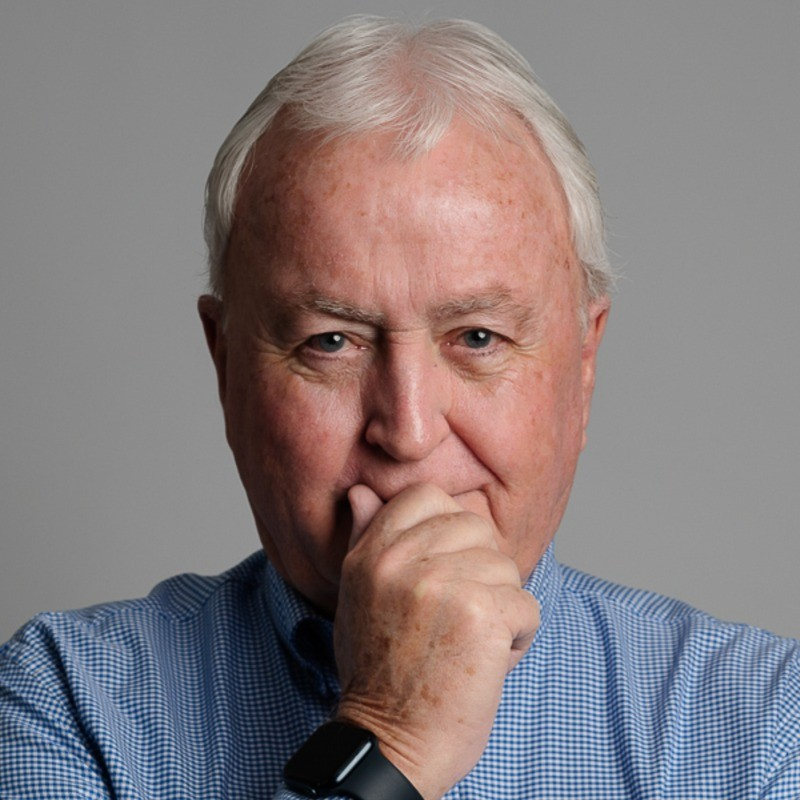
Lawrie Philpott
Lawrie Philpott on consulting, leadership, long-term client relationships and what boards and non-executive directors are actually for.