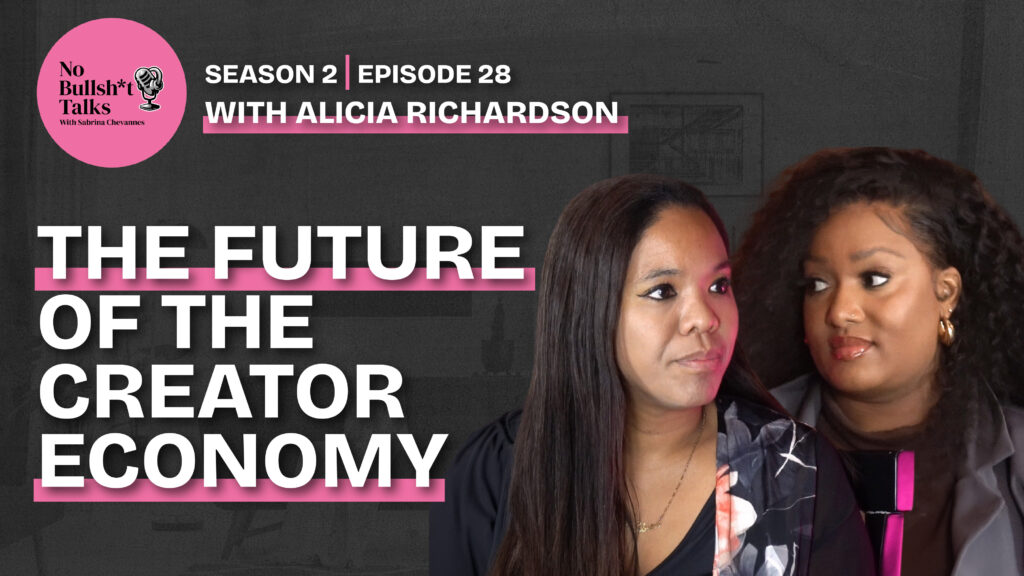
No Bullsh*t Talks · Season 2 · Episode 27
Being a Male Ally in a Man’s World
With Lee Chambers.
 Watch on YouTube
 Listen on Spotify
 Apple Podcasts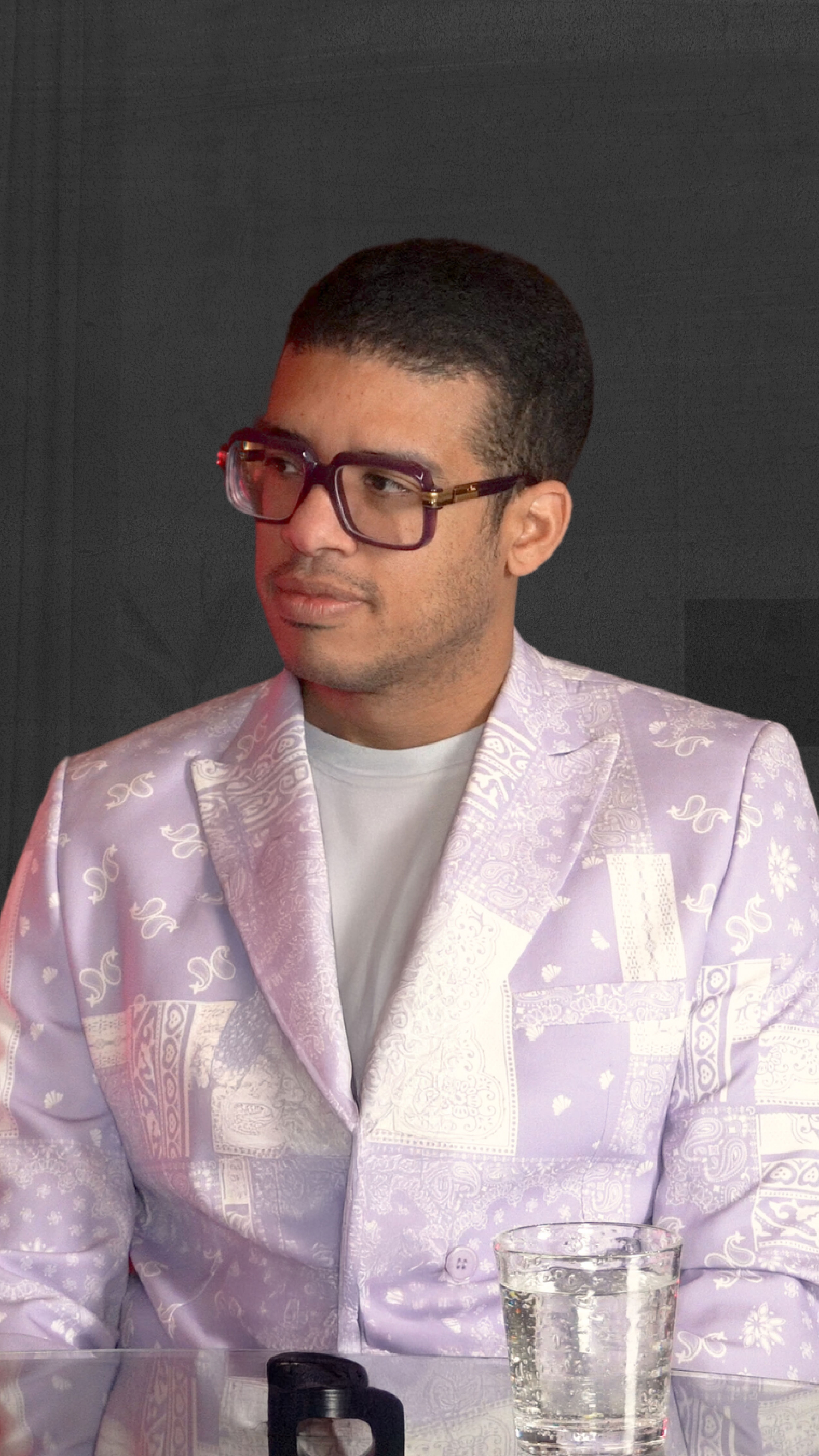
About this conversation
On Allyship, Ethics and Racism
In this episode of ‘No Bullsh*t Talks,’ host Sabrina interviews Lee Chambers, a qualified psychologist and advocate for gender equality, known as the Black Autistic Guy on social media. Lee shares his mission to guide men towards understanding and championing gender inclusion. Discussing his journey from a tech entrepreneur to a stay-at-home dad, he highlights the significance of allyship and the systemic barriers women face.
The conversation delves into the societal construction of masculinity, the impact of online communities on young boys, and practical steps men and women can take to bridge gender gaps. Listeners are offered actionable insights to foster inclusive workplaces and communities, emphasising the collective effort needed for meaningful change.
Watch
See the full video conversation.
Listen
Take the conversation with you.
 Audible
Watch the moments
that travelled.
Watch, share and continue on the original platform.
Read the full conversation.
The transcript is organised by timestamp so it can be generated from the master transcript, edited once, and published here without designing a new section every week.
Introduction to Gender Perspectives+
One of the biggest challenges we have is that the world is simply built from a male perspective.
Lots of things are written and created through the male gaze.
And if you look at what men and women consume, women consume about 50/50 in terms of male-created, male-led, male-designed content alongside female-created, female-led, and female-designed content.
Men, on the other hand, are likely to over-index on male-created, male-led, male-designed content, which means that we often don’t read, hear, watch, or listen to things from a female perspective.
Which means that, generally speaking, we lack a bit of that gendered intelligence because we just don’t have that second perspective, which can be really powerful.
And you ask anyone to look at their bookshelf—especially men—it’s full of men.
Podcast Overview and Guest Introduction+
No Bullsh*t Talks is a podcast for entrepreneurs, by entrepreneurs.
There’s too much bullshit out there, especially when it comes to business. This podcast aims to highlight what’s true and what’s not in the world of entrepreneurship, bringing you honest and raw conversations about the roller coaster that is entrepreneurship.
Each week, my guest will be a high-performing entrepreneur sharing the ups and downs of their journey and helping you prepare for the road ahead while providing you with actionable insights and absolute gems of knowledge.
Stay tuned as I introduce this week’s guest.
Lee Chambers is known as the Black autistic guy on social media, and he’s a proud male ally. He’s a qualified psychologist and speaks up about gender equality, inclusive leadership, and menopause awareness. He’s a TEDx speaker and has been featured in the likes of Vogue, The Guardian, and NME.
I present to you this week’s guest, Lee Chambers.
Welcome, Lee, to No Bullsh*t Talks today.
It’s great to be here, great to be here, Sabrina.
You’ve come from where today?
So I’ve actually traveled just across London, but I’m based up north, based up in Preston in Lancashire, but up and down the country trying to make a difference.
Yeah, I know. So I was like, yeah, okay, you didn’t travel all the way in here. I like to pretend that people travel all the way. I’ve had someone from Israel, I’ve had people from Scotland, and I’m just like, ‘You’ve come all the way just for the podcast,’ right?
But yes, so you’re from Preston, but you’re in London a lot. You’re traveling, like you said, making a difference. What do you do? Do you want to explain to people what you do? Because you wear a lot of hats, but you’ve got one strong mission, and I’m going to let you say that in your own words.
Lee Chambers' Mission and Work+
Yeah, so my mission is to take men on a journey and open up a world for boys.
So a lot of my work is around closing gender gaps.
That started from my own journey of being a stay-at-home dad, of learning to walk again, of putting myself in different environments.
I’ve built a tech business, and seeing a different side of the world.
But nowadays I’m massively focused on the skills of allyship, why men need to step into inclusion, how that benefits men when they do, and how actually, when we come together and partner with women, we can actually make a massive difference in society.
Not just closing some of those gaps, but actually giving more people the opportunity to thrive, creating businesses where people want to work, and actually starting to shape the future so that the systems that hold us back actually start to crumble, and we can be who we want to be.
Do you know what? When you hear that, that is music to a woman’s ears.
But not a lot of men are going to respond to that very well.
And I want to talk about that first.
I feel like you hold quite a controversial stance, really, in terms of…
Well, it shouldn’t be. This is what’s also ridiculous. It shouldn’t be at all.
You’re just like, “Guys, let’s have an equal world where everyone’s treated equally. Let’s talk about things that are unfair and unjust in life.”
But people consider it controversial because you’re a man going, “Hey, what about women? Did you not know that this happens?”
And bringing this awareness.
Challenges of Advocating for Gender Equality+
You must get a lot of stick from men for doing what you do, and I kind of want to talk about that first because I feel like I don’t know what it’s like. And there’s a lot of stuff out there—you said you’re fighting for gender equality—and there’s a lot of content out there about how unfair it is for women, but I don’t know what it’s like for you right now. And I can imagine it’s not that easy for you standing up there talking about these sort of issues, and you must get a lot of crap from men.
To be honest, I get my fair share of trolls. That’s just how it is. I kind of frame it as some of the resistance from men, some of the resistance from women. I challenge people’s perspectives on what we have internalized, because we’ve all internalized a lot of the stuff we’ve been brought up with—what we’ve seen, what we’ve heard, beliefs that our parents and people close to us have had. Anything that challenges that can make people a bit resistant and can actually trigger people a bit.
How I suppose frame it in my world is that, firstly, you know this yourself as a woman of color—you get an awful lot of shit in your inbox.
“Yeah.”
I get less.
“Really?”
Just being a man. Just being a man, I get less. I get less pushback being male simply because I’m in a place where the parity dynamics within society mean that I can say things that women can’t say. And I can say things that a woman would say but get less flak for it. Even though it’s me stepping outside of that typical box of manhood and those masculine expectations, I still get less in my inbox overall.
And also, I don’t really get death threats or threats of sexual violence. Lots of the women that I know who work in this space do all the time. So I’m actually in a privileged position to be able to challenge and poke the bear in a way that others can’t because I get less. And even though I might get more than someone who doesn’t do anything, actually that’s a worthwhile trade-off.
And I think on the other side of it, if we think about people who become, in some ways, activists and actually are challenging perception systems, you’re always going to get some pushback. That means that you’re actually creating enough resistance or tension to actually know you’re changing something, because you’re getting that kind of gradual flood of people saying, “Why are you saying that? Why are you doing it that way? That doesn’t make sense. You’re this, you’re that.” But actually that’s sometimes validation that you are making a change.
And I do think, from a wider perspective, I can amplify the experiences of women that I’ve heard, and that’s not really traumatizing to me. Whereas if a woman had to stand up and talk about her experience of being sexually harassed, yeah, it creates an emotional connection with the audience, but also, as she’s stood on that stage talking about something that’s happened to her, that’s pretty traumatizing. I have more endurance to share things because I’ve not had a lot of those experiences that a woman would have had. So actually it gives me, again, a level of protection to keep pushing.
And if I look honestly at the work that I do, I do a lot of amplifying the gender gaps that impact women. I’m quite raw and honest about some of the things that I’ve learned, sitting in a room full of mothers and grandmothers when I was a stay-at-home dad, and just thought, “I need to do something. It can’t be like this and can’t just be accepted.”
But a lot of the work I also do is looking at what happens to men when they step in. What happens to men when they start to close the gaps. Why inclusion hasn’t historically marketed itself very well towards men. And we look at what the barriers are to men stepping in, what motivates them to do so, what makes them step back out again.
So a lot of my work is actually understanding the constructs of masculinity, how that holds men back, how traditional masculine traits are not necessarily toxic, but they can be if they’re over-indexed into, or they’re used in an unhealthy way, or they become limiting.
So for as much as I amplify the challenges that women face, for as much as I create those spaces and partner with women to make that change, I’m also working to make the world better for men as well. So this isn’t an either/or. It’s not a “but,” it’s an “and.” Close the gaps, and women and men both benefit. And if people can get their head around that and see that the root cause of many of our challenges are very similar things, and we come together and tackle them, then the world will be a better place.
“Yeah. God, a lot of that… I was just sort of thinking about it, and it’s so true. All of it’s so true.
I’ve been tackling writing a post on this this week because you also follow me and you see my content that goes out, and you see the responses I get too. And it is just that. I was saying the other day—I wrote a post saying I will write something and I’ll just get loads of abuse, loads of crap in the DMs and in the comments publicly, and then a man would write the exact same thing and get loads of praise. And I’m like, ‘Wait, I’ve said the exact same thing.’ It’s just wild.
And then, like you were saying about the sexual abuse stuff, the story that I came out with about a year and a half ago was really, really difficult, and it’s still going on right now. I didn’t quite realize the impact it would have, or didn’t even comprehend what it was going to turn into. I wanted to fight back against some of the negative stuff I was getting, so I just came out with some powerful stuff that actually happened.
I think the first tweet I sent on this topic went to like five billion people, and I was like, ‘What is happening to my account?’ Bear in mind, these are stories of young women—and when I say young, some of them were very young women—who had been sexually assaulted.
Now you’d think that when you hear this, most of the responses should have been, ‘Oh my God, that’s awful.’
The majority of the responses were calling me a bitch, saying I must have deserved it, I must have done something to cause it, I’m a liar, I’m an attention seeker. It was just… I don’t know. That whole experience really screwed me up for so many reasons. But it’s just so eye-opening what people are really like. And bear in mind, they’re saying this publicly.
Like, I get it on a platform like X, you know, Twitter, where you can be semi-anonymous, right? Sort of. But LinkedIn? Name, employer… how on earth are people so brazen and so openly racist, sexist, misogynistic, just so screwed up and so aggressive?
Even a post I wrote yesterday was about the Miss Universe competition—something so silly, right? And all I wrote was that I was upset that people were criticizing the women. They were bringing up that a white, blonde-haired, blue-eyed girl won, and they were saying, ‘Oh, it’s the first time a normal woman has won.’
I was like, ‘Wait, so are they calling her normal because the other women who had won were a darker skin tone, and that’s not normal?'”
“Oh no, Western beauty standards.”
“Western beauty… I mean, in a sad reality, those Western beauty standards are the norm. So technically they’re not wrong, because the very kind of rigid stereotype of what a woman is supposed to look like as this objectified being—she was the epitome of that. Basically, she looked like a Western beauty standard, a Barbie doll. This is what they say in terms of being Barbie-like.
But it’s the fact they have the audacity to reinforce that stereotype, thinking that they’re making women great again, or whatever it was that one of them said.”
“It is. And all I put on that post was something along the lines of, you know, they were saying the women were usually bigger. And I’m like, none of the women…”
I just put pictures of all the previous winners. They’re all so slim, so beautiful. They were all just so incredible. I was like, “What is wrong?”
I’m so sick of women having to show up in a certain way and constantly being criticized. That was the essence of my post.
The amount of negativity I got—it was just like, “You’re just jealous because you’re a fat, ugly bitch.” It was all these sorts of things, saying, “You don’t conform to natural beauty standards.”
I’m like, “Wait, people are saying this as themselves on LinkedIn?” It wasn’t Facebook. It wasn’t Twitter. It’s LinkedIn, and this is the stuff I was getting.
How is this okay? How is this normal? They think this is acceptable? If this is how they behave on a professional platform under their employer’s name and their real name, what do they say in the pub?
This is what shocks me, and this is what I’d love to hear from you—your experience—because this is literally what you talk about every day. I make one of these posts every so often, and every time I’m still shocked about the response. I shouldn’t be. I should be used to it, but it’s still just like, “What is wrong with people?”
How are you able to handle this? Does it not still shock you that this stuff happens? And how can we make it better? Because it’s so awful.”
“Yeah. So I think it’s really funny because those are the same people who are quite often likely to profess the importance of free speech, but they’re also the same people who are like, ‘We’re going to boycott Boots now because they made a Christmas advert and it had a Black…'”
“Oh yeah.”
“But no, I think if I kind of look at what I see in the world, there’s multiple different levels to it.
Firstly, people feel emboldened on social media to post things without considering the consequences. Part of that is because even on LinkedIn, where your photograph is there, your name, your employer, your work history, and the people you’re connected to are quite visible, people still feel a level of anonymity behind that because it’s not the same as walking up to someone in the street and saying it to their face.
Because the truth is, there’s no direct retribution or punch or being kicked in the shins—or the nuts. Quite like to do that to some of the guys.
There’s none of that directly.
People also feel that even when there are identifiers there, there’s a whole group of fellow people online who feel the same way, who will just back me up if I get challenged. So they feel there’s an army of people who are going to help them if they get called out.
Now, that isn’t always the case, because there’s lots of people who see that and think, ‘Even if I might kind of agree with what he’s saying, there’s no way I’m getting myself behind that with my name, because that’s probably going to land me in hot water.’
So suddenly the army that they have—or think that they have—doesn’t turn up.
And then if we think about who runs the tech platforms, they don’t face this stuff, so they aren’t really bothered. It’s not properly regulated. You’re getting people’s accounts closed or comments removed or posts taken down for mocking… I know it’s very silly… but then there’s stuff about genocide that’s clearly hate speech, but it doesn’t violate community standards. Fine. It’s like the system doesn’t work either.
So you’ve got people who feel emboldened. You’ve got certain tech entrepreneurs openly spouting off whatever they think on social media platforms. That makes men on the street also feel that they can probably say exactly what they want.
Except those tech entrepreneurs are so rich and so powerful that nothing can really debase them or silence them because they just buy a whole platform to do it with. Whereas that man on the street actually faces potential consequences.
And as we saw in the summer, if you incite violence in this country, there’s a chance your ass is going to go to prison. That got people thinking for the first time that these very words they type can incite violence or hatred, and they can actually get in trouble.
The truth is, that doesn’t stop people. And especially with what’s happened in America this past month or so, that’s just emboldened people as well.
If I think about my own work, obviously we’ve looked to understand where men are at on that continuum of being willing to step into more inclusive behaviors, step into thinking about how allyship works, stepping into thinking about how to partner with difference, and how difference, when we come together, actually creates more effective products, services, and outcomes.
And actually how some of the challenges that men face are rooted in the fact that things are very unequal in society. A lot of men have got left behind because it’s only a few men who benefit from how the system currently is.
And those few men also have an awful lot of power and control over telling other men what masculinity is.
The Impact of Online Communities on Boys+
And if we think about what we do with boys in schools, possibly the scariest thing is the world as it is today.
Half of the boys that we’ve spoken to and surveyed have said their online world is more interesting, more rewarding, and more engaging than real life.
And what that means is that’s where they start to derive their source of identity, their source of connection, their source of belonging, their feelings of being listened to and being heard—from the online world.
And why is that a problem?
Brands don’t market to teenage boys unless it’s the sneaker companies with the latest trainer drop: ‘500 pairs, $500, wear them in the queue, hope your parents are rich enough.’
But other brands have targeted female teenagers, girls, and younger women because they make purchasing decisions. Those brands get them as young girls, and when they’re women and they’re controlling the household budget, they’ll probably still be aligned to those brands. They’re much more powerful in terms of consumer spending. Therefore, they’ve been targeted a lot by all sorts of brands.
Whereas boys haven’t, and that’s left the gap.
Online influencers, forum moderators, video game streamers, who’ve spent the past 15 years honing their message to these teenage boys, working out exactly how to market to them, how to hook them in, how to pull them on a consumer journey.
Because if they’re not being marketed to, there’s a gap.
And lots of teenage boys are disenfranchised. They look at the world and, on one side, there’s this old version of masculinity that’s not really acceptable, that’s labeled as toxic, that doesn’t really feel relevant in today’s society. But there is no clear definition of what this new version of masculinity is. There’s no agreement on what it looks like, and it’s very blurred.
So many of these boys are in between. They’re in the middle. They’re in this gap between what used to be masculinity and what it’s going to be in the future.
And in that gap, when you don’t really know, you’re a bit uncomfortable, you’re a bit unsure, you’re much more likely to start searching outside of yourself for answers to what it is.
And that’s when you get pulled into communities.
These communities are away from mainstream media. They’re quite often away from typical social media. These communities are held on Telegrams and Discords and forums and all these kinds of networks and platforms that sit behind what we can see.
And once they’re in these communities, they hear people saying similar things to them—similar ages, similar interests, play the same games, are connected to the same sports people, and idolize similar influencers.
But in those communities, it’s adults who control those communities.
And those adults effectively groom those communities of young boys in a controlled way to try and get them to become consumers of the future.
This works really well because already the leaders of these communities—brands are going to them to reach teenage boys. They’re becoming the gatekeepers to the teenage boys’ attention, their perspectives, their mindsets, the way they view the world.
Obviously the other side of that is those same leaders of these communities talk about what the truth is. They become the news source. They become the belief system.
And in many of those communities sit very misogynistic, very racist, very white supremacist viewpoints because that’s always been part of those industries.
And actually these young boys have just been drip-fed all this stuff, and they believe it because this is a space where I belong, feel connected to other people, and listened to. In this space, people understand me.
And all of a sudden, this online world that’s very rewarding, very engaging, and interesting is gradually shifting the belief system without them really realizing because they feel like they’re quite empowered in these spaces, but actually they’re being disempowered bit by bit.”
“It’s so scary when you think about it because what can you do? There’s too much power. There’s a power imbalance in this world. These guys have too much power.
And when I think about it, when you’re talking about the difference between old masculinity and new masculinity, I’m like, well, what is considered to be the epitome of a man these days?
Because when I think about who are the most influential men in society at the moment, look how bloody well Andrew Tate did.
Doesn’t that terrify you, that someone like him pushing such a message like he does—he’s worshipped like a god among so many men in the world?
And doesn’t that say something about what the message really is?
If you think about it, I just think about all the most vocal, kind of prominent men out there. I think about Andrew Tate. I think about Elon Musk and Donald Trump.
These are the biggest names you could think of who have a very large voice with a large male audience. These are the first names I can think of, which is terrible if they’re the first names I could think of.
But they all have that similar sort of message that they’re trying to deliver.
Who are the other men?
Who are the other men that have such an authoritative, strong voice that are pushing a different message? That are pushing a message that isn’t wealth, sex… you know…
Who is doing something that powerful, on that scale, that is giving an alternative option to men out there?
Because I can’t even think of one.”
“Yeah, like there are some that people just highlight, like, ‘Oh, isn’t he a nice guy?’ I don’t know… I’m thinking like Keanu Reeves, take for example. Celebrities. People always highlight him as the nice guy. Look at all the things he does, and who he is with, or whatever.
But because he is the person he is, he doesn’t get up on the stage and is like…
And again, it kind of goes with that personality, right?
Those who are probably inherently good guys doing good things are usually doing so in the shadows, and they’re not having that sort of big voice.
And isn’t there always going to be that imbalance because of that?
And how do we fight that?
Because I literally can’t think of many men who are doing the opposite.”
“Yeah. I mean, I kind of look at it in numerous different ways, Sabrina.
I think firstly there is an acceptance of the way that the world is at the moment.
It wasn’t that long ago, if we thought about who were the richest, most powerful entities on this planet, it was nations.
Nations were where we fought world wars against each other and blew our people to shreds in the name of territory and protection.
Now, there’s still a lot of geopolitical conflicts out there in the world today, but the power is different.
So if you think about the 200 wealthiest entities on this planet, it wasn’t that long ago that almost all of those 200 were countries.
Now, less than 50 of those 200 richest, most powerful entities are countries.
We have individuals and organizations that are more wealthy than countries.
That’s why there’s such shifted power.
And if you think of some of the tech companies with the three trillion dollar market caps, they’re actually richer than a whole region.
There are some companies that have more value within them, apparently, than the whole of Europe put together.
It’s… yeah, I think that it’s incredibly scary.
Firstly, they hold so much data. They hold so much control. They hold vast amounts of wealth. They hold vast amounts of secrets.
Those entities are incredibly powerful.
And if one of those entities decided that they weren’t particularly happy with a government, they could pretty much shut half the world down.
If you think about how much of the world runs on AWS, and someone there decided, ‘Actually, we’re not very happy with this decision,’ they could literally switch the lights off.
Boom.
Flights, transport networks, banking, stock market—everything had just crashed.
The power that they have is incredibly scary.
But I think in that world, if you think about the wealth and the control and the power that gives entities, there are people within those entities who also have that level of control too.
Voices—there are a lot of voices.
But you think about… we’re in a place where we have a person in what I imagine, and what I’m for, probably the most powerful political position in the world.
The guy wouldn’t pass a DBS check.
So it’s like sometimes there is a level that power and wealth can actually protect you from the very things that, for a typical man on the street, would potentially stop you getting a job and leave you in deprivation and poverty.
The challenge is that when you’re struggling, you’re going to look to someone who’s offering some kind of solution.
Andrew Tate talks about the system being broken.
Donald Trump says, ‘We’ll fix America and make it great again.’
Elon Musk says DEI is a distraction and has to die.
These people are saying things that people can attach their own meaning to.
They’re all slogans. They’re all phrases.
People look at ‘Make America Great Again’ and they’ll take themselves back to a time when they thought America was great in their own eyes.
That’s really powerful because it personalizes that message.
It’s not like a political manifesto where people are reading a brief.
They’re able to put their own assignment on that.
For most people, they probably remember the great time being when they were young, had no responsibilities, were free, and the candy in the store was only a dime. It wasn’t like a dollar.
That creates this nostalgic viewpoint that doesn’t fit with reality.
And the truth is, we look at the world and there are so many men who are struggling.
So many men who are struggling.
So many men in that gap, in that in-between.
So many men who economically are not able to be the provider and the protector that they once were told and thought they needed to be.
That don’t actually feel they have a purpose and a meaning.
Where women have become more financially independent, more financially stable, more able to make autonomous decisions—that’s really important.
It’s been massively important that women over the past 50 years have had the opportunity to actually break beyond the things that held them back.
The things that used to be not legal for women.
The things that women used to have to rely on a man for.
It’s been so important that we’ve advanced that to a point where women can have choice, can have stability, and can have independence.
The truth is, at the same time, in those past 50 years, men haven’t had the space, the opportunity, or the understanding of how to evolve too.
Our role has changed.
Lots of women now don’t necessarily need a husband.
They can be more selective.
That’s probably an important thing.
But also that means that men are thinking, ‘Well, what’s my purpose?’
Because my mom and dad operated like this, but the world’s completely changed.
Actually, it’s not like that anymore.
Who do I connect to?
I think we’ve got one in five men over 50 who say they have no friends.
None.
One in five men who say they have no friends to go around and have a brew with or have a chat to.
Most men have one, two, or three.
We have very small circles.
There’s even the terminology coming out from some research just this week looking at how men are having, more than ever, to be looked after by their partner if their social network shrinks to a point where they become quite lonely and quite disconnected.
That means then their female partner is more likely to have to spend some of their emotional labor looking after this individual who’s isolated.
They’re now researching to see what impact that has because the emotional labor on women in society is still significantly more.
But there are a lot of men who… we’re very teleological beings as humans.
We need a target.
We need something to move towards.
We need meaning.
That gives us purpose.
It gives us momentum.
It gives us a feeling of being able to make a difference and know why we’re here.
I speak to a lot of men, and there’s a real lack of understanding of what is meaningful to me.
Who am I connected to?
Actually, just how do I be a man in a world where there’s so many different voices?
There’s so much confusion.
I’m getting told by people with big followings I should be like this.
Then I’m speaking to my friends, and they’re saying, ‘Well, maybe not like that.’
I’m speaking to my family, and they’re saying, ‘Well, no, you should be like this.’
I’m speaking to my partner, and they’re like, ‘Well, no, I’d love you to be like this.’
Men just… so many men just feel like they’re being pulled around and not really sure.
They just want some stability and a clearer pathway.
So if I think back to your question, those people with such big followings—there’s no way for a typical man on the street to control that because the power imbalance is so big.
Those men have platforms—massive platforms—to incite change in whatever way they decide to.
My vision is gradually gathering together a collective of men who firstly look at those boys in those communities and find a way to be as effective at marketing to those boys as those communities are.
Because we can’t say those communities are wrong.
You can’t say those communities are bad because those communities reframe people who say they’re wrong as haters.
They basically invalidate the connection and belonging they’re feeling in that group.
The best way to think about it—you’ve got a child, they love gaming, and you’re like, ‘He’s wasting all this time on this game.’
For them, the game means more than the game.
The game means speaking to my friends on my headset.
The game means getting a new avatar and a new gun for my game, or a new player on FIFA, or whatever it is.
They have more meaning than just banging the pad.
But you see it as just sitting in the room in the dark, playing in front of a screen, when really they should be outside.
But it’s the meaning behind it.
So you can’t say those communities are wrong.
You can’t criticize those people, sadly, because they work on very clever cycles where, if you’re criticizing them, you’re the problem, not them.
But to create a different pathway for these boys to see that actually, yeah, the system is broken, just as you’re being told in these groups, but actually you don’t need to follow that pathway.
You can actually look at this pathway.
So it’s presenting a different pathway for boys to become men and understand how to navigate that.
A big part of that is masculinity doesn’t need to be rigidly defined because every single one of us has masculine traits, masculine energies, including women.
It’s up to us to understand how we express that masculinity.
That’s what I’m passionate about—getting young boys to actually realize you’re never going to be told how you should be a man.
If I think back to me, I was told how to be.
Then when I got ill and had to learn to walk again and was pretty much paralyzed, and had nurses showering me and healthcare assistants feeding me, all those things I valued—independence, autonomy, physical presence, status, being able to do what I wanted, being self-sufficient—I lost all that.
I was completely reliant on other people.
It just made me think the man who I thought I was—that’s what I’d been told and conditioned to be.
It’s not who I am.
Ten years later, I’ve been able to work through some of that and realize actually I need to turn up as myself.
If I do that, I actually feel that stability.
I feel that meaning.
I actually feel so much better mentally than not really knowing who I am or trying to be someone who I’ve been told to be.
We do that with boys in schools.
We help them understand online disinformation, misogyny.
We get them to critically think about what we see because so many of them are being shilled to by fools online.
Understanding Personal Values and LinkedIn's Role+
But on the other side, we help them to understand who they are, what their values are, what they stand for, and how they express that.
And while LinkedIn is probably the best platform in terms of the overall amount of trolling and sensible conversations most of the time, it’s absolutely full of cheat sheets and all sorts of other nonsense.
Even the people on there—lots of people with amplified voices—well, they’re not worth listening to.
Oh my God.
The Journey to Finding Purpose+
I feel like there’s a lot, and you touched on a bit of your story there. I kind of want to delve into a little bit of it because what you’re doing is incredible, but I need to know what made you do it.
I know, obviously, a lot of your story, but not everyone does. I think that when someone has such a clear and powerful, passionate mission, there’s a reason behind it, right? It’s not just that they randomly woke up one day and thought, ‘Oh, I’d like to talk about this.’
Talk us through it, because I think people also talk about passion a lot. I recently did a separate podcast on this, and I talked about the bullshit around passion.
People talk about that, but having a really clear mission for the right reasons is a very different thing.
I just want to talk to you about that.
Tell us your story.
What happened to you? What made you suddenly decide, ‘This is what I need to do. This is what I need to change in the world’?”
“Yeah. So I think, again, it’s a real journey. We’re all on a journey.
Actually, a lot of the self-development, personal development, self-help space is absolutely full of nonsensical platitudes and a lot of what your podcast is labeled as.
That’s because it sells easily, and it rolls people into this toxically positive cycle of, ‘Oh well, you know, I can find my purpose by reading this book.’
It took me like 15 years of adversity and learnings and lessons to actually start to find some of the strands of that purpose and start to weave them together.
You don’t just find your purpose overnight or by hiring some coach who tells you that they’re going to help you find it.
Oh my God.
And yeah, passion can be incredibly dangerous if it’s not channeled.
But I think, for me, my journey is quite interesting.
Overcoming Adversity and Mental Health Challenges+
So I grew up on a council estate, so I’ve seen people go in lots of different ways in life.
I was given some opportunities and some backing by adults who thought I’d make it and make a difference. That made me not only believe in myself a bit more, it made my educational experience better, but it also helped me move beyond some of the racism I faced growing up as one of the few Black kids in a town in the north of England.
I was the first person in my extended family to go to university, which was both a pressure and a bit of a privilege.
But actually, I dropped out halfway through with mental health issues, and that was the start of the passion around mental health for men, becoming more emotionally aware, and being able to express yourself.
I spent a year at home working on myself. I didn’t go to therapy or anything like that—why would I do that?
But I actually went back and graduated, and that was some validation that you can go through a bit of a rough time and come out the other side with something to show for it.
Building a Tech Business from Scratch+
I went into corporate finance but got spat out in the 2008 recession, and then started a tech business, which started from my parents’ bedroom where I’d ended up after being made redundant.
Yeah, I ended up growing that across Europe over the course of five years, which was an immense journey in many ways.
I was in my mid-twenties, so I was learning an awful lot—how to hire, how to manage a team, then build business functions and systems, and then gradually start to scale that to be operationally efficient, all while learning a completely new industry.
I was trying to get hiring decisions right, which I didn’t.
Trying to treat people in an equitable way, which I didn’t either.
Trying to make stuff work when, at the end of the day, people’s livelihoods are resting on your shoulders.
But I did learn so much from that.
I also had a bit of an interesting time just being a young Black lad in the tech space.
We’re talking 15 years ago when I started, and yeah, things were pretty prickly back then.
Everyone was like, ‘Well, who the hell are you?’
But actually, we used that to our advantage.
We were, in many ways, seen as a bit of a team of misfits, but that was our selling point.
That was our advantage—moving quickly in an agile industry.
A Life-Changing Health Crisis+
But as I said earlier, this kind of journey for the work that I do today really started 10 years ago when my immune system failed.
All of a sudden, I was left in hospital. I couldn’t really move and couldn’t do a lot of things for myself.
I’ll be honest, at first I was like, ‘Why me? Why now? This isn’t fair.’
I was 29. I was thinking about becoming 30. I was going to become a father again, and suddenly I was wiped out.
It felt like the worst time for it to happen.
I took a few weeks really being very sorry for myself while also being dosed up on morphine and Tramadol and being away with the fairies.
But as they got my immune system back under control, I started to realize there were a lot of things I hadn’t been grateful for, including free education, the freedom to set up a business, having a support network coming to visit me and listening to me moan in hospital, and just the opportunities that I’d had growing up in Britain.
Like many of us, I don’t think about that. I even started to think, ‘I can speak English, and almost everyone speaks English.’
I’d never thought about that before.
It just made me think, what can I do to become a bit better, as well as break beyond that masculinity that I’d realized actually wasn’t serving me and wasn’t me?
It took me 11 months to get back on my feet.
My daughter was born during that period.
I was driven to get back on my feet so I could take my daughter’s first footsteps with her.
I managed to make that.
She’s now 10.
Not been much else since.
But it’s really powerful to see how you will drive towards a goal if someone else is part of that—if you’ve got a meaning bigger than just yourself.
It definitely did that for me.
It made me then decide, what am I going to do next?
Becoming a Stay-at-Home Dad+
I could go back into my company and continue that journey, replace the interim MD I’d brought in, but actually decided no—I didn’t want to.
I just decided, over the course of a weekend, that I’d step out operationally and become a stay-at-home dad.
That was seen as absolutely ridiculous by a whole group of people who were like, ‘Such a loser thing to do. Career suicide. What the hell is your wife doing? You’ll be back in two weeks, mate. You’ll be bored.’
I initially planned that for six months.
I spent three years doing it.
I think it was the most effective leadership and development training course I’ve ever attended.
Because literally every single day you were on.
Every single day you had two little ones to negotiate with, two little ones to be very patient with and present with.
But also, the power of being in these baby and toddler groups, for me, is what really planted the seed for this work.
So I went along, bright-eyed, with a two-year-old and a one-month-old, and that was a lot already.
I got to my local baby and toddler group.
I walked in as the only man in the room.
That just hit me.
It just hit me like, ‘Wow. God, I feel uncomfortable. What have I let myself in for here?’
I went and sat down, and I was taking a few breaths like, ‘Yeah, it’ll be fine. It’ll be fine.’
And it was.
I was welcomed by a few of the mums and grandmothers.
That kind of put me in a female-dominated environment because my background had been sport, tech, finance—one of three brothers.
I’d spent a lot of my life surrounded by men.
And actually, all of a sudden, there were no men in the room apart from me.
Discovering Allyship and Gender Inequities+
It was just in those spaces that I started to hear from those mothers and grandmothers the things they’d been through in their lives, the barriers they had to overcome, the harassment they faced, the discrimination that had been part of the journey they’d gone on, and even some of the abuse and oppression that some of them had faced as well.
I just sat there and started to think, ‘I wasn’t aware of this.’
I ran a company where 30% of our team were female. I never really thought about what things they might be facing outside of work.
It was just really eye-opening because they trusted me to open up about some of these things.
They didn’t suddenly stop talking about these things. Well, maybe they did a little bit at first, but as I started to become part of the group, all of a sudden I got upskilled on menstruation and menopause and all these other things that I’d never really considered or thought about—things you just don’t even talk about with your partner.
It’s funny because these groups can be therapy for a lot of women. They’re a safe space to just share, ‘Actually, yeah, this postpartum depression is absolutely awful, but my doctor just won’t listen to me,’ and many of the other things that I heard on that journey.
What it did was make me think about what I could do, and I realized I didn’t really have any knowledge of what I could do.
That’s when I started to search and found the concept of allyship, and started to understand that allyship is about partnering with people. You don’t need to have lived through the same experience, but if you partner with them, give them space, and come together on a journey with them, you can actually make some change.
Obviously, even the word *allyship* itself comes from the old French word *alier*, which means ‘to combine,’ ‘to unite,’ ‘to come together.’
I just started to think, in a world that’s increasingly polarized, with a lot of division and a lot of fear, how powerful would it be if people came together? If we fostered more trust, more collaboration, and more unity?
Because, for me, what’s really important is that sometimes people look at helping others as an act of losing out.
Actually, allyship itself isn’t about helping others. It’s a lot more about solidarity than it is about charity.
I think what’s really important is that allyship is a verb. It’s about what you do. It’s an action-oriented word.
It’s not about what you say. It’s not necessarily about what events you turn up to or where you show your face. It’s actually what you do behind the scenes. It’s how you act when there are no women in the room. It’s how you think about challenging those around you, and doing that in a safe but sustainable way.
If I think about how I got into this, it’s simply due to my own journey and starting to see some things I didn’t see before.
Then I stepped out of that space and saw other things—other inequities, other gaps that existed—and started to think, ‘Well, what can we do?’
Because gaps aren’t good.
No gaps are ever good.
The bigger the gap, firstly, the more of an issue it causes over time.
Secondly, the bigger the gap we have as humans, the more we have to assume.
That’s a big thing.
Because the bigger the assumption we make, the more likely it is to be wrong, even if we’re doing it with good intentions.
When I saw the statistics from the *Men at Work* study while I was researching this, and found that 82% of women say they face some form of exclusion at work—that’s all women. If that’s broken down into women of color, and then into Black women, we’re into the nineties.
But then 91% of men didn’t feel they were excluding women.
Men’s perception of women’s reality versus women’s lived reality—there’s a massive gap in the workplace.
It doesn’t really matter what the gaps are, whether it’s gaps in workplace expectations, pension gaps, pay gaps, health gaps, pain gaps, opportunity gaps, or gaps in the dreams we have as children.
A world full of gaps means that a lot of people fall between them.
If we actually create bridges over those gaps, people have the opportunity to cross over, move more freely, be who they are, and not spend their lives climbing out of those gaps, but actually be on the surface, being able to make a difference in the world.”
“It’s quite scary when you say those stats.
Like you said, 91% of men don’t even think anything’s wrong.
It’s not that they’re bad men at all—they just aren’t aware.
I always say this: you could have the best intentions, you just aren’t aware of something you’re doing. We’re all capable of that.
I just think, what can we do?
Because this is your world. This is what you do. This is the mission you’ve set yourself.
You’ve got a powerful story. You’ve got a reason why you got into this.
Not everyone’s going to have that kind of wake-up experience to feel empowered to do this.
But I know there are loads of great men out there who do feel there’s a gap, for whatever reason.
If you have a wife, a daughter, a sister, or a mother—which is why I feel like it’s people you should be able to relate to—you’ve got women in your life. Most people do.
Obviously there are going to be a few people who’ve had mothers who haven’t been with them, sadly, so they may not have many women around them.
But the majority of men have women in their lives—multiple women in their lives.
Yet they don’t speak to them.
They don’t even ask them about their experiences.
Or they dismiss them.
They may be inherently good people, but they don’t think anything’s wrong.
I’ve got so many men that I know who are good men, but they dismiss many things.
They think that you’re overreacting, or they don’t believe that this is the reaction you get.
They don’t have any clue.
Unless they see it with their own eyes, unless they’re right there while it’s happening, they’re like, ‘Oh my God.’
And I’m like, ‘I’ve told you about this over and over again.’
They just think you’re exaggerating. They think you’re being overly dramatic.
I’m so sick of hearing that stuff.
It’s always the same.
But unless it’s right there in front of them—which rarely happens because a lot of the time, when we endure misogyny or sexual assault, they’re not going to do it in front of other men.
They’re going to do it in private, when there are no witnesses, when it’s just manipulation and all that sort of stuff.
It happens one-on-one.
The Power Dynamics and Abuse in the Workplace+
And, really sadly, recently I’ve been hearing so many horrific stories of women being manipulated by men in positions of power into doing things they were not comfortable with.
Not sexually necessarily, but it’s like they’re promising them opportunities—whether it’s funding, a job, a speaking opportunity, or whatever.
They’re saying, ‘Oh, we can help you, and I will do this for you if you do X, Y, Z for me.’
All they’re doing is manipulating them and using them.
There’s a lot of this abuse of power out there.
They don’t do that in front of other men or in front of people who they think are going to challenge them and realize what’s going on.
They do it in secret.
This is the problem.
This stuff happens, and therefore other men are like, ‘Well, I’ve never seen it happen, so therefore it doesn’t happen.’
That is a very common response, as you’ve probably heard.
‘I’ve never seen this.’
Just because you’ve never seen it doesn’t mean it’s not going on.
I’d just love to understand, what can we do?
What can men do—obviously the good men out there who want to make a change?
And what can the rest of us do?
Like you said, there’s a big gap in the workplace.
Lots of the people who listen to this podcast are founders, and they’re under a lot of pressure to have a diverse team, a culturally aware team.
There are dynamics in there where they’re not sure what’s going on.
What can people do to address some of these issues?
Because it happens all the time.
There is this imbalance, and there are men doing things inappropriately that we need to deal with.
I’m just curious what can be done to help this.”
“Yeah. Oh man, I mean, it’s a whole episode in itself, Sabrina.
Firstly, one of the biggest challenges we have is that the world is simply built from a male perspective, and lots of things are written and created through the male gaze.
If you look at what men and women consume, women consume about 50/50 in terms of male-created, male-led, male-designed content alongside female-created, female-led, female-designed content.
Men, on the other hand, are likely to over-index on male-created, male-led, male-designed content, which means that we often don’t read, hear, watch, or listen to things from a female perspective.
That means that, generally speaking, we lack a bit of that gendered intelligence because we just don’t have that second perspective, which can be really powerful.
Ask anyone to look at their bookshelf—especially men.
It’s full of men.
Business books, historically, have almost always been written by men.
Even the way that we operate in business is very male-normative.
So that creates a gap before we even realize it.
Secondly, if you think about the stories that have come out about very powerful men in recent times, sometimes they’ve passed away before this has actually got to where it needed to get to because of the NDAs.
But it’s not just this one powerful person who’s created this completely toxic trail of destruction.
They’re held up by a whole system and structure around them that has allowed them to facilitate this abuse for years.
It’s really sad that it doesn’t come out when it’s one woman.
It takes ten women to report it before it even gets taken seriously because we’re in a world where not only is content consumption skewed, but the history books are too.
If you look at history books, it literally is *his* story.
It’s headshots of men who created things, created innovation, started wars, broke records, created empires.
Where are the women in the history books?
Well, unless they were a queen, they were either a mistress or a witch—and probably got beheaded.
It sets an example of who gets listened to, who gets platformed, and that still exists in society today, where women are simply less likely to be listened to, less likely to be believed, and less likely to be taken seriously.
That’s ingrained into all of us, including women themselves, because we swim in the very sea that’s been created for us.
If you look back on some of the things that were on television or in the newspapers when we were children, you look now and think, ‘Jeez.’
But that’s what we were surrounded by.
Our parents talked about that kind of stuff.
That’s the river we’ve swum in, and all that water has been absorbed into us.
We’ve all got lots of internalized stuff that we actively need to work on.
In terms of the founder space, I started my first company in 2008, so I’ve been around for a long time.
Even from a founder’s position, there are imbalances in the startup journey, when everyone’s scrabbling together and helping out, and then in the scale-up journey, when all of a sudden you’ve got to find people who are ready to do that.
I’ll be honest, some of the stories I’ve heard in the founder space, having been in there for 16 years…
There are some individuals who have exploited their power.
We’re not talking about not giving employees equity when they probably should have.
We’re talking about very direct manipulation, coercion, abuse, using the platform, promises of future gains, promises of opportunities, and directly exploiting the power dynamic that they’ve created as a founder.
Sometimes that power dynamic is purposely created, and some founders have dark motives behind what drives them.
For anyone who sets something up and builds something, you’ve got to have a level of naive optimism to even start.
But you’ve also got to have a level of wired self-assurance to keep pushing through continuous rejection.
You’ve really got to have a hell of a lot of tenacity.
How you use that is your choice.
Some people use that in a very manipulative and quite damaging way toward other people.
Again, I’ve spoken to a lot of women in this space.
You think about this idea that predators do it behind the scenes.
In a world where there’s the potential to be cancelled and called out, things have definitely gone a bit more underground.
But everyone knows who they don’t want to share a lift with at the awards.
People still know who’s that handsy person who, when the music comes on at the Christmas party, is going to be planting lips all over you whether you want it or not.
The truth is hidden in plain sight, really.
Most of us know.
It’s quite challenging because when there’s a power dynamic, it can be career-limiting.
Start pushing those buttons and trying to enact some action, and the more powerful an individual is, the more structures they have around them.
To this day, there are a lot of women sat there, medicated up to the eyeballs, not able to talk about what’s happened.
That means it doesn’t get shared.
It means that even those individuals who have been called out and tried to be tackled have managed to silence the very victims of the perpetration.
Yeah…
I mean, it’s quite a dark thing to talk about because it’s not an easy thing to always navigate.
Even those very power dynamics can change what consent is, because someone can end up consenting to something because the power dynamic is large enough that there are consequences if they say no.”
“Yeah, it’s really screwed up because when you put it that way, it’s all so true.
There’s nothing we can do.
It can feel really helpless.”
“But this is where that collective nature comes in.
If you think about what’s happened to those people who have been brought to task, it starts with a collective.
The sad reality is that, at the minute, that starts with a collective of brave women—usually who’ve been abused—and they’re having to bring that together as a team to get any kind of traction.
But even the most powerful perpetrators can be brought to task if there’s enough of a collective voice to call for it.”
“It’s true.
We’ve seen this with the Weinsteins and the Epsteins of the world, right?
We’ve seen this happen.
But look—it never happens at the time.
It never happens in the right way, in a timely way, because people are fearing for their own lives, their physical safety, their mental safety, and their careers.
Like you said, these people are in positions of power.
I know this because it’s taken me 20-odd years to come out about the stuff that I’ve gone through.
Now I’ve got 30-plus women who have also shared their stories with me about the same men.
But I’ve also got several women who still won’t say anything because they’re saying, ‘I’m doing really well in my career now. I cannot risk that.’
When you’re still directly associated in those areas—whether you’re getting paid by these employers or there’s some sort of connection—you can’t risk that.
If you’ve got kids, you can’t.
They’re like, ‘I can’t afford to do it.’
These people know this.
That’s why they abuse that power.
They’ll keep doing it because it’s going to be 10 or 20 years later before it comes out.
By that point, they’re like, ‘Okay, well, that’s fine.’
That’s the problem.
It is really difficult.
I just feel like there needs to be something in place.
I feel like, yes, as you said, it always takes multiple brave women to come out and do it.
But where are the men who are witnessing this on a daily basis?
They’ll be like, ‘Oh, that’s just classic so-and-so.’
They know it happens.
They see it happen.
They turn a blind eye.
They may encourage it.
Where are these guys?
Encouraging Men to Step Up as Allies+
Why don’t they say something?
And that’s where the allyship of that collective comes in, because truth be told, they might not have directly been impacted, but they have more power to create that collective voice.
Actually, we look at how men can be upstanders in those situations in a way that also kind of mitigates the potential damage it can cause to them. That’s a skill set. It takes time to do that. You can do that in ways that are not so direct that you put yourself in an unsafe environment.
It is challenging, but at the same time, if we think about the big things that we see in society, you won’t get any man saying, “Oh, I do that,” because they don’t want to be associated with being, you know, a rapist. In fact, sometimes men hear that and they say, “Find me this person. I’ll beat them up.”
The answer is more violence isn’t the answer. That’s usually a sign of someone saying, “I actually probably feel guilty that I should have called stuff out in the past,” and this is my immediate reaction—to get angry about it and say, “I’m not like them.”
But within that, there is a consideration for all the little things that hold up those crimes at the top. Actually, what holds up that pyramid of violence? It’s attitudes. It’s jokes. It’s all that base-level gendered language, that base-level misogyny, that banter. Because as long as that’s all right, all the stuff above it becomes more possible, more possible.
It’s deeply woven stuff. It requires a lot of work, and that’s the challenging bit, because what we’re fundamentally looking at is what gets men to step in.
There are barriers a lot of men face: saying the wrong thing, upsetting women, overstepping the boundaries, what’s going to happen if I get it wrong. They worry about how they’re going to be judged by other men. They worry about having to call people out and the skills of doing that. They worry about having to challenge their own behaviors, knowing that they will have done things, seen things that they should have called out but probably didn’t.
Then we look at what motivates men into this work and to actually build some of these skills, because these skills also help you collaborate more effectively at work, lead diverse teams better, become better at leading Gen Z talent. These are quite powerful skills, and some of those aspects can be quite attractive to men who are thinking about how they can use this as a competitive advantage on their own leadership journey.
It sounds quite transactional, a little bit selfish, but people need a purpose to engage in this work. What we found is the biggest motivator is men having a clear understanding of how engaging in inclusion, how building allyship skills, how partnering with women benefits them, their teams, their organizations, their family, and society at large.
That’s very, very rarely talked about to men. What happens to you when you step in? What are the benefits to you? What is in it for you? What does it do to you? The difference it makes to you.
Because until then, it actually feels like you’re going to lose something if you start partnering with other people and breaking down barriers that they face.
But truth be told, in society, the very things that impact women also impact men. The very things that impact men also impact women. Actually, it’s together we can start to drive some change, close some of those gaps, and tackle some of the root causes that are damaging both men and women.
That does require a little bit of humility, a willingness to be a beginner and learn some of these skills, and not doing what a lot of men do due to our own conditioning. We’ve all been brought up with the comic books and superheroes coming and saving the day and beating all the baddies up, being very stoic, and just saving the city again.
But this isn’t a problem that we can just jump in and fix. There are no superheroes in this. It’s all about finding some tools to change some systems. It’s longer-term stuff. It’s a whole series. It’s not just a single episode.
I know, and it is, but it’s not easy. There’s no quick fix, and it’s about, like you said, long-term, everyone working together.
Final Thoughts and Book Insights+
And is this the stuff that’s covered in your book then? Because you’ve got a new book coming out in January, I believe.
Yeah.
Tell us more about that because I feel like you’ve been trying to help educate the world on this and provide some potential solutions for a healthier, happier place that we’re in. So what’s covered in your book?
Yeah, so my book’s called *Momentum*, and it’s **13 Lessons to Realize Your Potential**. It’s actually slightly different. It’s more focused on that journey to actually get to a place where you can start to be more effective as an ally. So it’s a lot more around that kind of self-development. It’s looking at traditional concepts in personal development and actually breaking them down a bit, kind of exploring how I redefined success through some of the stuff I went through.
But really, if I think about what the source of the book is, it’s the 13 lessons that I wish I’d have known 20 years ago when I first kind of stepped out of university into the workplace that I didn’t know then, but I wish I’d known because it made a real difference.
Ultimately, they’re the 13 lessons I’ve learned through the adversity, through the challenges, through the few successes, and through all the different pivots I’ve made in my own career. These 13 lessons are things that have helped me navigate those things, but are also quite often things I’ve had to learn the hard way that I’ve now put into, obviously, my book so that you can read them.
Some of those lessons will resonate, and you might actually get something from them, get some real clarity. Some might not land. Some you might have mastered. Who knows?
But I think it’s really important that when we think about doing this work and actually being able to make a difference, because all of us will get meaning out of making society better. Because at the end of the day, we’re sold this dream of, you know, the 2.4 children, the nice house, consume some more stuff, buy some more stuff, you’ll be happy, get another promotion.
That ain’t making no one happy.
What gets you happy is actually realizing the difference you can make. Happiness and contentment so often derive from actually being able to make an impact for others. That’s a part of humanity they never want you to explore too much because then you might actually go and do something and make some change in the world.
So yeah, the book is focused around how to unpack some of that stuff and looking at personal development a little bit differently. I think that everyone can take something from it, and there’s even more around my own journey in there for you to dig into.
Oh, well I’ll definitely have to update the show notes when it comes out with the link so people can go get it. I think it’ll be such an insightful read.
I guess the book will have so many gems there and action points they can take, but if you had to give one takeaway now for people out there—you know, there’s obviously not one quick fix to make the world a better place—but if you had to give one takeaway for someone to action something today that could make a huge difference in the future, because I think there is that little butterfly effect, as I say, what can people do? Whether it’s attitude, whether it’s a slight tweak, what can people do to try and make a little bit of a difference?
Yeah, if I’m to just highlight one lesson from the book that kind of stuck out as I was spending time writing it, it is that success isn’t linear.
We so often think on those founder journeys that, you know, we’re chasing EBITDA, chasing our monthly recurring revenue. We’re on that mission, and we want that line to go nicely straight up—a nice linear straight line that we can show in our projections, show in our forecasts, and go on that lovely funding journey.
That’s a pain in the ass.
Having had a business that grew and grew in quite a linear fashion, I started to honestly believe that success was linear. Then all of a sudden, you hit the bumps in the road, and those bumps in the road actually mean that there are times when you start to pull back on things, you have to completely reprioritize, and suddenly your graph looks like an incredibly squiggly line.
It was just that moment where I realized, wait a minute, nothing is this linear. Actually, you keep being told that success is continued growth, is continuation of scaling the team, scaling your revenues.
But it’s not.
Sometimes success is actually pulling back, becoming more efficient, scaling things down a bit to regrow again, pivoting slightly and moving so that all of a sudden you’re not on the same graph anymore—you’re on a completely new one.
So for me, it was that realization that, firstly, success isn’t the linear mathematical equation that we so often think it is.
But also, when I lost the ability to walk, all of a sudden, trust me, my EBITDA didn’t matter anymore. I’d taken it so seriously until I couldn’t wash myself, and then I was like, yeah, it’s not that important.
So yeah, “success isn’t linear” is one of the things that massively shifted the way that I navigated the world.
Oh, I really like it. Life is one big squiggly line. I do think that.
So thank you so much. It’s been amazing having you on the show today, and thank you for being so candid and sharing everything.
I hope that people take something away from this and realize that it can be a better place if everyone just works together.
Yeah, that’s the way.

Meet the guest
Lee Chambers
Lee Chambers is known as the Black Autistic Guy on social media and he’s a proud male ally. He’s a qualified psychologist and speaks up about gender equality, inclusive leadership and menopause awareness. He’s a TEDx speaker and has been featured in the likes of Vogue, The Guardian and Newsweek. Lee’s Socials