No Bullsh*t Talks · Season 1 · Episode 22
Creating Perfect Sales And Marketing Copy
With Alyson Lex.
 Watch on YouTube
 Listen on Spotify
 Apple Podcasts
The source Episode has no valid video still. ▶
About this conversation
On Content and Sales
Alyson Lex is obsessed with copywriting, and in particular, she specialises in writing copy that sells. This is a common concern among small business owners and entrepreneurs as they worry that they’re not good writers and it can reflect their brand badly.
Alyson gives some great tips on what to do to create fantastic sales copy and how you can still write well even if you’re not a “writer”.
Watch
See the full video conversation.
Listen
Take the conversation with you.
 Audible
Watch the moments
that travelled.
Watch, share and continue on the original platform.
Read the full conversation.
The transcript is organised by timestamp so it can be generated from the master transcript, edited once, and published here without designing a new section every week.
Meet Alyson Lex: Copy Expert & Crazy Cat Lady+
Sabrina Chevannes-Denman:
Hi everyone, and welcome to this week’s episode of No Bullsh*t Talks.
I am so pleased to be joined here today by the amazing Alyson Lex, who is a sales copy expert, aren’t you, Allison?
Alyson Lex: I am. That’s what they tell me.
Sabrina Chevannes-Denman:
But you are also known as the crazy cat lady. Is that correct?
Alyson Lex:
I am a crazy cat lady. I am. It’s more of a self-earned or self-bestowed title, if you will, but yeah.
Sabrina Chevannes-Denman:
So what makes you crazy cat lady? How many cats do you have?
Alyson Lex:
I have eight. Eight cats.
In my defense, you know, I do differ from the crazy cat lady stereotype. I have a husband. I got him before I got seven of those cats, so he didn’t know what he was getting himself into.
Sabrina Chevannes-Denman:
And what does he think of all the cats?
Alyson Lex:
We are never going to have this many cats again.
We’ll just leave it there.
No.
Yeah, honestly, I fostered a lot of cats and discovered after a few of them that I’m really bad at that because I have fostered five cats. I still have four of them.
And so I’m not the kind of person that can love on an animal and then let it go to another home. That’s just not one of my superpowers.
Sabrina Chevannes-Denman:
How does it work with so many cats? Like, that is just… do they fight? What is going on?
Alyson Lex:
You wouldn’t really be surprised.
So I do have one cat who picks on other cats. I have two girls and the rest are boys. Six boys. One of my cats picks on both of the girls.
So as long as we can keep those guys separated, we’re fine. But when he’s in a mood, sometimes it’s a spray bottle of water.
The rest of them, I mean, they get along just fine. I have pictures of all six boys sleeping on my bed together. No problem.
Sabrina Chevannes-Denman:
I love how those gender dominance problems seep into cats as well. Like, that’s really… the boy feels like he should prey on the other girls because, right, you know?
Alyson Lex:
I have my own personal space heaters. There’s always a cat available for your lap.
Some of them just sleep on different beds or in different rooms. It’s really not as crazy as you would think it is.
Sabrina Chevannes-Denman:
Where did this obsession with cats come from? Because, I mean, I love cats. I love all animals. I’m obsessed with sloths in a way. I just get distracted by them everywhere I go.
But I don’t own a cat. I never will. It’s quite safe to say.
Alyson Lex:
I never thought I would either.
I don’t think it was really an obsession so much. It’s not like I woke up one day and was like, I want to have cats.
You know, in 2010, I found a cat outside in a storm in the middle of a huge snowstorm, so I brought her in.
Then I met my husband later that year. We got married a couple years later. There was another cat outside in the middle of a heat wave. It was the hottest day of the year. I brought him home. They’re my extreme weather cats.
Then I guess maybe two years after that, we thought we were ready for another cat.
So we went onto Petfinder and we found a pair of brothers. One of the brothers had a ton of applications and the other had special needs and had no applications, and we said we’re going to need both.
So those were three and four.
Then I started fostering. There was a post on Facebook about a cat. It was three days before Christmas. The cat had been dumped by his previous owners and was living terrified under a bush.
We said, no, we’ll bring him home for the holidays and find him a home.
I fell in love with him. He’s the one that picks on everybody.
That same rescue reached out to me and said, “Alyson, you work from home. We have a couple of cats. They were found under a dumpster and they’re really very skittish. Can you take them?”
At the time, I didn’t have a kid, so I had an extra bedroom. Put them in the bedroom, go work in there sometimes, and socialize them. No problem.
Those cats are too skittish. People don’t like skittish cats. They want friendly cats. So they’re essentially unadoptable. So they’re here.
And then the last one we found in my yard right before construction was to start on my house, and I didn’t want the workers to scare her away.
Sabrina Chevannes-Denman:
So you don’t really… like, you found them. Do you not get worried that they belong to someone and they haven’t picked them up and they’ll wander back?
Because obviously they would wander back home, I guess, if they were a loved family pet.
Alyson Lex:
Yeah. So with the one that was found under the bush, the rescue did their full due diligence and everything like that before they even said, yeah, you can keep him.
With the two that were found under a dumpster, there were actually a bunch of them and they were found in a box. So it was somebody who threw away a box of kittens, and yeah, we’re just not going to go there.
Then the one in my yard, I actually did a lot of searching in the neighborhood. It wasn’t like she showed up in my yard and I got her.
She was in my yard exclusively for weeks. It was when the construction was going to begin that I decided to bring her home.
Everybody, we checked for microchips, we put flyers up, and we checked with the shelters. So there’s a lot of due diligence.
I never want to take somebody’s pet. But at the same time, if this cat’s going to just be a stray outside…
Sabrina Chevannes-Denman:
I’m sure they’re not sad now. That people abandon animals, it’s just really sad.
We’re going to move on from that because it’s going to make me cry.
Alyson Lex:
Yeah, but these guys are all happy, fed, spoiled. They have their own toy box, you know. They’re fine.
Why Copywriting Is Really About Human Emotion+
Sabrina Chevannes-Denman:
So you’re obsessed with cats, but you’re also obsessed with copy. So let’s talk about that.
Does that go as far back? Yeah, I can’t even… why are you obsessed with copy?
Alyson Lex:
I love being able to tap into how people feel and figure out a way to help them feel better.
And that’s a really high-level way to answer it. But one of the things that I love about my job, working with people who help other people, is that I get to take part in that ripple effect.
I’ve heard it called torches lighting torches, right? If I help you improve someone’s life, then I have indirectly helped to improve that person’s life.
And I get to do that on a really grand scale.
So I really deeply believe in the transformative power of your zone of genius.
And sometimes the only thing that’s standing in the way of my clients, or my prospects, or my audience really being able to create those transformations for their people, is just the right words to connect. And copy has that power.
And then from the logistical side, once you get your copy down, that’s your messaging. That’s like a baseline for your whole business, for your whole brand.
And once you can really understand that, then you’ve got a leg up on how you’re going to approach things, even products that you can create.
Getting your messaging on point makes things a little bit more fun.
Branding Isn’t Just Logos & Colors+
Sabrina Chevannes-Denman:
Absolutely.
I mean, we do branding at Complex Creative and it’s so difficult because you approach it from… essentially, what we both do is branding, but we’re approaching it in different ways.
You approach it from the words perspective, and we’re approaching it from a visual perspective. But we do a lot of strategy beforehand.
A lot of people come to us because they know that we do visual identity and they just assume that’s what branding is. It’s how something looks. It’s just the logo or just the colors and the fonts.
They don’t actually understand everything you just said, and so we have to communicate that as well.
I think that maybe with copy, it’s a little bit easier to communicate that with the client because messaging is literally words and messaging.
But you must have to do branding exercises first with clients. How do they handle that?
Because I’d like to know, because a lot of clients come to us and say, “Just do us a logo, for God’s sake. That’s all we need. Just that’s it.”
And they don’t understand what needs to come first.
So how do you communicate the need for understanding the messaging, understanding your target audience, and understanding what the brand means as a whole rather than just the way it looks or the little words on a page, for example?
How do you get a client to understand that?
Alyson Lex:
It’s very difficult.
So it’s funny because I have been doing some work with some other branding agencies, and so I’ve been playing in the brand archetypes and really learning that and using that to not only direct the messaging but then to ensure the cohesion between the messaging and the visuals.
We’ve been doing some really cool stuff to really help things just nail the client needs and brand voice.
And I’ll probably write a book about it. That’s my new thing. I’m going to write a book about this.
Sabrina Chevannes-Denman:
I find it weird that vice versa, you haven’t written a book on this. It’s accomplished. She’s like, you know…
Alyson Lex:
Oh my gosh.
Well, I mean, I always say, do as I say, don’t follow what I do. You’re going to sink your ship.
Sabrina Chevannes-Denman:
I am really…
Alyson Lex:
Behind the scenes, it’s better than it used to be, but behind the scenes, it’s not so much a hot mess anymore, but it is still a mess.
So the book thing… I have 85 book ideas. That’s about prioritizing. And yeah, anytime.
How Alyson Researches & Understands Audiences+
Alyson Lex:
But when I speak with a client for the first time, we really do go through understanding who their person is.
If they don’t already have something written up, then that ends up being part of what I do for them — to figure it out with them or for them using the information that I glean during what I call my light stalking.
I’ll make competitive research, do all of my digging into them.
As far as what I’ve learned, I’ve been doing this for 15 years, so I have a broad understanding of a whole lot of markets and we can bring in certain things.
So I’ll just give you a quick example. One of my previous clients is a contractor — a home services contractor for high-end luxury homes and historical homes in the Washington DC, USA area.
So, you know, that’s like a center of our history. Just knowing that they replace windows and doors and roofs and siding on these kinds of homes, and where their price point is, that lets me know that, hey, their audience is affluent.
And so then I can bring in what I know about marketing to the affluent. I can bring in what I know about marketing to people who have that kind of money.
So some of it is I don’t necessarily need to research each individual audience because I know about how to market to specific characteristics of that audience.
There are other things where I can understand, hey, you know what, their client might be a local services person — the HVAC, the air conditioner and heater contractor, or the pest control guy.
Well, then I can look at the things that the people who have worked on my home talk about because I’m a talker. So I’ll talk to them about their business.
Well, I do that because I want to hear what they’re complaining about so I can sell to them on behalf of one of my clients.
So it’s my job, a lot of times, to help my clients figure out what their people want, and then as part of my service, I can deliver that to them and they can use it in the future, which is really helpful.
Writing Different Copy for Different Buyers+
Sabrina Chevannes-Denman:
Yeah, absolutely.
I feel like one of the hardest things is understanding who you’re talking to and then being able to communicate that.
So say if you have clients and you’re trying to write very targeted copy for their audience, how would you differ the way you speak to the audiences?
In terms of specifics of what you do with the copy, take even an audience where their target audience is women, and maybe another brand is male. It’s not like you’re going, “Hey babes,” and one thing together was about, “Yeah bro,” on the other one. It’s not as obvious as that.
Which, I don’t know, what do you think is the case, right? You just have a nice script font and pink things because honestly, these are the suggestions that we get from our clients.
I mean, it’s not always, and sometimes that works. Don’t get me wrong. It absolutely does work if you’re looking for a very specific type of audience.
But when it comes to sales copy, what sort of subtle differences would you write in terms of communicating with, say, a female versus male audience?
What would you do in terms of changing the copy?
Alyson Lex:
Yeah. So the female to male example is a great one, and there are other examples which I can share if you want.
But you look at the motivators of that audience, so we’re going way into stereotype.
And okay, in order for me to give this example, I would not be this far into stereotype land if I had more specifics about a project. So I’m just going to put that disclaimer out there.
There are always nuances and you always want to make room for people who may, on the surface, fit those parameters but have slightly different interior lives or what have you, especially when we’re talking about gender and gender expression and gender preferences and all of that.
So traditional female versus male. You would look at what motivates women to achieve something versus what motivates men to achieve something, and you would also speak to their experiences.
So I’m going to just say weight loss, okay?
Men and women both have different experiences around weight loss. Women may put more of an upfront filter on their view of weight loss based on how they feel about how they look. That’s a mix. Men have that same experience. They still have feelings about how they look, they just don’t talk about it.
And so for a woman, I would say something about, “Yeah, I get it. It’s everywhere and you don’t know if you should feel shame or feel go-girl or whatever about you. Sorry, but at the end of the day, you just don’t care for how you look.”
But for men, I would say something about, “We don’t talk about this and dad bods are celebrated, but also not. It really feels like there’s a double standard because if you open up TikTok, the thirst traps are all full of muscle, right?”
I would say very similar things — you want to look like who you see out there — but for women it’s more spoken about publicly than men, and so I would just address that issue.
Now the other example that I’m going to give is people who are, let’s say, buying a luxury item versus somebody who’s buying a standard version, like just a used version of that item.
Selling Luxury vs Budget Products+
Alyson Lex:
So let’s talk about a $300 toaster versus the $10 toaster from the local Walmart.
The person who wants the $10 toaster is just looking to make some toast.
Sabrina Chevannes-Denman:
Hmm.
Alyson Lex:
Right? They just want two pieces of bread, push it down, whatever.
The person who’s buying the $300 toaster, they are now in the affluent way of marketing, which is they care about saving time.
They care about showing off and they care about ease and simplicity of use.
They don’t want something that’s going to break. They care about aesthetics. It’s got a little status in it, right?
But really, I mean, I’ve got the $10 toaster from Walmart and it’s got this stupid little door on the bottom. Every time I pick this toaster up, the door pops open. It’s driving me crazy.
And so when I’m marketing to people who are going to spend money on the $300 toaster, I would talk to them about how well it’s made.
There are no crazy parts. You want to clean it? Great. Pop this open, shake it out, you’re done.
And if it ever breaks, you just ship it back to us. We’ll send you a new one. No muss, no fuss, no hassle.
For the $10 toaster? Hey, you can’t beat it. You push it down, it makes toast.
So it’s just about understanding the motivations of the audience, and there are subtle differences in each of them.
Why Businesses Need to Niche Down+
Sabrina Chevannes-Denman:
Today, I need… you’ve summarized what everyone needs to do when they’re running a business. It’s connect with an audience. It’s that relatability.
And, you know, it’s getting your target audience of like, “Yeah, that’s exactly how I feel.”
Well, yeah, they get me.
And not everyone is going to get you, and I think that’s where brands go really wrong. A lot of the time they are trying to cater for too many people because I think the wider the audience, the more sales.
But then the more broad your audience is, the more difficult it is to communicate really directly to them.
This is why I was saying niche down. It’s funny because what you were saying — do as I say, not as I do.
So we niche in terms of… we don’t niche in terms of clientele, in terms of demographics. We niche in terms of what we offer. So it’s a little bit different.
But, you know, we still have a typical target audience we speak to when we communicate, so we attract more of those people.
We don’t necessarily restrict ourselves and we still get the messaging there.
But I feel like that’s why people say niche things down, right? Because if you’re trying to say, “Oh actually, my thing’s for anyone and everyone,” how do you think about how anyone and everyone thinks all at once? Because you just can’t.
Like, say that’s why you came out to take one, right?
And I think when it comes to sales copy, if you do have multiple audiences, you could do multiple ad campaigns with different copy for each one, talking to different people with a different landing page and target and connect with every single one of them.
And I think that’s what you do, right? That’s how you actually create your campaigns and be able to target them.
Alyson Lex:
Yes. One thousand percent, yes.
So you said a couple of really important things that I wanted to call back to.
One, you don’t necessarily need to niche on demographics. That’s fine. But what do you offer and what problem is it solving?
So if all of the people from 85 different industries are coming to you with one problem, well, that’s your niche. You solve XYZ problem, and that’s okay.
The other thing that you said is we have this thing, this section of people we go after, but we don’t restrict ourselves.
I’m not saying to turn away money. If somebody reads all of your marketing and says, “You know what? I’m not that person but I want her anyway,” okay.
Do you think I was marketing for a construction company to come hire me? No. They found me. They liked my style. They wanted to hire me.
I have a bunch of those clients on my roster even though I market purposefully to coaches, experts, course creators, and the like.
So don’t turn down money. Just don’t go after that money.
If that money comes to you, take it. We don’t turn down money.
So the third thing that I want to really talk about with niche is we’re not saying it’s forever. It’s for now.
Choose a place, a way, a section, a subset, an audience to go after.
And then once you’ve got that under control, you get to pick another one and then go for that one.
The Mistake of Selling Too Many Offers at Once+
Alyson Lex:
And so that’s how you’re creating your campaigns and your landing pages, right?
So you might have a checklist on how to solve problem A and a video on how to solve problem B. You pull them in.
Sure, there are going to be people who overlap, who want both problems solved, but you’re speaking to two different people. You’re sending them through two different experiences.
They may all lead to the same place, right? Because reworking or initially working on your brand can solve a bunch of different problems in your business. But at the end of the day, the solution is this service here.
So I am a big fan of multiple streams coming into one place — your core offering.
Then you can break off what you offer and develop new stuff as you master the first thing.
I think one of the big problems with business in general is we all have so many ideas and we all get so excited about all the things we could do.
We don’t think about all the things we should do.
And most of those things are to stop doing so much.
It’s really hard to sell 15 different programs at one time.
If you could put all of your effort into selling one core offering and then grow from there as the demand grows, your marketing is going to be easier, your brand is going to be more cohesive, and you’re going to be a lot less stressed out.
Sabrina Chevannes-Denman:
Yeah, absolutely.
And I think it’s difficult because I’ve had so many clients in the past who said, “More products means more sales, right?”
And I’m like, well, no. Actually, most of the time it doesn’t mean that.
I always use the restaurant analogy where you go to a fancy restaurant and their menu has only a few items on the menu because they do those items well and they’re amazing and they excel at them.
Whereas you go to a restaurant which is cheap and cheerful and their menu’s like this and it’s like, “I’ll have number 384 please.”
And they’re like, “Oh yeah.”
And it’s just like, how do you have this many dishes? It’s crazy.
And then you just sit.
The Reality Behind “Passive Income” Courses+
Sabrina Chevannes-Denman:
There you are. You don’t know what to have.
Whereas the other ones are just… if the choice is easier because there are fewer items, you actually are more likely to make that sale, which is why I feel like it’s interesting.
But you also mentioned course content. You help course creators, and I think that’s such a common thing at the moment.
Everyone’s talking about courses. You scroll through Instagram, everyone’s creating a course. We’re going to teach you how to create a course.
So many people come to me and say, “Should I be creating a course?”
I feel like I need to be in all these books — passive income and productize your business — and there’s this advice coming from everywhere.
There’s so much pressure for people these days as an entrepreneur. You already started out by yourself, which is kind of scary as it is, right?
You need to kind of wade through all the other crap that you have to deal with — the legal stuff, the HR stuff, provider outs — and it’s stressful.
Then you’re like, “Got to create a course. You should be making money while you sleep,” and all this stuff.
It’s like, okay, I totally get that — productizing your business and having something that’s there, that is creating money all the time and is always a low threshold to get into whatever service you’re offering.
Obviously there are so many pros around it.
So let’s say we have decided creating a course is a good idea. It’s worth our while.
What advice do you give to course creators on how to do it?
Because again, there are so many people out there. Say you’re in the beauty industry and you want to create a course on beauty tips — whatever it is in terms of makeup. Or even if you’re in the sporting industry and you want to do something around that.
There’s so many things you can do.
But what if you’re not a good writer? How on earth do you create a course? Because that’s the thing that’s intimidating.
These people are brilliant at what they do. They are the best in their field at what they do, but they struggle to communicate that they are the best at what they do.
So how do you help those people? What do they do in terms of copy and course creation?
Alyson Lex:
Okay, again, a lot there.
So the first thing — I want to go all the way back to should you do it?
And I have coached clients through this. I have dealt with this myself. All of it.
Okay, if you think that by creating a course you are going to magically increase, explode, skyrocket — any of those marketing buzzwords — your income while you’re sitting on a beach under an umbrella drinking a mai tai, think again.
Sabrina Chevannes-Denman:
Good, because that’s a cool thing about No Bullshit.
Alyson Lex:
You have to hustle your… can I say the word ass? Because I’m going to say the word.
Sabrina Chevannes-Denman:
You have to hustle my ass off. I know, that’s why I thought I could.
Alyson Lex:
So yeah, but you’re going to have to hustle like crazy.
Okay, so what I really want you to do is sit down and look at the numbers.
If you spend the same number of hours that you’re working right now selling your one-on-one, your high-level service, your whatever — if you take that exact number of hours and spend it pushing this course, think about how many you would need to sell to replace that income.
That number is going to be a lot higher than you think. Especially when you consider it has to be every month.
Okay, so my copy services — the pricing starts, it has a comma in it. My pricing starts over $1,000.
If I have a maybe $97 course, I have to sell 10 of them to replace the lowest potential possible income at $1,000.
So if I want to make $10,000 a month, I have to sell 100 of these courses every month.
Sabrina Chevannes-Denman:
The thing is, you say that, but then there are so many people out there who say, “Yeah, just run Instagram ads and it’ll do that for you and you’ll make thousands.”
Of course ads instantly just coming through your inbox — photoshopped bank statements proving they’ve done this — and that’s what they think, right?
They think you just set it up and it all comes rolling in.
But what’s the reality you’ve seen with your course creators?
Why Most Online Courses Fail Financially+
Alyson Lex:
Yeah. So this is straight from Facebook.
I have a really good friend who runs Facebook ads. She runs mine.
A lead — a first name and an email address that has bought nothing from you — costs between $20 and $30 with Facebook and Instagram ads, and Google is not much better.
So that’s how much it costs to get somebody on your list.
Sabrina Chevannes-Denman:
That’s a lot of money, especially if you want a free course.
Alyson Lex:
That’s to get them to opt in for something for free.
Now let’s look at conversion rates.
On a cold audience, your conversion rate, if you’re really good and lucky, will be between 5% and 7%.
So for every 100 people that sign up, five to seven of them will purchase your thing. So let’s say five, and that’s if you’re good. Okay, it can drop down to zero.
So 5 out of 100 people.
So you’ve spent $20 per person times 100.
I’m going to open my calculator because I’m a writer for a reason.
All right, 20 times 100 is $2,000.
You have spent $2,000 to make five sales at $97. That is $485.
You are now $1,515 in the hole.
Sabrina Chevannes-Denman:
That’s quite…
Alyson Lex:
That’s sales. That’s the reality.
And so creating a course from scratch, you really need to have an audience.
You need to have a plan to continue to build your audience.
You need to have an incredible social following in order to use ads and replace that income because you’re going to need organic traffic to supplement.
And that means selling to people who already know and love you.
The more people know you, the longer they’ve been around you, the higher that conversion rate goes because it’s that trust factor, right?
I hate the phrase know, like, and trust because I hear it so often. It’s just one of those annoying things and like, oh, we’re going to talk about this again.
Yeah, but there’s a reason people talk about it.
Okay, I could release a copy course right now to people who have hired me, who have followed me, who have heard me on a podcast, who interviewed me on a podcast, and I could probably sell a good deal of them.
Once I’ve exhausted that resource, now what?
Now I have an asset in my business that’s not making me any money, that’s going to lose me money, especially when you consider that I’m going to now split my attention between marketing my product and marketing my services.
So I really want you to think, and I know I’m really going in on this, but this is No Bullshit.
Okay, that’s why you’re doing this.
I’m really talking. That’s so fucking…
Really think about why.
Why do you want a course?
Is it because you saw an ad on Facebook that says you could make $5,000 this week?
Yes, they are lying to you. Yes, they are.
Focus on One Core Offer Before Expanding+
Alyson Lex:
Because they want to sell you their thing.
Exactly.
Okay. Selling your services and fulfilling your services — yeah, you do tap out.
There is an upper limit of income that you… there is an upper limit of what you can charge for what you do, depending on what it is.
You may or may not have reached it already, and there’s an upper limit to how many hours you’re willing to or able to work.
Okay, if you’re not at that limit, why are you thinking about this right now?
Get to the top of your game.
Master marketing your thing that you’re doing right now.
Build efficiency into your business.
I am doing everything I can to get anything and everything off my plate that isn’t video content for my business, my podcast interviews like this, or client work.
The more I can do that — my VA is amazing — the more I can do that, well, now my hours just got a lot more valuable because I’m not sitting here formatting a blog post in WordPress, right?
Sabrina Chevannes-Denman:
Pay someone to do that.
Alyson Lex:
I’m buying my time back so I can use it to make more money.
So that is my soapbox moment.
Now let’s talk about how to market your course.
Sabrina Chevannes-Denman:
The second. Okay.
Matching Your Sales Funnel to Your Price Point+
Alyson Lex:
So a lot of it’s going to depend on how you are going to sell.
All right, and how you sell it is going to depend on how much it costs.
If it’s a $47, $67, $97 product, go ahead and sell it with a sales page, maybe a sales video.
All right, if it’s $100 to $400, you can sell it with a webinar, a training, a long form — give them content, real value, not this fluff testimonial stuff. Real value. Include great stories, show them the results, and then pitch them to an order form off of the training.
If it’s above $450 to $500 — and now this is a sliding scale, so if your people are used to paying a lot, then you can move the scale up, but this is a good mark to start with — if it’s above about $450 to $500, you need to sell it with a phone call.
And if it has a comma in it — if it’s a $1,997, $1,497, $2,997 — I don’t care how many 97s, a program with a comma in the price, you must sell it with a sales call.
And so the funnel that I would use there is free webinar or free training, drive to a sales call, and then sell them on the call.
So depending on how you’re selling it or what your price point is, is going to change how you market it.
What I like to do is get people onto my list, either through a lead magnet, through an event like a summit, or something of that nature. Get people onto my list, nurture them, and then invite them to book a call directly because I have services.
So hey, do you need copy? Let’s talk.
We book a free discovery call. It’s 30 minutes and we just talk.
And if they’re a good fit, then I sell.
I have a really great close rate for qualified people who come onto those calls.
And qualified will change depending on your business and what that looks like. For me, I know pretty much before the call if they’re going to be a good lead.
Sabrina Chevannes-Denman:
That takes time. That takes time, knowing that, right?
And you have been doing this for 15 years. Exactly.
You have to know your business inside out. Again, coming back to the branding, you have to know who your audience is.
You need to know the exact personas of the type of people you’re going to want to work with to be able to know that.
And so obviously, those people listening to this who have just started out, don’t feel intimidated because it does take time.
It’s not easy either, what we’re talking about. It’s not something that you can just pick up.
And again, this is why I stress to people that it’s so important to get professionals to help you with this because writing copy seems easy with the tools out there like Grammarly or whatever.
People think they can just write a blog post, shove it into Grammarly, and think it’s going to sound great.
They watch a few YouTube videos on what SEO is, they tweak some things.
And like you said — WordPress. Everyone thinks that WordPress is super easy.
We design and build WordPress websites. That is our thing.
My nickname is Sabrina the WordPress, which — I have been doing WordPress forever.
And even I still struggle with certain things I have to do because what we do is right up… it’s not your standard blog template that you just take and change a few pictures.
But you do the wrong thing and it could be detrimental to your business.
What I’m trying to tell people is get a professional.
If you are actually serious and you respect your business, you need professionals to help you because you write the wrong copy and suddenly you are communicating in a way that actually puts your business in a bad light accidentally with one word.
And with this social media culture in this day and age, it takes one little thing like that.
People jump on and then you become a meme or you’ve destroyed a business.
So this is why I get people to really try to get professionals to help.
But again, people are going to say, where do we get the money?
I get that. I respect that. You’re not going to have a lot of money when you start out, or even if you’re a few years down the line, you may not have the money that you would like to spend on a branding agency, a website agency, a marketing agency, copy, video editing — all this kind of stuff that you require to be able to make your business grow.
I get that.
So you do have to prioritize.
So maybe you could share some words of wisdom for those who are bootstrapping it.
And, you know, when it comes to pay, say they would like to get a professional to help at some point, but right now they just have to get something out there.
Whether it’s an email campaign, whether it’s social media, whether it’s the copy on their website — how do they go about writing good copy if they are not a writer per se?
If they failed English at school, I feel whatever.
How do they go about writing good copy that’s just going to survive them to the next stage of the business?
How Non-Writers Can Create Effective Copy+
Sabrina Chevannes-Denman: What would be your advice?
Alyson Lex:
Exactly.
I love that you’re talking about that because that’s really what you’re going to do. You’re going to get good, have it be good enough to get you to the next step, and then reassess.
So the first thing that I would do is really take the time to understand your audience.
Okay, and I know we’ve harped on this a lot during this conversation, but it’s that important.
I want you to open up a Google Doc, open up a Word doc — I don’t care — a piece of paper on your desk, whatever, and I want you to write down a couple of things.
One, every demographic thing that you can think of.
Okay, and I’m not just talking about what you find in the Facebook Ads dashboard, although that’s a good start, right?
How old are they?
Where do they live?
What kind of work do they do?
What’s their family life?
What’s their gender or gender identity?
What are those things?
But then go back and get very specific.
Okay, where do they live?
I’m in Baltimore, Maryland. I’m in a suburb of Baltimore.
If I was on somebody’s ideal client radar, they would write down they live in the suburbs of a relatively major city and chances are they live on the coast.
Right? Not in the middle of the United States. They’re on the coast.
They probably live in a — here we call it red or blue state to denote liberal or conservative.
They live in a liberal area and you could always make note of how they feel about those kinds of affiliations or issues and they write.
Because even just understanding that I live in the suburbs of a major city, probably on a coast, that gives you an insight into my life.
If I’m selling a jump rope to a kid who lives in the suburbs, I’m talking about jump roping with your friends in your backyard.
If I’m selling a jump rope to a kid who lives in the most urban areas, I’m talking about playing jump rope with your friends in the parking lot of your apartment building.
It’s a different life and it goes back to those small little tweaks that we talked about.
All right, so the demographic stuff.
Then I want you to look at the social stuff. The stuff that you would know if you were friends on Facebook or followed them on Instagram, right?
What kind of vacations they take.
What kind of car they drive.
Whether they’re a crazy cat lady or a dog person.
All of that stuff.
Then I want you to look at the relationship that they have had with you up until this point — you and your topic.
Do they know about your topic?
How do they feel about your topic?
Do they know that you help with that topic?
Do they understand what you do?
Do they understand the nuances?
Have they done their research?
All of those kinds of things.
Then I want you to go into what I call the psychological stuff.
The “7 Whys” Method for Understanding Customers+
Alyson Lex:
This is their hopes, their wishes, their dreams, their fears, their worries, their doubts, their deep-seated insecurities.
What is bothering them?
And then for all of those things, I want you to ask the question: why?
All right, they’re worried about making money in their business. Why?
So they can blah blah blah. Why?
Because they blah, blah, blah. Why?
And drill down as far as you can.
In coaching, like life coaching, it’s seven steps — the seven steps of why. I like to use that here too.
Why do they care about making money in their business?
So they can support their family.
Well, why is that a thing for them?
Because they feel this way.
Well, why do they feel that way?
Because blah blah blah.
Until you just…
Sabrina Chevannes-Denman:
Can’t answer anymore.
Alyson Lex:
Down to the most raw, real emotion.
Speak to that.
Solve that and you’ll sell.
All right.
Now if you’re not a good writer, you failed English class — that’s fine.
I didn’t graduate college. I was an English major, but I didn’t graduate. So we’re in this together.
You don’t have to be.
In fact, becoming a copywriter, I had to unlearn everything I learned in college and high school English because it’s conversational. It’s just like we’re speaking right now.
And so I love the dictate my copy method that I just coined right here.
Sabrina Chevannes-Denman:
Let’s go.
Alyson Lex:
Go to Otter.ai. It’s an automatic transcription service.
They have a free tier that should be more than enough for you. If not, I think it’s 10 bucks a month. I pay for it even though I don’t use all my minutes.
They have an app on your phone. Speak into your phone. It will dictate to you.
You copy and paste it into your Google Doc or Word doc. You edit it to make it look clean so it doesn’t have all the ums and ahhs.
And you have copy.
So you just talk to people.
“Hey, I understand this problem.”
“I get this pain that you’re in.”
“I know how it feels to blah blah blah and worry about XYZ.”
“And I know you’re hoping for something that they’re hoping for and that’s why I have my amazing product goes here.”
“I created it to help you avoid all the pain that you have.”
“Here’s what you’re going to get — these 12 beautifully designed video modules,” right?
Or service.
“That’s why I help people just like you because I don’t want you to feel frustrated and stuck and overwhelmed.”
“So let’s talk,” right?
Drive them to the call to action.
The call to action is whatever you want them to do. Visit the sales page. Go here. Buy my thing. Book a call.
Tell them exactly what’s going to happen.
If you ever have the occasion to go to my discovery call page, which is a funnel page that I have made with a video where I explain exactly what’s going to happen on this discovery call.
Because I don’t want them worrying about it.
I don’t want them curious.
I don’t want them confused.
You know exactly how to do it.
Go here. Watch the video. Click the button. Book the call.
That’s the kind of detail you’re going to give in your call to action.
And then you’re going to bring it back to the emotional stuff.
Imagine how great things are going to be once we’ve worked together.
Imagine what it’s going to feel like when we solve this problem.
You’re going to hit them with emotional, you’re going to move into logical, and you’re going to go back to emotional.
Because that’s how people buy.
They buy based on emotion. They justify it based on logic.
So your sales copy is going to follow that same curve.
And that is probably the fastest formula I can give you.
Why Authentic & Conversational Copy Converts Better+
Sabrina Chevannes-Denman:
You know what I love about that? There were so many things I love about that.
I love the seven whys. I love that it’s conversational. I love that it’s emotional because that is exactly what life is and communication is.
Because copy is comms. It is communicating to people.
People forget that.
Like you were saying, people think, “Oh, I failed English. I can’t write. I’m not a writer.”
They think that you have to be writing Shakespeare to be able to do your website copy. It’s ridiculous.
But it is just communication and everything you taught about how you connect to people.
Whether you’re people that I’d rather just go for a drink in the pub with and have a conversation there — then that’s how you should be talking to people.
If that’s the way you do business, then that’s how you should talk to people.
That is literally how I run my business.
Everyone asks me how I landed my biggest client.
I was like, do you know what? Most of my biggest clients I’ve landed in a bar, and I’m not even joking.
When I’m not working, I’ve got a shot of tequila in my hand. I’ll just start speaking to the person next to me because I do after a few drinks.
And they ask what I do and then, “Oh cool, we need those.” Like, yeah, whatever.
We have a good chat and they like who I am as a person and the values.
Maybe I’ll give you my business card and they actually do call a few days later when they sober up and think, “Oh my God, that person.”
And then we have a meeting just to sober up. My goodness. It’s finished.
Alyson Lex:
If you make your sales in a bar, then take your phone with you to the bar.
Ask the other person, “Can I record this?” They’re going to say sure. You’re going to record it.
You’ve now recorded copy.
What do you say? Use it.
Seriously, the transcribe my dictate my copy method can be used in a bar.
Sabrina Chevannes-Denman:
Yeah, absolutely. Recording device in your pocket all the time.
And I think that’s it. We always did our stuff through that.
So our entire copy across all our marketing material, our website, is basically how I speak to people.
It’s so casual and conversational.
And obviously a lot of people on the website are going to go to it and think, “Oh my God, these people are awful. This is so unprofessional,” and they click off it.
And it took me years to realize that that’s okay.
That’s fine.
If those people don’t like the way we speak because they’re not going to like the way we work and it’s going to be a bad relationship anyway, so it’s fine.
And so we started to develop this copy and so many people now land on this and go, “It’s so refreshing to see this.”
Then they clear the call with us and they go, “You’re exactly how you are on the website.”
This is great. There’s no disconnect.
Exactly.
So just be true to who you are, which I think is so important.
And that’s why you said harp on about audience because if you’re talking that’s true to your brand, then it’s going to work, which I think is exactly what we need to do.
And I loved what you said. There are so many things I liked about that.
But you also mentioned Otter, which I have used. Otter is great.
You can transcribe your Zoom meetings as well, so it’s fantastic for when we do kickoff meetings, brainstorming meetings.
You can share those notes with your team and all that sort of stuff.
And I loved that you share all of your favorite resources on your website. I think that’s fantastic.
Again, it shows me the type of person you are because a lot of people are quite selfish and they’re all, “I don’t want to tell you my tools. It’s my secret trade tools.”
But I love that you shared all of your resources, which is brilliant.
So you mentioned Otter as one.
What other favorite tools do you think are essential for copy and marketing that you love to use and you’d recommend to other business owners?
Alyson Lex:
Well, if I look at what I do in my business, it’s really just a whole lot of Google Documents.
So I was thinking, what tools have I used that I rely on maybe not every single day, but they help me?
There are two headline analyzers and I’ll make sure I send you the links.
One is through, I think, the Advanced Marketing Institute and it helps you understand how many emotionally charged words you’re using in your headline.
The other is Sharethrough.
So it’s headlines.sharethrough.com and it will analyze different facets like the length and power — they call them power words — and things like that for headlines.
For headline analyzer, it’s aminstitute.com/headline.
Both of those headline analyzers will look at different parts of it.
And headlines are the thing that I get asked about a lot. They’re one of the hardest parts of writing copy because they have to grab attention.
So sometimes you’re just looking for a headline and you’re like, “I can’t land on one,” and this will help at least get you in the right direction.
So the higher the number, the better the headline. Of course, that’s subjective.
They’re trying to put data behind what’s really a subjective thing.
That being said, it’s a good way to weed through all the options that you have and kind of get you going in a good direction to make sure you’re using emotionally charged copy.
Sabrina Chevannes-Denman:
So anything else?
I mentioned Grammarly as an example. That’s another one that people love to use to check for grammar.
But you know what? I don’t like a lot of Grammarly’s edits.
I’ve used Grammarly to double-check some people’s stuff and I’m like, that is not even correct. Some suggestions are actually worse.
But there are other tools out there that you may think are quite useful.
Is there anything else that you’d recommend in terms of output to help people who, like I said, are bootstrapping and just trying to do some stuff at the moment to help themselves before they get an expert like yourself involved?
Anything else you could possibly recommend?
Alyson Lex:
Yeah.
So one of the things that I would do is look at people that you really respect and look at their websites.
If you’re trying to write a website, what do they do that you like?
A lot of it is not the visual — it’s more of the strategy, right?
So if I’m trying to put a website together, what do I want my website to look like? What kind of stuff do I want on there?
I’m going to swipe.
I’m going to swipe and deploy — meaning the idea.
I’m not going to take their copy and their images and their exact thing.
But, “Oh, you know what? I really liked how she formatted this bio. I’m going to do it that way and try it for myself.”
So I’m going to model.
And if you want to look at some swipe copy from direct response copywriters, you can go to Swiped.co.
That’s kind of a repository of sales letters and sales pages and emails and things like that from top-tier marketers.
The big names, the ones that you’ve heard of.
I personally keep my own swipe file.
So I have a throwaway email address that I use that I sign up for anything that looks interesting if I want to see their funnels.
Good emails that come through my regular inbox, I forward into Evernote and I organize by what it is and tag it and all of that.
So then if I’m stuck and I’m like, “Man, I’ve got a headline that I want to write,” or a piece of copy that I want to write about XYZ thing, I’ll go to my Evernote.
I’ll go over to Swiped. I’ll take a look and let it give me ideas for structure, for hooks, for angles, for words, things like that.
So building your own swipe file is one of the most important things that you can do if you want to write the bulk of your copy.
Now, you know, we’ve talked about bootstrappers learning copy.
But even if you have the money to hire a copywriter, you should know how to at least recognize good copy when you see it because not all copywriters are awesome.
I’m awesome, but—
Sabrina Chevannes-Denman:
Nah, I’m just kidding.
Alyson Lex:
But I’m not awesome for everyone.
Not everyone’s going to resonate with me and I totally get that.
But you want to be able to know, “Hey, I see that I need some edits here because this is not going to connect. I have a problem with that.”
Also, you don’t want to be beholden to your copywriter.
If you wake up at 3:00 on a Saturday morning with an amazing idea, you with some copy chops can get it out by Monday.
Your copywriter is going to have a turnaround time.
So even if you have the money to hire, take some time and learn what good copy looks like and why.
Sabrina Chevannes-Denman:
I think that’s great advice.
I think everyone should learn a little bit about different trades so they can actually understand what’s best for business at the end of the day.
But thank you so much, Alyson. You’ve been an incredible guest today with lots of words of wisdom.
Outro & Where to Find Alyson Lex+
Sabrina Chevannes-Denman:
So I think it’s been amazing.
Where can people get in touch with you if they want to know more about what you do?
Alyson Lex:
Sure. You can find me on Instagram, Facebook, LinkedIn — just look for Alyson Lex.
That’s A-L-Y-S-O-N and last name is L-E-X.
Or you can go to AlysonLex.com. That is my website.
And my podcast is Systems to Thrive at SystemsToThrive.com.
And so, you know, we talk a lot about marketing and business and all that good stuff too.
Sabrina Chevannes-Denman:
Perfect.
I’m going to put all those links in the show notes as well for those who wanted them.
But thank you so much. It’s been amazing.
And yeah, thank you.
Alyson Lex:
Thanks for having me. This was fun.
Sabrina Chevannes-Denman:
No problem.
And thanks everyone for tuning in.
For those who are regular listeners, please do remember to hit that like or subscribe button to support us.
And then, you know, make sure you tune in next week for another episode of No Bullsh*t Talks.
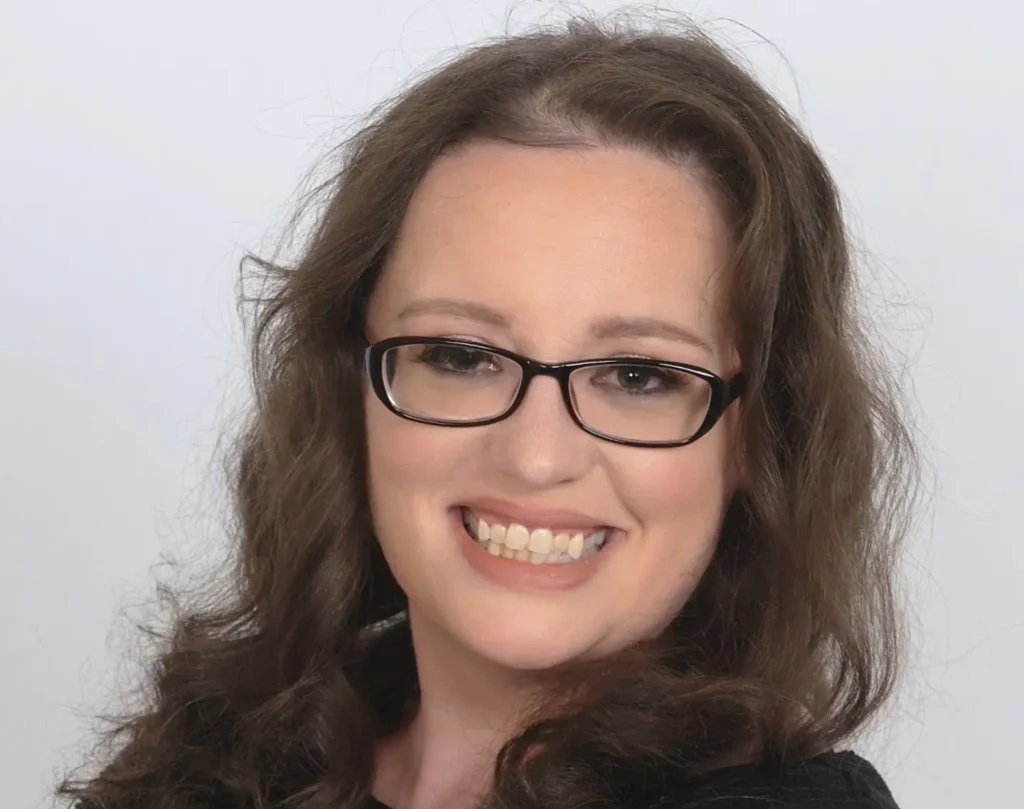
Meet the guest
Alyson Lex
Alyson Lex is proudly known as a “crazy cat lady” who loves to write, and help others write well too! She helps business owners and entrepreneurs grow their businesses through powerful sales copy, product creation and marketing consulting. She is also now a public speaker and motivates others to pursue their business dreams.


