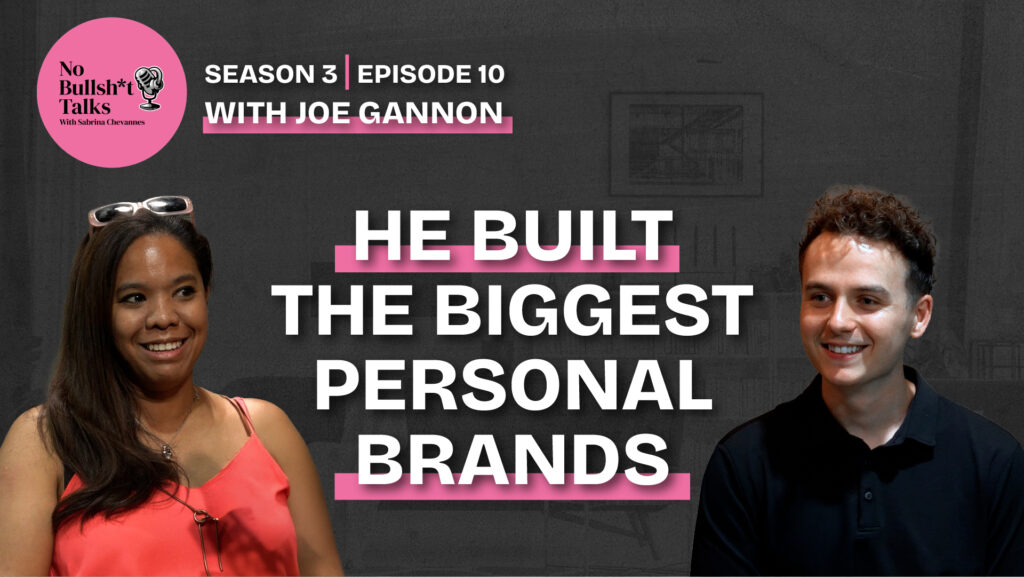
No Bullsh*t Talks · Season 2 · Episode 8
The Secret of Personal Branding
With Izzy Prior.
 Watch on YouTube
 Listen on Spotify
 Apple Podcasts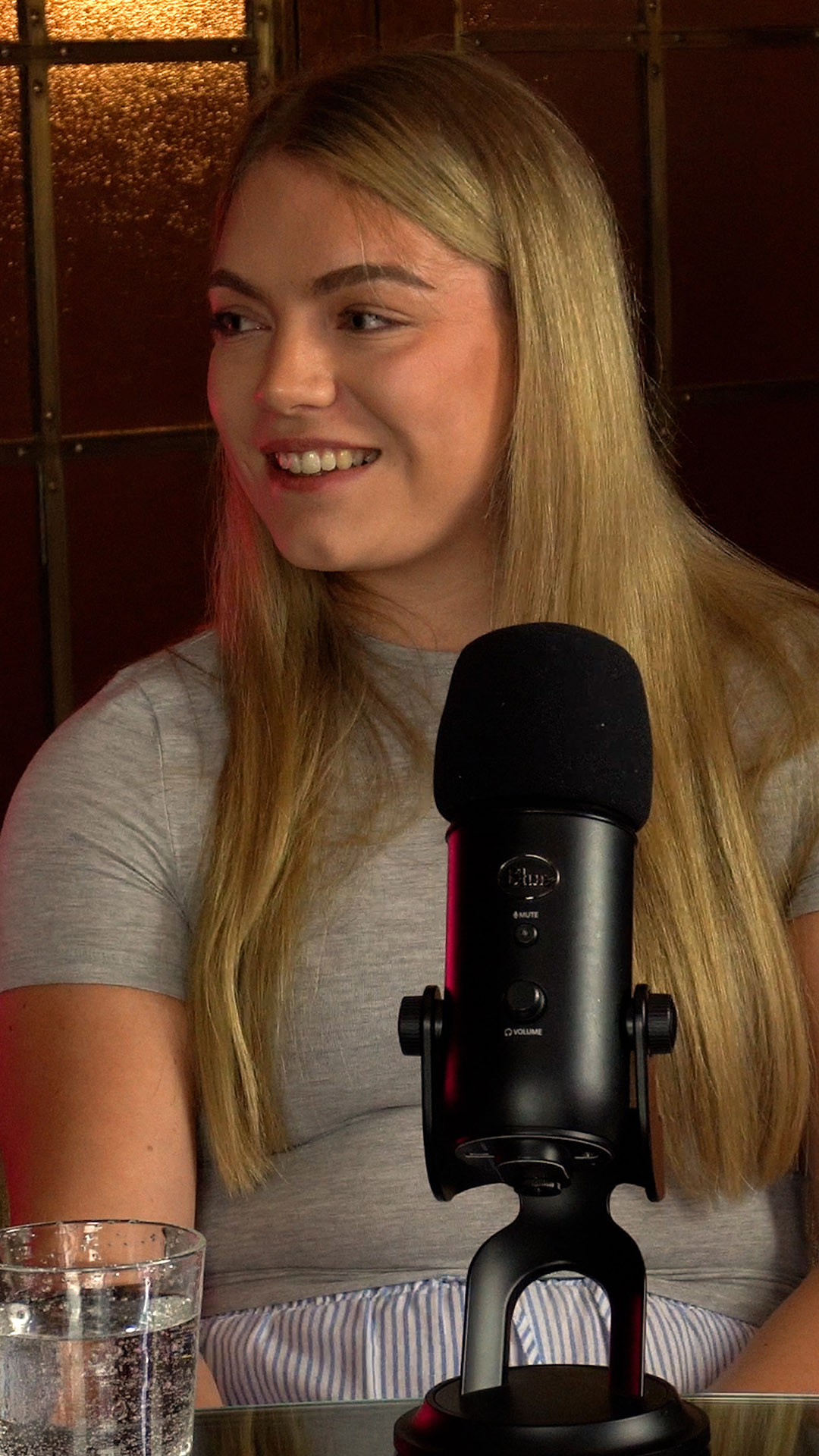
About this conversation
On Branding
In this episode of No Bullsh*t Talks, we dive deep into the world of personal branding with Izzy Prior, founder of Spark Social Media and official LinkedIn top voice. Izzy shares her journey of overcoming ageism, embracing authenticity, and the challenges of maintaining a strong personal brand.
We discuss the pitfalls of engagement pods, the importance of self-reflection, and finding a work-life integration. Tune in to learn actionable insights from her experiences and how you too can build a trusted and authentic personal brand.
Watch
See the full video conversation.
Listen
Take the conversation with you.
 Audible
Watch the moments
that travelled.
Watch, share and continue on the original platform.
Read the full conversation.
The transcript is organised by timestamp so it can be generated from the master transcript, edited once, and published here without designing a new section every week.
Introduction to No Bullsh*t Talks+
It was getting in the room with people and being proud of my voice and being proud to stand for who I am and that’s when if we return back to values there it’s making sure you are proud of who you are.
In that way I’ve been able to talk with people who you know 19yearold is he who’s working that Financial job would never have imagined speaking to because I’ve seen a lot of agism when I went onto the LinkedIn scene and start of my business I assumed that I would be a victim of agism and it kind of led to a mindset of me inflicting it on myself and assuming that I was too young or too inexperienced to do these things and then that created that incubator of impostor syndrome and a lack of confidence.
No Bullshit talks is a podcast for entrepreneurs by entrepreneurs there’s too much bullshit out there especially when it comes to business this podcast aims to highlight what’s true and what’s not in the world of Entrepreneurship bringing you honest and raw conversations about the rollercoaster that is entrepreneurship, each week my guest will be a high performing entrepreneur sharing the ups and downs of their journey and helping you prepare for the road ahead while providing you with actionable insights and absolute gems of knowledge stay tuned as I introduce this week’s guest.
Meet Izzy Prior: Personal Branding Expert+
Izzy Prior is the founder of Spark Social Media and is a personal brand builder for purpose led individuals she’s an official LinkedIn top voice and one of the leading authorities in the world of personal branding.
She’s on a mission to show that age doesn’t always matter and how we can escape the stereotypes of our generation.
I present to you this week’s guest, Izzy Prior.
Welcome Izzy to No Bullshit talks.
Hello, I am so glad to be here.
For the second time.
Yeah.
The first one had a bit of drama I’ve been um sharing all the kind of mishaps about the podcast and filming and just business in general right cuz things don’t always go perfectly even if it seems like it does online.
Very true I I feel you on that definitely so do you want to tell the audience first a bit about who you are what you do and um because there may be some people don’t know who you are although I feel like you’re got quite the personal brand which will come to obviously but do you want to tell people what you do?
Yeah sure so I’m Izzy Prior, I’m 23 years old had to think that how old.
You should not be losing your memory at 23.
Um I had a personal branding agency however at the start of 2024 I moved back into freelancer state sort of that solopreneur I hate the term that solopreneur route um and now I work with startup brands on their branding and social strategy um how I’ve come to this three years down the line the business has been going absolutely loving it and um in the process of I’ve grown a brand um to about 73,000 followers so not doing too shall there.
73,000 followers I mean so you mention that as an Accolade I’m not saying it’s not but what do we feel about that?
The Reality of Social Media Followers+
Because I feel like there is so much emphasis in this world on followers, and it’s almost directly equivalent to your self-worth.
I’ve even seen companies hire people based on the number of followers they’ve got.
What are your thoughts on all that?
It’s interesting because now you’re making me overthink why on Earth I said that as part of my introduction.
There’s a lot more to me, but yeah.
I think with how especially LinkedIn has moved over the last 18 months, we’re seeing the rise of these top creators—100,000 followers to 400,000 followers—and prizing them as godsend celebrities almost.
There are so many impactful and unimaginable creators, business owners, and really great individuals who have 2,000 followers or maybe not even 10,000 followers.
Because they haven’t invested, or had time to even invest, into the content space, their voice isn’t treated as gospel, or their advice isn’t seen as so you know authoritative.
Authoritative.
Yeah, exactly.
Because they haven’t got the followers.
It ultimately has turned into a game.
I’m quite grateful for the fact that my LinkedIn journey has grown very gradually over the years.
I haven’t suddenly gone from zero to 70,000.
Boom.
Three years it’s taken to get this.
It’s been a linear journey.
Yes, I think last year we had a really big boom in content creation, and I went viral a couple of times.
But that doesn’t mean that it impacted my business any more or any less.
How people viewed me and how people spoke to me changed massively, and that was really weird.
To see people coming up to you at events going, “I follow your content.”
I’m not exactly getting an autograph here, but having that at this age is a little bit uncomfortable.
I’m not a celebrity.
I’m an ordinary person who managed to find a shortcut, as such, in the social media space and worked really hard in networking and my own marketing to get where I am.
But that doesn’t mean I’m a celebrity or some person you should idolize because they’ve got a certain amount of followers.
It’s interesting you say that.
I think a lot of people will idolize you and definitely do.
Even I’ve had that at events, and people come up to me and go, “Oh my God, I love your LinkedIn content.”
I have 16,000 followers, so I don’t have anywhere near as many as you.
But they show up on the feeds of those who actually do listen, which I think I value more than another 100 followers.
I think, like you said, you were questioning yourself as to why you said it in your introduction, which is interesting.
But it shows you that, I guess, society has made us all kind of think of followers as a way of determining whether we’re successful or authoritative, like you said.
But that is your industry too.
That’s what you do.
You help craft brands for people.
You mentioned these top creators, and things have all changed.
What has changed over the last couple of years, and why do you think people are turning to places like LinkedIn to craft this personal brand?
The Dark Side of LinkedIn Engagement Pods+
I’d say four or five years ago, engagement pods were a thing.
Whether it’s a third-party tool—I’m not going to list them out because I’m not giving them any promotion—but there are third-party tools you could very easily search on Google and pay, you know, $20 a month, perhaps pay $5, or even hundreds of dollars, pounds, whatever your currency, and have your posts displayed.
Now people are trying to hack the algorithm and assume likes and engagement equal that status, that more engagement equals more eyes, equals transactions.
I think it’s really important that we correct this idea.
That’s not happening.
These were a thing four or five years ago, and very much in America, big pod groups.
You can now check out these profiles of people who were using pods back then.
Their spend went, their engagement went, and now they’re getting 40 or 50 likes whilst having thousands and thousands, hundreds of thousands of followers.
It’s very easy to see people who used pods back in the day.
The organic space surged a lot, especially in the UK, over these last two years, and pods went quiet.
We didn’t really talk about them much.
They were still a thing for some groups of creators, and we just assumed that the people that went from 20,000 to 100,000 were doing it organically.
At the beginning of this year, and maybe midway through last year, a lot of people got caught out.
There are some people who are becoming detectives over LinkedIn and pointing out your favorite creator is not who they say they are.
They’re selling a LinkedIn course.
They’re selling a boot camp.
They’re selling, you know, six weeks to master 100K followers, yet they’re not even practicing what they’re preaching.
They are using distribution channels to get that engagement, to get thousands of likes.
They are in WhatsApp group chats with 50 creators who are all posting very similar content.
They are taking over the algorithm by deciphering the trends in these WhatsApp groups.
So you go onto LinkedIn today and see your whole timeline is about perhaps the work-from-home, remote-first workplace debate.
And all 20 of your favorite or top creators are talking about that.
You’re assuming that’s the trend today.
I’m going to be automatically attuned.
But they’ve actually decided that.
And so you’re going to engage on more of those posts, and that’s how they all win.
They’re going to keep doing that.
Now obviously, there’s a lot of room for interpretation.
You may go, “Oh, my favorite creator is not in that.”
They’ve put a post up saying they haven’t.
But there are a lot of things going on behind the scenes that are making people a lot more fearful.
I mean for me, I’ve had to put multiple posts up saying that I’m not in a pod.
I’ve never been in one.
I don’t want to be in one.
I’ve rejected invitations.
But why is it that because I have a higher following, I have to put out a disclaimer?
No, I’m not part of this.
I Oh my God, I feel for you.
As you know, I am always trying to call out the bullshit, and there is so much bullshit on LinkedIn at the moment.
So much so that it’s becoming depressing for other people.
And I actually feel sorry for LinkedIn because there’s not a lot they can do about it.
They can try and ban these pods, but like you said, people are creating their own little WhatsApp groups.
There’s nothing wrong with that according to these creators because they’re saying, “Oh, we’re all just a bunch of people who support each other and just like and comment on each other’s posts.”
But when you orchestrate it, there’s a big difference.
And what it sounds like—I didn’t even know they were picking topics and deciding they were going to do that—it sounds like manipulation.
It’s almost like they are creating these cults.
LinkedIn is becoming a cult in a way.
These creators are creating these cults, dedicated followers who just blindly believe anything they say.
It’s like they’re completely being brainwashed.
It might as well be you’re recreating Charles Manson and followers on LinkedIn.
I will say LinkedIn has been absolutely beautiful for me over the last three years.
You know I’ve learned a lot about myself as a businesswoman, as a human being.
But you have to take what you see on that platform with a pinch of salt.
Just because Gary Vee has said this worked for him does not mean it’s gospel.
It does not mean it’s the textbook definition of how to reach success.
I think you know the biggest piece of advice I say to someone when they come to me and say, “Izzy, I’ve been told I should be doing this,” or “What are your thoughts on this?”
You need to remember that this is all noise.
This is a platform with so much regurgitated advice and a lot of beliefs and opinions that aren’t facts.
You need to separate and segregate those two: facts and opinions.
Because if your favorite follower is talking about X and you’re going, “Do I agree with that?”
“Do I feel like I have to agree with that because I don’t want to be cancelled?”
Or, “I don’t want to be you know out of that group of people.”
“I don’t want to be out of the cult.”
“I don’t want to go against someone’s opinions and have them disconnect from me or stop engaging in my content.”
It’s all social smoke and mirrors.
It’s become a playground.
You know back in the school days, you’d run away crying because you weren’t invited to someone’s party.
Why is a professional network becoming akin to a school playground?
It’s down to popularity.
It’s down to the exact same things that we went through in high school.
It’s like It was who was the prettiest girl, who was the fittest guy, who was the captain of the football team or the netball team or whatever.
They had this following.
Now it’s like who’s got the most amount of followers and who’s looking like they’re generating the most amount of business and creating this lifestyle.
But the problem is it’s all fake.
People don’t realize it, and it’s dangerous.
You mentioned Gary Vee.
At least he’s got kudos behind him.
He’s got years of established business success.
How much of it is exaggerated, I do not know.
But he does this on every platform.
I feel like he’s done really well on YouTube and Instagram and everything.
It’s not just LinkedIn.
I do want to come back to LinkedIn for a little bit because, like you said, you’ve had amazing success on LinkedIn.
I actually personally love LinkedIn.
I think it’s my favorite network by a long, long way.
That’s why I get so annoyed that people are polluting it because they are ruining what could be a beautiful place.
I’ve met so many great people, clients, friends.
We first connected on LinkedIn.
You wouldn’t be here today without LinkedIn.
Actually, half of my guests are the same.
All my 10X speakers are from LinkedIn.
It’s that beautiful connection, and I love it.
I learn so much.
But then I get so annoyed with these people abusing the system and, just like you said, the generic regurgitated crap that’s on there.
So I want to help other people because so many people come to me and go, “How do you get good engagement on your posts?”
“How do you like you know consistently get people showing up on your posts?”
You do get consistent people.
I say that I get a lot of consistency, but then I do get posts that tank.
People don’t see those.
They think that all of my posts are consistent because they only see the good ones.
But I think that also comes down to whether you use pods or not.
Because like you said, if you use pods, it’s going to drop at some point unless it becomes a very expensive game for you and you’re doing it for the rest of your life.
How do we help people who are comparing themselves naturally to these creators?
Cuz now I, even I naturally do it, and I get depressed because I’m looking at it and I’m like, “This person posted three minutes ago and they’ve got like 1,500 likes.”
It’s impossible.
It doesn’t work but if you think about it for a second.
But even I find myself in that paranoia trap where I’m like, “Oh my God, they’re doing this and the content isn’t that good.”
You look at it, you try to replicate it, and it’s a spiral of just toxicity.
Creating Authentic Content and Avoiding Comparison+
How do you advise people who are trying to create content on LinkedIn and to stay away from all this?
It’s interesting because there are a couple of things that I want to pick up from what you said there.
The comparison.
If you are someone who hasn’t been—you know, I know you’ve been in social media for the last 10-plus years—so writing content and having that marketing angle is going to be an advantage that you have over perhaps someone who is a business coach, or they’re a speaking coach, or whatever their sector is.
Maybe copywriting and content creation isn’t something that they have in their you know in their arsenal.
So they’re already automatically at a disadvantage in their journey when you’ve got the big creators who are CEOs of companies, marketers, LinkedIn agencies, and personal branding agencies.
You know I have an advantage myself, being very much in the creative space.
I started in social media marketing and graphic design.
Then I moved over to storytelling, ghostwriting, and copywriting.
Now I’m back in brand strategy, graphic design, and social strategy.
It’s constantly being creative for me.
I’m at an advantage of being able to take 10 minutes out and write a post that will get a reasonably good amount of engagement.
Whereas Sally down the road, who’s a business coach, and she’s got 13 calls a week, one-hour calls executive coaching calls, and she can only squeeze LinkedIn into one to two hours in that week.
That’s going to be a headache.
Straight away, going into the “Why am I not getting the same amount of engagement as Izzy?” mindset, that needs to be wiped straight from the page.
Everything that you need to reframe this as, “I’ve got two hours to share my stories, my business acumen, my expertise, and my experience with my audience, and this is how I’m going to do it.”
Systems are going to be a massive part to play here.
Making sure you block out that time slot so that you don’t sacrifice your you know marketing that week.
Making sure you’ve got a bank, whether it be a Notion page, a Google document, or even the notes on your phone.
I still use it.
I still use it.
And I’ve got that you know I’m putting out this much content repeatedly. I’ve got so many brain-dump ideas in my phone because I’m sitting on the train and I’m eavesdropping on someone’s conversation.
Yeah.
I go, “Oh my God, that would be such a good piece of content.”
Or, “I don’t agree with that person. Let me just write it down because it might come up later on.”
Even a little analogy or something.
But you know you need to wipe that idea of comparison off.
And then also the other thing you mentioned there was replicating the top creators’ content.
Now a lot of them are repurposing content from two years ago or so that worked well for them, and they go viral again.
It’s very much using very similar frameworks that they’ve been associated with, whether it be bullet points, or graphic design, carousels, or certain hooks.
Their audience, as it’s grown, has associated a certain style of writing with who they are.
If suddenly I were to start doing you know a bullet-point list and really short and sweet content, people would probably go, “Oh, that’s not who the Izzy is that I followed three or four months ago.”
Because I’m very much—yes, I’ve been experimenting over the years—but now I’ve returned back to that descriptive, emotional copywriting.
I love telling stories and compelling narratives.
Yeah.
Yeah.
I cannot physically write a post with maybe 15 characters and then click post unless it’s a short quote.
The one with the three things and a lie that everyone does.
Yeah.
I can’t do that.
I love and maybe it’s that ADHD trait there, but I love explaining things.
I love building a picture for my audience of that emotional impact that they have in that experience, or really making them feel heard.
And that’s me.
Whilst Bob might be a little bit more introverted and more straight to the point, no bullshit, and every sentence that he has to share is purposeful.
And I don’t think there’s a wrong or right way.
You just need to experiment and learn your tone of voice.
Ultimately, those are the two things I wanted to pick up on.
What else, in terms of avoiding you know following the big creators and making your own path?
I’d say it’s that self-reflection and self-advocacy piece.
A lot of people come to me and they feel like a narcissist for starting a personal brand.
They feel embarrassed to talk about themselves when their team has been the reason for their company’s success.
Or, “I can’t talk about that award.”
Or, “I can’t talk about the fact that I’ve made six figures.”
Because they’re seeing all over LinkedIn that the top creators are talking about, “I closed a six-figure deal,” or, “My business was acquired for 10 million, 48 million,” whatever that quote is.
They’re assuming that engaging content and what people want to see are these rags-to-riches stories.
So it’s reframing that narcissistic angle this is self-advocacy for yourself.
This is another marketing tool for you as a founder, for your career path, for your business, and for how people perceive you.
If you’re a speaker, you’re just sitting on the sidelines of your business.
You need to see your stories as something that’s more transactional.
Your stories are a currency in this day because they’re the difference between someone making a decision to work with you and going with another agency, another keynote speaker, or another business coach.
The Power of Storytelling in Personal Branding+
Yeah, I think you’ve mentioned storytelling, which is so important.
I’ve been having so many questions like conversations about storytelling just this week alone.
I’ve just been reading, have you ever read Kindra Hall’s book *Stories That Stick* book as well?
She’s a professional storyteller.
It’s interesting.
I’d recommend it.
That’s a great book.
There’s nothing new in all these books.
It’s just that she’s driving it home.
Even I’m listening to it thinking, “Yes, I need to craft a proper story.”
I like telling stories, but I don’t realize I’m even telling stories.
What you were mentioning about being on the train and the notes—I’ve got a notes file that just says “Content Ideas.”
That’s what it’s called.
In my to-do list that never, ever gets cleared is “Transfer notes to Notion board” to make an actual content calendar.
I’ve still not done that.
I was saying this to someone yesterday because people say to me, “How do you know what to come up with on LinkedIn?”
And I always call it developing a content mindset.
I was like, “Everything’s content.”
Literally.
I’m always on.
Everything’s content.
I sat in the other room yesterday with someone asking me this.
She was like, “No, it’s not.”
Then I was like, “Look, this conversation is content.”
She was like, “Wait, what?”
I was like, “Tomorrow you could go on LinkedIn and talk about how you had this conversation and what you learned from it and how it changed your perspective.”
Because she was sitting there going, “Oh my God, that’s brilliant.”
“Yes, I should do this.”
“Yes, I should do that.”
I was like, “Turn that into content.”
She went on LinkedIn this morning and posted it.
I was like, “Love it.”
As a high-value individual in the business space, I’m sure that every single day you’re having a call with someone, you’re having a conversation, a meeting, or a podcast with someone where you’ve either taught someone something, a new perspective, or you’ve learned something from someone.
And even if she didn’t put, “I had this meeting yesterday,” she could have framed a post around that because it’s come to the surface of her head.
We’ve got so many things as business owners going on that it almost paralyzes us when we come to writing content.
And this is what I see a lot.
People have that writer’s block.
They’ve got the idea, but actually framing it becomes difficult because they’re trying to put seven different messages in the same post.
As you said, in our day-to-day lives, perhaps you’ve had a sales call and you’ve had a really nasty objection or a nasty experience.
Or you know you’ve had a great sales call and it taught you something to communicate with the rest of your audience who are possibly going to buy from you.
Every working minute you’re doing something that maybe the people behind you, or you 10 or 15 years ago, would have loved to have and soaked up that knowledge.
It’s realizing that you’re not boring.
A lot of people assume, “Yeah, I’m just a CEO.”
What do you mean you’re just a CEO?
Or, “I’m just running the wheels in this right now.”
Or, “I’m doing business growth.”
Or, “I’m a CMO.”
There are things that your community, or your future community, will absolutely soak up.
They will pay good money to experience the experiences that you have on a daily basis.
It’s recognizing and maybe getting over what I like to call a hesitation hurdle.
Yeah.
You really need to reframe what your life looks like in comparison to what you were experiencing 10 or 15 years ago.
If I kept a diary and posted every single day, Izzy at the age of 19, who was working a finance job, would have been like, “Whoa.”
“You’re on a call with that person?”
Or, “You went to this event?”
Or, “You went to this country to develop a workshop?”
That would blow my mind.
So you know it’s reframing how we perceive things.
Definitely.
I think reframing is actually my favorite activity to do.
Otherwise, everything’s so negative, right?
Any bad thing can be reframed into something positive.
Yesterday I woke up and you know—this is why people don’t check their phones in the morning when they wake up, but I always do—I checked my phone to a one-star review on my company Google page.
How did you deal with that?
Well, first of all, I was like, “Who the hell is this person?”
Then I went through all my emails.
I typed in their name.
I went to LinkedIn.
I’d never heard of this person.
It was obviously a troll review.
But it was like, “Don’t trust any of Sabrina Shannon’s companies. She’s a liar and she will just get what she wants.”
I was just like thinking, “I don’t remember the last time I actually got what I wanted.”
Then I was like, “Okay.”
I thought, “Right, okay, so it’s not an actual disgruntled customer.”
Because if it was, I’d be really upset and I’d want to try and rectify it.
But it was, “I don’t trust any of Sabrina Shannon’s companies.”
I was like, “This is someone who’s attacking me, not the business.”
And then I was like a few years ago, I would have been really upset with this.
I would have been like, “Oh my God.”
Or replied with, “Who the hell are you?”
Or tried to find out who did it.
I looked at that and just thought, “Wow.”
“Someone’s really anti-me personally.”
I don’t know what I’ve done.
I know that I treat everyone with the utmost respect.
Even if I disagree with someone, I’ll still try to keep it civil.
I’ll voice my opinion, but I don’t personally attack people.
And I just thought, “You know what?”
I realize that if you want to make a difference in the world, you don’t make a difference by just being nice all the time and saying you know keeping to the status quo or trying to agree with everyone.
You need to ruffle some feathers to make some change.
And with every time you ruffle those feathers, you’re going to piss off some people.
I’ve noticed that any time I create some engagement, there’s always going to be some haters.
There’s going to be someone blocking you.
Exactly.
There’s someone that doesn’t like you.
They’re going to call you names.
I was like, “This person just doesn’t agree with something I’ve done.”
They’re not, they’re not like, I don’t want to say Man enough because I don’t want to be all like you know they use the wrong terms, they’re not I don’t know..
Brave?
Brave enough.
Yeah, Exactly.
To actually write their own name and do it from their own profile.
It is just a nasty attack.
And so I realized that reflects more on them than it does on me.
I was like, “Do you know? I’m turning that into content.”
Yeah, there you go.
Handling Criticism and Staying True to Your Values+
On the podcast.
But it’s so interesting that you bring that story up in terms of you know not sticking to the status quo, actually getting off the fence and standing for your values and beliefs.
Because in that way, you’re going to attract the people to Nobs, attract the people to the community that you’re building, to your LinkedIn content, and to your future businesses that align with your values, align with your beliefs, and work ethic.
And I think that’s the biggest thing.
You want to be attracting people that possibly work with you in some regard who have aligning values.
So many people I see—and this might come from a place mentally—but so many people I see are afraid to put their values out there because they’re scared of being told off, or being corrected, or called out.
Yes, it’s not nice to receive hate.
But in this digital landscape, you could post anything.
You know a good example is one of my closest friends, who is a personal trainer.
She constantly gets awful comments from people over on TikTok and Instagram because she wears gym wear that women buy for the gym.
She gets called out constantly.
What does she get called out for?
Just for wearing gym wear.
It’s not like the woman’s naked in the gym.
But that’s such a great example.
No one’s ever going to be happy with what you’re building, what you’re doing, or your business.
And I think it took me a little while to learn that.
Because yes, in the early days of LinkedIn, I was putting a little bit—not necessarily provocative content up—but things that were a bit satirical, a bit out there.
It put my opinion across.
A little unhappy comments came in and I was like, “Oh my God, I’m never posting anything like this again.”
I wanted to be liked by everyone.
The people-pleaser comes in there.
And as the journey progressed, I started standing for those values and looking within and going, “Who actually is Izzy?”
“What does she stand for?”
And as I’m putting that content out there.
I’m bringing in the people that value my authenticity, value my no bullshit, and value the realness that I have.
As a result, I’m bringing in clients, and friends, and you know business colleagues, essentially, who do agree with me.
But it takes a little while to get there.
I’m really glad you mentioned values because I feel like part of it is a bit of a buzzword now.
Understanding Personal Values in Branding+
People just say “values” and they go, “Oh, I want things to align with my values.”
And the amount of times candidates have said that to me in interviews as well.
And I’m like, “Do you even know what your values are?”
“Do you know what they mean?”
But I love how you said it’s an automatic filter.
That’s why we’re called Nobs.
Because it’s the name.
It’s still funny.
But other people find it really inappropriate.
We had someone who respected me as a person but was like, “I just can’t join a community called Nobs.”
He just couldn’t.
He felt it was so inappropriate because he works with corporates.
Totally fair enough.
Being called the No Bullshit Agency, some people love it and some people think it’s really inappropriate.
Again, that’s fine.
Each to their own.
And I just feel like anyone who does find it inappropriate is not going to be the right person for us anyway.
And you know I like to keep it real.
I like to be honest.
If you can’t say the word “bullshit” or you think that’s a really inappropriate word, then you’re probably not going to like a dose of reality every single time.
And you I’m not for everyone because I say things how they really are.
Not everything is sunshine and rainbows all the time.
I will call out some stuff.
And I think that’s okay.
I think a lot of people are worried about being liked, and it is really difficult.
I think values is an interesting one.
The Role of Values in Brand Strategy+
So I want to talk to you about your experience with what you do for brands.
Because, like you said, you’re a brand strategist.
You help people individually and also companies, I guess, craft their brands.
How does values come into it?
What are other people’s kind of feelings?
Do they not all pick the same values all the time that apparently they are?
It’s interesting because across some various startups that I’m working with right now, there are specific values that repeat.
But also, when it comes down to those discussions and calls, it’s, “We have to be like this because our competitor has been like this,” or, “The industry looks like this, therefore that’s the foundation, that’s the baseline we’ve got to follow.”
And without really delving deeper, they’re not understanding how exactly they should frame who they are.
And I strongly believe that before we look at campaigns, before we look at your social strategy, what platforms you’re wanting to upload to or be present on, we need to look back and, again, have that self-reflection piece.
That doesn’t just extend to your personal brand.
It extends to your company brand.
And when we delve deeper and look at what actually is the mission of this company, that mission statement speaks to so many more things.
Your personality traits, your tone of voice, and your values are all the foundation of what your brand will eventually turn into and the impact that it creates.
Whether you’re in the social impact space, you’re an agency, or you’re a product-based business, how you communicate with your audience is so important.
I think that’s beyond some great graphic design, great headshots, or that viral template that you’re following.
Creating Emotional Connections with Your Brand+
It’s how someone feels and the experience they have when they go to your website, when they react to your content, or even the customer service that a customer has with that business.
How do they feel?
What does the experience look like?
When we tap into those values, some examples to throw around are that if it’s a Gen Z company, it’s that playfulness, that quirk, the abstract.
But also maybe there’s a little bit of knowledge and education in there because that’s a massive part of stepping out on social media nowadays.
It’s not just memes and GIFs and trying to go viral for viral’s sake, but actually having an impact on your audience and making that experience better.
A lot of people jump straight into social media without really looking at their why or the purpose behind it.
So I one of the first sessions I have with people when we look at brand strategy is, “What exactly do you want your audience to feel, and how do you want to be remembered by them?”
Whether it’s the buying process, the onboarding, or leaving a shop, all those things.
I think the feeling is the most important thing.
I’m so glad you said that because I’ve been doing branding for several years, and I try to explain to people that your brand is not your logo.
It’s not the fact that you have this Pantone color and use this font in your headings and how important that is.
It is the feeling.
Because If you think about all the top brands in the world, can you name any of their values?
Most of them, you can’t.
Take Nike, one of the most popular brands in the world.
If I were to list their values, I don’t think I could actually list their value..
Exactly.
But I could tell you how Nike comes across and you know the sort of brand they are.
Obviously, their tagline everyone knows and their logo that people know.
It’s iconic.
But it’s like they’re associated with the best athletes in the world.
So it’s like they’re clearly associated with quality, and you know high performance, and you know the absolute skill, kudos but determination, grit, like hard work.
All of that is quite clear.
Who the Nike ambassadors are.
Same as like Apple.
Everyone loves Apple.
And the amount of times people say, “I want a website like Apple,” is ridiculous.
Again, we know “Think Different,” but how many people can relay their values?
We can tell you that you know we were just talking about you transitioning from Windows to Apple.
But you know like I was saying that I think the way Apple makes people feel.
Like Apple doesn’t necessarily have superior products per se, but people will be completely loyal to the brand just for the ease, and like you know the slick, the design, and all of that sort of stuff.
So for me, that feeling is absolutely everything.
Personal Branding: Authenticity and Vulnerability+
How do you create that, though, is a different thing.
I think that’s why it has to be authentic.
I think there’s one thing with a company, but then what about the people that you work with?
Because I feel like a lot of people listening to this are going to be people who are thinking about their personal brand.
And like we said at the beginning of this episode, LinkedIn is a big place for it, but obviously, depending on what platform, Instagram might be right for you, Twitter, wherever you are showing up.
And remember, personal branding is not necessarily just social media, but obviously that’s where a lot of content is.
How can an individual show their values without being like, “I am brave. I am authentic,” and like all that sort of stuff?
It’s really interesting you say that.
I actually put up a post the other day and the hook was, “I’m doing this business thing wrong.”
And I know I’m not doing this business thing wrong, but it was a little bit of a quirky clickbait hook because I am doing business differently to a lot of what the business gurus, especially top creators who are business coaches, out there are suggesting and giving as unsolicited advice through their listicles, videos, and YouTube videos.
I don’t have a cookie-cutter approach.
Sales calls with people are completely non-salesy because the sort of work I do—personal branding and brand strategy—is about getting to know someone’s mission, understanding them, and giving them an ear.
The first thing they want to have as an experience with me is being able to trust me.
Over the years of working with people’s personal brands, I’ve you know had calls with people where they’re in tears, where they’re going through a really hard time personally or professionally, struggling to close that round, so many many hardships, which is factual in this entrepreneurial journey for everyone.
They want to be on a call every two weeks, having their hour, looking at their personal brand strategy, building themselves up, and feeling like they actually trust someone.
If the first experience with me is me going, “I’ve listened to everything you’ve said. Here are your pain points. Here’s my solution,” there’s no warmth and there’s no rapport built.
This goes beyond the sales call.
It’s that onboarding process.
It’s you know having conversations as if I’m someone sitting on your shoulder, helping you with that content brain we went back to earlier, always having that content switch on and being able to make sure that your reputation is upheld without sacrificing vulnerability.
And I think another buzzword is authenticity.
What even truly is authenticity when everything that we post is so fabricated to make sure that it matches the algorithm?
The hook is short enough so it captures enough eyeballs and makes people read on.
We’re getting professional photo shoots with acne and blemishes blurred.
Authenticity can be broken down into actual authenticity and performative authenticity.
And I don’t want to go into that conversation too long because I could sit here for hours with you, Sabrina.
But there’s a lot that comes back to our values here.
And I think instead of writing out a list and saying, “I’m congruent, I’m consistent, I’m independent,” and all these sorts of things, you need to work out exactly what your work ethic is and how well you merge with people, whether it’s your stakeholders, investors, or employees.
That needs to be demonstrated through your content and your actions.
And I think a great quote that I read, which is actually more referred toward relationships, is, “Who we are isn’t how we feel about people, it’s how we behave towards people.”
I think that continues in this conversation here.
Your values aren’t through a list of how you demonstrated. You know, “I’m a great boss because I speak to my team, X, Y, Z.”
It’s, “I allowed my team to do this.”
I suppose that’s not the best example because it’s coming from a place of vanity sometimes.
But when you’re telling people about your culture, the values of the company, the values of yourself, and the values of a team, are all those things really placed into one post, one conversation, or one website page?
No.
I get what you mean.
I think it’s a good example.
I see people going, “I’m a great leader. I’m a great boss because of X, Y, Z.”
I’m like, that’s a PR stunt.
You’re saying you’re doing those things, but are you really?
Whereas if you’re just posting stuff about things naturally happening, you’re already explaining your culture without blatantly explaining those things.
I feel like it’s really I think it’s really great.
Then you go back to the trust thing because trust is so important for every relationship, business relationship, personal relationship, whether you’re looking for a client, colleague, or anything.
Trust is of the utmost importance.
But I’d love to find out how you’ve dealt with that in what you do…
Navigating Ageism and Building Authority+
Bearing in mind you’re 23 years old, right? And I know that people are ages and they’re going to be like, “Izzy, you’re 23. What the hell do you know about anything?” Whether it’s personal branding—and okay, Gen Z has a good reputation for social media knowledge—but what do you know about strategy, branding, like business, and all of that sort of stuff?
You must get that a lot. How are you navigating being in this position of authority considering you’re just 23 years old?
There’s a couple of things there that it comes down to. Now, when I stepped out on my first job, it was a corporate job in my very small hometown. I wasn’t well-networked. I didn’t have contacts because I wasn’t in a big city. I had to go out there and prove myself and prove my identity and persona to people in the world of LinkedIn.
Yes, I made mistakes initially. I think I went viral over a post talking about burnout, which makes me cringe talking about it now, but it’s all part of the journey. It all makes up who we are.
And but It was socializing. It was networking. It was getting in the room with people and being proud of my voice and being proud to stand for who I am. And that’s when If we return back to values, it’s making sure you are proud of who you are and you are strong with the values that you have because, in that way, I’ve been able to talk with people who 19-year-old Izzy, who was working that finance job, would never have imagined speaking to.
And because of that, it’s spiraled and snowballed into referrals, business opportunities, and getting into further rooms with even bigger people.
Now, I will be straight. There has been ageism, but also there hasn’t been, and that’s what I want to dig into for a second.
Now because I’ve seen a lot of ageism when I went onto the LinkedIn scene and started my business. I assumed that I would be subjected to this, that I would be a victim of ageism, and I actually wasn’t as much as I expected. It kind of led to a mindset of me inflicting it on myself and assuming that I was too young or too inexperienced to do these things. That created that incubator of imposter syndrome and a lack of confidence.
In the early days, I actually created that for myself, which is crazy to think about.
But secondly, a lot of the clients that I’ve worked with have seen my personal branding content. They’ve seen the case studies. They’ve seen the results that I’ve created with people, and they’ve looked beyond age.
I don’t put my age on my social media anyway. Around my birthday, you talk about it being your birthday, but I haven’t got my age on my bios because it’s irrelevant at this stage. Whether you’re buying from someone who’s 50 years old or 25 years old, you should be looking at their personal brand from a place of: Can they do the job? Do I like them?
That values conversation comes back to us. So would I work well with them? Is their work ethic mirrored in my own work ethic? Can they actually achieve this result for me?
I think age becomes not even a priority at that point. Maybe that’s because I’ve attracted the right audience. I’ve attracted people that don’t see that, and it’s been fortunate that I’ve not faced many people who have used age as an excuse.
However, I have seen on the platform reels and reels of conversations of “Gen Z don’t know anything,” “Gen Z are too inexperienced,” and “Why are they charging this amount of money for something that they you know haven’t even gone to university or got accredited in?” “Gen Z are bluffing with all these 10K months” and all that lame rags-to-riches and hooky clickbait content.
And It’s almost as if this whole generation, especially in the creative and social media space, has been painted with that same brush.
Now as someone who’s in personal branding and a young entrepreneur in their early 20s, I’ve been unlucky to be painted with that brush because it’s not just one but two demographics of people that are told to stay away from in the social media space.
Sure, I’ve had to stand up for myself and fight for that, but I’ve done that successfully. And It’s because it comes back to me standing for myself, standing up for myself proudly.
Yes, there are people in this space who you’ll very quickly learn are snake oil salesmen. They’re not perhaps to be trusted for the amount you’re investing in, but that doesn’t mean we should paint them all with the same brush.
But you mentioned that it is hard. You’re young, like you said. You’re young, you’re in the personal branding space, and there is a lot of bullshit around it.
I just scroll through any social media network and everyone is on six figures, seven figures, or whatever. It’s like, I’m sorry, but are you really? There’s no proof for it.
Like you said, there are people like that. How do we determine who’s telling the truth and who’s not? Because, like you said, there are these pods and they’re all in it together. And all the ones we’ve discussed this off the record, not naming names, but we know who’s in these pods. They’re people who I used to respect, people who actually are legitimate as well, have great careers, great like experience, and they don’t need to do it.
But they are so sucked in by this desperate need for fame and social validation that they’re joining these pods.
But how do we know who’s actually worthwhile? Some of these people are charging thousands dollar an hour for their consultation, claiming that they’ve done this personal branding and they’ve gone from zero to over a hundred thousand followers in such-and-such amount of time.
People are like, “Wow, this person really knows what they’re doing.” But they don’t know that they’ve bought all their followers, they’re in engagement pods, everything they do is fake, they use AI copy, and all just none of it’s real.
How do people determine what’s real and what’s not?
Two words: social proof.
I completely agree with you. I feel like, in some ways, the very active creators on LinkedIn have become numb to how odd this is—charging that amount of money for an hour of your time and expecting the same result as what this person’s achieved.
They’re not seeing that it wasn’t an hour of their skill that took them there. It was years. They went through a lot of this is me talking about the people who’ve done it authentically and organically. They’ve put the effort in.
A lot of people come to me and go, “How can I get to your position?”
How many hours do you have? Because it’s not going to be a quick success.
I had a client a few years ago who said, “I want to get to 100K followers.”
Why? What is the purpose? Is it that social validation and being seen as the big guy in the space?
There are other ways to claim that validation beyond cheating and shortcuts that are going to effectively hurt your reputation.
There are a lot of people here who, again as you said, have an amazing business, are really skilled individuals with a lot of acumen, but my perception of them has just diminished because I’ve recognized they’re in an engagement pod.
I don’t want to be associated with that individual.
It’s hard because maybe they don’t see that from the outside. They see, “Yeah, I’m really liked. I’m getting validated by thousands of people here. I went viral. Maybe the business is going up.” The business bank account, that is.
But what do people actually think of you?
It’s that social listening that we really need to be in tune with.
So how can we actually find out who’s playing the game and who’s being authentic, organic, and actually safe to work with?
Going back to the social proof thing, it’s really important we look at case studies, results, and the ROI of that activity.
If it’s marketing, we need to see the success and maybe even actually speak to one of their clients. I know a lot of people in the generations above will go and speak to a previous client or an existing client and see what the experience was like.
Yes, it might feel a bit extra to do that, but if you’re willing to spend 10 or 15 grand a year on a specific service plus, then you need to make sure you’re counting your dragons and seeing if this investment is going to be worth your while.
Because ultimately, as business owners, we do have a responsibility to make sure something follows through.
Yes, things as we both know, things can fall apart even though we did all of our due diligence and all that.
How else can we see who is playing the game?
Often, a lot of people going back to the engagement pods, a lot of the same people will be in the comment sections in the first half an hour. AI-generated comments or very short sentences supporting one another. Again, similar trends in content.
There are some people who are in pods not understanding the impact the negative impact of pods on their reputation, who are doing a good job.
There are individuals who are perhaps in a pod unknowingly and not realizing the impact it has on their reputation. They do a good job. They are providing a great service that creates results for people.
But are we just writing them off because they’re in a pod? Is that something they need to be aware of? I don’t know. Perhaps.
Yeah, I think they just don’t know. I think some people are trying to do it innocently. They’re thinking, “I just need to get traction,” and, “I’m so sick of this algorithm.”
There’s always the algorithm or whatever.
But I guess I want to know, what would you attribute your success to? Because you said you’ve grown it solidly and organically over the last three years.
Why have you done so well on LinkedIn?
Again, I’ve had that advantage of being a creative. I think my traits of empathy and creativity are far beyond what a textbook can teach you.
And I think they’re even doing university courses now on how to be an influencer.
Oh my God, I know.
But textbooks and blog articles are only going to get you so far because that’s not unique. It’s a cookie-cutter approach.
You need to obviously delve deeper and understand who you are, what advantages you have, and use them.
If you have a marketing budget to be able to spend on maybe a VA working with you or a podcast studio, I think video is going to be massive in this next year, and high-quality content.
The barrier to entry is low in personal branding, but the barrier to success is high.
Quality conversations and having you know corporate responsibility are going to be massive. In the same way we audit businesses nowadays on what they are doing to help the world, that’s going to be playing a part on people.
Also, being real, no-BS, being trusted, and having those values come to the surface.
For me, what worked was that I did have that advantage of being a creative. I also had time early on in my journey to be networking and getting into those rooms.
I think when if you see personal branding as beyond a digital personal brand and more of a holistic brand—going networking, being in those in-person communities, showing your face, showing up in places, and getting to know people on a more trusted level—they’ll come across you on your social media channels and go, “You know, I really vibed with Sabrina, and I’m going to engage with her because I like this post. It’s relevant to how I feel at the moment.”
“I like the woman that I met the other evening, and I want to support her.”
When you have that bubble of people who you get along with—not because you’re in an engagement group, but because you vibe with them—you will see that surge.
Beyond that, on the digital landscape, I think the quality content is going to be really important. It was for me.
I made mistakes, and maybe my account could be in the 100K-plus range if I was more consistent because I went traveling for six months and my engagement and my content went down.
Yeah.
It’s experimenting, and it’s doing it and returning to your why constantly because there are going to be months where you’re like, “God, I can’t.”
There are going to be times where you don’t want to be posting and far from it, and maybe your pipeline’s full, so yeah, let’s switch off personal branding and marketing for a while.
But that’s going to be so important because you know it’s an evergreen thing.
The Reality of Going Viral+
I want to talk about your cringy post you said I went viral about bur ey Cuz I don’t know if I saw maybe I did maybe I was the angry people on it what what was that.
Okay so 2022 I feel like it was longer ago that’s embarrassing it was only two years ago.
I was severely undervaluing and undercharging my services.
This was back when I was doing social media management.
I had about 25 clients no Freelancers no VAs just doing graphic design social media management and videography for people across so many different Industries.
And I didn’t understand because I was so new to the business space.
I didn’t have a business coach.
I didn’t have the LinkedIn knowledge or the business etiquette that I know now of when you scale or when you have this many people you start to delegate rather than oh more money let’s take it all in.
So it was pretty poor naive mentality for me.
But’ all been there.
Yeah, exactly so I had 25 clients um you know I don’t even think I had a schedule until back then.
So I he was up till 3:00 a.m. every night um my eye was twitching.
I was going to bed with my laptop.
I had a very poor social life and I turn up to you know social things like birthdays and things where I kind of had to show face and people are like you you look so ill you look tired.
I was I was really I I won’t say pull the depression card but I was really in a bad head space.
My mentality was poor and I thought this is business like this is normal because the guru and the Hustler hustle Bros and the hustlers on LinkedIn and Twitter tell me that this is the route because you’ll reach success One Day by putting in these wraps.
So I put up a post.
I was on a train to Guilford down in sori and I took a selfie and I was so tired and I I did a real raw post because yes authenticity was my value but I didn’t recognize the impact that this post was going to have.
In a few hours it reached over 100,000 people and in the space 24 hours 1.6 million people saw that post.
Hundreds hundreds of comments going you know snowflake generation D like a lot of rude comments.
But also if I were to look back on that post now I’d probably agree with some of those comments but in the moment I felt so attacked as a as a 20 21 year old.
And it was just one of those times where you kind of wish you had your own personal brand chases and go is this post relevant is this post purposeful towards my journey is it helping someone.
It did create a conversation of we need to be looking after our health more as business owners.
We need to learn when we make efforts when we when we you know do things wrong.
Maybe delegation hiring a VA would have helped me.
All these things but it created a conversation.
I’m glad that did but the amount of shit that I got after that not not amazing and it’s not my proudest post.
You know it didn’t create business in instead it actually probably told some of my existing clients like is he struggling like is is she going to be able to support me this month.
A lot of kind people offering like coaching um you know mindfulness therapy off the off their backs.
But return to that question like making sure our content really yes we can be vulnerable but really Vibes with our purpose and objectives with marketing.
There was so much there which was amazing like honestly.
But do you know what like like you said you’ve got the like fantastic attitude and and it’s going to sound condescending if I say for your age it’s so mature but like exactly.
But that’s what that’s why I wouldn’t say like that.
I just mean in general like even like i’ I feel like I think I said this to you other day that you’re so mature compared to how I was in my 20s and whether that’s agism or whatever.
But the point is that’s why I think age is nothing but a number because there are so many things that I can learn off you.
But that that the way you’ve approached that is so great.
Like I think you’ve just told everyone else of the Pils of going vial.
People want to go vial and they don’t understand what goes with that.
If you’re going viral it’s because your content is probably a little bit controversial and a large percentage of that is going to be hateful comments.
And that’s not great for your mental health at all so it doesn’t it adds to it.
And like you said your current clients might have been like oh my God Izzy but you learned so much from that.
You’ve you’ve grown into this incredible person because of that post whether you see that as a mistake a stepping stone on your journey an actual revelation moment whatever you see it as you can’t regret that moment.
Because you know it it’s turned you to who you are now.
And I feel like now you really do look after yourself and I feel like you spend a lot of time doing that.
And I definitely want to talk about that because I think that burn out whether what do you call it burnout you said whether you use the depression word what whatever you call it.
I think everyone’s so quick to self- diagnose these days but let’s just call it being tired because you know.
Exactly whatever you want to call.
Yeah cream cracker like let’s just say like sometimes I feel cream cracked.
Balancing Business and Personal Well-being+
How do you manage being a business managing all this stuff and balancing like whether you call it work life balance whatever you call it and and and you know stay present with your mind as well?
So I’d put it down to a couple of things now.
Last August between now and last August I’ve had a mountain of success in sort of the client work, the business I work with in comparison to previous years where it was constantly chasing the pipeline, stressing, going to bed going am I going to be able to pay the bills this month or you know when’s the next sale coming in.
I think that’s what agency life doesn’t tell you when you go yeah I’m going to start an agency because that pipeline always needs to be ready for when one door closes another’s got to be open and you’re so stressed and it’s like a you know your cortisol levels are constantly high and you’re struggling with sleep.
Maybe you’re overeating because you’re emotional, perhaps undereating because that’s just something that you’re not attuned to and it’s impacting your personal life.
So yes, last September August time I hired an accountability coach and as someone with ADHD and neurodivergent traits, executive function hasn’t always been on my strong point, understanding that from sort of my education days first initial job.
And rather than using that as an excuse for perhaps not facing obstacles as easily, I had to find a solution.
And for the last eight to nine months working with an accountability coach has helped me eat those typical frogs in our week, reframe my perspective on things, but also incorporate more personal habits into my schedule.
And that comes down to a work life integration not a work life balance because I feel like so many people go yeah work life balance is so important.
The amount of posts that I put up daily, weekly, whatever about finding that work life balance and making sure we look after our mental health and self-care, that is the dream.
That’s an ideal world but we’re not living in our dream world are we?
We need to find something that integrates with how busy we are in our business especially for like CEOs and big agency owners and people who run a team like yourself.
I’m fortunate that I don’t run a team but it’s very unlikely you’re going to find work life balance when you’ve got 10 plus employees and you’re managing 10 other projects.
And when you get home at night you’re not going to stick on Netflix and your work brain’s not going to off just as much as your content brain never switches off.
So finding habits that work in my personal life and bleed into my professional life has really helped.
You know, making sure I’m getting 10K steps a day is the small things but you know that’s an hour and a half of walking.
Do you have that time?
A lot of people don’t and there are ways you’ve got to look at ways and systems of incorporating that.
Reading, meditation, visualization, all of these small things that maybe take 10 or 15 minutes have had huge impacts on how I turn up to sales calls, going and sitting on a panel or a podcast like this has massively helped with those actions.
So another thing that’s massively helped me with sort of managing my lifestyle has been boundary setting.
As a chronic people pleaser this was something I needed to work on very early days into my business years because if I didn’t sort that then those habits and those lifestyle traits would have been sacrificed for pleasing every single client, taking on every single person, perhaps undervaluing myself.
So as soon as you build up resilience in your boundaries, in your habits, in your mindset, it becomes a catalyst for the success in your business.
And that’s what I mean when it’s work life integration.
The traits that are in your personal life should bleed into your business life and the same the other way round.
It doesn’t mean staying on your phone till 10:00 p.m. at night and replying to emails.
If that works for you and it doesn’t cause mishap and sacrifice in your mental health then by all means go for it because I do that sometimes.
But if it is starting to then you need to have that order and work on things.
Yeah and I think I much prefer the word integration.
I think that people talk about work life balance as if they’re different things.
And I’m like I know people are going to be like well work is not life but it is.
It’s a part of life no matter how you look at it.
It shouldn’t be your entire life and that’s when things turn into problems.
And this podcast is aimed at entrepreneurs right and those are the people who make it really blurry most of the time.
And I love looking at my phone first thing in the morning and I know that’s the biggest no-no ever.
But I don’t look at social media, that’s not what I look at.
I look at what my to-do list is.
I look at my calendar.
Like preparation of the day.
Yeah.
And that wakes me up because otherwise I’d just be snoozing.
I’m like I don’t want to get up.
But actually looking at my phone, that light actually wakes me up.
I know you’re supposed to go outside and get natural light.
This is what everyone says.
I’m sure it is healthier but it works for me.
I look at my day because I’d be anxious going what’s my day like.
And even though I know roughly, I look at my day and I mentally prepare for my day.
And I just check some of the things I need to do and that just helps calm me and that’s just what it is.
And I think that you could do things a little bit differently to other people but like you said as long as it doesn’t cause you harm then I think that’s okay.
Final Thoughts and Key Takeaways+
And I’m really glad you said that.
And I think I’d love to just end the pod on a bit of advice for people because I think you know we’ve spoken a lot about, we’ve spoken about a lot of things today but essentially you’re personal branding Guru.
I’m sure that you hate that word.
Um strategist.
Strategist, sorry.
Strategist.
You’re personal branding strategist and um I feel like if you had to pick one takeaway for entrepreneurs out there trying to build their personal brand at the moment who maybe feel a little bit intimidated, what would be your recommendation?
Um okay.
Do you want an engagement pod?
Yeah.
No joking.
Secrets out.
Oh mine’s a little bit on the more basic mental like psychological side but I think the biggest part to play in this year is going to be self advocacy and self-reflection.
And that needs to be the first and most vital activity you do whether you’re 10 years into your personal brand in the most holistic way possible or three months into building a business and just starting on LinkedIn.
That self-reflection means you know who you are, you know who your audience or your future customers are, you know what your business stands for, you know what your work ethic is.
And when you bring those things all together and weave it into that digital landscape, things will become a lot more easier and you won’t be stumbling over your words or fearful of being called out because you’re so strong and congruent in yourself that these sort of things don’t phase you.
And also one other thing, don’t let followers and likes impact how you see yourself and determine how successful your business is.
Yeah, I think that last one absolutely.
Oh my God, I could drill that into people’s heads.
But I really like the self advocacy and self-improvement bit because I feel like self-reflection, I think you said, but it all comes down to self-improvement right?
If you’re consistently improving yourself and learning then you’re going to grow no matter what you put out there.
So thank you so much Izzy.
It’s been amazing having you on today and I hope that, I’m sure that everyone’s found this so useful definitely.
Thank you, Sabrinna.
Thanks.
Meet the guest
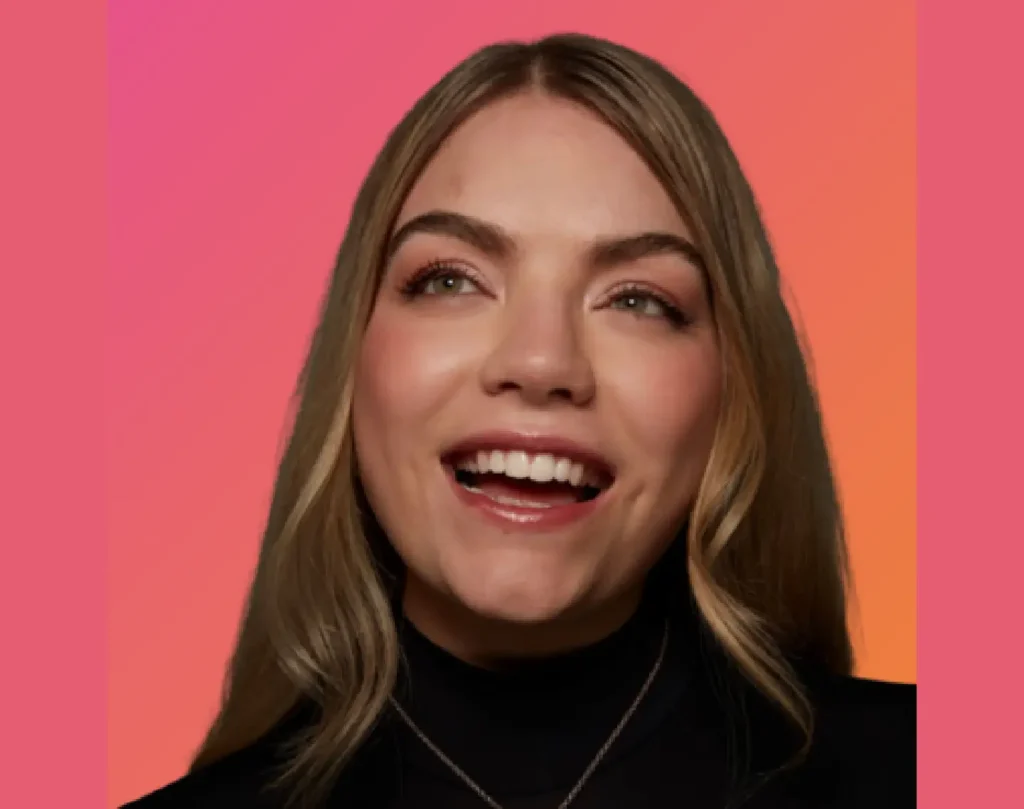
Izzy Prior
Izzy Prior, founder of Spark Social Media and official LinkedIn top voice. Izzy shares her journey of overcoming ageism, embracing authenticity, and the challenges of maintaining a strong personal brand.