No Bullsh*t Talks · Season 3 · Episode 19
Who Actually Pays When You Build a Company
With Louisa Plint.
 Watch on YouTube
 Listen on Spotify
 Apple Podcasts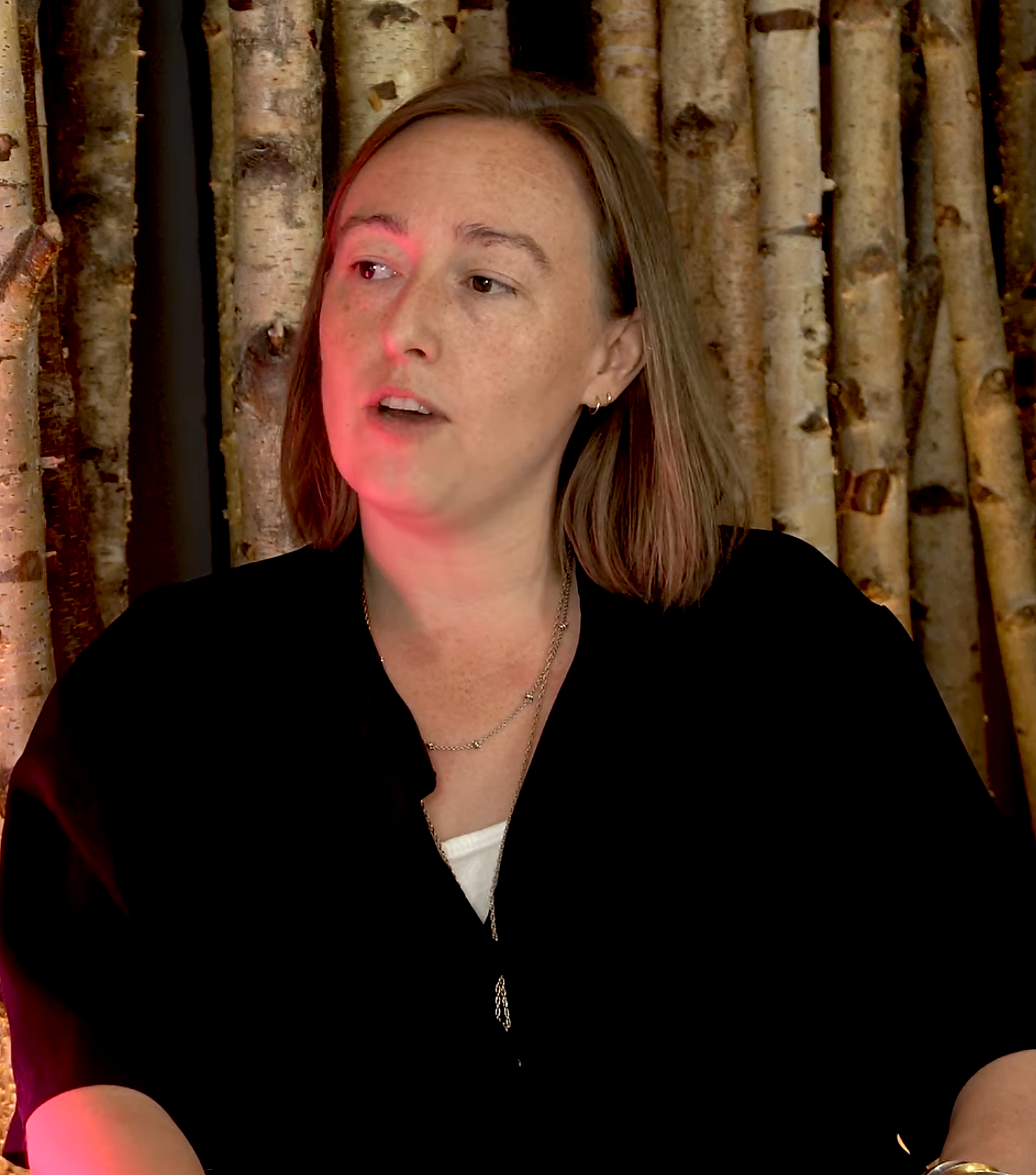
About this conversation
The true cost of building a company
Louisa Plint is a third-time founder at 34 who started her first business at 20. She’s now the CEO of AuxPay and Auxeris, building fintech tools to fix one of the most persistent and painful problems in business – recruiters not getting paid on time. But this episode goes far beyond B2B payments.
Louisa and Sabrina get into the hiring crisis and the AI cold war that’s made finding good people harder than ever – candidates using AI to bulk apply, recruiters using AI to vet them, and the actual quality of the candidate not moving an inch. There’s a brilliant conversation about red flags in interviews, why being genuinely human with your team beats polish every time, and why AI outreach is quietly killing real relationships.
Watch
See the full video conversation.
Listen
Take the conversation with you.
 Audible
Watch the moments
that travelled.
Watch, share and continue on the original platform.
Read the full conversation.
The transcript is organised by timestamp so it can be generated from the master transcript, edited once, and published here without designing a new section every week.
Intro+
00:00:00.040 — 00:00:26.440 · Speaker 1
I think people are delusional if they think it is easy to be an entrepreneur. The polished version of what it is to be an entrepreneur is just a lie, because it is really hard to stop trying to polish everything. I'm just going to be human. We have this sort of attritional cold war between AI and AI. Often it's not a piece of paper that you get at the front. That tells you one thing that hasn't changed is the candidate still sucks.
00:00:26.720 — 00:00:59.400 · Speaker 2
No Bullsh*t Talks is a podcast for entrepreneurs by entrepreneurs. There's too much bullshit out there, especially when it comes to business. This podcast aims to highlight what's true and what's not in the world of entrepreneurship, bringing you honest and raw conversations about the roller coaster that is entrepreneurship. Each week, my guest will be a high performing entrepreneur, sharing the ups and downs of their journey and helping you prepare for the road ahead while providing you with actionable insights and absolute gems of knowledge. Stay tuned as I introduce this week's guest.
Meet Louisa Plint+
00:01:05.970 — 00:01:28.410 · Speaker 2
Louisa Prince is the founder and CEO of Clerics at Hawke's Bay. Building tools to fix late payment in recruitment and industry. She entered with zero prior experience but quickly became very successful in. She's also an international poker player and hosts her own podcast. But it's fine. I present to you this week's guest, Louisa Cloete.
00:01:32.090 — 00:01:35.650 · Speaker 2
Welcome, Louisa, to Naval Talks. I'm so glad you're here today.
00:01:35.770 — 00:01:37.290 · Speaker 1
Very, very excited to be here.
00:01:37.290 — 00:01:59.930 · Speaker 2
I can't wait to hear what we're going to talk about, because I feel like you've got a lot of depth and are you and you're not afraid to talk about it, which is really nice. And I think that's what I like about it. This whole podcast is about being real. Talk about the things that really matter. Um, in entrepreneurship especially. And I think that, you know, I'd love to hear your insights on it. So do you want to introduce yourself for people who don't know it?
00:02:00.130 — 00:02:30.490 · Speaker 1
Yeah. Of course. Um, I, um, I found a third time founder of a company called Osiris. We basically build technology for the recruitment industry, but none of the kind of AI candidates sourcing stuff. We work in fintech, so primarily trying to solve people not wanting to pay recruiters. Um, but I've done a range of things to get here. And, um, yeah, I mean, it's been a journey. I'm 34 and as I say, it's my third business started my first one when I was 20. So I've done I've done a few different things.
00:02:30.490 — 00:02:38.010 · Speaker 2
Yeah, I feel you. I started to think when I was 21 as one son sends what time. So I feel like it's a, it's a journey and it's an emotional one.
00:02:38.730 — 00:02:43.410 · Speaker 1
Yeah. And I'm not a very emotional person. So it's you know, it's a real indication.
00:02:43.690 — 00:03:36.420 · Speaker 2
But tell me more about like the, um, the business first, because I felt like I want to know and get some background because you said like it's people who avoid paying recruiter fees. I mean, as someone who hates recruiters, I mean, I feel bad saying that because obviously there are good ones out there, just the same as any industry, but I feel like recruiters have the same sort of rap as estate agents or something like that. Yeah, it's just like I just feel like they exploit you. They all they want is their commission. They don't care if it's a good fit. And this is just from someone who runs a small business who, you know, wants to find good people. And it's bloody hard finding good people. And so I just want some help finding good people. But then when they say, yeah, we found someone who's probably reasonably good, but we want £18,000 for that. And you're like, um, okay. Like, yeah. And so it's hard. So I guess this is where the pain came from for the business.
Fixing late payments in recruitment+
00:03:36.460 — 00:04:13.820 · Speaker 1
Yeah. So I totally sympathise with your perspective. So when I first started out in my sort of real career, after my first business, I worked in finance and ops for a consultancy firm, and I would often have to deal with recruiters because we were offering off and hiring people. And also I would go to my CFO and go, who are we paying? And he would always come back with. Not the recruiter. Uh, obviously. Um, and so as a result, I basically saw the industry as being inefficient, uncomfortable, painful, but actually hugely valuable. And the interesting thing now is 63% of invoices paid to recruiters are paid bait.
00:04:14.460 — 00:04:15.420 · Speaker 2
Interesting.
00:04:15.460 — 00:05:54.270 · Speaker 1
85% of recruitment companies have experienced some form of late payment. And I mean this is a representative problem across the entire B2B world. We have not innovated in B2B payments, and yet we've got used to Netflix reaching into our bank accounts on a personal level. And yet 80, 80, 90% of B2B payments are still PDF invoice, manual bank transfer from some little finance assistant sitting somewhere. And so basically we're starting with recruitment. But ultimately the goal is to make it easier, more trackable, but also more incentivising for the client. So for example, when you get an invoice for £18,000 Instead of paying it all after 30 days or not. Most people don't. Yeah. And then getting a refund if something goes wrong. What we've done is built an automated system where essentially we trade off between the recruiter and the client. So instead of paying in one lump sum, you get split payments over 90 days in line with that typical refund period. Yeah, but the trade off is I'm going to take it out of your bank account. Yeah. So all you're doing is saying, I'm going to give you great cash flow. You're going to feel the value of your your candidate. Yeah. You're going to understand that the work has actually been done and you're going to have time to pay it. But the trade off is that the recruitment company is going to know the money's coming. Yeah. So from a staffing and a headcount cost, they don't need an extra finance assistant. They don't need a CEO picking up the phone to their clients every week being like, excuse me, you haven't paid us. And actually, from an efficiency and a cash flow management perspective, I mean, when you consider since 2000, there have been 86,000 recruitment businesses registered in the UK, and there are only about 33,000 still in operation.
00:05:55.270 — 00:06:00.630 · Speaker 2
Hudson said. What is making everyone want to go into recruitment? I guess they just see it as quite easy.
00:06:00.670 — 00:06:19.830 · Speaker 1
Like, yeah, I mean there is there is a and that's how we end up with bad recruiters because there's a fallacy that it is easy. And I mean, you're talking to a person who. So when I became interested in this industry in 2018, I set up a recruitment business. I had no experience. My first placement was replacing myself in my own job and I charged a full fee.
00:06:22.470 — 00:07:32.600 · Speaker 1
So it is. It is as an industry, it is relatively easy to get into, but that's how we've ended up with a very large market of a huge number of very fractured businesses. But finding the really good ones is very difficult. And on top of that, maintaining incentive to look after the good ones, paid them on time, you know, be decent with them, have good contractual terms. Um, has become so difficult because there are so many businesses. But I mean, the flip side of it is, I mean, there's about £630 billion in recruitment fees every year globally. Now, when you consider that 60% of them are late and on average 26 days late on average, there is a huge Castro problem in this industry. Like it's insane. And so ultimately, and as I say, I think this this will eventually relate to law firms and accountancy firms and consultancy businesses and ad agencies and blah blah, blah. But I do think the next, the next big innovation in, in payments and fintech is going to be business to business because I think we've solved we've solved e-commerce, we've solved consumer payments, but we haven't solved business to business.
00:07:32.640 — 00:07:35.400 · Speaker 2
And why do you think that is, though? Um.
00:07:35.760 — 00:08:25.450 · Speaker 1
I don't know. I think it's simply that people it's easier to solve for one individual. So you're not dealing with infrastructure based processes. You're not dealing with, you know, is a particular client dealing with a 30 person finance team and a procurement team and an approval process and blah, blah, blah, blah, blah. And I think there's a lot of things that people perceive technology couldn't solve for. The other thing is the underlying payment. Rails didn't previously accommodate business to business, so they were all orientated around car payments. You know, the likes of Amex and PayPal and blah blah blah. And actually now we're seeing a lot of innovation around things like direct debit pay by bank, you know. So we are seeing improvements in the way that businesses can pay each other. Um, so yeah. And also big business doesn't really care about small business.
00:08:25.490 — 00:09:28.930 · Speaker 2
Well, that's for sure. I mean, yeah, it's, uh, it's kind of nuts. I feel like as a small business. Cash flow is really important. Or I think, like any business is important. But with obviously generally big businesses have a lot more working capital and reserve in. And they don't really appreciate that. When we say 30 day terms, we are counting on those 30 day terms and we're budgeting for those 30 day terms. So when they pay us 125 days later, which is generally what a lot of these businesses do. It's painful. And actually we've now pivoted to basically working mainly with small businesses because actually it's been better, better experience in terms of like, you know, the speed of payments. And when you said about the B2B thing versus BC. So that made me think about my own finances and it's like, it's right. Like, I don't really miss payments personally. Like, I generally have been quite good at managing that. But businesses I found it so much harder to cash flow. So I wonder so it's interestingly saying that because actually that relates to me personally too, because I guess it's because with my personal finances, there's only a limited amount of bills that goes out with business.
00:09:28.930 — 00:09:29.930 · Speaker 1
The amount of control that you.
00:09:29.930 — 00:09:30.890 · Speaker 2
Have. Yeah, exactly.
00:09:30.890 — 00:09:33.890 · Speaker 1
Because we relinquish control over the last 10 to 15 years.
00:09:33.930 — 00:09:56.500 · Speaker 2
Yeah. But I think with the businesses, I think it's the fact that you've got people to pay suppliers to pay and like, you don't know when money's coming in. Most of the time it's personally you kind of know you've got a salary that it's coming in. It's reliable or like, you know, you're paying yourself. Um, whereas like in the business, again, you're relying on suppliers to pay you on time. And when they don't, it screws things up. And then there's, there's a big cascade.
00:09:56.580 — 00:11:49.550 · Speaker 1
Absolutely. And and on top of that, you know, there is a phenomenon a certain in big businesses where middle management in finance needs to be seen as valuable. And the number one way they can be seen as valuable is cash flow management. So they'll be sitting on a huge bank of cash. And if they can show that their outgoings on a particular quarter were lower because they didn't pay you on time and they pushed it into the next quarter, they are presenting value as an asset to the business, which is completely farcical when you think about it, because it's not like, I mean, we've had clients, so previously when we were actually doing recruitment, we built the system, the payment system for ourselves, and we've been using it for the last four years, and we've only just now started rolling out to give it to other customers and give it to other recruitment businesses. Um, but I mean, we had a customer. I knew they were sitting on a cash balance of £2 million. I knew that, and they owed us 20 K. Now our contract stated you can either pay in 14 days in full and have a refund period, or you can use our instalment based payment thing and they went for the instalment based payments. Now, ironically, I was very happy because I was like, you're using our payment system. It's predictable. I don't have to think about it. I don't have to do any admin. I don't have to chase beautiful. But even when they're sitting on a huge amount of liquidity, liquidity, they're still going to take that cash flow if they can. And the irony is, I mean, there's a lot of legislation going on at the moment around the Small Business Commission and trying to change fines and interests and everything to do with late payments. But the entire the entire infrastructure of that policy is big stick. And I think we've misunderstood how to get people to do what we want. It needs to be carrot and stick. And we're looking at how do we bring in the carrot. The stick is I'm going to find you 8%, and I'm going to report you to the Small Business Commission. But the carrot is I'll give you the good cash flow that you feel like you need, but in return, I'm not going to have to chase you because I know. Because I'm going to reach into your bank account. I'm going to take the money.
00:11:49.590 — 00:12:01.470 · Speaker 2
Nice. So on the note of like, you know, obviously this the whole point, you say like recruitment people. I want to talk about people because I think that this is a topic that you like to talk about. A topic that grieves me.
00:12:01.670 — 00:12:02.670 · Speaker 3
Yeah, yeah, yeah.
00:12:02.710 — 00:12:21.510 · Speaker 2
Um, I think it's not spoken about enough. Um, so in my experience, in my circles, like, obviously most of the people who watch this show or people I speak to are generally small business owners and again, defines small business owners. But small business owner technically is like under 50 people in the UK. Like it's actually like kind of nuts these days.
00:12:21.510 — 00:12:26.390 · Speaker 1
It's like it's actually even I mean, about 80% of businesses in the UK are under ten people.
00:12:26.430 — 00:13:58.440 · Speaker 2
Yeah, well that's it. There's an average is like eight people or something. So I think I, I think it's funny because when I would say, oh, small business owners or someone, people get offended and they're like, I'm not small. And I'm like, well, it's just like you. So like you are kind of small, but it's like they'll take offence to it because it's always like stigma around the size of your business. That's all about scale, growth, speed, right? So I feel like small businesses have an identity problem in some weird way, right? And we're obsessed with growth because everyone seems to be hiring. And that's the cool thing to do. I mean, even like LinkedIn put a special banner around your profile picture to say hiring, don't they? So it all makes you feel very special and like we're growing our team and it's all a big thing. But in reality, when I speak to lots of businesses now, I'm almost encourage them not to hire because we've had some terrible people over the years. And it's like we've expanded, grown. Some people hired the wrong people, and then it's just it's even worse for the company and it's so detrimental. And it's I keep talking to people about this now, all the great business owners I know and people who are members of our club, they'll say, I'm finding it so hard to find good people. But yet, apparently the unemployment rate is huge and there's more people available for work. It doesn't make sense. Like, I feel like the narrative on both sides doesn't add up. And all these graduates or people who are apparently great at their jobs go, I can't find a job. I've applied for 500 jobs this year and I can't get one. But yet people are going. I can't find good stuff. Like, how are both situations true? And like what is really going on out there people.
The AI hiring cold war+
00:13:58.480 — 00:14:49.490 · Speaker 1
Honestly, is we're in a very weird time. And I think, I mean, it's impossible to have a conversation about hiring right now and not talk about AI. Yeah, much to my dismay, because all anyone ever talks about is AI. But one of the biggest problems I think we're facing in terms of finding good people is that we have this sort of attritional Cold war between AI and AI, and that is which is ironic because we're trying to hire people. Um, but essentially what that is, is we have candidates using AI to apply to improve their CVS to, you know, submit applications, whatever it is. And then we have recruiters slash hiring managers using AI to vet them, and that AI is getting more and more and more and more sophisticated. And the one thing that hasn't changed is the candidate still sucks.
00:14:50.610 — 00:15:21.810 · Speaker 1
So in terms of actually the ability to see quality and to evaluate quality, it's actually getting harder because at the end of the day, as you all know, and you as you've described, you've worked with really good people and really bad people. Often it's not the piece of paper that you get at the front that tells you that the person is going to be really good, but you don't. I mean, I could tell you some stories of people, of things that I have had to deal with in terms of employment. I mean, I have the proud badge of having dealt with an employment tribunal. Oh, no, I.
00:15:21.810 — 00:15:22.650 · Speaker 2
Didn't hear this.
00:15:22.650 — 00:16:28.090 · Speaker 1
Though. Oh, I mean, no, no, I mean, you can I mean, it's all in the public sphere. That's the irony. Yeah. You know, go and Google it all the all the judgement exists. But that was I could not have guessed when I started that employment journey that we were going to end up where we ended up in terms of nine months of argument and, you know, laptops being stolen. And I mean, I think my favourite line in the judgement, again, you can go, we've only ever had one, so you can go and find it. And as I say, it's all public. Uh, the my favourite line in the judgement was the claimant was at some point petulant, disingenuous and somewhat petulant. That gives you the truth that the judge wrote that about my former employee. Um, and we basically won most of the case. The only bit we lost was they made us pay some holiday pay. But I think by that point the judge had misunderstood because I had said he accrued five days of holiday pay and he took five days holiday. And I think at that point she like, wanted to rip her own eyes out. Um, so she was like, just pay him the five days. Fine.
00:16:28.370 — 00:16:28.650 · Speaker 2
Okay.
00:16:28.690 — 00:16:54.140 · Speaker 1
That's fine. So like, it was a couple of hundred pounds on that, but most of the case we won. But honestly, I could not I could not have guessed that when we started that journey when I first met this person who shall obviously remain unnamed. Even though it is in public record. Um, I couldn't have guessed that we were going to go through that level. And I mean, you know, record secret recordings of meetings and doctors and evidence. Um.
00:16:54.180 — 00:16:55.100 · Speaker 2
Oh my God.
00:16:55.140 — 00:16:57.220 · Speaker 1
I mean, it was a journey. It really was.
00:16:57.260 — 00:17:38.660 · Speaker 2
Well, I mean, so this is the question, like, what are would you say are red flags? I think this is really important because I think, like you said, you can't tell on CV's like you can't tell. We've had so many people come glowing CV's, they seem amazing in like first month or some of the things they seem like dream employees. And you're thinking, okay, fantastic, this is going to be absolutely amazing. And then something happens and you know, we have had ones where they've gone like a switch that she overnight and you're like, what happened? Like and you like people you think you trust. And you know, like you said, that would never have happened and you never thought would have happened or what there have to be. I said, there have to be some signs. But obviously if we keep it keeps happening. Are there really signs? But what would you say are the signs that you've had over the time. And, you know.
Red flags when hiring+
00:17:39.660 — 00:20:12.750 · Speaker 1
It's interesting. So I have a couple of questions that I asked during an interview and one in particular, which I think is very, very important. And that is if you could snap your fingers and be doing your dream job, what would it be? And if the answer is, I would be a senior project manager. I don't hire them. Yeah, for a number of reasons. One is that, you know, I'm running a Start-Up, I need innovation, I need imagination, I need animation, I need all of those kind of traits. But number two is you're already from the offset trying to do what you think. I think you want to say, like I want you to say. And that to me is an immediate red flag because I'm like, you're not organically answering here. And so I've had people say, I own an F1 team and I'm like, ooh, beautiful. I mean, I know what my my answer would be. I'd be a full time poker player, obviously. Um, but um, that to me is such an indication of are you trying to check the boxes to get through the hurdles to get the job? Or are you genuinely keen to work in this particular role or in this particular company? The other thing is, a lot of people do not listen to their instincts, so and I will put my hands up with the employee that we ended up in tribunal was I. I had rumblings in my stomach probably a good few months before everything blew up, and I should have listened. And the irony was, I remember turning around to my investors afterwards and saying, my job now is to make sure that the time it takes me from rumble to decision is shorter, and then you know when if it goes wrong, then the next time, the time it takes from rumble to decision is shorter. And a lot of successful founders will tell you that. It's like how slowly, far, quickly. Yeah, exactly. And I genuinely I mean, we are in a difficult, difficult time now legislatively because obviously people have more right. And but the irony is the rights of employees haven't actually changed. So even when they said, well, you can't take someone to tribunal for two years, that was still predicated on the idea that the employer complied with the regulations of notice, you know, verbal notice, written notice, warning, blah, blah. They still had to do that process and they could still be reported if, you know, they didn't do that process. So nothing has materially changed in terms of what an employer's obligations are in terms of letting someone go. But people are now terrified because they're like, well, the employment rights come in so much earlier, you know, and it's like, well, just do it right.
00:20:12.790 — 00:20:29.710 · Speaker 2
I feel like there's been so many scares for small businesses about employment rights and, you know, all that sort of stuff and, and all the taxes and everything around it. Like the whole like last reform or whatever was basically to, to add all these different things in which screw over small businesses and which what everyone sort of saw that picture of.
00:20:29.750 — 00:20:37.240 · Speaker 1
No, but the Labour Party isn't going to screw over the working man. It's okay. It's okay. I'm pretty sure they said that.
00:20:37.560 — 00:20:39.720 · Speaker 2
We could get into a nice political debate about this.
00:20:39.760 — 00:20:41.080 · Speaker 4
You know, quick, quick. Run away.
00:20:44.000 — 00:21:41.410 · Speaker 2
But the point is, I think the small business were freaking out when all these announcements came, right? Because it's like, it's it's they were talking about this unemployment rate and how difficult was to find a job. Thanks to AI we're talking about. And but then they put all these things in place and everyone was suddenly like, oh, now it's bloody expensive to hire people. Like, what am I going to do? And so I guess like that was also going to be my next question for you as well, is like doing what you do. What size businesses are you seeing are currently hiring at the moment. So I feel like, oh, lots of businesses kind of go smaller. I feel like lots of people are kind of I mean, like, again, as I said, in my in my, in my industry, like, I think there's this stigma around being small. Like people do still see it as a bad thing, but yet there's still a massive push of going freelance, because it's kind of cool that you're doing your own thing, you're quitting your job, and you're starting your own thing and doing all this personal brand and all this malarkey, right? And it's just like, it seems so easy, like we said. Like people just right. If you post some things in and suddenly they go viral and suddenly they're on six figures a month and they're living in Bali and doing three days a week.
00:21:41.410 — 00:21:43.890 · Speaker 4
So that's the guy in the park. Does that.
00:21:43.890 — 00:21:44.690 · Speaker 1
Happen so.
00:21:44.690 — 00:21:49.770 · Speaker 4
Often? No, it looks like it when you scroll through LinkedIn. So it's like that's.
00:21:49.770 — 00:21:58.810 · Speaker 2
The message and the image that people are getting. So those people are turning into entrepreneurship. But then they realising how bloody hard it is and it's like what is the reality.
00:21:58.850 — 00:23:31.340 · Speaker 1
I honestly, I, I think people are delusional if they think it is easy to be an entrepreneur. Like. And that's not me saying don't do it. Like absolutely go for it. But my God, I and I mean, I think the only the harder thing is probably having kids. I think it's, you know, it is it takes a unique sort of absolute sort of almost sort of masochistic behaviour to want to put yourself through running a business and running a small business in this environment and this climate is so, so difficult. But at the same time I think. And this is what we why we kind of initiated the conversation about people. It's about who's around you. It's about finding the right team. It's about finding the right people. And yes, right now it's very hard. But I also wouldn't be hiring. I'm not putting a job advert out if I need to hire, like I'm talking to people, I'm taking recommendations and we'll be looking for a sales person in the not so distant future. And I've already started talking to people who work in adjacent companies that I know about, like, who do you know? And if you if you got anyone in your company who's getting to that 5 or 6 year thing and they might be looking for something new, because right now the sheer volume of applicants and it's not that there aren't good ones there, it's just really bloody hard to get through the mist of sheer quantity. I mean, it feels like Covid. I remember advertising a job and Covid, and I got 1125 applicants in 36 hours.
00:23:31.380 — 00:23:32.300 · Speaker 2
Oh my God.
00:23:32.340 — 00:23:35.740 · Speaker 1
And of course, it was. It was, uh, pay per click on LinkedIn.
00:23:35.780 — 00:23:54.620 · Speaker 2
Oh, yeah. Did they? It's like crazy because we used to do the free ones. And it was like within like the time you clicked it and then you go off the page, it already maxed out all the free capacity and stuff. You had to go pay for it. And you're like, oh my goodness is really expensive. So it's it is wild. And actually of that 1125 people like how many are actually going to be good.
00:23:54.660 — 00:23:55.060 · Speaker 1
Like what?
00:23:55.100 — 00:23:55.900 · Speaker 2
Oh 10%.
00:23:55.940 — 00:24:36.660 · Speaker 1
If I met with 25 and I think I submitted five. Yeah. And I mean, this comes back to the value of the recruiter though. And I think that's where that's where a lot of people don't see the other side of the engine. This was back when I was proactively recruiting for clients and I did that work. I went through every single applicant and and gave. And what was even funnier was they really liked five of the applicants and scheduled the interviews and then decided that because of Covid, they were actually not going to hire. So and I didn't get paid anything, so it cost me on the pay per click. Oh, all of the time. Well, that's the problem with contingent. No wonder recruiters are kind of, you know, asking. You're like.
00:24:36.700 — 00:24:39.220 · Speaker 2
Dude, I did it. Yeah.
00:24:39.540 — 00:24:50.220 · Speaker 1
But it's like I did probably three, four weeks of work and I didn't get any money out of it. And the irony was I'd pulled I'd pulled myself and some of my team off furlough to fill the role.
00:24:50.860 — 00:24:51.980 · Speaker 5
Oh, God.
00:24:52.060 — 00:24:53.420 · Speaker 1
So I was like, so I mean, you know.
00:24:53.460 — 00:25:00.060 · Speaker 2
What do you do? Then, like I say, if like those five candidates, I said, oh, it's not the right time now. So about two years time, they wrote back to those candidates and hired them.
00:25:00.460 — 00:25:01.580 · Speaker 1
Not only to get a 12 month.
00:25:01.580 — 00:25:05.140 · Speaker 2
Cover. That's what I mean. Well, if I wait till like 12.5 months or whatever, they're just like.
00:25:05.180 — 00:25:06.220 · Speaker 1
Yeah, yeah, they can technically do.
00:25:06.260 — 00:25:08.180 · Speaker 2
That. Oh my God. See, so I tell.
00:25:08.180 — 00:25:55.430 · Speaker 1
People just straight up all the candidates, um, like they will just they will go, I mean, I, we had a recruiter, uh, as part of our Zeus network. So we used to work with freelancers who we would support across all the kind of technical needs and legal and finance. And he signed a contract with a client just before he joined us. And within a week of joining us, he said, I think the client's stolen the candidate. What can I do? And I was like, you didn't use our like, we legally can't represent you because you signed it under your own terms. Like if you'd signed it three days later when you joined us, we would have been there with, you know, letters and blah, blah, blah, blah, blah. But we can't fight on your behalf for a contract that isn't owned by us. So it was really. And he he didn't get paid. He did all the work and didn't get paid.
00:25:56.590 — 00:28:04.120 · Speaker 2
Do you feel sorry for them in that sense? And that is hard because I think like again, I think like you said about entrepreneurship, I think you have to be a certain character to be a recruiter for that exact reason, because you have to hustle before you even know you're going to get paid. And it's almost like a commission only when it is a commission only basis kind of thing. Right. In that sense is a performance thing. So you have to be good at what you do. And so therefore you have to be quite confident, borderline arrogant or whatever. So it's like so I guess it does attract certain type of personality types and want to do it is hard, I get it, but at the same time, like, yeah, I think it's um, the level of, of ethics around some of the stuff is I'm not going to get into blueprints anyway. The point is what I realised I was like, what are you talking about? It is this it comes down to the same thing. Is network like it's all down to your network. And this is a whole point of what I try to say and why I run like in my networking groups and everything like that is because it's all about who you know. And the same with any business. I feel like sales is my sales. I could have a sales person with sales. It's the same thing. Like I think that it's all about AI, but, you know, like people are outreach, AI outreach at the moment. And I can't stand it. I don't know about you, but I cannot stand it. Like, I also cannot stand someone who ads you on LinkedIn and immediately goes and pictures you in the DMs. I immediately just click on like remove connection. I just don't even care who they are because that is not my type of person at all. Like if you're just immediately pitching me something, then it's you're not my type of person because I believe in building relationships. And I think that's the same with what you just said. Like, you're now asking people around for who you know that could be a good fit or are new is higher than where where they're joining next week. Um, they're going to be a new community manager for the community that we're running, which is amazing. That literally came from one of our members. So our members literally was like, oh, actually, um, you know, we've I've got someone I can recommend because I was I was like, I can't do this. Like, I'm so sick of seeing the people out there who claims me really good. I just started asking people who I know are good people, and they were like, I know someone, I'll introduce you. And actually, all the best people I know are generally being introduced. And it's very rare that you find someone who is, you know, just handed a CV or whatever and applies for a job.
00:28:04.160 — 00:31:08.180 · Speaker 1
Yeah. I mean, it's interesting because two of my team at one point in their lives were my bosses in two different way. Yeah. So my fractional CFO, he was he taught me everything I know. He was literally my first boss when I moved to London, age 24. And we've been we've been like mate since then, but also he was the first person I started talking to about the recruitment industry and being like, I want to mess with it. Back in 2017, sitting in a pub in Victoria, literally like, I think there's something in this industry we can do and the other person is my account director. So during Covid, I did a couple of months consulting for a, um, like CRM migration, uh, for an executive search firm. And she's brilliant. I mean, she's just got the evolution. She was the first person I hired other than my CTO, and she's done everything from like, legally trained. She trained as a nurse, and then she spent 20 years in recruitment and is very sharp. And I poached her because I was like, I can see the potential. And she is the most unbelievable person. She her patience a bear in mind, we spent a lot of time dealing with recruiters and I am not a patient person. Um, her ability to sit and be patient with our customers and understand, I mean, we used to get the number of emails we used to get going. I forgot my password and she would just calmly go and deal with it and be like, yeah, I'll hop on and help you reset your password. Like, unbelievable. In terms of, um, yeah, just her what she what her skills are that aren't the same as mine. Just. I'm in awe of them. Um, but that relationship was built over, as I say, since Covid, so I got to know him whenever it was 21, 22. Um, and then, I mean, the rest of my team, weirdly, I got my CTO from LinkedIn. I put a job ad out, but we've been working together, which is very odd because you wouldn't normally assume to find a technical person on LinkedIn. But again, this was back in 21. Um, but my front end developer is his cousin. Um, and my marketing person, I think she did come through an application, but she we hired her for a short contract, and she knocked on my door about a year and a half ago and said, can I come back? And I was like, yeah, sure. So. So yeah, it is. I think those relationships are in terms of not just how you find people, but also how you build those relationships. Yeah. I mean, a lot of my investors say to me, why don't you have co-founders? And I'm like, well, I've had two really bad ones in the past. So I kept the door shut. I was like, I'll build the relationships and then let people in. But I often joke that I've built a cult because I'm like, these people are so supportive and so loyal and so hardworking and so patient, and they'll all get their cake. Like 100%. They trust me. Um, but it is. Building those relationships takes time. And if you can build it on the foundation of something other than work, i.e. friendship or, you know, they've known someone that you know or whatever, it's definitely easier to have a long term, solid working relationship.
00:31:08.220 — 00:33:18.750 · Speaker 2
But how do you get to that stage? Because I feel like I'm thinking about the new entrepreneurs out there, or even like myself who who've I've worked in previously. Before I started my in business, I worked in like totally different sectors where I don't think I would have been able to find necessarily people. And I think I was so young, I didn't really make those connections, because I think that when you're really young, you don't I don't know, you don't necessarily bond and you don't keep those connections. If you've gone into entrepreneurship quite early and you haven't got a corporate career and you haven't got lucky, as you said, you've met people from previous jobs or your previous bosses. Like, how do you go out and build those networks? Because like you said, having people you have to trust around you, that's essential. Like it is what makes a good business go round. Like if you don't have those people, you're just never going to be successful. And I was I was even watching a show last night and I was sitting there going, it was so like real. I was a pain of it. The guy was basically trying to build a business, same sort of thing. And he was like saying, it's so difficult to find people who are a willing to learn because they're just not. They're so close minded. They like, I know better than whatever. And it's so hard, especially now in the era of AI, it's even worse. But B who actually give a shit? That was the two things, and I was like, oh my God. He just summed up basically everything in seconds. Like, how do you find someone who actually gives a shit? And I obviously come to the conclusion that no one's going to give a shit as much as me because I'm the founder. Like, I've learned that, like, obviously I'm not expecting to be able to care as much as I do because that is a disproportionate amount of caring that they need to do. But I want them to take pride in their work and actually, like, actually just give two ounces of a shit. Because what we notice is that, for example, you know, we've had people in the past who come and they just don't really care. They produce some like really awful piece of work. And I'm like, do you want to see a thing that's the best piece of work you've done? And they'd be like, yeah, it's the best I could do. And I'm like, oh, okay, cool. Would you like to present it to the client tomorrow then? And they're like, uh. And I was like, because they're not necessarily client facing. They don't have to deal with the backlash you're going to get from the client. So they don't really necessarily feel like they need to raise their game. So, so when the guy said, like, you know, finding someone who wants to learn and finding people who care, that's probably the hardest thing. How on earth do you find that?
Stop polishing everything+
00:33:18.750 — 00:36:43.170 · Speaker 1
I actually think it's not necessarily about finding them. I think it's about creating them. So I think we it doesn't matter whether you're talking about employees or you're talking about investors, or you're talking about collaborators or anything else. I think we have a systemic problem. It's the same with the girlboss. Here's me having my coffee, I'm in Bali, blah blah, blah, blah, blah. We have a systemic problem with not being human and it drives me bonkers. So I am very honest with my team and yeah, okay, sometimes it bites me in the ass occasionally, but and I am aware about who when I relay personal things or when I talk about stuff. But actually I think I've somehow managed to make them care about the business and me, because we have a very, very authentic relationship. I hate the word authentic, are disgusting, but we have a real relationship. We have a human relationship. You know they're going to be invited to my wedding. Yeah. Like, I care about them a lot. I care about them just as much as I care about the business. And I think they know that. Yeah. And as a result, I think they care about me and the business just as much as I do. And I think a lot of people treat employees as an asset, which they are on paper. If you're laying out a balance sheet or a peer now, it's an asset. But if you're building a small business where you're working with five, ten people, you're building a relationship with these people. You spend more time with your employees on a daily basis, probably, than you do awake with your own partner. And yet people treat them like like they are literally just numbers on a piece of paper. And it's like, well, now we can just just use AI like you can if that's what you want. And I think the same in place with investors. The same applies with, as I say, collaborators. I always find it funny that I, I will sit on meetings with investors and say and swear and be and be exactly who I am because I'm like, I'm not going to polish this like you, either like this or you don't like this. You either care about this or you don't. And that's totally fine if you don't. But I'm not. I'm just going to be human, you know? And I think we are so trained by social media and by expectations to be that kind of Polish version of ourselves that is wildly inaccessible both to employees and to employers sometimes, and as I say to investors and just even people reaching out to you, it's like, how do I send a human message to a person who's got this pristine little profile and 25,000 followers, and how do I actually engage this person? And actually, I watched this with my fiancee. So she's a professional dancer and she has a teacher who is incredible, very talented. You know, they they in the dance industry, they describe it as booked and blessed. She's all over the place. She's doing very cool stuff. And she He does a periodic kind of five minute newsletter thing, because so many people asked to take her for a coffee and a five minute chat, or a ten minute chat. Oh, wow. And my fiance said to me, she's 26. So she said, how do I really want to get to know her because she's so amazing. But I just I don't want to be that person. It's like, hey, can I buy you a coffee? You know, and I said, invite her and her partner for dinner. And she said no. Literally, when she asked this woman, when nobody's ever asked. That would be amazing.
00:36:43.210 — 00:36:43.690 · Speaker 2
Really.
00:36:43.730 — 00:36:49.530 · Speaker 1
My partner has just moved to the country. I love her, I'd love to come for dinner. And it was like, oh.
00:36:49.890 — 00:36:57.330 · Speaker 5
Function like a human being and it's three dimensional and suddenly you can build a relationship very quickly.
00:36:57.370 — 00:37:00.130 · Speaker 1
And I mean, I'm excited because, you know, I like to meet new people.
00:37:00.170 — 00:37:00.410 · Speaker 5
Yeah.
00:37:00.450 — 00:37:16.740 · Speaker 1
But I genuinely I think we've misunderstood what it is to be human in whether it's in the way that we employ people, in the way that we work. People work with people, and the way that we introduce. Introduce ourselves to people. You know, I think let's just stop trying to polish everything.
00:37:16.780 — 00:37:20.260 · Speaker 2
I'm with you on that. Obviously, I literally run a podcast called No Bullsh*t Talks. I make.
00:37:20.260 — 00:37:20.700 · Speaker 5
It very.
00:37:20.700 — 00:38:13.380 · Speaker 2
Much about being real. I don't I don't try, and I just feel like it's exhausting. If you and I, and I definitely did for a while. Like, I definitely showed up being someone I thought other people wanted me to be. If that makes sense. Like, because I felt like I had to be a certain way, I had to show up a certain way because that's what people expected of me. And it's just, it's so it's so draining. So it's like the easiest thing you could do is just be you. And I just think that also it's like you can have this persona online, but then when people meet you in person, that's immediately burst. Like, I've met some people in person, I'm like, they are so different from how they are and then you just don't trust them. So that's why I don't understand any of the dodgy sales tactics I get. Like, I get like DMs or like emails, which are just sort of like pretending one thing and then you get on the phone with them and it's totally different scenario. You're like, well, the trust is just gone. Like, how were you building a relationship that way? So I just don't understand it.
00:38:13.420 — 00:38:53.180 · Speaker 1
Funnily enough, I was going to mention the the one time I think you can bullshit people when reaching out to them on LinkedIn is when you tap into the core psychology of being a middle aged man, and that is if you're looking for investment as a woman. So I would always message people and go, I'm a solo female founder of a tech business. So white nights and traits. Yes, I'm funny enough. I had dinner with one of my investors in his partner the other day and he said, how do we even meet? And I said, you fell for my trap. Yeah, I love that. But I also never bullshit went as soon as we got on the call. Yeah. And they'd be like, so what can I help you with? I'm like money.
00:38:53.180 — 00:40:25.870 · Speaker 2
But that's psychology. That's not necessarily bullshit. That is a tactic. Yeah, I get I get that. And and so I do kind of know what I was going to say. So, um. Yeah. So I love that story about like, like I said, inviting up for dinner because it's so human and so real. And I think that's obviously everything that I'm trying to do with my business as well. Like every event I run is in person. For that reason. I want people to get offline and just be real human. And I think that for me, this is why I have this love hate relationship with AI. Like, it's been largely hate for most of the time just because but as as a company now we are embracing the positives of AI. That obviously are some. But the reason why I think I hated it so much is because it's made other people be less human. Most people just dampen their creativity. They don't even try to think. And at that situation, I was thinking that most people I know, I say, I know they're not people I necessarily like and trust that people I know of in that situation, they would have turned to AI and asked them in a prompt and be like, what should I do here to get a meeting with this person? That's what they would have done, and they would have spewed back a load of answers and they would all been bullshit. And everyone's doing the exact same thing because everyone's writing the same stuff, and that's what's happening right now. So it's the same. It's a big content. Same with anything. Same with outreach to the cold. Outreach or whatever. Building relationships. No one's building real relationships anymore because they're all using AI to do their normal jobs, and they're not thinking for themselves. So therefore, it's not human, because AI is basically thinking for you. And I think that's part of the problem.
00:40:25.910 — 00:42:25.360 · Speaker 1
I'm massive, and I think, I mean, we've been talking about it recently with our kind of sales approach. It's like, should we migrate back to a newsletter? So the reason we're looking at newsletters is because you don't you're offended by the fact that it's not personal. And the reason I think people have been more tolerant to it now where they weren't a year ago, is because everything that you get in your inbox, you assume is now AI. So it's like, oh, I saw that you went to this thing. Well, your AI scraped that off my LinkedIn. Yeah. Like I think I think we are in a particularly acute situation right now where sales outreach, network building is really hard because people are so Just offended by the idea of, well, I'm just I'm just talking to a bot. Like, you have it. You don't know who I am, and you don't care who I am. And I think this is also comes back to an even more significant problem, which is that post-Covid, I think we have so much more work from home now, and I'm not an advocate for working in the office versus work. I'm like, do what you need to do. Yeah, I work from home quite a lot, but I have to be very disciplined about going out into the world because I'm like, I have to remember that not everybody is sitting there spamming me on LinkedIn. Yeah, with their little AI things. And there are actually interesting people that I can talk to and collaborate with. And as I say, I mean, one of the reasons I love playing poker is that you. I mean, I sat down next to one of the like, I think he's the culture editor at the Times the other day. Super interesting. I've had investors from those things. I've had clients, I've had lots of different, and people met lots of interesting people in those sorts of environments, like playing poker. And I think if also, the other thing is, if you put yourself into the world without a purpose, it's like, I don't need to go and meet ten people that are going to add value to my business. I need to go and meet ten people. That might just give me a little bit of inspiration. Yeah. And I think people would then be pleasantly surprised by and I have their faith in humanity restored because, you know, dear God, it's hard at the moment.
00:42:25.400 — 00:43:36.410 · Speaker 2
And I think that's it. It's like there are so many people now again, probably got it from AI, probably got it from some guru who tell them they've got certain quotas they have to fill in terms of meeting people and the conversations they have to have, and it becomes so rigid and they do it just to fill that quota. It seems like the whole how many times I have to comment on a post or something simple like, you know, it's all ridiculous, but if you actually just go out there without any intent, like you actually are going to more likely to meet someone. Like you said, you met investors at poker. And I think poker is a fantastic point of that because again, you can play poker online, you can make money online, and you can sit there and grind for hours and actually make a decent amount of money online playing poker. But the difference is like basically you pay was it 100 x the buy in to play in in your life? This is what I'm realising when I listen to my budgets when I play poker. It's basically the equivalent field is about 100 times more expensive if you're in person to to buy in to a poker tournament, which then sounds absolutely ludicrous. Why would you want to go in person? It makes no sense. But the point is, it is a wonderful experience, like you get to travel around the world, which is really nice, but you, that's how you meet me or people and have those real conversations. Like you said, you're not going to accidentally have an investor come sit at your poker table and want to invest in your business online. That's just not going to happen.
00:43:37.210 — 00:45:26.020 · Speaker 1
Not well, not for a very long time. But I do know someone who met her husband in the chat on PokerStars. What? But this was this was about 15, 20 years ago. Um, but no, I think you're absolutely right. And and, I mean, my fiance often says to me, like, she'll force me to go if I'm like, oh, I'm tired and I don't want to go anywhere because it is very easy to become. When you're dealing with your own business, it's very easy to become Self-contained and and I'm not saying this from the perspective of someone who's therefore super disciplined and has been balanced and well organised and had my shit together. I mean, last end of last year, over a period of about six months, I was averaging walking out of my house once a week like I had become. I was so tired and so stressed and just so burnt out that I literally, I was like, all I have to do is sit on my computer and work. And I wasn't seeing I it was a year and a half between probably. Yeah, probably end of last year and six months into the previous year was the last time I had the word drinks in my diary. I like and it's so easy to fall. It's Alice in Wonderland. Like, I just I was down the rabbit hole so much. And then ironically, the thing that snapped me out of it was, uh, as you know, the monthly Ladies Women's poker, and my fiance would every single month would be like, You have to go. I will. Even if you don't have the money, I'm going to give you the money to go. You have to go. And it was my off, and it was the only time I would go and socialise in a month. And ironically, one of my very good mates, who you may well remember. Jodi. Yeah. Um, she won a package to cand play the PokerStars open, and we have a mutual agreement that assuming partners aren't interested in going. We will often hop on.
Burnout: nearly quitting the business+
00:45:26.060 — 00:45:26.580 · Speaker 6
I love.
00:45:26.580 — 00:47:48.270 · Speaker 1
That. So being the spoilt brat that I am, I called my dad and said, I've got. If I use your air miles, I can get a flight to camp for £1 and there's a free hotel and blah blah, blah, blah blah. And so at the drop of a hat, I called up my team literally at 48 hours notice and I said, I'm going to camp for five days, and I am not touching this business for five days, and I'm afraid you guys just have to deal with it. And they're amazing. So they did. But I was so burnt out and so lacking in faith in people and going out and being curious that I have never been closer to quitting a business than I was. In the beginning of December last year, I was I was so done. I had spent a year in arguments around contracts with a big, big, unnamed company. I had dealt with the employment tribunal. I had just a long list of stuff had gone wrong. And and this is where I say it's not just about team, because Cornelia, who is my fiancée. Oh my God, the resilience and patience when cash was a problem or I wasn't being able to get paid or I was burnt out, or I was depressed, or I didn't want to leave the house, you know, and bear in mind, I she's a professional dancer, but she's also 26. I do her tax returns. She doesn't pay tax most of the time. She doesn't earn me. But to put financially supporting both of us on like a 13 year salary, I mean just and then obviously family and you know, friends who would just check in like it is. I genuinely think the polished version of what it is to be an entrepreneur is just a lie because it is really hard. That being said, I came back from can I flew to Sweden for two weeks. I stayed with my future in-laws. I switched off in the middle of nowhere in Sweden. I came back in January. I knew what we had to do and over four months we built the new payment platform for deployment. Literally, it all happened the second week of January. I came back and was like, right, I'm back in the room. But it was only because the people around me a my team, gave me the space to do it. My family gave me the support I needed whilst I got my brain back in gear. And you know, my friends were okay with the fact that I just had disappeared from their lives. And we're very excited when I came back. You know.
00:47:48.350 — 00:47:51.550 · Speaker 7
I think all of that shows me the complete reality that I.
00:47:51.550 — 00:50:26.690 · Speaker 2
See. Entrepreneurship is just one big, giant roller coaster. You just don't know what it's going to be like emotionally, physically, financially, all of that sort of stuff. And that's why most people, I don't think, can tolerate being an entrepreneur. And I know so many people go, oh, everyone can become an entrepreneur. Just learn these things. I don't think so. I think some people just won't have what it takes because it is so difficult. Like you said, one day you're up high, you've got an investor and you're loving life. Next minute you're so down because everything's gone wrong and it's like you just want to give it all up. And I have those days all the time. I was texting my colleague yesterday going, I want to give it all up. But I was like, I can't deal with it anymore. I had so much bullshit around it. Even scheduling this podcast in like, because I had 400 plus applicants to this podcast and ten slots, obviously I'm going to have to disappoint 390 plus people, and it's like I was sending out some basically emails just saying like, you know, sorry you didn't get selected this time, blah, blah. And and the amount of abuse I got back was wild. And I'm just like. And then I realised it's like an ego thing and and then and then other people just trying to sell me stuff and, and like in return Going okay if I'm not on the podcast, but can you buy my book? And I'm like, sorry, what? And it was just it was the weirdest, like, experience. And I was just feeling like, really? And then I was like, having all this other bullshit about me. And I was like, I can't deal with people like and. And it is that. And there's something that always stuck with me that friend said, which I love. He says, the reason why I think you're you're able to deal with all that stuff is because you have the home advantage. And that's what he calls it. And I don't think he got it. He made it up. He got it from someone else, but I can't remember who. So apologies to not repeat it, but he calls it the home advantage. And it's me because I have I'm so happy at home. Like I have a wonderful husband who again, like I said, is so supportive of me. Like he's there for me emotionally, like, you know, and and financially if I need it. I'm luckily I'm not having to to burden him with that yet, but he will be there. And my parents are the best parents I could possibly ever ask for. Like, I know that they'll be there for me no matter what. Like, I love my dog. Like, you know, I'm building a family. Like, I just feel like I'm. I'm in this really, really happy place at home. So I feel like no matter what happens, if I'm in with business, I've always got that to fall back to. And what I realise is that people actually don't have that. Like a lot of people like, and I underestimated, I've always kind of grown up in a happy home, you know, so I'm really lucky in that sense. I totally underestimated the fact that actually a lot of people don't. And it's so much easier to deal with the shit around you if you've got people who genuinely love and care for you. You come home after a crap day and you've got that like that is. And so I really like thinking about that as the home advantage. And that's all I've got.
00:50:26.730 — 00:51:05.780 · Speaker 1
It's honestly and I think, I mean, I often laugh with my team. Uh, one of my teams said to me, and I will probably get I'll probably get in trouble for saying this, but I am I am very aware of exactly who I am and exactly what privilege and opportunity I have and I have. And I say this from the perspective of someone who has a disabled sibling. I understand the pot luck of getting a good start and a challenging start. And on paper, I got a very good start. So. But the one thing I would say is that, you know, my my colleague said to me one day you'll be talking about how you, how you did it. And I said, well, all you have to do is start with,
00:51:06.900 — 00:54:16.270 · Speaker 1
you know, successful parents, good education, you know, place to stay in London, but a financial support like, like, like and then and then it's easy. Yeah. No, it's not easy. But I cannot imagine how much harder it is to do it as you describe, without all of the, all of the bells and whistles. And I mean, I couldn't have done it again without my team, without without my partner, without my family, but also that, I mean, I've had friends of mine. I had a friend of mine messaged me, I've got a year and a half ago being like, uh, can we go for drinks? And I went, no, I just, I have no money. So no. And she was like, okay, it's fine. And that that sense of connectedness and I, I will put my hands up and say, I have lost a lot of friends over the last over the last 4 or 5 years. Not in the sense that, like we've had big falling out and fallings out, but I think if people come from the very traditional structure of, you know, the 9 to 5 and the weekends are totally yours and all that kind of stuff, and we're going to get 28 days holiday a year and then try to co-exist with someone. Like when people say to me, when are you free? It's like, I'm never free. Yeah. In the sense I'm always working. However, if you ask me a specific date or time, it's I will move everything else. But it's like my default position is that I am working on something, or I'm lying on the sofa, staring at the ceiling, trying to solve something. But having a lot of my friends have learnt that now, which is that you? If you want to see me, give me a date and a time, and I would move heaven and earth. If you need me, ring me. Because if I get a missed call, I will. Absolutely going back. If you send me a text saying, hey, we should hang out when you're free, you're not. Nothing's happening because I'm just and and I it's not because I'm doing anything better or more important than anyone else. It's just the nature of the way running a business operates. It is invasive. And the other thing, the other one big thing I would always tell anyone running a business when you're having those moments of God, I can't do this, is does it come from your head or does it come from your stomach? Because I have run a business where the God I can't do this came from my stomach, and I spent a year slogging away at something that I knew in my bones wasn't going to work. And now the God I can't do this is in my head. And that's because I'm so tired and I haven't eaten yet today, and I need a break. And I could do with a holiday, and I don't have enough money for this thing. And I got to worry about that HMRC thing or that tax bill or whatever it is, but it's all head. So in my bones. I know the business will work, I know we'll get through it. It's just and I'm surrounded by people who support that feeling. Um, and I think it's super important to be retrospective and introspective as to how you look at your feeling around that stress as an entrepreneur and how people are reacting. Are people just placating you by being like, yeah, keep going. It's going to be great. Yeah. Or do they actually support you and do they actually believe in you? And do you actually feel genuinely from what you're doing, or are you trying to present whatever? And I think that's so important.
00:54:16.310 — 00:55:32.160 · Speaker 2
I think like one thing I took away from what you were saying, that that will rattle a lot of people, the people who have the perfect chiselled social media profiles and the content out there is the fact that you've just you just explained to me how hard you work. Like how many hours you work, how you get burnt out. How you don't get to your friends and like, you know, you have all this situation, you've got no money. It's like, you know, like it's I mean, you've really paid a glamorous picture of on conversion right now, but I think it's the fact that that is often the reality of things. But there's been this anti hustle culture push right. And I think it's gone from one extreme to the other. And I I, I love the fact that people are not killing themselves over work and and it's like they're overdoing it. But I also hate the fact that people think that you can just make IO pumps and, you know, click your fingers and you have a business and manifest some success or whatever what it is, it's like the reality is somewhere in between. And no one ever got, no one ever got anywhere without the hard work. But like, you've just painted a picture of like, hustle, hustle, hustle. Like to the people out there who are like, no, that's unhealthy. Burnout, toxicity, all the key buzzwords that's come on since Covid. How would you respond to that? Because obviously in the reality of things, you know, that's what your life is. But how are you going to respond to that?
00:55:32.160 — 00:57:09.370 · Speaker 1
It's gonna it's gonna come straight back to people. So again, I am a millennial. I am a dyed in the wool. Like I left university in 2014. I booked one four day holiday between leaving university and Covid one four day holiday in nine years. Oh my God. Every other day. And when I say one full day holiday, I mean, I don't mean I didn't book holiday days, but I was working on side hustles and other businesses and like going to meetings and stuff. I booked one four day trip abroad for myself in nine years and I worked whilst I was there, obviously, but I was in another country. So in terms of understanding the inherently toxic nature of that mindset completely get you. I described Covid as government mandated burnout for me. I did not walk out of my house for six and a half weeks, and I didn't talk to anyone, and I stopped watching telly and I stopped reading books. All I did was I would get up in the morning about 11:00, eat some lunch, sit down and start playing poker online. At 3:30. I would do that until one and 2:00 in the morning, and I would go to bed. And I did that every day. I shut down my business the day they announced lockdown and I just stopped. I wasn't even drinking. I wasn't sitting there getting pissed like everybody else, everyone having fun. I didn't do any of that. I just completely hibernated. So in terms of the worst of it. Yes, my fiance is religious about making me go out, about making me go and see people. Now, sometimes she's fighting a losing battle, like the end of last year where I was just really it was a confluence of events. But actually, I mean, she'll do things like Saturday morning, she'll be like, should we go and walk and get a pastry? And I'm like.
00:57:09.370 — 00:57:10.570 · Speaker 6
Oh, okay, fine.
00:57:10.650 — 00:58:08.660 · Speaker 1
So again, having people around you that can see what you need and it's not the people that are going to go, you should go for a run. I yes, I should go for a run, but I'm not going to. But having those people that will take you out of the world take you out of the space. And that's why I like going to Sweden, because I can switch off, add on top of it. Her mother is an entrepreneur, runs her own business. I can sit away from everything and talk to people who understand the stresses and strains. You don't have to be on peak performance all the time, and it is okay to burn out or to be stressed or, you know, whatever. But it's also okay. I mean, my team will often turn to me if I'm of a day. I will say, oh, I'm just really I'm I'm feeling really wrecked today and I would like to switch off. Just do like we got it. It's fine. Come back tomorrow. And that's something I've learned with this business, is that sometimes you need to piss off to the south of France, play poker for five days.
00:58:08.700 — 00:58:14.820 · Speaker 6
Like I would if I cared. And and the thing is, I'm like, I'm not curing cancer. The world's not going to end.
00:58:14.860 — 00:58:15.380 · Speaker 1
Like.
00:58:15.380 — 00:58:16.140 · Speaker 6
Nothing.
00:58:16.140 — 00:59:17.100 · Speaker 1
I do in this business is absolutely like, yeah, planet defining. I love it and it's beautiful and it's amazing and I'm passionate about it. But if I take half a day and this is what I didn't know in my 20s, if I take off day, the world is not going to end. You know nothing is going to happen. I am just, statistically speaking, more likely to come back tomorrow on higher form and doing better. And actually, I think that's a really big learning curve that people need to to realise is that, you know, it's quality, not quantity when it comes to delivering. And it's the same with friends. It's quantity, not quality, sorry, quality, not quantity. It's not how many people you have around you. It's about the relationships you build and the people who are going to be there. I had a friend of mine who is a very, very well paid, very successful consultant and I ping her messages being like feeling a bit tight on cash. We had an unexpected bill and we're waiting on the investors. They're running a month late. Can I have some money.
00:59:18.020 — 00:59:18.620 · Speaker 6
Ping.
00:59:18.620 — 00:59:18.940 · Speaker 1
Into my.
00:59:18.940 — 00:59:26.460 · Speaker 6
Bank account? Wow. That's trust. And that's it. It's proper human relationships. I might not have.
00:59:26.460 — 00:59:27.860 · Speaker 1
A thousand people around.
00:59:27.860 — 00:59:28.300 · Speaker 6
Me.
00:59:28.460 — 01:00:21.110 · Speaker 1
But my God, the 20 or 30 I do. Jesus, they are unbelievable. And and and on top of that, my fiance often says to me, do you? When I'm doubting myself and I'm like, oh, I'm the worst. Should we be like, do you think all the people around you are stupid because they're spent like your team spending time around you? Your friends are turning up for you. Your investors are backing you. Like they can't all be dumb or you're not that much of a cult. Yeah, like it's like you're not. It's not possible. And I think having having that and valuing it and getting the most out of it and taking it as the validation far more than I got a thousand lights. I just went viral on LinkedIn for posting a joke about sending a client a cake for a late payment. I didn't send a client a cake. It was a joke. It said hashtag satire on it, and yet it's got 250,000 impressions.
01:00:22.310 — 01:00:25.870 · Speaker 2
See what I mean? But then something serious about your business won't go anywhere. That's the concern.
01:00:26.350 — 01:00:29.070 · Speaker 8
Is that it's going to validate me. The fact that I made a cake joke.
01:00:29.110 — 01:00:30.270 · Speaker 2
It does to some people.
01:00:30.310 — 01:00:30.870 · Speaker 8
Yeah, but.
01:00:31.750 — 01:00:32.910 · Speaker 2
Yeah. Bullshit.
01:00:33.590 — 01:00:36.950 · Speaker 8
It's just bullshit. Exactly. I see it.
01:00:37.430 — 01:01:16.390 · Speaker 2
I totally feel you. And I think that's what it's, it's it's like it's everything you said is a it totally resonates. But, um, I know that I haven't spoken about poker because I feel like that would have been a great conversation. And I feel like we don't have much time. But I really want to ask you at least one question, because I feel like I think that poker playing poker has really helped me, and I'm obviously way early on the poker journey than you are, and I feel like poker has really helped with my business. I think there's such a massive parallel between poker and entrepreneurship, so I, I have to ask you about it because you are one of the few people I know who are actually good at poker and running a real business. So I need to know if you see the same parallels and whether you think it's helpful and how you see that.
Poker as training for entrepreneurship+
01:01:16.430 — 01:01:17.350 · Speaker 8
How what?
01:01:18.110 — 01:02:04.840 · Speaker 1
I don't think it could be more helpful. It is. So I'll do you know this, but for your viewers or to a bit of context, um, poker is a very simple dynamic in the sense that when you get dealt to cards and you have no control over what those two cards are. Now with those two cards you have one of two potential goals and that is to maximise gain or minimise loss. So if you get good cards, your job is to maximise gain. And if you get bad cards your job is to minimise loss. Now those two cards are exactly the same principle as every other component of luck in life. So as we describe, as I described earlier with my, you know, just be born to a good family.
01:02:05.040 — 01:02:05.720 · Speaker 8
I got dealt.
01:02:05.720 — 01:02:07.120 · Speaker 1
Aces. I will.
01:02:07.120 — 01:02:08.640 · Speaker 8
Never no one can ever.
01:02:08.640 — 01:02:13.920 · Speaker 1
Accuse me of being unrealistic about how I mean, I suppose maybe queer and a woman are.
01:02:14.120 — 01:02:14.600 · Speaker 8
The only.
01:02:14.600 — 01:02:15.560 · Speaker 1
Downsides, but.
01:02:15.560 — 01:02:15.840 · Speaker 8
Pretty.
01:02:15.840 — 01:02:37.800 · Speaker 1
Much everything else I got dealt really good cards. At the end of the day, it's my responsibility to play them, and that is what's so brilliant about poker. People will get lucky and people will win big pots, and people will be unable to analyse how they actually created value from their hands because, you know, they happen to hit a one outer and just, oh, I won a huge part. And it's like, yeah.
01:02:37.800 — 01:02:37.960 · Speaker 8
But.
01:02:37.960 — 01:03:19.800 · Speaker 1
You played the hand really badly. That's the bit you control. It's not whether you get aces, it's what you do with them. And often investors will say to me who don't know about the game or go, so you're a bit of a gambler. And I'm like, absolutely not. My entire thing in business and in poker is about evaluating risk reward dynamics. What risk do I have to take to get the expected value that I want? How much money, how much, how many customers? How many? Whatever it is can I get if I take this amount of risk and do those, do the numbers add up on that? And I mean, there are some brilliant books out there about, um, I mean, people like, um, oh God, what's her name live. And um, oh.
01:03:19.800 — 01:03:21.880 · Speaker 8
I've got my, her name. Annie. Jake.
01:03:22.440 — 01:03:26.080 · Speaker 1
Annie Duke. Um, but also there are some new ones, like, um.
01:03:26.120 — 01:03:26.320 · Speaker 8
Oh. Oh.
01:03:27.120 — 01:04:05.410 · Speaker 1
Yeah. Talking about how decision making and how equities and all that kind of stuff feed into it. And then the other really big factor is if you play live. You're sitting down with seven other people that you may or may not know. You may have historical dynamics with you, may not you. There are gender dynamics. There are age dynamics there are. And navigating that in a way that you can maintain calm in the way that you operate. It's why I joke that nothing really stresses me now, because I've done situations where in a, you know, eight, £900 pot, I'm bluffing. With four high no pair, I have nothing.
01:04:05.650 — 01:04:06.250 · Speaker 2
Let's do.
01:04:06.250 — 01:05:20.180 · Speaker 1
That. It's so stressful. Ironically, sometimes I will put myself in that situation for the pure purpose of evaluating whether I can regulate my internal systems to still make the right decisions and make the right moves. Expensive training it is. It's okay because you fold it. So in the most recent one, it was absolutely fine. I pulled it off. But that's the same with business. It's like it's so useful to be able to sit and regulate how you are emotionally responding Yeah. Yeah. You know, in order to make decisions that are going to be give you the best expected value. So. Yeah. Poker is awesome. It's just really fun. Fun. Like it's just you meet great people. And that being said, I will add one little asterisk to that, which is, I often say to people, poker is like smoking. If you've made it to adulthood without doing it, maybe don't start now. I've been playing for 15 years. I've probably. Yeah. I can't stop you now or you've already started, but I've probably paid. Oh, God. 3 or 4 million hands of poker in the last 15 years, both online and in person. It is a long journey and just like business you when you first get into it, you are the little fish in the tank.
01:05:20.260 — 01:05:22.860 · Speaker 2
I'm still. I'm always going to be a fish for a long few years, I think. Yeah.
01:05:23.460 — 01:05:39.620 · Speaker 1
But also you've got to have the brain for it. And then again, this comes back to our entrepreneurship thing. You've got to have that genius. It's like, I'm just gonna put myself out there and I'm going to take all the risk and I might end up losing everything, and it's going to be painful. But if I don't try.
01:05:40.740 — 01:06:22.660 · Speaker 2
It's. And that's, um, you know what I would say? Well, honestly, that was a great that was a great explanation. I loved it. And I think, like, for me, the biggest thing I said about learning about poker is emotional control. That is actually the biggest thing. And that's why I absolutely love it, because it's also you, you, you play your hand, you make mistakes on those hands or you don't make mistakes and you still lose, which is the thing I find the hardest. And it's like, it's like that, that emotion that you have to do, you have to completely reset it because your next hand, you're just starting all over again. You cannot be thinking about the previous hand. I think that's what I struggle with, is the fact that I'll consistently have that thought in my mind about the last hand, last hand. It affects you. It affects you. There's a whole tilt. Tilt. Exactly. And like, you know, it's like, okay.
01:06:22.700 — 01:06:22.860 · Speaker 1
I.
01:06:22.860 — 01:06:24.460 · Speaker 9
Think maybe we should introduce.
01:06:24.500 — 01:06:27.580 · Speaker 1
Tilt into the entrepreneurial world because tilt is like.
01:06:27.620 — 01:06:28.340 · Speaker 2
It happens.
When Trump killed her investment deal+
01:06:28.340 — 01:09:58.280 · Speaker 1
You put your heart and soul into something. And as I say, I mean, we did that or we were. Everything was going right. And then we had a minor altercation with the business and everything just fell apart really fast. And that was really hard. And then, you know, getting to that point where and this was all last year, getting to that point in December where I just was like, right, I'm just going to it was the equivalent of walking away from the tables and being like, I'm going to just take a breather and take a bit of time off. And then being able to come back and not feel the consequences of what's happened in the past. And poker is such a wonderfully acute training ground for that, because when someone calls you down with a really stupid hand and gets lucky and you lose a chunk of money and oh my God, I'm in, I think the worst one I ever had, I lost. It was a £1,500 pot. It was a £15 pot, and 45 seconds later it was a £1,500 pot. And someone had made a move that was complete bollocks. He had two cards that he could hit to win, which for anyone who wants to know, is about by the time you get to the last part, about 4% chance. I have 96% to win this hand. And it was a £1,500 pot and one of the two cards he needed to hit, and it was just and he was like, oh, I'm so sorry. I didn't think you had that hand. So he played because he didn't know what, he didn't understand what I had, and that I remember my head hitting the table. And I remember walking out of the Vic on Edgware Road at 7:00 in the morning being like, oh my God. And actually being able to come back and examine and think about how to move on from that and how to make better decisions, and whether it was a decision that I could have changed or done something different, which in that situation, no, I couldn't have done things differently. I followed the maths and, you know, I got unlucky. But that discipline is so important and and I think in Start-Ups, that's it's the same thing, you know, when something doesn't work out or a contract falls through or a client pulls out or whatever, you need to feel the thing, but then you need to be able to have that separate, you know. So it's really hard though. I mean, I had an investment deal fell through because of Donald Trump. And I had literally I was playing poker when I found out I, we had an icy on a Saturday email on Monday saying we love it. Crossing T's dotting i's. Trump announced the tariffs on Tuesday. It was an American fund. Trump announced tariffs on Tuesday, 9 p.m. on Friday, I was standing in the Hippodrome casino and I get an email saying we're not deploying any capital. And I had been working on this for like six months, and I saw that two of my teams succeed in. So I wrote them an email saying, oh, Mastodon on slack being like, guys, we'll pick ourselves up. Don't worry about it. Right? It's fine. And I decided this is the ultimate like, not tilting moment. So I put my phone back in my pocket and I went and played a session. Profitable session of poker. I came woke up the next morning. I took off so vertically I think my fiance was like, she's having a breakdown. I went absolutely fucking apeshit. I was so angry at the things that I can't control. I can't control Donald Trump deciding I can't control, market changes I can't control. And that made me so existentially angry. And by Monday morning I was ready to go again and it was fine. But you've got it. So you've got to have the reaction, but you've got to do it in a way that is. And with people around you who could be like, God, yeah, that sucks. You can have it.
01:09:58.320 — 01:09:59.920 · Speaker 2
You can have your moment. Yeah.
01:10:01.160 — 01:10:13.880 · Speaker 2
We need our moments. I think without them, we wouldn't be able to get through it. Oh my God, oh my God, Louise. And it's been so great having you on today. It's been such a vibe and I feel like we could have talked for ages, and we definitely need to have more of a chat about poker entrepreneurship. I think it's.
01:10:13.880 — 01:10:15.120 · Speaker 1
Good. I mean, I will.
01:10:15.120 — 01:10:15.680 · Speaker 2
Always.
01:10:15.920 — 01:10:17.480 · Speaker 1
I always happily talk about.
01:10:17.480 — 01:10:19.640 · Speaker 2
It. Amazing. Thank you so much.
01:10:19.960 — 01:10:20.920 · Speaker 1
Absolute pleasure.

Meet the guest
Louisa Plint
Louisa Plint on late payments, AI-driven hiring, founder resilience and what poker teaches entrepreneurs about risk and emotional control.